Nepali Congress's Historical Role in Democratic Development

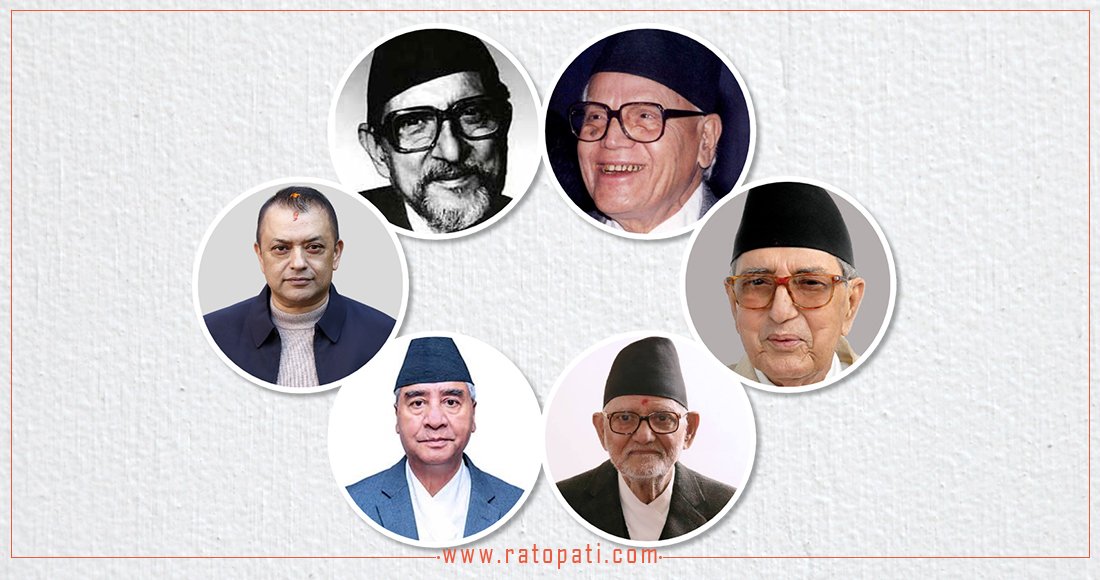
The true strength of any political party is not measured solely by its electoral victories or defeats, but by history. History observes the sacrifices a party has made for the nation, its struggles for the people's freedom, and the leadership it has provided during times of crisis.
Judged by these standards, the Nepali Congress is Nepal's most historic and influential political force, having led the democratic movement. Its history is not merely a tale of forming and dissolving governments; it is a history of the pursuit of freedom, the establishment of civil rights, the struggle against autocratic rule, and the continuous journey of democracy.
Therefore, discussing the Nepali Congress is not just about a specific party, but about the democratic evolution of Nepal. For over a century of the Rana regime, the autocratic system deprived the Nepali people of education, expression, organization, and political participation.
The state was confined within the authority of a few individuals, and citizens did not even have the right to live freely in their own country. In such difficult times, merely dreaming of change was a great courage. And to dedicate one's life to making that dream a reality was even greater courage. With that courage, the pioneers of the Nepali Congress began the campaign to light the lamp of democracy.

They struggled not for power, but for the restoration of civil liberties. Jail, exile, financial hardship, and the risk to life became commonplace for them. Democracy was not just their political program; it was a philosophy of life.
The 2007 BS (1950 AD) People's Movement became a decisive turning point in Nepal's modern history. Armed struggle, public pressure, and an unprecedented awakening of national consciousness brought an end to the Rana regime and opened the door to democracy. This victory was not of one individual, but the result of the collective sacrifice of thousands of known and unknown warriors.
The Nepali Congress led this movement, ushering the Nepali people into a new era. The concepts of civil rights, political participation, and freedom began their institutional journey from that point. Many democratic rights that we enjoy today are the fruits of the sacrifices made in that movement.
In 2017 BS (1960 AD), the elected government led by BP was dissolved, and the Panchayat autocratic system was imposed. Democracy was once again in crisis.
Even after 2007 BS, the journey of democracy was not smooth. The country was seeking a new path amidst political transitions, institutional weaknesses, and resistance from old powers. Amidst these challenges, the first general election of Nepal was held in 2015 BS (1959 AD). For the first time, the Nepali people had the opportunity to elect their own representatives.
That was not just an election; it was a historic declaration of sovereignty. The Nepali Congress received a clear mandate, and the leadership began efforts to institutionalize democracy. Planned development, expansion of education, land reform, administrative reform, and strengthening civil liberties began to be pursued from that time. This was led by BP Koirala, a great leader of the Congress.
However, that journey did not last long.
In 2017 BS (1960 AD), the elected government led by BP was dissolved, and the Panchayat autocratic system was imposed. Democracy was once again in crisis. Many leaders were imprisoned, many were forced into exile, and political activities were severely restricted. But the Nepali Congress did not abandon the struggle for the democratic movement.
Unlike the political culture of losing principles after losing power, the Congress continuously raised its voice in favor of democracy. In those difficult circumstances, standing for democratic values, civil rights, and public participation was the greatest contribution.
This continuous struggle kept the flame of democracy alive. During this period, party leaders prioritized national responsibility over personal life. Many spent years in prison, were separated from their families, faced financial difficulties, but did not abandon their faith in democracy.
Their sacrifice sent an important message – democracy is not a gift bestowed by rulers, but a right achieved through struggle by the people. This consciousness continuously strengthened political awakening in Nepali society.
The 2046 BS (1990 AD) People's Movement was a mature result of that struggle. The cooperation of various democratic forces, public participation, and widespread agitation brought an end to the Panchayat system. Multi-party democracy was restored, and the Nepali people regained their political rights. This movement also taught a profound lesson – when democratic forces unite for a common goal, autocracy cannot survive.
The Constituent Assembly election, the peace process, and the promulgation of the constitution in 2072 BS are historic achievements in Nepal's democratic journey. The constitution is not perfect.
Division always weakens the democratic movement, but unity can change history. Even after that, Nepal's political journey was not smooth. There were many phases of armed conflict, political instability, conflict with the monarchy, and national crises. But in these difficult circumstances, the Nepali Congress again played a decisive role in advancing dialogue, consensus, and democratic processes.
The 2062/063 BS (2006 AD) People's Movement took democracy to a new phase. Autocratic rule ended, the door to the peace process opened, and the foundation for a new constitution was laid. This was not just a political change; it was a historic transformation from decades of violence and conflict towards peaceful political competition.
The Constituent Assembly election, the peace process, and the promulgation of the constitution in 2072 BS (2015 AD) are historic achievements in Nepal's democratic journey. The constitution is not perfect. There are challenges in its implementation. The need for reform always exists. But it has institutionalized democracy, federalism, inclusivity, human rights, and the sovereignty of the people.
The role of the Nepali Congress was decisive in this historic process. Consensus, dialogue, and commitment to constitutionalism provided a new political foundation for the country. But the greatest lesson of history is that no achievement is permanent. Democracy is not a system that, once won, remains secure forever. It must be preserved by each generation through its integrity, responsibility, and service.
Only if the Nepali Congress can transform its glorious past into energy for building the future will history once again give it an opportunity to play a new role.
The 2007 BS revolution, the 2046 BS People's Movement, or the 2062/063 historic change are not just celebrations of memory; they are sources of inspiration that guide the present. If those values are lost in practice, the glory of history will gradually fade.
Today, this is the biggest challenge for the Nepali Congress. The party has a glorious history, but history alone does not build the future. History gives responsibility, offers opportunities, provides inspiration; but the future is determined by present conduct, organizational strength, leadership ethics, and accountability to the people.
Therefore, today the Congress needs to transform the struggle of its founders into its current working style, not just remember it. If the present generation fails to learn humility, service, discipline, and dedication to the nation from the sacrifices of the generation that dedicated their lives to democracy, then respect for history will remain incomplete.
The real asset of the Nepali Congress is not power, but history. But history is not preserved by speeches; it is preserved by principles, service, and self-reform. The people are still looking for a party that can win their trust, inspire hope for the future, and give the nation the right direction.
Therefore, only if the Nepali Congress can transform its glorious past into energy for building the future will history once again give it an opportunity to play a new role. The current leadership cannot shy away from this historic responsibility at all.
To be continued...
This specific news has been automatically translated by AI. As a result, there may be some inaccuracies or language errors.
_drOmyPMDMX.jpg)