'Dear You' Film Sparks Identity Debate in Singapore Over Language Policy

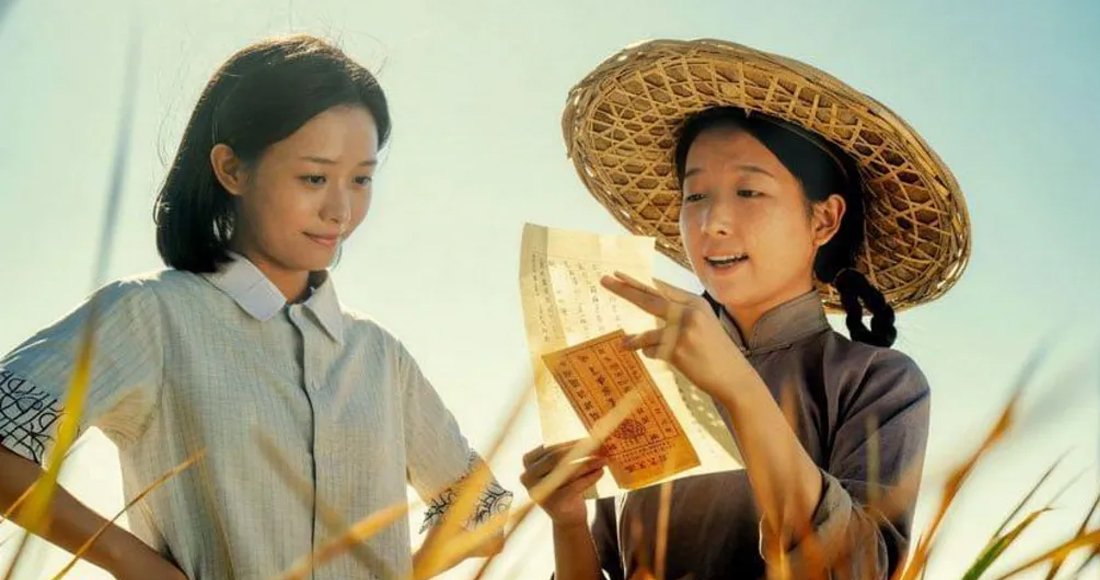
The film 'Dear You', based on an emotional story of family, hope, and hardship, has achieved remarkable success at the Chinese box office this summer. However, it has also sparked an unexpected debate about identity in Singapore, thousands of kilometers away from China.
This film was shot almost entirely in the Teochew language. Teochew is the language of the Chaoshan region of China, which is still spoken among the older generation of Chinese communities in Southeast Asia.
But when this film began to be screened in Singaporean cinemas this month, many viewers were disappointed. The reason was that most screenings were dubbed in Mandarin, not Teochew. Mandarin is the common language (lingua franca) of China and, along with English, is one of Singapore's four official languages.
A church minister, Wu Siew Lin, says, 'As we are from the Teochew community, it feels even more special to be able to watch this film in Teochew.'
She watched the film last week with her mother. They managed to get tickets for one of the only eight special screenings available in the Teochew language. According to reports, all those tickets were sold out in less than two hours.
Many locals have raised questions—when this film is being screened in its original language in China, why is it not being screened in Singapore, where Teochew is still spoken by many older Singaporean Chinese?
This film has unexpectedly started a debate on the Singapore government's long-standing language policy.
The government has been encouraging Singaporeans of Chinese descent to speak Mandarin over other Chinese languages (which are called 'dialects' there).
Initially intended to unite the Chinese community, this campaign has been so effective that some say it has pushed languages like Teochew, Hokkien, Cantonese, and Hakka to the brink of near extinction.
In response to growing public interest in this issue, Singaporean officials have also reacted.
In a statement released on Monday, Singapore's Ministry of Communications and Information said, 'We have heard the demand to allow films made in local languages to be screened more freely in cinemas.'
The ministry has also pledged to adopt a 'more flexible approach' in this regard in the future.
Meanwhile, many have expressed their disappointment on social media.
Some have even announced plans to travel to neighboring Malaysia to watch 'Dear You' in the Teochew language. On Monday, tickets for about five thousand people were put on sale for eight additional screenings, but according to local media, they were also sold out within two hours.
On Thursday, however, 50 more screenings in the Teochew language were approved.
For many Singaporeans, 'Dear You' has become a bittersweet journey back to their own past, told in a language that has traveled across the sea to reach the new era. The story of the film 'Dear You' is based on the historical background of Chinese migration to Southeast Asia.
However, even viewers who do not understand the Teochew language seem eager to watch this film in its original language.
Anna Zhang, 35, from Beijing, who moved to Singapore for work, says, 'I think sometimes the feeling that language creates is the real subject.'
She mentioned that she watched the film in Teochew with subtitles.
According to her, she watched this film in its original language just like any other foreign film.
She says, 'I'm not saying that translated versions are not good. But I think there's a different feeling in the original language. The dubbed dialogue doesn't feel like it's coming from the original character.'
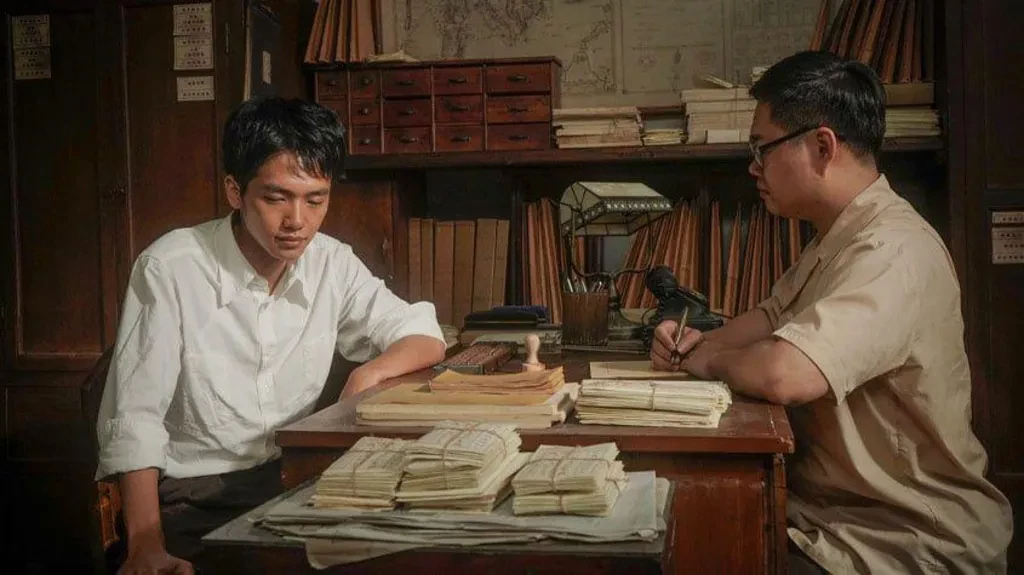
'Dear You', with a modest budget and mostly new actors, tells the story of a young man from a southern Chinese village who travels to Thailand in search of his grandfather.
His grandfather had fled his village in the 1940s during the Chinese Civil War to avoid being forcibly conscripted into the army.
After that civil war, which disrupted the lives of millions, he reached Thailand in the 1950s and started earning a living by driving a trishaw (three-wheeled bicycle rickshaw).
He lived in a hostel with other Chinese immigrants and sent letters filled with longing and sorrow to his wife and children back in his village.
'Dear You', presented especially in the Teochew language, touches upon the fundamental question of identity.
This is because its story is linked to the historical migration from the 19th to the mid-20th century, when millions of Chinese made perilous journeys across the sea to settle in Singapore and other parts of Southeast Asia.
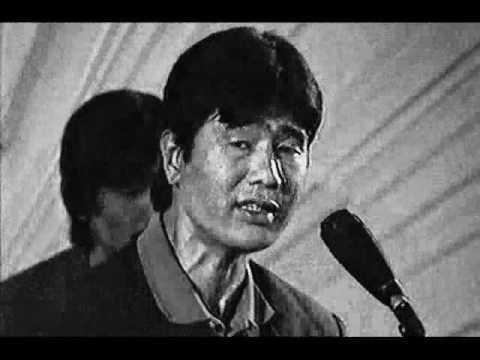
Lee Cher Leng, an associate professor of Chinese Studies at the National University of Singapore, says, 'Dialects, or local Chinese languages, are the root identity of Singapore's Chinese community. In my opinion, Mandarin is mainly a language learned through school, added later.'
She adds, 'It's really interesting that such a small film raises such a profound issue.'
At one time, these languages were widely spoken in Singapore's Chinese community.
Singapore's Chinese population constitutes over 70 percent of its total population.
However, after the government launched a campaign in the 1980s to encourage citizens of Chinese descent to use Mandarin instead of various local Chinese languages, these languages gradually began to disappear from radio and television.
Later, films made in these languages were dubbed into Mandarin in cinemas, while local languages were removed from radio and television programs.
All this was part of a comprehensive bilingual policy implemented in the 1960s.
According to this policy, all Singaporeans were required to speak English along with their 'mother tongue' determined by their ethnic identity.
At the time the 'Speak Mandarin Campaign' was launched, about 70 percent of Singaporeans spoke some form of Chinese dialect at home.
However, by 2020, this figure had dropped to just 8.7 percent.
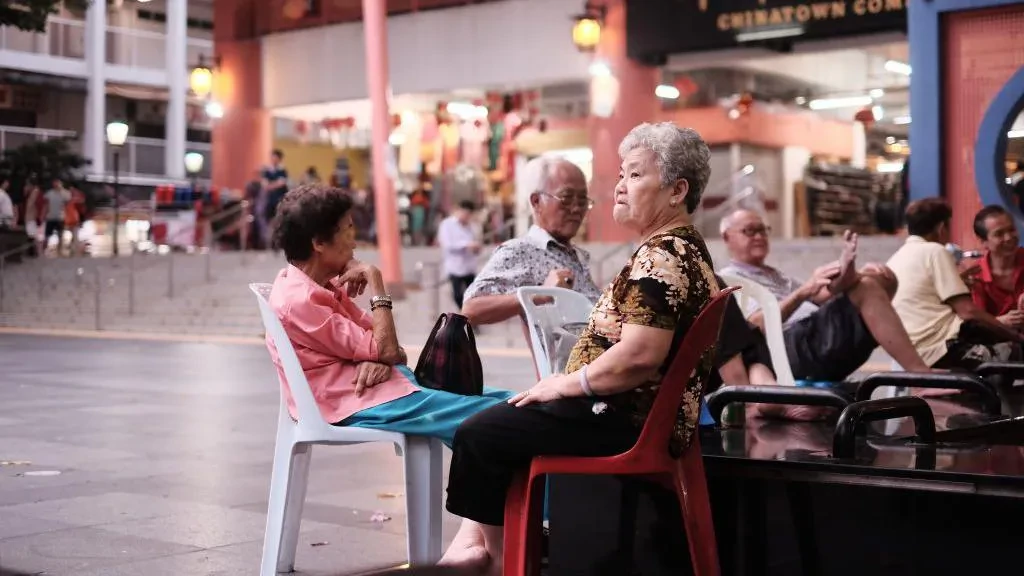
Today, these local languages are mainly spoken only by the dwindling population of elderly Singaporean Chinese.
Many of the restrictions imposed at that time are still in place, while today, nearly half of Singaporeans consider English their most comfortable language.
Since the 1990s, the 'Speak Mandarin Campaign' has shifted its focus from speakers of local languages to encouraging Singaporeans of Chinese descent educated in English to use Mandarin.
In a joint letter published last week in the local newspaper The Straits Times, two film directors stated,
'This campaign has served its purpose. It has made Mandarin the common language of Singaporeans of Chinese descent and has destroyed the traditional structure of local languages.'
They further wrote,
'Screening a film made in a local language today is as common as screening a film in French or Malay.'
Therefore, they asked, 'Isn't the best way to confirm the success of the 'Speak Mandarin Campaign' to completely relax this rule?'
According to them, doing so would also send a message of mature acceptance of the cultural diversity within Singapore's Chinese society. For the past week, this idea has been widely echoed on social media and in various comments.
This debate has also reached politicians.
Opposition MP Dennis Tan wrote on Facebook, 'Local languages are living records of our ancestors' journeys, traditions, and identities.'
The debate appears set to continue.
This is because two MPs have already raised questions with the relevant authorities about the possibility of screening films in their original local languages.
Wu Siew Lin says, 'Now, in reality, many people cannot speak the local language.'
She adds, 'I think it's time for the government to review this policy. If they want to preserve some part of our culture, this will be very important.'
But it is not only languages that are disappearing.
The cultural traditions associated with those languages are also gradually disappearing.
One of the scenes that moved Wu Siew Lin the most while watching 'Dear You' was a traditional Teochew community ritual, which she herself had experienced in her life.
When she turned 15, reaching the age of 15 is considered an age of special cultural significance in the Teochew community. Her parents gave her a special gift to mark her entry into adult life.
In the Teochew language, this ritual is called 'leaving the garden'.
However, last year, when her niece turned 15, no such ceremony was held.
Nevertheless, in recent years, young Singaporeans have become somewhat more attracted to exploring their cultural roots.
Some are learning the endangered local languages spoken by their grandparents, while others are organizing trips to their ancestral villages in China.
However, Tan Ying Ying, an associate professor at Nanyang Technological University who researches local languages, is not optimistic that this will bring about a significant change in the situation.
She says, 'Younger generations are learning these languages now. They might learn them out of interest, like learning a foreign language. But if no one speaks these languages in daily life, it will be impossible to preserve them in the long run.'
According to her, the widespread debate surrounding 'Dear You' is perhaps 'a collective mourning for the loss of something valuable.'
This specific news has been automatically translated by AI. As a result, there may be some inaccuracies or language errors.

_cwAmdxbaAY.jpg)