Opposition Parties Criticize Government for Unbalanced International Relations

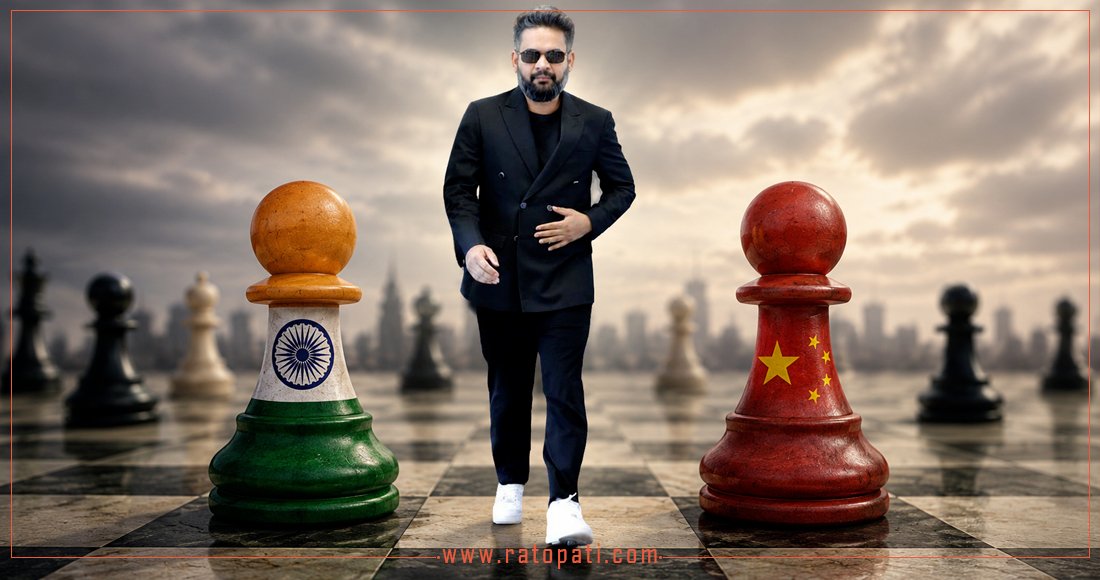
Kathmandu. The opposition parties have started objecting to the government led by Rastriya Swatantra Party leader Balendra (Balen) Shah for creating an imbalance in international relations. They accuse this government of spoiling the traditional relations with neighbors and taking actions that affect other international relations.
Nepali Congress leader Dr. Prakash Sharan Mahat claimed that the balance of the country's international relations has been disturbed recently. Talking to RatoPati, he said, 'International balance is very important for building diplomatic relations, but recently it feels like that has been broken. If balance is not maintained in international relations, a very big problem can arise.'
He emphasized the need to build good relations with the two neighboring countries, India and China, in particular. He stated that trust must be maintained with neighboring countries. He commented that the current government has failed to gain the trust of the two neighboring countries and that unnecessary disputes are being created in international affairs.
_raay0oVnoY.jpg)
CPN-UML's Foreign Department chief and former Foreign Minister Pradeep Gyawali also claims that the current government has failed to maintain balance in international relations. He said, 'The government has not been able to maintain balance in relations with the two neighboring countries, India and China, as well as other countries.'
He claimed that the government has brought up some serious issues that raise questions about the foreign policy itself, saying, 'When the government published its commitment paper, it mentioned that Nepal wants to work as a vibrant bridge, not a buffer state, which is a very flawed statement in diplomacy.' He clarified that Nepal has never been a buffer state and accused it of being forcibly established as one.
Gyawali said that the current government seems to lack even basic knowledge of geopolitics. He clarified that foreign policy and diplomacy should not be trifled with.
_8vhTaZSunr.jpg)
Gyawali stated that Prime Minister Balen's unwillingness to meet with Indian Foreign Secretary Vikram Misri, who wanted to come to Nepal as a special envoy of Indian Prime Minister Narendra Modi, has not sent a good message. He said this has affected the relations between the two countries.
He claimed that the Prime Minister's statement that his country has encroached upon another's land is an irresponsible expression, and it will have a significant long-term impact on the relations between the two countries. 'One must be very careful when making statements on such matters,' he said, 'These are the things that have created a crisis of trust with India.'
According to Gyawali, China has been suspicious from the beginning. 'China has not taken lightly the involvement of those seen in the Gen Z movement,' he said, 'China is also displeased with the kind of activities related to security that have been happening in Nepal recently.'
Gyawali said that spoiling relations with both India and China will create long-term problems for Nepal. He clarified that although Foreign Minister Shishir Khanal has tried to do some damage control, it has not been enough. He stated that initiatives should be taken at the Prime Minister's level for this.
Pramesh Hamal, head of the foreign department of the Nepali Communist Party, also said that the current government has failed to maintain balance in foreign affairs. He said, 'Our foreign policy is a non-aligned foreign policy, and its provision is in the constitution, but the current government is moving contrary to it.'

He claimed that questions have been raised about the government's actions regarding international relations, and despite this, the government has not provided any answers. 'For any country, geography (land) is the most important thing, but Prime Minister Balen seems to have brought that into dispute,' he said, 'The Prime Minister has made a statement in parliament saying that Nepal has encroached upon Indian land; such an undiplomatic statement cannot be anything else.'
He also objected to the Prime Minister not having responded about this so far. He said that the Prime Minister's failure to clarify on sensitive issues like geopolitics could have long-term effects, and stated that the current government has created an atmosphere of mistrust with the two neighboring countries, India and China.
Hamal stated that the incident of celebrating the Dalai Lama's birthday in Nepal with the government's permission, contrary to the one-China policy, has also made China suspicious of Nepal. He said that it feels like the current government is working with a bias towards a particular country.
In an interview with RatoPati a few days ago, Janata Samajwadi Party Nepal chairman Upendra Yadav also said that the government is working in a way that creates mistrust in relations with neighboring countries. 'One has to speak carefully about many things in diplomacy; diplomacy is sensitive as it relates to the nation and nationality. When speaking on behalf of the state, one must be careful, but the current government has repeatedly failed in this,' he had said.
This specific news has been automatically translated by AI. As a result, there may be some inaccuracies or language errors.

_ke6hmvuewe_XLPTtgxmKE.jpg)