Smart Driving Licenses Nearing Completion as Printing Accelerates

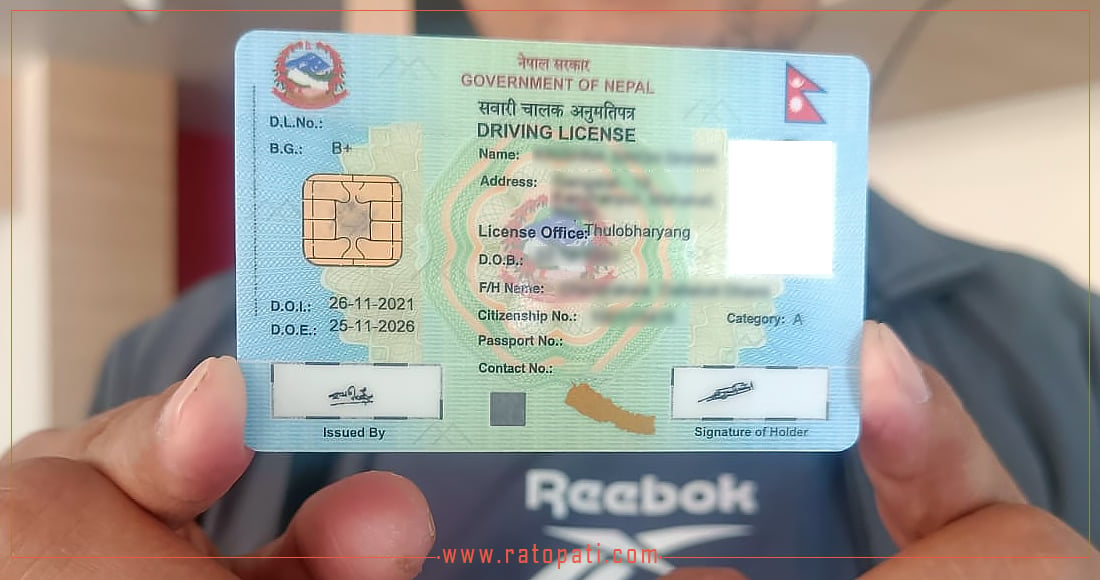
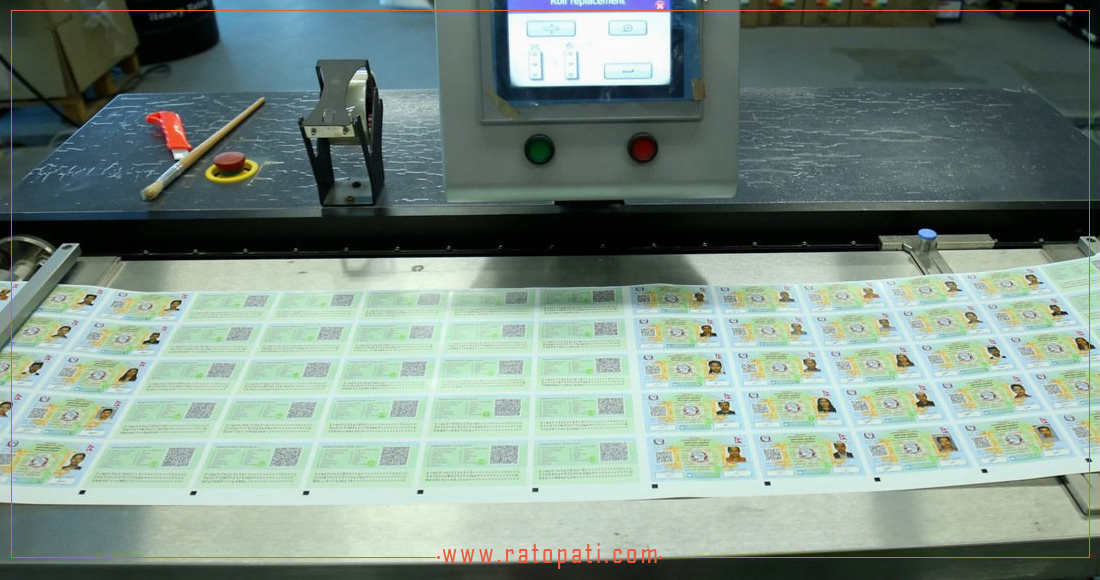
Kathmandu. There is good news for millions of service recipients who have been waiting for smart driving licenses for a long time. Overcoming the extreme shortage of smart cards and the slowness in printing, the Department of Transport Management and the Security Printing Center have brought the printing work to the final stage. According to the Security Printing Center, the printing of 1.57 million smart licenses has been completed so far.
As per the agreement with the department, the center was given the responsibility to print 1.2 million cards in the first phase and 1.7 million in the second phase. Of these, only a very small number of licenses are left to be printed, informed Gopal Raj Timilsina, deputy secretary at the center.
“So far, 1.57 million cards have been printed, and work is underway to print the remaining cards within the next 2 to 3 weeks,” said Timilsina. The center is currently printing up to 40,000 licenses daily. There is no shortage of cards required for printing, and the center immediately starts printing as soon as data is received from the department.
Licenses with less than one year validity will not be printed
The department will also decide whether to print licenses for service recipients whose renewal period is less than one year or six months. Especially since service recipients going abroad request licenses even for a short period, the department is considering extending their validity and providing them with cards, informed Khathiwada.
“Old licenses with a renewal period of less than 6 months or one year will not be printed immediately. Due to years of delay in printing, many service recipients’ licenses have expired or are about to expire before they receive the card. Such service recipients will have their licenses printed only after re-renewal.”
Now, upon re-renewal, a new license with a 10-year validity will be provided, said Keshav Khathiwada, director at the department.
According to Khathiwada, there are about 3 to 4 hundred thousand licenses with less than 1 year validity remaining. Furthermore, the decision not to print these short-validity licenses will save millions of rupees in printing costs for the state, and service recipients will also avoid the hassle of getting a card for a short period and then having to renew it again. However, for service recipients preparing to go abroad for foreign employment or study and who need the card immediately, the department is working on extending their validity or making special arrangements to provide the card, he said.
Another problem seen in the license distribution process is revenue collection. Some service recipients come to get licenses after passing the trial or without paying the revenue. According to the rules, revenue must be paid within 18 months of passing the trial, and the system starts the card printing process only 24 hours after the revenue is paid.
The renewal period for licenses has been extended from 5 years to 10 years. According to the notice published in the gazette on July 29, 2025, the validity of newly issued or renewed licenses will now be 10 years. With the implementation of this system, service recipients will no longer have to visit the office frequently. The department aims to reduce the current backlog to zero by the end of Asar. If this target is met, service recipients paying new revenue from Saun will receive a 10-year validity license.
Claim: Backlog to be zero by Asar
The department had a total liability of printing 2.9 million licenses for service recipients who passed the trial in the last 4 years. Of these, the center has already printed about 1.57 million. Director Khathiwada said, “We are working to complete the printing of all 2.9 million licenses by the end of Asar. Our plan is to develop a system that can provide licenses within 24 hours of paying new revenue from Saun.”
Another problem seen in the license distribution process is revenue collection. Some service recipients come to get licenses after passing the trial or without paying the revenue. According to the rules, revenue must be paid within 18 months of passing the trial, and the system starts the card printing process only 24 hours after the revenue is paid.
What is the cost?
According to the Security Printing Center, the basic cost of one smart card is 195 rupees and 17 paisa. This is the rate approved by the management committee. Adding 13 percent value-added tax (VAT) to this, the total cost of one license comes to about 221 rupees. According to Deputy Secretary Timilsina of the center, the full and actual cost details will be clarified only after the final audit.
The center has clarified that the printing work will not be stopped due to budget constraints. Deputy Secretary Timilsina said that the work is being coordinated with the department and the work will continue as long as money is available. He said, “We are a printing press; the printing work will continue as long as the department provides the money. So far, there is no situation where work has to be stopped due to budget.”
He stated that there is no shortage of necessary raw materials (cards) and printing is being done as soon as data is received from the department.
Licenses will now be printed regularly by the Center
Due to the arson at the Department of Transport Management office during the Genji movement last August, significant damage occurred, including to the printing machine. After this, the department was unable to print licenses.
After that, the license printing became uncertain. Subsequently, the interim government handed over the responsibility of license printing to the center. The center started printing licenses from November 12, 2024. In fact, preparations to print licenses from the center were underway even before this. An agreement was reached between the Department of Transport Management and the Security Printing Center to print driver's licenses in May 2024, but printing had not started. After the department's machine was damaged during the Genji movement, a new agreement was made and printing was advanced.
Similarly, there was a preparation to advance the license printing work from the provinces earlier. Although the provinces purchased license printing machines with their own investment, they are currently unused. The main reason for this is legal complexity, clarified Director Khathiwada.
Licenses will be printed regularly from the center, informed Director Khathiwada. According to him, the department's printer is 6 years old, and due to the damage from the arson, repairs would cost more than 30-40 million rupees. Director Khathiwada says, “There is a provision to repair any equipment that breaks down by spending up to 30 percent of its purchase price, but repairing the machine burnt in the arson would require almost its purchase price. Therefore, instead of spending a large amount of money to repair the old machine, using the high-capacity modern machines of the Security Printing Center seems more beneficial and sustainable.”
Similarly, there was a preparation to advance the license printing work from the provinces earlier. Although the provinces purchased license printing machines with their own investment, they are currently unused. The main reason for this is legal complexity, clarified Director Khathiwada.
“The Security Printing Act gives the Security Printing Center the exclusive right to print government and sensitive documents,” he said. “Unless this act is amended and the authority is transferred to the provinces, they cannot print licenses with their own machines legally.”
It is due to this legal limitation that printing is done from the center.
This specific news has been automatically translated by AI. As a result, there may be some inaccuracies or language errors.
_zDgGjQnBk0.jpg)