Regional Economic Disparities Persist Despite Federalism

Nepal, after adopting a federal governance system, has aimed to distribute development opportunities, resources, and economic benefits in a balanced manner across all its provinces. The core principle of federalism is to advance development based on local needs, potential, and priorities, and to reduce regional inequalities.
However, nearly a decade after the implementation of the federal structure, economic production, income, investment, infrastructure development, and employment opportunities have not been distributed equally among the provinces. While some provinces have made significant progress in economic activities, industrial development, service sector expansion, and attracting investment, some provinces still lag behind due to low production, limited investment, and a weak economic base.
Provincial per capita Gross Domestic Product (GDP) clearly reflects these regional economic disparities. Per capita GDP, obtained by dividing the total value of goods and services produced in a province by its population, serves as an indicator of overall economic productivity, income levels, and living standards.
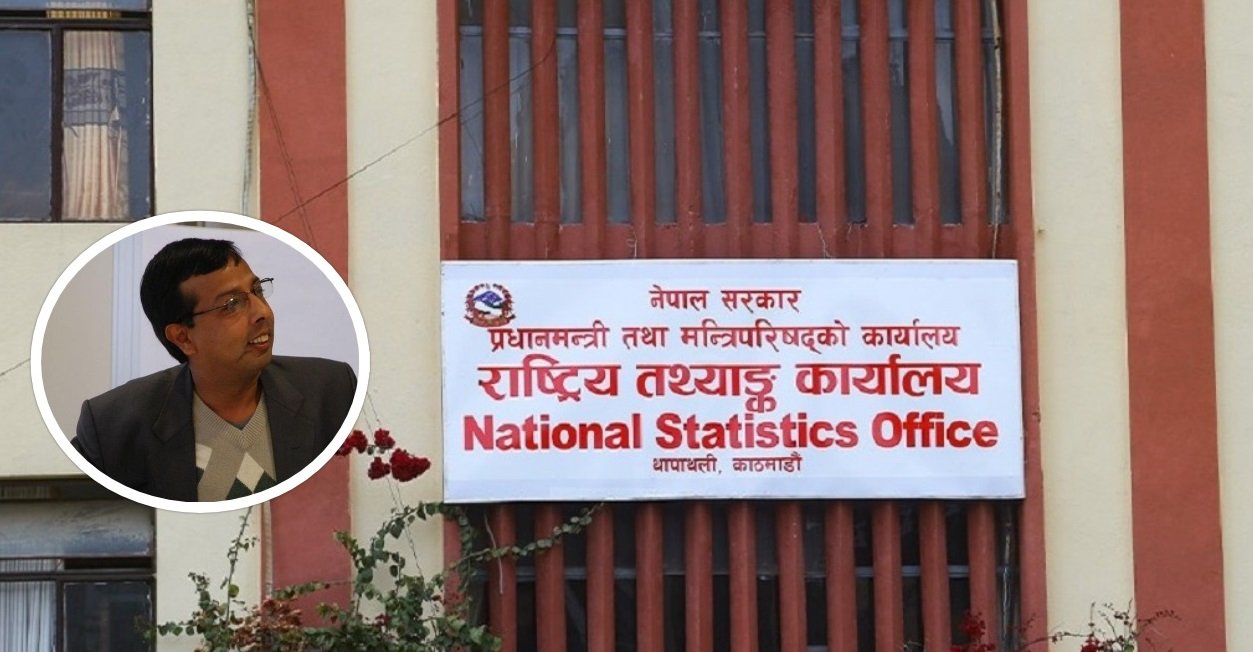
According to data published by the National Statistics Office (2083), Nepal's average per capita GDP is 1,513 US dollars. However, provincial data shows that Bagmati and Gandaki provinces are above the national average, while Madhesh, Karnali, Sudurpashchim, and Lumbini provinces are below the national average. The significant gap, particularly between Bagmati Province and Madhesh Province, indicates that economic development opportunities are still concentrated in a few limited geographical areas.
This situation signals that regional imbalance still exists in Nepal's economic development. The unequal distribution of economic resources, investment, infrastructure, and human capital has led to varying paces of development among the provinces. Consequently, challenges such as increased internal migration in search of employment, excessive population pressure in urban areas, and persistent poverty and unemployment in weaker provinces are emerging. Therefore, the analysis of provincial per capita GDP is not just a study of economic data but also an important basis for understanding the effectiveness of Nepal's federal governance system, the state of regional development, and the potential for inclusive economic transformation.
This article analyzes the state of provincial per capita GDP, its causes, the impacts of regional inequalities, and the policy measures necessary for inclusive and balanced economic development.
Concept of Per Capita Gross Domestic Product
Per capita GDP is an important economic indicator for measuring the economic production capacity of a country, province, or region and the average economic status of its citizens. It represents the average level of production or income obtained by dividing the total monetary value of all final goods and services produced within a specific period (usually one year) by the total population of that region.
In simple terms, if the total economic value produced by a country or province in a year is divided equally among its residents, per capita GDP shows the average value that falls to each person. Here, GDP is related to the total population, representing the total value of all goods and services produced in a year.
For example, if a province's total GDP is 10 billion US dollars and its population is 5 million, its per capita GDP would be 2,000 US dollars. This implies that each person has contributed to or is associated with economic activities worth an average of 2,000 US dollars.
This specific news has been automatically translated by AI. As a result, there may be some inaccuracies or language errors.