Nepal's Constitution Amendment: A Call for Consensus and Inclusivity

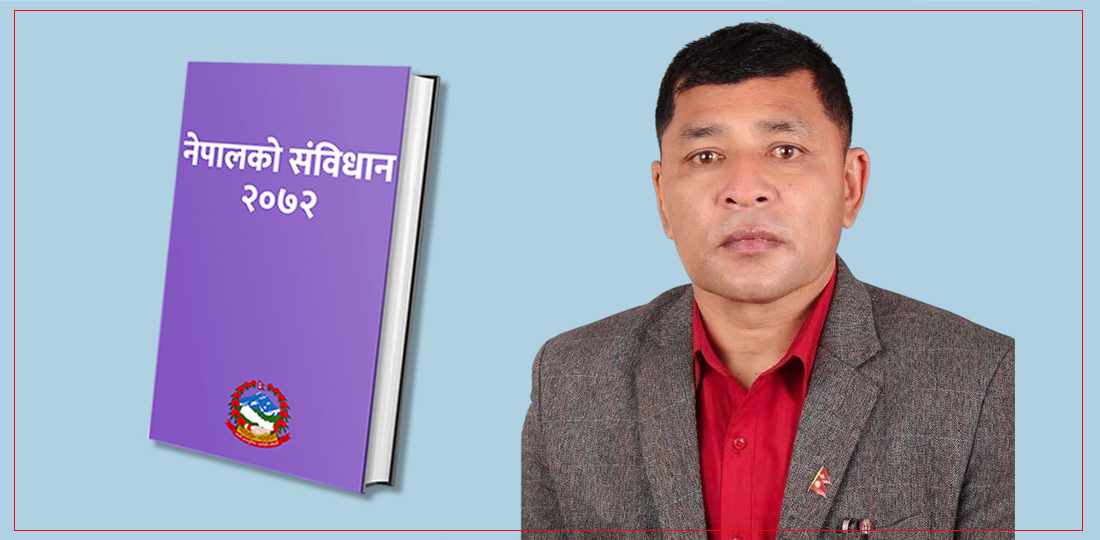
Nepal's Constitution of 2072 is not merely a legal document, but a national political consensus forged through decades of political struggle, people's movements, armed conflict, Madhesh movements, inclusivity, and the journey towards a federal democratic republic. For this reason, the issue of constitutional amendment is not confined to the government's administrative or parliamentary agenda; it is directly linked to the state's political legitimacy, historical agreements, democratic trust, and public expectations.
After a decade of experience in implementing the constitution, voices from the government, opposition, and the streets have been calling for timely amendments to some of its provisions. However, concrete and institutional initiatives for this have not been forthcoming. In this context, the formation of a 'Task Force to Prepare a Constitutional Amendment Discussion Paper' by the newly formed government through a cabinet meeting on Chaitra 16 has initiated formal interaction among political parties regarding constitutional amendment.
As the task force has begun seeking suggestions from various parties, and the parties have started presenting their views, the debate now appears to be moving in a positive direction. The process of constitution-making in Nepal is considered one of the most complex political transitions globally.
After the end of the monarchy following the People's Movement of 2062/063, the country entered a federal democratic republic. Subsequently, the first elected Constituent Assembly was given the responsibility of drafting the constitution, but due to the inability to reach consensus among parties on issues of federalism, governance system, electoral system, judiciary, and identity, the Constituent Assembly was dissolved.
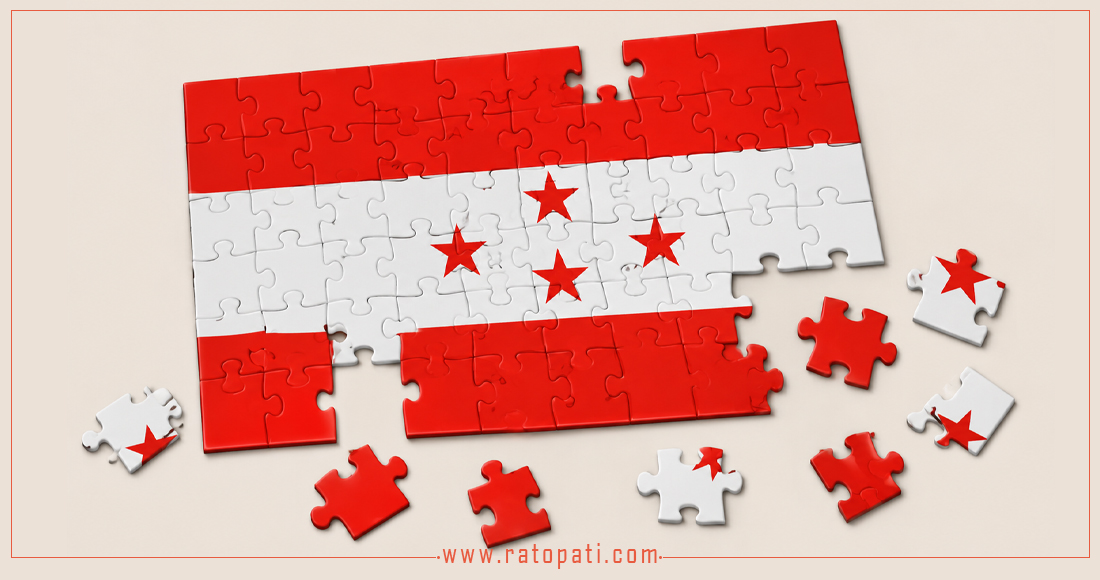
Finally, the constitution was promulgated in 2072 by the second Constituent Assembly, which was not the document of any single party but a shared document created through long dialogue, consensus, and agreement among the Nepali Congress, CPN (UML), CPN (Maoist Centre), Madhesh-centric parties, representatives of indigenous peoples, the women's movement, civil society, and various social groups. Therefore, the debate on constitutional amendment also needs to proceed with a spirit of consensus, harmony, and shared ownership.
If constitutional amendment is viewed not as a clash of parties or a competition between the government and the opposition, but as an opportunity to make democracy more effective, accountable, and inclusive based on implementation experiences, then it can pave the way for expected political and governance reforms.
Looking at Nepal's constitutional practice, there is a tradition of building reliable structures for significant constitutional changes. Even during the drafting of the 1990 constitution, a Constitutional Suggestions Commission was formed. The practice of forming commissions led by former Chief Justices or senior legal experts to resolve various constitutional disputes has existed in Nepal.
The reason for this is to ensure that the debate on the constitution is not solely driven by party interests, but also includes jurisprudential seriousness, historical consciousness, and a spirit of national consensus. The criticisms raised about the current task force lacking such broad representation and credibility are not mere political comments made for the sake of opposition.
More importantly, the current government itself has been formed as a result of elections held accepting the constitution of 2072. If there were political forces completely rejecting the constitution, the situation would be different. However, with a government elected through the legal framework of this very constitution, it is natural to expect the amendment process to be inclusive and consensus-based, in line with the spirit of the constitution.
If the constitution is accepted for governance, but attempts are made to sideline the main consensus-building forces in the name of amendment, it can increase political mistrust. The Rastriya Swatantra Party, being a new political force, seems to have made the weaknesses of old parties, corruption, administrative inefficiency, and public disillusionment its political base. It has gained some public support in this regard.
However, the question of the constitution is not merely a debate of the old versus the new. The constitution is a matter related to the continuity and stability of the state. Therefore, the tendency to completely reject old political agreements simply because one is a new political force is not a sign of democratic maturity. To dismiss parties that contributed to constitution-making as merely old forces of the past is to outright reject historical reality.
The ten years of experience in implementing the constitution have certainly shown some weaknesses. Issues such as ambiguity in power sharing in the implementation of federalism, the effectiveness of provincial structures, the balance of power between the National Assembly and the House of Representatives, the politicization of constitutional commissions, the appointment system of the judiciary, the expensive nature of the electoral system, and political instability have been raised.
There is a need for debate on these issues. However, if attempts are made to weaken the core spirit and historical consensus of the constitution in the process of finding solutions to these problems, it can lead to even greater crises.
For example, let's consider the issue of federalism. At the time of constitution-making, federalism was not just an administrative restructuring; it was a strong means of political participation for historically marginalized communities.
If, in the name of amendment, attempts are made to weaken the provincial structure or move towards excessive centralization, movements of the Madhesh, indigenous peoples, and regional identities may flare up again. Similarly, if the system of inclusive representation is weakened, the concept of social justice established by the constitution itself may be questioned.
International practices of constitutional amendment also clearly show the importance of broad consensus. In South Africa, after the end of apartheid, Nelson Mandela's leadership created a basis for national reconciliation by including all parties in the constitution-making process. In India too, there is a tradition of seeking all-party consensus on sensitive issues during constitutional amendments. Even in America, constitutional amendment is made extremely difficult, so that temporary political majorities cannot change the fundamental structure of the state.
In a transitional democracy like Nepal, the need for consensus is even greater. For this reason, it is not appropriate for the government to try to make the constitutional amendment debate a project of political achievement. Constitutional amendment is not merely a tool for implementing a party's election manifesto. It should be a document of national trust and a process of reconstruction.
For this, a high-level commission should be formed, comprising former Chief Justices, constitutional experts, Constituent Assembly members, civil society, women, Dalits, indigenous peoples, Madhesis, and youth representatives.
Only such a structure can make the amendment process credible. Today, there is disillusionment with democracy in Nepali society. Corruption, unemployment, weaknesses in service delivery, and political instability have caused public dissatisfaction. However, the solution to this cannot be found by blaming the constitution alone. The political culture of implementing the constitution, administrative capacity, and leadership integrity are equally important.
Many problems lie in practice rather than in the constitution. Before concluding that federalism has failed, the question of how much authority and resources have been transferred in accordance with the spirit of federalism must also be raised.
Ultimately, the question of constitutional amendment can only be successful through national consensus. An amendment made through the arrogance of majority rule may gain legal validity, but it will not gain political and moral validity. Nepal's political history has shown that decisions made without consensus are not sustainable in the long run. Events such as the dissolution of parliamentary system in 2017, the unstable experiments after 2046, and the dissolution of the first Constituent Assembly have taught this lesson.
Therefore, constitutional amendment should be taken not as a means of revenge, dominance, or political display, but as an opportunity to re-strengthen national consensus. The constitution of 2072 may be incomplete, and improvements may be necessary, but any amendment made by disregarding the historical pain, struggle, and consensus incorporated in its creation will not strengthen national unity.
The constitution is not just a book of laws; it is a shared political agreement of Nepali society. Therefore, its amendment must also be made possible only through shared responsibility and shared ownership.
This specific news has been automatically translated by AI. As a result, there may be some inaccuracies or language errors.
_drOmyPMDMX.jpg)