Film Stars Returning to Theater, Driven by Acting Hunger

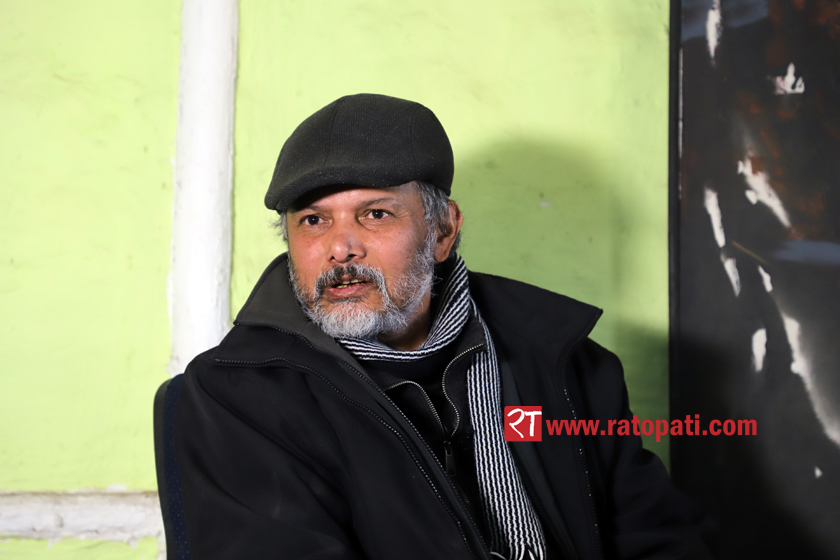
Having been active in the theater for four decades, I am currently experiencing a very different feeling. Observing the landscape of Nepali theater today compared to yesterday, I feel a very pleasant and meaningful change. At one time, artists working in theater struggled greatly to enter the film industry and were desperate to get there. A narrow mindset that viewed theater merely as a stepping stone to films was prevalent in society.
Times have changed today. Film stars who have established themselves in the film industry, earning considerable fame, fortune, and popularity, are returning to theater houses in droves. They appear eager to act in theater. I consider this change a very positive and natural process.
While this practice may seem new in our theater journey and experience, it has long been an established and regular process in international theater. In many developed countries around the world, the practice of established film stars coming to theater and theater artists going into films has been ongoing for a long time. In our country, however, the trend was to go from theater to films in the past. Coming from films to theater was considered a compromise. Although late, the door for coming from films to theater has now opened and is continuing.
Established film faces, from the 'Mahanayak' Rajesh Hamal to popular actresses like Rekha Thapa, Benisha Hamal, Surakshya Panta, Srishti Shrestha, and Namrata Shrestha, have already stepped into theater. I believe this is a very encouraging sign for the development and expansion of Nepali theater.
Many people ask me, 'Why do star artists who have established themselves in films, enjoyed comforts and glamour, endure the difficult practice and hardship of theater again?' In my opinion, the straightforward and simple answer is—the hunger for acting.
Some people criticize the arrival of film artists in theater as a temporary fashion or a means of cheap popularity, but I do not see it that way alone.
Technical aspects dominate films. There are facilities for 'cut' and 'take'. Mistakes by actors can be corrected on the editing table, but in theater, artists have to perform their art directly in front of the audience, without any technical support. This vitality and the immediate feedback from the audience give the artist a unique sense of self-satisfaction, which is difficult to find on the film screen. I believe they are attracted to theater to satisfy that same real thirst for acting.
Some people criticize the arrival of film artists in theater as a temporary fashion or a means of cheap popularity, but I do not see it that way alone. It is true that they cannot be limited to theater forever. Because they are busy with the demanding schedules of films.
Theater demands great dedication, discipline, and time. To prepare a play, one must rehearse regularly for at least a month and also dedicate continuous time on performance days. In such a situation, it is not always possible for them to make time for theater. Therefore, instead of calling their occasional performances when they have time a temporary fashion, it is more appropriate to understand it as time management. I believe that their acting in plays by taking out time amidst their busy schedules is in the interest of theater as a whole.
There is a possibility that many viewers will come to theater houses to see established film faces, which helps in adding new audiences to theater.
Some also worry that the entry of film artists might disrupt the seriousness, originality, or discipline of theater, but I don't think so. Acting is acting, whether it's done in front of a camera or on stage. When a film artist enters theater, they automatically have to embrace its discipline and decorum. Theater has its own rules and a rigorous methodology, without which no one can survive on stage. After entering here, they also work as hard as other theater artists. Therefore, the arrival of film artists does not affect the originality of theater; rather, it helps make this field more dynamic and energetic. The participation of star artists increases both the vibrancy and the audience for plays.
There is a possibility that many viewers will come to theater houses to see established film faces, which helps in adding new audiences to theater. On the other hand, it also provides a great opportunity for new and learning theater artists working alongside them. By working with established artists, they can learn professionalism, and their own performances also get a chance to reach a larger audience. This is a kind of mutually beneficial situation.
There are also complaints that theater ticket prices have become a bit expensive after film artists started performing. This may have had some impact, as their management, promotion, and remuneration aspects are a bit costly. However, in the context of rising costs in every sector with time, the increase in theater ticket prices alone cannot be considered unnatural. This process also seems necessary to make theater financially sustainable and self-reliant. Ultimately, it helps in making theater houses and artists financially strong.
For me, theater is a medium of vibrant and deep expression. Its main characteristic is that the artist performs live, and there is no 'retake' facility here. Once it starts, it flows automatically until the end. This direct, live connection between the audience and the artist is the true beauty of theater. The gradual reduction of this distance between film and theater and the increasing movement of artists is a pleasant and hopeful aspect for the Nepali art sector as a whole.
(Based on an interview with senior theater artist Sunil Pokharel by Kuber Giri for Ratopati)
This specific news has been automatically translated by AI. As a result, there may be some inaccuracies or language errors.