Mangoes: A Culinary and Cultural Staple of Mithila

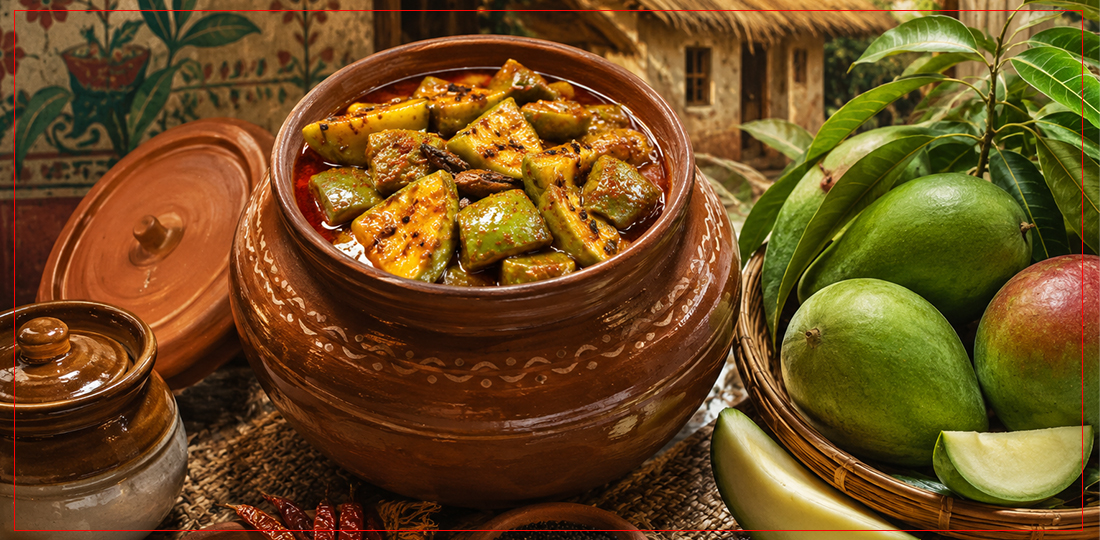
The mango season has begun this year. Mango tikla (tikola) has started to be eaten as raw, khatmitthi, and vegetables. The recent rains have helped the mangoes gain weight. This is a sign that preparations for making mango pickle can begin. Mango pickle is not just a common dish but also a part of Mithila's cultural heritage.
Mango is called the king of fruits. It is extremely popular worldwide for its excellent taste, aroma, and nutritional value. Mangoes, which grow in the summer and monsoon seasons, are a boon from nature to Mithila society and the most delicious and universally loved fruit. Mangoes have their own unique significance in Mithila.
Hundreds of traditional and rare varieties of mangoes, as well as Sarahi, Sinduri, Maldah, Bombay, Kalkatiya, Langda, and Jardalu are cultivated in the land of Mithila. The diversity of mangoes here is so famous that Mithila society also enjoys organizing mango festivals.
Mango festivals are an opportunity for mango lovers to experience its unique taste and enjoyment. Especially in the summer season, people enjoy eating various types of mangoes because it is a seasonal fruit. Mango festivals are often organized as a unique competition in Mithila every year in some place, where people not only taste various types of mangoes but also exhibit and trade mangoes and mango nurseries.
Maithili literature and folk songs are also full of descriptions of mango blossoms and mango orchards, which are symbols of rural life and mutual love. During the mango season, proverbs like "Magh gujare, Fagun majare, Chait lie tikola. Vaishakhme kosao Jeth-Akharmedhako." are often heard.
In Maithili literature and Mithila culture, mango is described not only as the king of fruits but also as a cultural symbol, a messenger of love, and a beautiful ornament of nature. Kavi Kokil Mahakavi Vidyapati has beautifully discussed mango blossoms while describing the spring season in his songs and Padavalis. From Varnaratnakar, the first written text of Maithili culture, to various Puranas and texts, the glory of the mango tree is sung.
Eating mangoes in the summer season is a special joy. But it also has many kinds of significance. In Mithila culture, the mango tree and its fruit are not just agricultural produce, but also an essential part of every religious, social, and cultural ritual from birth to death.
It is considered a symbol of love, prosperity, and purity. The use of 'Amrapallav' (tender mango leaves) is mandatory for establishing a kalash at the beginning of any auspicious ceremony, yajna, or puja. Without mango leaves, the puja is considered incomplete. There is a tradition of performing mango weddings during wedding rituals. In Hindu Sanatan Dharma and Maithili traditions, mango wood is used for cremation.
Mangoes also have great significance in terms of health benefits. Mango leaves contain vitamins A, C, B, as well as powerful antioxidants. It is a natural remedy for controlling blood sugar, improving digestion, reducing weight, and maintaining healthy skin and hair.
Drinking mango leaf decoction (by boiling in water) provides relief from problems like gas and constipation. It is useful in reducing body weight. Drinking mango leaf tea improves the body's metabolism, which helps in burning fat faster and reducing weight. The anti-inflammatory properties of mango leaves reduce skin problems like blemishes and itching.
Various traditional dishes and preparations are made from mangoes, such as Kuchcha, Khatmitthi, vegetables, pickles, Ammath (Amoth), etc. The style of making mango pickle in Mithila is unique, due to which mango pickle can be eaten for three to four years. Mango pickle is an integral part of Maithil feasts and meals. Mango pickle is the cultural heritage of Mithila.
Various types of mango pickles are a common dish in the cuisine of Mithila households. Mango pickle is a delicious and popular summer dish. It is made by cutting raw mangoes into small pieces, adding salt, turmeric, spices, drying them in the sun for some time, and then adding mustard oil and various spices and storing them in a container.
Pickle generally refers to preserved dishes made from sour fruits like mangoes, and spices such as ginger, garlic, and green chilies, which are salty, sour, spicy, and oily. Preserved pickles are relished worldwide as enjoyable, delicious, sour spices, and different cultures have their own styles of making pickles.
It is part of the special affectionate duty of traditional and popular dishes of grandmothers in the Mithila region. They start making pickles after the rain begins in the month of Jyeshtha. This is because after the touch of rainwater, the fibers in the mango start to break. Pickles are not made from tender mangoes. There is a custom of drying the tender tiklas that fall in the wind for khatta.
Mango cultivation in Nepal is a major fruit, accounting for about 32 percent of the total fruit cultivation area. Although it is an important part of the agricultural economy, production fluctuates due to dependence on weather, lack of modern technology, and storage deficiencies. Despite high market demand, there is still a compulsion to import a large quantity of mangoes from foreign countries.
The Government of Nepal has given high priority to mango cultivation and has adopted a policy to increase production and quality. Through pocket and block development programs, policies have been adopted to provide orchard management, quality sapling distribution at subsidized rates, disease control, and technical and financial support to make the Madhesh Province a mango hub.
The National Horticultural Research Center provides training to farmers on advanced technology, grafting methods, and disease control. Programs for climate-resilient farming, value addition, and marketing are being implemented to develop the Madhesh Province, which accounts for more than 62 percent of the total mango production, as a 'super zone' or hub for mangoes.
Emphasis has been placed on the development of improved mango varieties and the production of quality grafted saplings. Agricultural Knowledge Centers provide consultancy services to protect mango inflorescence (flower) drying disease and other calamities.
In the Saptari district, considered the capital of mangoes, the Government of Nepal and the Madhesh Province Government are implementing special policies and programs to promote mango cultivation. Mango production in Saptari has increased significantly in recent times, and it is estimated that about 75,000 metric tons of mangoes will be produced in this fiscal year.
In the new national budget, the government has also introduced a special policy to establish mango processing centers in the Saptari and Siraha districts to add value to the production of mango farmers and facilitate marketing.
This specific news has been automatically translated by AI. As a result, there may be some inaccuracies or language errors.