Analysis of Nepali Communist Movement's Challenges and Path to Renaissance


Following the recent election results, discussions are underway from various angles regarding the renaissance of the Nepali communist movement. Some express disappointment, some restlessness, and some harbor sentiments like the current rulers will soon be discredited and then it will be our turn. The communist parties that became major players in parliament were not even considered left-wing parties, let alone communist. Therefore, some believe it is time for a true communist renaissance.
World history shows that revolutionary movements progress through ups and downs of many mistakes, problems, difficulties, and defeats. Revolution is built in this manner. Che Guevara says, 'When the revolution loses momentum, we must analyze again, review our problems, reorganize forces, and chart the path forward.'
Therefore, for the true and effective renaissance of the Nepali communist movement, an objective analysis of the current situation, review, and a new journey of reorganization are necessary.
- Communist Movement in the Crosshairs
The main political leaders of the change in 2062/063 were primarily the communist parties of Nepal. The communist parties were also the main stakeholders of the constitution that was formed. Communist parties have also held the main share of government operations during this period. Prime Ministers and ministers have also been predominantly from communist parties. For eight out of the last ten years, leaders from communist parties have been Prime Ministers.
Viewed this way, communists have been the main political leaders of Nepal for the last two decades. However, despite receiving so many opportunities, communist forces could not present reliable solutions to the problems of society. There was no such effort, which led to communists becoming the target of the anger of the common people, especially the working class.
Communist parties became engrossed in parliamentary elections, focusing only on the upcoming elections and their mechanical victory. Consequently, they became severely detached from movements of economic and social transformation and from the joys and sorrows of the working people.
The communist movement is primarily an anti-imperialist movement. Therefore, it goes without saying that imperialism will also be against democracy and, even more harshly, against the liberationist communist movement. However, due to the communist movement's failure to exercise adequate vigilance, or its inability to do so, regarding imperialist attacks on knowledge, organization, leadership, and policy, there are numerous examples of socialist movements and efforts being set back. The Nepali communist movement has also become an important lesson among these.
Why couldn't communist parties work according to the people's expectations? Why did they become the target of anger? Among the many reasons for this, the most significant and central reason is the unhindered application of neoliberalism. Despite the dominance of communist parties and leaders in government, in terms of planning, neoliberal policies were advanced without any hindrance based on suggestions from the World Bank, IMF, and their representatives.

There was no significant difference in policy among communist, socialist, democratic socialist, and liberal forces. Instead, there was a competition to see who would be the true supporter of neoliberalism. In this way, the leading segment of the communist movement fell into the trap of neoliberalism, and efforts to escape it were either deemed unnecessary or weakened. As a result, the priorities of the movement did not align with the needs and priorities of the working class. This naturally led to the unfulfillment of the expectations that the people had immediately after the revolution.
Disappointment is natural at such times. This is because, after sowing neoliberal economic policies in society, there has been no widespread happiness in the lives of the common people anywhere in the world. Even American citizens in the heart of capitalism, people in supposedly prosperous European cities, are forced to sleep on the streets and in their cars. They depend on charitable churches and organizations for a meal. To escape mental health issues, they are forced to indulge in various drugs.
What this means is that the gifts of capitalism are disappointment, exploitation, and starvation. It puts guns in children's hands, not books. It readily puts drugs in your hands rather than medicine. As a result, the carriers of ideas and warriors of struggle who confront it are rendered 'completely disabled'.
Without a meticulous analysis of these issues, the current prevalence of populist political stunts and the emerging events that lean towards fascism cannot be understood.
- Content with Republic, Unaware of Capitalism
The republic itself is merely a system of governance. But what kind of republic? Whose republic? A republic for the common people or a republic for the powerful in society? There was a need for sufficient discussion and programs on this, but the Nepali communists did not pay attention to it.
The bankruptcy of ideology is prevalent in all parties, big or small. It's not that this tendency hasn't been fought, but even there, strong ideological preparation was lacking.
We had a capitalist republic. That is, not only did we get a republic, but capitalism also emerged more prominently with it. Therefore, along with the republic, Nepali communists should have implemented new theoretical, ideological, and programmatic plans suitable for the changed circumstances. Content with the pride of achieving the republic, the communist movement remained unaware of global capitalism, which emerged in a formidable form alongside the republic, and thus could not adapt.
They did not pay much attention to what capitalism is, what impact it has on political parties, their leadership, and cadres, and what geopolitical games, challenges, and crises it imposes. Consequently, communist parties failed to prepare ideologically to fight it. Sadly, Nepal's communist parties have become like machines that produce rulers for the current system. Their main job has become merely giving tickets in various parliamentary or community business social sector elections. They have failed to become tools for developing knowledge and leadership for revolutionary transformation. This situation must change now.
Thus, while the republic itself is a significant achievement, this system has become confined to the acquisition of positions such as ward chairperson, mayor/deputy mayor, member of parliament, minister, prime minister, president, or similar governance roles for specific individuals. The root cause of disputes, fights, and discord has been confined to who gets which position and who doesn't. Leaders of the revolution themselves cannot get along, are ready to attack and eliminate each other at the slightest opportunity, misuse commitments as pawns for capturing parties and state power, hold conventions for unity and capture for power, collective spirit diminishes, intolerance towards differing views, considering flattery as loyalty, viewing questions as non-cooperation, relying only on specific coteries and factions – such tendencies have increasingly integrated communist parties and leaders into capitalist discourse.
Communist parties became engrossed in parliamentary elections, focusing only on the upcoming elections and their mechanical victory. Consequently, they became severely detached from movements of economic and social transformation and from the joys and sorrows of the working people.
This was an attack by capitalist ideology on left politics. Such an attack is natural in the capitalist world system. Keeping this in mind, Fidel Castro in Cuba launched a campaign to prepare the entire party rank and file for the 'battle of ideas' with capitalism. His saying was: the decisive factor in today's burning political struggle (socialism or capitalism) will not be nuclear weapons or arms, but the battle of ideas.
However, the preparation for this battle of ideas in the Nepali communist movement remained very weak. The notion created by capitalism that class struggle only happens in elections, not in daily life, has affected communist parties as well. Some leaders even said – the political revolution is complete, now it's the economic revolution. Now it's about development, not ideas.
In reality, the question was: what kind of economic and social transformation, what kind of development, and development for whom? The answer would have demanded politics aligned with that perspective. Viewed this way, it was a clear ideological issue.
Some did not hesitate to say that the idea now is 'corporate socialism'. They used to say it before, and now some have started suggesting changing the name of the communist party. Some say socialism will not come now, and a 'welfare state' is the best destination. Some are talking about building 'center-left', 'left democratic' forces. Some are even saying that communists were ruined by doing politics for the poor; by talking for the 17 percent poor, the population above the poverty line (83 percent) became resentful of the communist party.
All these are ideologies created by capitalism to obscure the revolutionary legacy of the communist movement and to tilt the class struggle of human society in favor of capitalism. Those who are permeated by such neoliberal ideas being called leading thinkers and organizers of the communist movement is a vivid example of the bankruptcy of ideology in the Nepali communist movement.
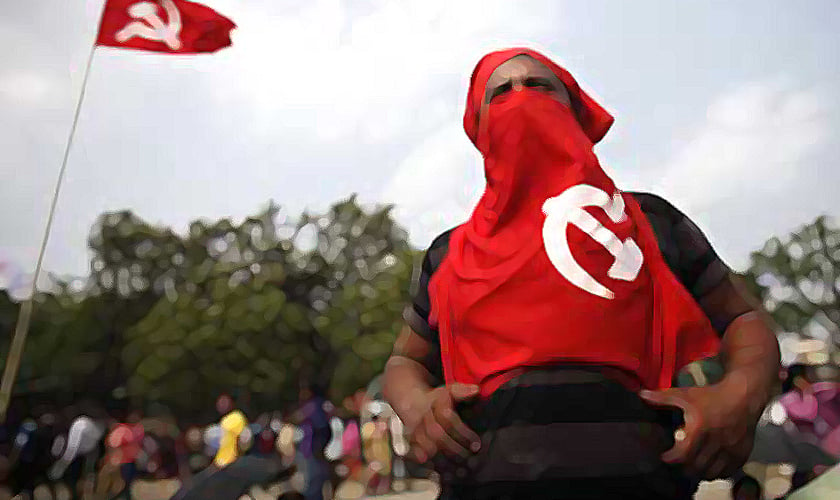
The bankruptcy of ideology is prevalent in all parties, big or small. It's not that this tendency hasn't been fought, but even there, strong ideological preparation was lacking. Instead of being clear on issues and following the theoretical path, efforts for reform within the communist movement were mostly limited to hurling abuses at leaders. The debate shifted to replacing one person with another, but the principles, programs, and collective spirit to fight neoliberal policies weakened.
Did we not need these three elements? Should we not have paid attention to their development? Do we still need to take initiative for this?
The main point was that when initiating the construction of a party clear on its issues, the issues themselves would start seeking leaders. This would either demand new leaders or the leaders themselves would adhere to the right policies and issues. The heat of debates regarding policies and leadership arising from differences in issues is naturally high. However, capitalism is not in favor of such heated debates. To prevent the power and strength of the capitalist class from being undermined, it tries to confine such debates to person-centric solutions and individual struggles, rather than issue-centric ones.
Television, newspapers, and social media are more active in personal partisanship than in ideological debate. This is a significant veil cast by capitalism over the eyes of the people. The Nepali communist movement could not escape this either. Therefore, the debate on ideology and principles in the communist movement became very weak.
The debate on ideology also remained very weak in universities. Those seeking an alternative to the capitalist system should have produced and reproduced that alternative knowledge and the people who possess it. Even though individuals who called themselves communists or preferred to be called communists went to universities, the debate on socialism did not happen/is not happening there. Critical classes against capitalism have not been/are not being held. The problems of society are on one side, and university discussions are on the other. Why? Here too, those who have come steeped in neoliberalism are deciding what to teach, what to discuss, and what kind of human resources to produce.
Let's start the discussion on how socialism can be translated into programs and worked on from today. Individuals understood socialism only as a goal, but socialism is not just a goal; it is also a process.
The Nepali communist movement also failed to focus on the production and reproduction of knowledge necessary to advance the socialist movement. Communist parties did not even enter into discussions regarding countering capitalism's efforts to end the ideology of the communist movement. On the other hand, some communist parties remained stuck in the rigid interpretations and analyses of the past. Some could not reinterpret Marxist struggle in the new context.
What does this list of representative ideas and efforts tell us? It says that communists in Nepal have become so ideologically weak that capitalism has easily chewed and digested them in the field of ideas. Or rather, what had we done to reach a level where capitalism could not chew and digest us, our ideology, our efforts, and our struggles? And wasn't it natural for it to digest us? When one enters the field without preparation, it is natural to fall.
Viewed this way, the Nepali communist movement first suffers from a lack of ideological work. This has made the Nepali communist movement incapable of understanding contemporary capitalism and effectively advancing the struggle against it. Second, by distancing itself from the working class, its class partisanship has weakened. Consequently, it did not strive to formulate and implement economic and social transformation agendas. Third, due to the insistence on being in government at any cost, this movement has not just compromised but surrendered to the ideas and institutions of the capitalist world system. Most individuals sent as left or communist representatives to ministries, projects, and planning commissions have emerged as chief architects of neoliberalism.
Fourth, the impact of the above three points has been on organizational operations. Democracy within party organizations has become very weak. When democracy is strong, the party committee is strong, but here, leaders have become strong, not committees, in every communist party. If necessary, they would even revoke membership of competitors. They would tell them to leave. Threatening, intimidating, and running the party like a private company – how can this work style be called consciousness nurtured by the communist movement?
Instead of critical consciousness, the belief 'the boss is always right' began to develop as a culture among the cadres. Communist parties became similar to capitalist corporate houses. Meetings and gatherings turned into applause ceremonies. This is what happens when ideological work weakens.
Thus, after the advent of the republic, there was confusion about how to prepare to neutralize the impact of capitalism on issues like ease of life, openness, freedom, education, health, and security that the republic should provide. As a result, the majority of people seeking a just and easy life fell victim to capitalism, and they also suffered from a lack of leaders to inspire them to confront it. In such a situation, anyone with dreams of liberation became a traveler without a compass. And the entire society and politics went astray.
- At What Stage of Capitalism Are We?
There is no way for the right-wing to provide solutions to the crisis imposed on humanity and the environment. Since it serves capitalism, it does not prioritize the majority working class, whether below or above the poverty line, for good governance and employment. Capitalism will continue to hoard wealth among the 1% while forcing the majority of people to leave their homes, face difficulties, and continue its cycle.
To protect this system, it uses deception, enticement, threats, attacks, wars, and a comprehensive assault through media, schools, universities, cinema, literature, and culture. Society has already become capitalist, and the target of the struggle should be capitalism, but the movement, failing to understand this well, could not pay attention to it.
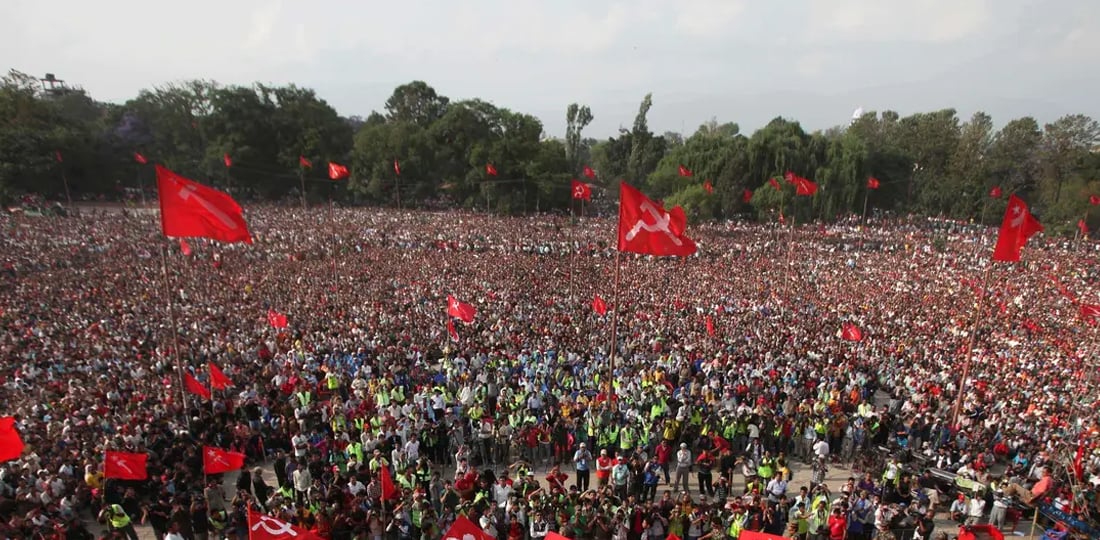
Therefore, we need to draw the correct conclusion about the character of Nepali capitalism. We need to provide a meticulous explanation of the character of today's capitalism, its thousands of tentacles of exploitation, and how it reaches the daily lives of Nepalis and the Nepali economy. This is because it is not easy to chart the future path with a night-blind vision.
There is as much confusion about socialism here. Although socialism was presented as an ideal word within communist parties, no meticulous work was done on it from anywhere. The discussion on how socialism can be translated into programs and worked on from today could not even take place. People understood socialism only as a goal, but socialism is not just a goal; it is also a process. It should be initiated as a process of socialism from today through struggles and efforts. However, the Nepali communist movement did not engage deeply with this, but instead got entangled in capitalist narratives like fighting feudal remnants, consolidating the current system, bringing prosperity, and development.
Initiatives to organize class struggle in the mentioned areas can revive the Nepali communist movement.
The main point is that the deeper the struggle, the greater the intellectual development. The struggle should have been against capitalism; failing to discern that, the struggle got lost somewhere along the way. Without struggle, the process of knowledge creation also stalled. Marx's famous saying is: philosophers have interpreted the world in various ways; the chief thing is to change it. He certainly did not say this without understanding that one must change it. It means that one who tries to change understands, and one who understands changes well.
Marx's main contribution was to link understanding with the effort to change. Here, we lacked the understanding needed to know what to change. That is, we did not pay enough attention to understanding capitalism.
- The Path to Renaissance
The right-wing has no way to solve the crisis imposed on society, humanity, and the environment. Since it serves capitalism, it does not prioritize the majority working class, whether below or above the poverty line, for good governance and employment. Capitalism will continue to hoard wealth among the 1% while forcing the majority of people to leave their homes, face difficulties, and continue its cycle.
To protect this system, it uses deception, enticement, threats, attacks, wars, and a comprehensive assault through media, schools, universities, cinema, literature, and culture. Society has already become capitalist, and the target of the struggle should be capitalism, but the movement, failing to understand this well, could not pay attention to it.

Therefore, the communist movement must make four major preparations, keeping all these things in mind.
First, ideological preparation. As mentioned above, the first condition for change is to enter the process of understanding. Its first task is to understand the গতি (gati - speed/pace) and दिशा (dishaa - direction) of today's global capitalism well. Instead of blaming specific leaders' morality and desires for the problems caused by the capitalist structure and resorting to abuse, the ability to understand any problem structurally must be developed.
Lenin says: an important task of a revolutionary party is to upgrade the consciousness of cadres and the class from 'trade union' consciousness to 'socialist' consciousness. This means developing the consciousness to see and understand every problem within the structure of capitalism, on a larger 'canvas'. In other words, this is a mandatory basis for ideological preparation. Therefore, understanding contemporary capitalism multidimensionally, understanding the changes it has brought to class consciousness, parties, and transformation agendas, reviewing it periodically, and ensuring the process of correction during the revolution itself are important tasks under ideological preparation.
Second, organizational preparation. To develop a dynamic organization of people who have entered the process of understanding. To develop an organization guided by knowledge, struggle, and principles. To ensure that every organized person participates in the process of understanding and changing. An organization that strongly holds onto collectivism and class partisanship is needed. An organization where the collective is strong, not individuals.
Such an organization, where broad democracy is practiced. The organization of farmers should be of farmers, the organization of students should be of students, the organization of workers should be of workers. Such organizational preparation will continuously strive to organize various social movements. Naturally, instead of a bureaucratic, commandist, organizational style suitable for capitalism, a dynamic democratic organizational style will expand. This strengthens the organization's hold on the group and the group's hold on the organization.
Third, programmatic preparation. Programs to fight today's capitalism must be formulated. We must have our clear programs on how to shape public service sectors like education, health, housing, energy, information technology, and drinking water, how to view small and medium businesses and enterprises, and how to manage agriculture. How to manage sectors like public, private, and cooperative? What are our thoughts on national and international investment and loans? Neoliberalism desires that everything be open to everyone, because private and public sectors cannot grow without protection.
Therefore, socialist efforts must manage this in a correct and different way. In which sectors is imperialism most interested and attacks most? Which sectors can we advance with our own plans? What kind of human resources, what kind of curriculum do we need for all these subjects? Clarity is needed on what kind of geopolitical structure is necessary for the socialist struggle, what role we will play regarding the Global South, and what kind of national and international relations and programs are necessary.
Thus, concrete preparation regarding economic, social, cultural programs, and international relations is necessary. It is necessary to publicize it appropriately, establish it at the public level, review it as needed in the evolving situation, and this is necessary programmatic preparation.
Fourth, preparation for mass mobilization. Preparation for mass mobilization to protect the ideology and programs favoring the working class, and not just that, but also to preserve the commitment of the communist party's organization and political leadership to class-favoring ideology and programs. So that the communist party does not get trapped in the cycle of elections after elections. So that support from the masses in the anti-capitalist struggle continuously expands.
The process of the party and the people (class) not being separate forces but being integrated as a single force, being well-informed and mobilized, must be kept alive. Capitalism attacks the collectivism of society as much as possible. The communist movement must continuously strive to develop solidarity and collectivism through mass mobilization against the capitalist effort to silence others by creating divisions, indifference, and negligence when one is attacked. For this, mass mobilization must be conducted with high importance in social and political movements.
These things are not exhaustive or complete. The revolution will also achieve necessity and completeness during the struggle itself. However, the Nepali communist movement can be revitalized through initiatives to organize class struggle in the mentioned areas.
This specific news has been automatically translated by AI. As a result, there may be some inaccuracies or language errors.