Primary School in Minab Destroyed in Attack, 156 Killed

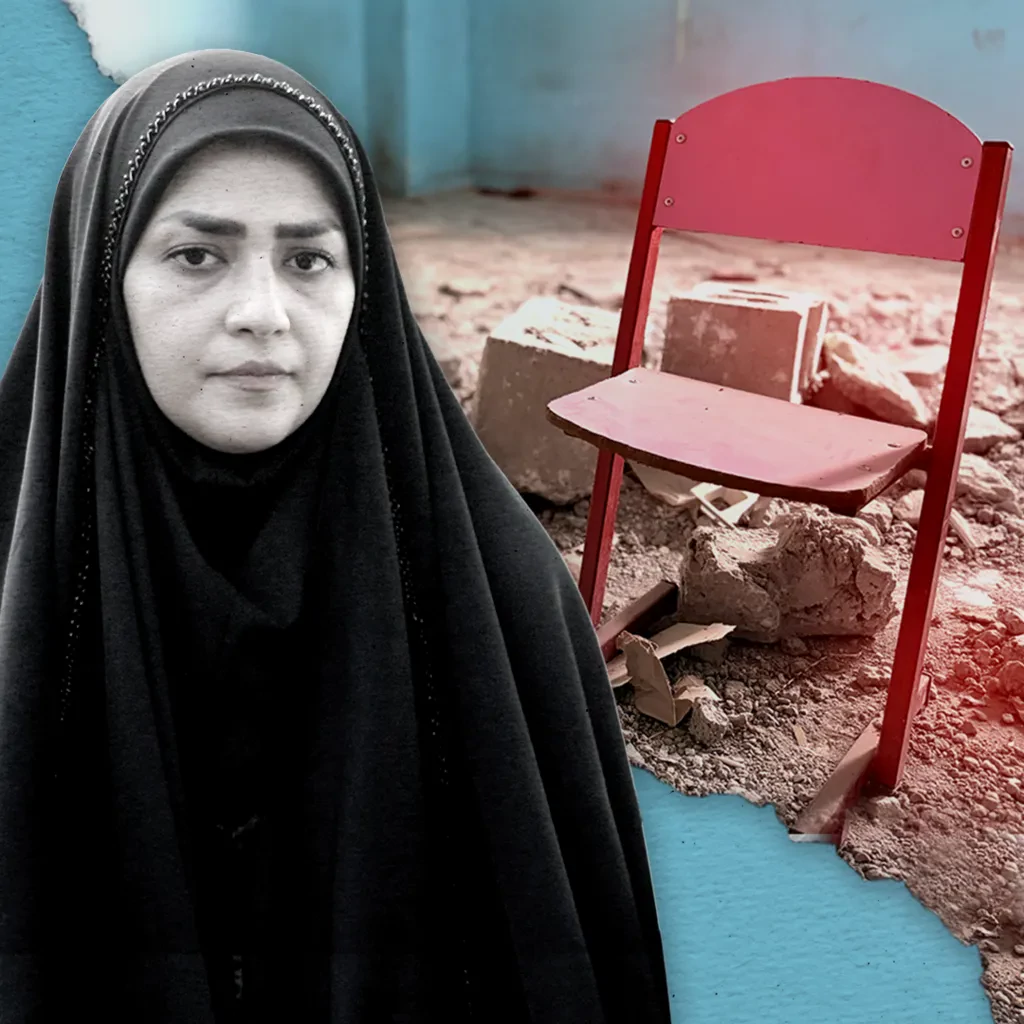
The Shajareh Tayebeh Primary School in the southern Iranian city of Minab has now turned into ruins. Large pieces of concrete hang from the collapsed upper floor, and colorful murals, including pictures of flowers, are still visible in some classrooms.
Teacher Amineh Nademi, 33, who teaches first-grade girls at this school, walks carefully through the rubble. She remembers exactly where each classroom was.
The attack on this school on the morning of February 28, the same morning the US-Israel began their war against Iran, turned a normal school day into the deadliest tragedy of the war. According to the Minab Public Prosecutor's Office, 156 people, including 120 children, were killed in the attack. Among the dead were a pregnant woman and her unborn child.
According to experts, available evidence suggests that the US military targeted the Islamic Revolutionary Guard Corps (IRGC) compound adjacent to the school. Although the US has not taken responsibility, US media outlets have reported that military investigations have concluded that the attack was likely unintentional on the part of the US military.
'We were all thrown into the air'
According to Amineh, it was the month of Ramadan that day, and the students were reciting the Quran in the morning prayer hall. Then she started teaching the children of the first grade a new letter of the Persian alphabet. As news of the war broke, the principal announced the school would be closed and parents were asked to pick up their children.
At that time, only five of her fifteen students remained in the classroom. As she turned back towards the classroom after hearing the sound of an explosion, a missile fell on the school. 'Something hit my head and the students' heads, and we were all thrown into the air,' she recalled. Then the classroom filled with thick black smoke.
'I couldn't even see the students who were in my lap. I couldn't breathe.' She still cannot forget the sound of another explosion, the screams of children, and the entire school collapsing at once.
'Find my son'
Reza Besharati, a rescuer from the Iranian Red Crescent, was among the first teams to reach the scene. The roads around the school were filled with parents rushing to find their children. When he entered the rubble, he also found his relatives.
'We were looking to see if anyone was alive, but unfortunately, no one survived,' he said. According to him, many bodies were so mangled that only an arm was found in one place, a leg in another. Many families had to identify their children based on their shoes or clothes. He said he could not forget the sight of a relative crying, 'My child, find my son.'
Investigation into the attack
After the incident, US President Donald Trump blamed Iran without evidence. Defense Secretary Pete Hegseth claimed that the US military never targets civilians and that an investigation was underway.
Later, US media reported that preliminary investigations showed that the school was considered part of a military compound due to old data from the US Defense Intelligence Agency. Satellite imagery confirmed that the school had been separated from the IRGC compound by a wall since 2016 and had its own entrance. Furthermore, information that this was a school was publicly available on the internet.
Daughter identified by socks
Every evening, the families of the victims gather in the cemetery near the school. Masoumeh Mehrab Shekhbadi, the mother of nine-year-old Setayesh, visits her daughter's grave every day. She also rushed to the school after the attack.
'There was no school, only smoke, children's hair, an arm here, a leg there,' she says, choking up. The family was able to confirm Setayesh's death only the next morning. 'They repeatedly asked me what color socks my daughter was wearing. I said cream-colored. Finally, my daughter was identified by her socks,' she said. Setayesh's dream was to become a teacher in the future.
'They went to study'
The Iranian government has repeatedly raised the issue of this attack in Minab at international forums and through government media. Although the war has divided Iranian society, the Minab incident has shocked many. Amineh still visits the graves of her former students.
Meanwhile, Setayesh's mother repeats the same question, 'What was the crime of these children? Were they carrying weapons? They only had pencils, books, notebooks, and school bags. They didn't go to fight, they went to study.'
From BBC
This specific news has been automatically translated by AI. As a result, there may be some inaccuracies or language errors.