India-China Coordination on Kailash Mansarovar Route Sparks Lipulekh Dispute


India's Ministry of External Affairs stating that the Lipulekh pass will be used for the Kailash Mansarovar Yatra from 2026 in coordination with China has once again brought the Lipulekh issue into dispute. Government spokesperson Sasmita Pokharel stated that the Nepal government has already sent a diplomatic note to the Indian government regarding this.
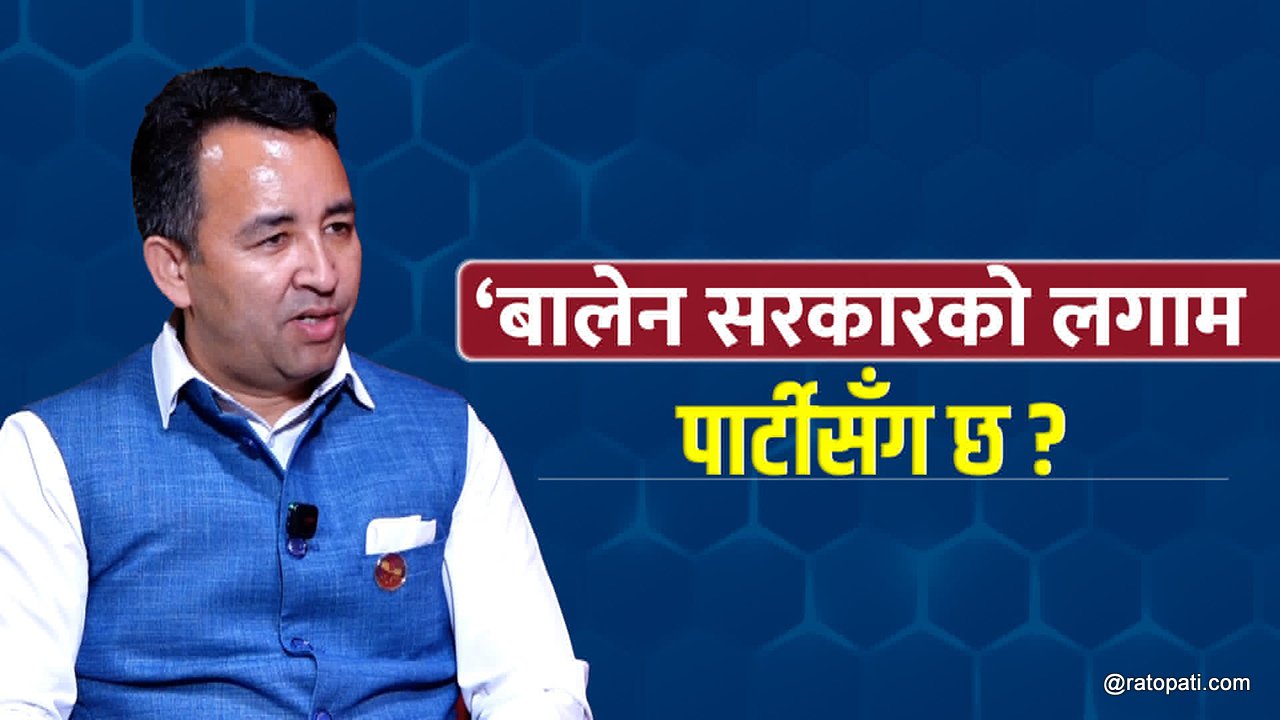
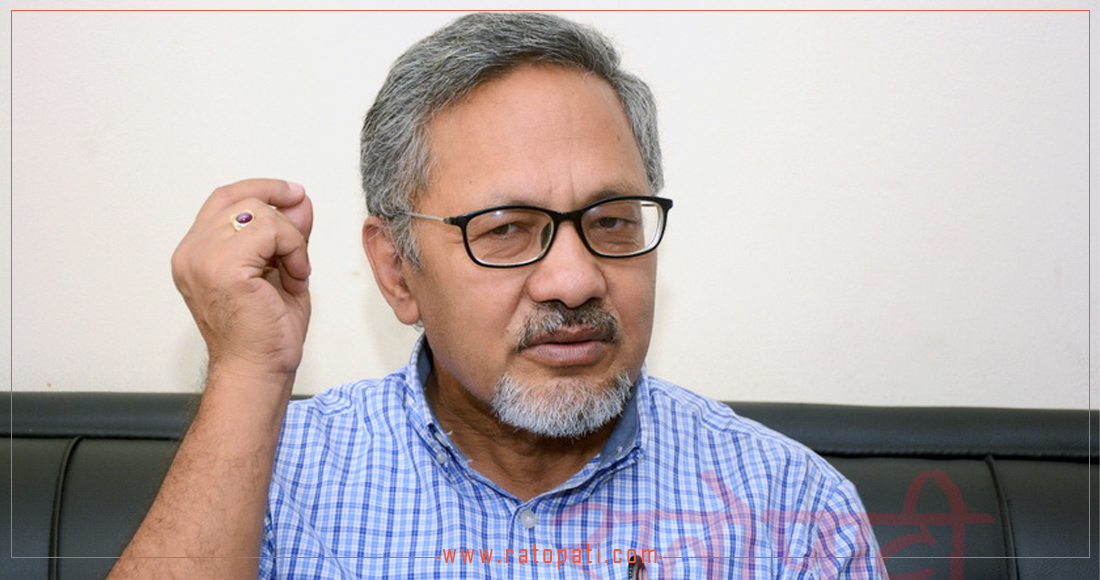
A conversation conducted by Naresh Gyawali for Ratopati with retired Lieutenant General of the Indian Army, Shaukin Chauhan, on how the two countries can resolve the recently resurfaced Lipulekh issue between Nepal and India.
- What is your opinion on how the two countries should resolve the disagreement regarding Lipulekh?
The most fundamental question is whether the two countries want to resolve this problem or not? I feel that the two countries do not want to engage in serious discussions on this matter. Both countries say they will talk about it later. When I was serving in various embassies, no one wanted to talk about this issue; they would just say they would discuss it later.
If the two countries sit down to discuss the resolution of this issue, there is no reason why it cannot be resolved. In fact, at one time, Lipulekh was a 'tri-junction'. For centuries, India used to trade with Tibet from Lipulekh. It is even written in history that India trades with Tibet from Lipulekh. But I don't understand why it is being made an issue now.
In my opinion, we have hundreds of issues to discuss. In reality, there is no real reason to create problems for each other.
Therefore, in my opinion, this is a political matter.
Secondly, both Nepal and India are very close to each other. Aren't they? Therefore, India's security concerns also need to be understood. In my opinion, we have hundreds of issues to discuss. In reality, there is no real reason to create problems for each other.
We (India) say that the origin and flow of the Kali River is 'change of course' from here, while Nepal says the origin and flow of the Kali River is from there. We are arguing in the 21st century over the Kali River from 400 years ago; I don't understand the reason for this.
- It is known to all that the Indian army came and stayed in Nepal's Kalapani and Lipulekh during the India-China war in 1962, and India has not yet returned the Kalapani land belonging to Nepal. Shouldn't a large democracy like India take the initiative to resolve the dispute with a small sovereign country?
I understand what you are saying. But the main issue is that the flow of the Kali River, being a Himalayan river, its course keeps changing. It keeps shifting up and down. Now, both countries need to sit down and discuss the 'hydrographic' results. Someone talks about history, someone says it went from here in history. They say this happened. India says one thing, Nepal says another.
First of all, we need to talk to each other. We have no other option but to sit and discuss.
Another thing is, India is still trading with Tibet from Lipulekh. Therefore, history, geography, and hydrography all suggest that all borders met at Lipulekh. Now, whether we believe it or not is a different matter. Therefore, I feel that we, as two countries, should resolve this issue by sitting together. However, discussions conducted through diplomatic channels should not be brought into public dispute or discussion.
Because as soon as any issue between two countries enters public debate, both sides are pressured to become rigid. Nepal and India are the closest sovereign brothers. Therefore, I don't see any problem if we want to resolve it. To be clear, this is purely a political matter.
- From your perspective, what should the incumbent leaders of the two countries do to resolve this issue?
First of all, we need to talk to each other. We have no other option but to sit and discuss.
- Why has the dialogue process stalled?
I don't know. I also don't understand what is hindering the dialogue between the two countries. Speaking of India, India has never said to Nepal that we are a big country. We always consider Nepal a sovereign nation. As far as I know, there has been no disrespect towards Nepal. At least not in my memory.
Ultimately, my emphasis is that we are two brothers and sovereign nations. We must understand each other's security concerns and our desires.
Therefore, if one wants to resolve the problem, I don't see insurmountable difficulties. I think it would be appropriate to form a high-level commission between the two countries to resolve this issue. Let that commission study history, hydrography, and geography and decide what to do. As far as I know, and based on the books I have read, Lipulekh was a tri-junction when India traded with Tibet.
- Earlier, you mentioned this was a political matter; are you implying that the Modi government is not interested in resolving this issue?
In fact, this is not an issue of one government but of all governments. Whether it is Modi, Oli, or even Balen. What needs to be emphasized here is that if you want to find a solution to the problem, everyone must sit together and talk. When you sit down to talk saying, 'I will resolve this issue,' many things become easy. But when you say, 'I will create a problem,' the issue becomes more and more complicated.
- Finally, is there anything you would like to emphasize?
Ultimately, my emphasis is that we are two brothers and sovereign nations. We must understand each other's security concerns and our desires. We must both have the desire to resolve this. This should not be made a matter of political gain.
This specific news has been automatically translated by AI. As a result, there may be some inaccuracies or language errors.
_uwZqw7sHpf.jpg)