Government Actions Threaten Press Freedom in Nepal


When a government that came to power in the name of change starts wielding weapons of repression against the press, it should be understood that serious mistakes have already been made, not just politically, but structurally.< /p>
Balendra Shah, Nepal's newly elected Prime Minister, who leads the Rastriya Swatantra Party and rose to power from the position of Kathmandu Mayor, is a person who has built his image on the wave of social media and confrontational politics. His politics have always been personal, direct, and ruthless. Now his target has changed.< /p>
Once his aggression was directed towards bureaucratic inertia and urban mismanagement; now it is turned towards democratic institutions, private media, the elderly, opposition parties, and anyone who questions the direction of the government.< /p>
The signals are coming fast. One of the government's earliest and most decisive steps was the decision to stop government advertisements in private media. In a media landscape where government advertisements are the lifeline, especially for small entities, attempts are being made to silence critical voices by strangling them financially.< /p>
While the distribution of government advertisements can be debated from various angles, all ministers in the cabinet seem to be following the 'Balen path'. In this matter, they are sending a clear message: we do not want independent media; government-controlled media is enough, and especially social media is all we need.< /p>
Amidst all this, social media has become the Prime Minister's favorite battlefield; where youth are mobilized, narratives are constructed, and cyber armies are used as if the government has no interest in reining in critics.< /p>
This is how a culture of silence is initiated. And it is being done grandly.< /p>
Taking advantage of the recent Bhadaure rebellion by the new generation, some incidents against the media had occurred as a rehearsal for the formation of this government. Those incidents established an environment in which press freedom is currently practiced in Nepal.< /p>
- That is a huge chasm
During the Bhadaure rebellion, more than a dozen media outlets and journalist organizations' offices were attacked. They were set on fire or vandalized. The sight of the Kantipur Media Group's Thapathali and Tinkune premises, a major private media group in Nepal's media history, burning is established as the most horrific scene.< /p>
About two dozen other media houses faced small and large attacks. Offices of Radio Nepal and Nepal Television, located within Singha Durbar, were attacked. A day before the arson, some journalists reporting on the casualties and arson incident in front of the Birendra International Convention Center, the former parliament building, were injured by rubber bullets fired by the police.< /p>
At least 19 people lost their lives immediately when public demonstrations were violently suppressed. Including the next day, about seventy-five people lost their lives in arson and vandalism incidents across the country. Journalists were shot at. Newsrooms were burned. And all this happened in a country whose constitution declares 'full press freedom' in its own preamble.< /p>
Looking at examples from around the world, the gap between constitutional promises and living reality appears to be the most dangerous place in journalism. Nepal has been living in that gap for years. Last August, that gap merely appeared as a huge chasm.< /p>
- A World Turning Back
The fact that Nepal's experience is not an exception in the global picture is a more significant aspect that makes this context tragic.< /p>
Reporters Without Borders has released its 25th World Press Freedom Index. The picture it presented on World Press Freedom Day (May 3) is that the world is decisively regressing from the values of open information.< /p>
Out of 180 countries and territories, 100 have seen their press freedom scores decline this year. Although Nepal has technically improved by moving from 90th to 87th place, its overall score has actually dropped from 55.20 to 54.80. This means that while other countries have fallen further, some countries may have moved up the rankings. This does not mean progress.< /p>
This is the speed of the downward journey. It's like a student who fails all subjects can still be the best in the third division.< /p>
Globally, political pressure on the press is intensifying. Authoritarian tendencies are spreading. The media market is weakening. And structures of repression such as legal weapons, economic blockades, physical violence, and digital harassment are becoming more refined and coordinated each year.< /p>
- Within the Borders of a Fearful Press
The region of the world where Nepal is located is experiencing the most rapid decline. In Asia-Pacific, 21 out of 32 assessed countries and territories have 'difficult' or 'extremely serious' press freedom situations. Anti-press legal attacks such as malicious accusations, harsh laws, and criminalization of basic reporting have become the government's favorite weapons.< /p>
The censorship and propaganda tactics developed by authoritarian regimes are now spreading beyond their original borders, corrupting the communication culture of nations. This is even more concerning, especially when they once prided themselves on democratic values.< /p>
The media faces constant restrictions in a difficult political environment. Authorities are trying to control, not just suppress, the distribution of journalistic content. This attitude is being replicated across the region with local variations. South Asia also presents a disappointing picture.< /p>
Its three most significant democracies – India, Pakistan, and now Nepal – are moving in the same direction simultaneously. Each through different mechanisms, each on the journey to the same destination: a journey towards a fearful press.< /p>
- Excuse to Question: America Like China
China is the harshest example to understand where the repression of the press ultimately leads, according to the Reporters Without Borders index. At 178th place, second from the bottom in the world index, China has the most journalists imprisoned in the world. Currently, more than 121 media professionals are incarcerated.< /p>
Although China's constitution also guarantees press freedom, China is not considered a model country for press freedom. However, the United States has presented itself as a global standard for press freedom for decades. It lectures others, conditions aid, writes proposals, and even sends delegations to press freedom conferences.< /p>
That same United States is now at 64th place in the World Press Freedom Index. And it has dropped seven places in just one year.< /p>
After being re-elected for the second time, President Donald Trump has censored government data. He has attempted to dismantle public broadcasters. He has weaponized independent government agencies to punish critical media outlets. He has blocked international aid for press freedom initiatives and filed lawsuits against unwelcome media organizations. The US Press Freedom Tracker recorded over 170 attacks against journalists in 2025, nearly double the previous year.< /p>
The case of America has significance beyond its geographical borders. When the self-proclaimed 'protector' of democratic values begins to weaken press freedom in its own home, it undermines the moral and practical framework that protects journalists worldwide.< /p>
Every regression in Washington gives governments across the developing world an excuse. They can easily say, 'Who are you to lecture us?' This serves as a tool to justify authoritarian tendencies.< /p>
- Same Garb in India and Nepal
Whatever negative practices Nepal adopts in its communication, political culture, and business networks, it does so by taking its close neighbor India as an educational example. India ranks 157th in this year's Press Freedom Index. In a country with a population of 1.4 billion and 900 private television channels, the media landscape should theoretically be a bastion of pluralism. However, India has become a textbook example of how media can be hollowed out without abolishing press freedom.< /p>
The process is well-planned. Media ownership is concentrated in the hands of groups affiliated with the government. Mukesh Ambani's Reliance group owns over 70 media outlets with access to at least 800 million Indians. NDTV, once considered the last bastion of critical journalism, was hostilely acquired by Gautam Adani, a close associate of Prime Minister Narendra Modi.< /p>
The rise of 'Godi Media', as Indians themselves call it, has transformed most mainstream coverage into political exhibitionism. Godi Media, operating with a mix of populism and pro-government propaganda, has established itself as the real power in today's India.< /p>
The legal structure of repression is equally systematic. Colonial-era sedition laws have been re-enacted under new legal guises. Anti-terrorism laws are being applied against journalists. A court order defines any online content as defamatory for a subsidiary of the Adani group, paving the way for its removal without judicial oversight. Five independent journalists and three news websites have been targeted.< /p>
Journalists in Jammu and Kashmir are under extreme surveillance and isolated in what press freedom organizations call an 'information black hole'. Despite being denied internet access, they are under direct police surveillance for regular reporting.< /p>
On average, two to three journalists are killed annually due to their work. The state of press freedom in what is supposedly the world's largest democracy is indeed in crisis.< /p>
Nepal is not India, but the tools of press repression are traveling through political culture, business emulation, and silent exchange of tactics among governments facing similar inconveniences. Every ruler has disguised this as 'accountable journalism'.< /p>
- Strengthening Structures: Untimely Talk
Nepal has an exceptionally diverse media landscape: over 4,900 print publications, nearly 1,200 radio stations, about 250 television channels, and around five thousand online media outlets. In this country, the government is also one of the largest media owners.< /p>
There is direct editorial control over institutions like Gorkhapatra and Rising Nepal. The Public Service Broadcasting Act has merged Radio Nepal and Nepal Television into a single government-affiliated body. The Rastriya Samachar Samiti is already the government's official news agency.< /p>
In this scenario, the Balen government has added a new trend: diverting advertising revenue going to private media towards government media. Through this decision, the government has further fueled the political culture of dominating social media and the systematic harassment of critics by government-aligned digital crowds.< /p>
This is a government formed against the backdrop of the violence of the Bhadaure rebellion, injured journalists who have not received justice, and burned newsrooms. It is not only indifferent to press freedom but is actively working in that direction with a calculated agenda.< /p>
For any government afraid of public questions, making the media resort to self-censorship is the most preferred practice. It requires no law, no court, no formal mechanism of censorship. It only requires journalists to conclude daily that the price of honest reporting is more than they are willing to pay.< /p>
When cyber harassment, economic pressure, and the memory of rubber bullets and arson become part of professional calculations, reaching that conclusion becomes easy.< /p>
The structure of independent journalism in Nepal requires essential strengthening. A Press Council truly independent of government influence is not a technical beauty; it is a structural necessity. Editorial autonomy of government-owned media must be guaranteed in practice. Legal provisions hindering investigative journalism must be reviewed.< /p>
And the culture of pressure from digital crowds directed at critical journalists must be termed an 'attack on democracy'. But in the current political climate, all these are just talk.< /p>
- A Big Truth
From Beijing to New Delhi, Washington to Kathmandu, a pattern is establishing itself with uncomfortable clarity. Governments of all ideologies, from communist to nationalist, populist, and democratic, have come to a common understanding.< /p>
Their understanding is: there is no need to directly ban journalism; if you make it a dangerous and frightening profession, journalists will start calculating on their own.< /p>
A press that censors itself does not cost the government a penny. It requires no law, no jail, no international criticism. Therefore, it is the real crime against democracy, and in doing so, the journalist themselves aims the weapon against themselves.< /p>
The World Press Freedom Index shows the regression of press freedom in 100 countries. But what it cannot document is the untold story in each of those countries: abandoned investigations, sources never called, articles written with only a paragraph on the edge of the truth.< /p>
That is the real cost. Not the index. Not the score. That is silence. Where there should be open journalism, there is silence, just as Bhutan appeared higher than Nepal in the press freedom index for years.< /p>
All this happens in a system where 'the government is stronger than the people'. It can be called any model of democracy. Nepal's journalism is also heading in that direction.< /p>
Although Nepal is a small country on the world map, it has a vast and resilient journalistic tradition. It has produced journalists who worked under Panchayat repression, amidst armed conflict, and political instability. The tradition of newsrooms that flourished rather than closed down amidst all these upheavals is now under pressure from a different kind of power.< /p>
That pressure is not the censorship of the previous era, i.e., the Panchayat era, but a refined, economically calculated, digitally expanded pressure from a government that understands how modern media works and strategically uses that understanding. We are witnessing the continuation of this application.< /p>
The press does not need the sympathy of the system. It needs solidarity from ordinary citizens, the dependent civil society, and democratic institutions that cannot function without it. Yes, all of them have become like sick patients in a corner now.< /p>
Press freedom is not just a professional concern; it is a public concern. When media buildings burn, cameras are pointed at journalists, advertisements are withdrawn, and campaigns of harassment begin, it is no longer just a question about the media.< /p>
It is a question of what kind of country Nepal is becoming.< /p>
In the darkness of the system, only the powerful can see; the weak need the light of true democracy to see, where press freedom, dignified journalism, and freedom of expression must remain unhindered.< /p>
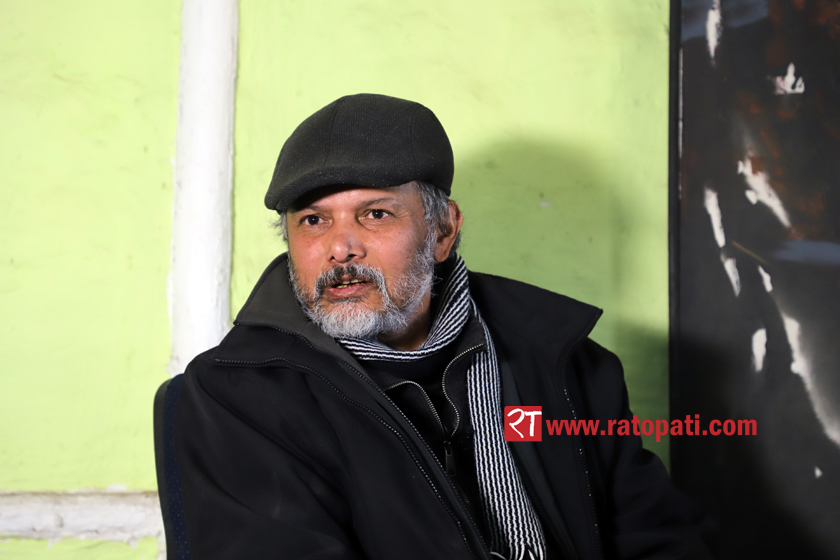
(Senior journalist Dhungel has been the Nepal correspondent for Reporters Without Borders (RSF), an international press freedom organization, for the past 22 years.)
This specific news has been automatically translated by AI. As a result, there may be some inaccuracies or language errors.