Buddha Purnima Celebrated Globally, Highlighting Buddha's Teachings and Lumbini's Significance


Today is Vaishakh Shukla Purnima, celebrating the 2569th Buddha Jayanti. On the occasion of the birth anniversary of Siddhartha Gautam, the founder of Buddhism, special events are organized in Nepal, India, and around the world. On this day, celebrated annually, in addition to formal programs, the contributions of Gautam Buddha to establishing world peace are remembered.
On the day of Vaishakh Purnima, Gautam Buddha was born, attained enlightenment, and achieved Mahaparinirvana. Therefore, Vaishakh Purnima holds significant importance in Buddhism.
The ideas propounded by Gautam Buddha about twenty-six hundred years ago have gained fame and spread worldwide in the present time. Nowadays, people from many countries follow his ideas as an ideal and philosophical preacher.
Buddha Jayanti is an annual festival for Buddhists. They hold deep faith, devotion, and belief in Gautam Buddha as the propagator of their religion, Shakyamuni Buddha. They consider Gautam Buddha as the master and themselves as governed by him.
Followers of Hinduism, according to the principle of avatarism, celebrate Buddha Jayanti by worshiping, venerating, and discoursing on Gautam Buddha as the ninth avatar of Lord Vishnu.
The world regards Gautam Buddha as the pioneer of peace. Shakyamuni Buddha is the pride of Nepal. The place where Buddha was born, Lumbini, is in the present-day central-western Terai of Nepal, which was the Shakya kingdom in ancient times.
Siddhartha Gautam's father, Suddhodana, was the king of the Shakya dynasty in the kingdom of Tilaurakot at that time. His mother's name was Mayadevi. While on her way to her maternal home in Devdaha, Queen Mayadevi was struck by labor pains upon reaching a place called Lumbini and stopped to rest. There, on the bank of the Pushkarini pond, while resting at the foot of a tree, Prince Siddhartha was born.
According to the customs of the Shakya clan, on the fifth day, 108 Brahmins of the Triveda tradition gathered and named the child. The Brahmins named the child 'Sarvarthasiddhi' meaning one who fulfills all desires. In short, he was called by the name 'Siddhartha'. When Gautam Buddha turned 16, he was married to Yashodhara, the princess of Koliya. They had a son, Rahula.
Siddhartha Gautam, who was serious-minded from childhood, was contemplative about everything. He saw old and sick people. He also saw death. This gave him detachment. The questions of what causes a person to be sick, what causes them to be old, and what causes them to die, made him renounce worldly life. To find the answers to these questions, he renounced his kingdom and family and became a monk at the age of 29.
Sambodhi means supreme knowledge, complete awakening, or Buddhahood, which in Buddhism refers to the state where Siddhartha Gautam realized the truth and attained liberation from suffering. This is the highest mental state where a person is free from attachment, aversion, and delusion. Sambodhi is the supreme peace or enlightenment attained by understanding the true nature of life and the world. After intense penance and meditation on the banks of the Niranjana River, he finally adopted the Middle Path and attained Sambodhi on the day of Vaishakh Purnima.
The teachings of Gautam Buddha emphasize the significance of the Three Jewels. 'Buddham Sharanam Gacchami, Dhammam Sharanam Gacchami, and Sangham Sharanam Gacchami' are the three main pillars of Buddhism. These are known as the Three Jewels. One should take refuge in these as priceless jewels: Buddha (the awakened one), Dharma (teachings, truth), and Sangha (community of followers). These three jewels guide beings to liberation from worldly suffering and lead them on the path from the mundane to the supramundane Buddhahood.
Applying Buddha's teachings in household life means making daily activities conscious, ethical, and benevolent without complete renunciation of the world. Householders can practice Buddha's teachings in their lives.
The Five Precepts, meant for lay followers, are considered the backbone of an ethical life. These are: non-violence (not to kill any living being), non-stealing (not to take what is not given), sexual misconduct (not to engage in sexual misconduct and to be faithful in relationships), truthfulness (not to lie), and abstaining from intoxicants.
Similarly, the Noble Eightfold Path is considered very important for people to manage the complexities of daily life and make their lives even better. The eight paths described by Gautam Buddha for liberation from suffering and attainment of Nirvana are called the Noble Eightfold Path. The paths of the Eightfold Path include: Right View, Right Action, Right Intention, Right Speech, Right Livelihood, Right Effort, Right Mindfulness, and Right Concentration.
Right View means understanding the Four Noble Truths correctly and seeing the world as it is, i.e., from a realistic perspective. The Four Noble Truths are: suffering exists, suffering has a cause, suffering can cease, and there is a path to the cessation of suffering. The Four Noble Truths are the essence of Gautam Buddha's entire philosophy. Regarding what is truth in the world, Gautam Buddha presented truth and its four aspects.
Gautam Buddha rejected the theory of the soul and rebirth, which is a very important subject among the traditional scriptural ideas. Enlightenment in life is life. Life is momentary, perishable, and impermanent. Therefore, life is not the truth, but suffering occurs in life. One should accept suffering rather than be disturbed by it; doing so will lead the vision towards the cessation of suffering, and the cause of suffering will be known.
Once the cause of suffering is known, there is a belief that suffering can cease. Such belief leads towards the means of cessation of suffering. This entire process is the Four Noble Truths. When Gautam Buddha presented this idea in his time, he called it a new idea, i.e., the Noble Truth. 'Noble' means new. His idea was new compared to the existing traditional ideas of that time.
Therefore, people who followed traditional thought began to be attracted to Buddha's idea of the Four Noble Truths. There was also conflict and struggle between classical thought and Buddha's thought. Ultimately, Buddha's idea not only became fully established in society but was also accepted by the proponents of traditional thought, who established it as a new series of incarnations. Thus, although Buddha's idea was within traditional thought, it was considered contrary to traditional thought and was categorized under atheistic ideology.
Discussing the meaning of Right Action according to Gautam Buddha, action means conscious activity or action done with willpower. Buddha defines action not merely as fate or destiny, but as activities performed through body, speech, and mind. In Buddhism, action is considered more powerful than God, determining a person's destiny. Every action has a consequence.
Right action yields good results, and tainted action yields negative results. What is deemed appropriate by wisdom is Right Action, which involves Right Consciousness without attachment or aversion. Desire, attachment, aversion, and delusion are the causes of action, which create the cycle of birth and death or suffering.
Right Intention means having the right resolve, a firm desire to be free from attachment, aversion, violence, and lust. It means dedicating one's entire life to good deeds. Right Speech means speaking truthfully, kindly, and usefully. It means refraining from lying, backbiting, using harsh words, or engaging in idle chatter. Right Livelihood means earning a living in a just and ethical manner. It means not engaging in businesses that harm others, such as trading in weapons, living beings, or poisonous substances.
Right Effort means continuously making conscious efforts to remove negative thoughts from the mind and bring in positive ones. Right Mindfulness means always being aware and mindful of the activities of the body, feelings, and mind. Right Concentration means concentrating the mind in meditation, which leads a person to supreme knowledge (Nirvana).
In household life, earning wealth and supporting one's family is necessary, but one should not cause suffering to others by falling into greed and attachment. Gautam Buddha rejected both excessive indulgence and excessive asceticism. Balance in life is the Middle Path. Not this extreme, not that extreme; the Middle Path—Buddha's philosophy. Spending a portion of one's earnings for the welfare of the poor and society (charity) and cultivating loving-kindness towards all beings are considered great practices in household life. Such a life is a state of cessation of suffering.
Billions of people worldwide have adopted Buddha's teachings in their household lives. Many observe the Five Precepts and meditate for a short time in the morning and evening.
Buddha's teachings can also contribute to governance. Buddha's philosophies are seen not only for personal liberation but as fundamental remedies for reforming modern public administration and political leadership. Observing the Five and Ten Precepts propounded by Buddha, or at least the precept of non-stealing, can help develop honesty and ethical discipline among rulers and administrators. According to Buddha, the root of corruption is greed, aversion, and delusion; good governance is possible only by eliminating these three poisons.
The democratic system practiced by Buddha in his Sangha can be the foundation of modern republicanism. It provides direction for establishing inclusive participation and accountable governance. The Ten Royal Virtues mentioned in ancient Buddhist texts (generosity, morality, renunciation, non-anger, non-enmity, etc.) teach rulers to be dedicated, compassionate, and impartial towards the people. Adopting these can foster a spirit of 'people first' in the administrative sector.
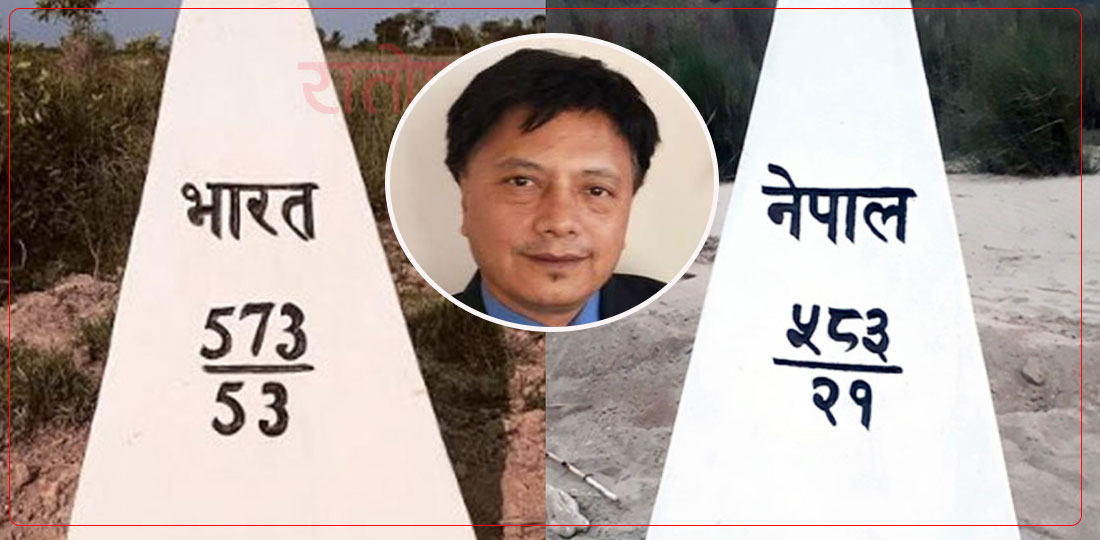
Confusion is sometimes created between the citizens of Nepal and India regarding the birthplace of Buddha. Although there may have been historical and geographical uncertainties about Buddha's birthplace at one time, this matter is now undisputed. The inscription on the Ashoka Pillar, erected by Emperor Ashoka in 249 BCE, clearly states, 'Here the Shakyamuni Buddha was born' (hid Budhe jate Sakyamuniti), which historically confirms it. Strong evidence has been found that Tilaurakot in Nepal is considered the real Kapilavastu where Buddha spent 29 years.
India, often citing that places like where Buddha attained enlightenment (Bodh Gaya) and gave sermons (Sarnath) are in India, talks about a 'shared Buddhist heritage'. There is no disagreement at the state level on this matter. Rather, the governments of both countries are collaborating in the tourism development and development process of Buddhist pilgrimage sites in their respective countries. A joint working group comprising officials and experts from the tourism ministries of both countries has been formed. Cooperation is also ongoing at the level of tourism entrepreneurs in India and Nepal.
The governments of Nepal and India are collaborating on the construction of the Buddhist Circuit, connecting important places associated with the life of Lord Buddha—Lumbini in Nepal and Bodh Gaya, Sarnath, and Kushinagar in India—into a single tourist route. The Indian government has assisted in the construction of the India International Centre for Buddhist Culture and Heritage within the Lumbini Master Plan area, as well as in the renovation of Buddhist monasteries and historical sites.
International efforts have also contributed to establishing Lumbini as a common center of peace for people worldwide. After the visit of United Nations Secretary-General U Thant in 1967, the concept of making Lumbini an international tourist and spiritual center gained momentum.
In 1997, UNESCO, an organ of the United Nations, included Lumbini as the birthplace of Buddha in the World Heritage List. With the support of the United Nations, the world-renowned Japanese architect Kenzo Tange prepared the Lumbini Master Plan in 1978. An international committee has also been formed for the development of Lumbini.
Besides India, many other nations and international organizations have made significant contributions to the development of Lumbini. In the Monastic Zone of Lumbini, various countries have constructed attractive monasteries based on their own architectural styles. Japan has built the World Peace Stupa and the Sokyo Japanese Temple in Lumbini as symbols of world peace.
Thailand has built the magnificent Royal Thai Monastery made of white marble. China has built the Chinese Monastery, reflecting Chinese architecture. Germany has built the magnificent Great Lotus Stupa.
South Korea has built the Korean-style Dae Sung Shakya Temple. Similarly, Myanmar, Vietnam, Sri Lanka, Cambodia, France, Austria, Canada, and other countries have also constructed monasteries and temples in their own styles.
Even in the current global context of war, the threat of war, and the arms race, Gautam Buddha, the pioneer of peace, remains relevant.
This specific news has been automatically translated by AI. As a result, there may be some inaccuracies or language errors.