Private Sector Alarmed by Government Plan to Empower Anti-Corruption Body


Kathmandu. The private sector was initially optimistic about the prospect of a stable government after the Rastriya Swatantra Party (RSP) secured a near two-thirds majority in the House of Representatives election held on Falgun 21.
Following the RSP's success, a new government was formed on Chaitra 13 under the leadership of Balendra Shah (Balen). Business leaders were further encouraged by the government's 100-day action plan and national commitment document, openly praising the administration.
The Balen government's commitment to place the private sector in the 'driving seat' was well-received. Business leaders welcomed the government's pledge to act only as a regulator and facilitator in areas such as job creation, supply of goods and services, revenue contribution, and investment flow. They openly supported the government's commitment to liberal economic policies.
Finance Minister Dr. Swarnim Wagle has also repeatedly urged the private sector in public forums to invest without fear. However, amidst this optimism, another piece of news has caused distress: the government's plan to bring the Commission for the Investigation of Abuse of Authority (CIAA) into the private sector.
_Vh1wedG2Zd.jpg)
This news has caused a stir in the private sector. While previous governments had attempted to address this, they were unsuccessful. The current government, backed by a near two-thirds majority, is preparing legislation to bring private sector activities under the scope of corruption investigations. Business leaders have expressed strong objections, claiming that while the government speaks of being private-sector friendly, it is secretly planning to intimidate them by involving the CIAA.
'A move to destroy the investment climate'
Major umbrella organizations and business leaders are outraged, accusing the government of double standards. They argue that this move will spoil the investment climate, lead to capital flight, and completely discourage Foreign Direct Investment (FDI).
Birendra Raj Pandey, President of the Confederation of Nepalese Industries (CNI), stated that there are already sufficient regulatory bodies and the state should focus on enhancing their capacity. He concluded that involving the CIAA, alongside bodies like the Inland Revenue Department and Nepal Rastra Bank, would lead to a culture of fear and indecision in the private sector, similar to the bureaucracy.
He noted that since the private sector requires quick decision-making, the fear of the CIAA poses a risk of stagnation. President Pandey says, 'We do not disagree that the private sector should operate within the rule of law, but the state must be aware that additional pressure could affect a sector that needs to take risks to conduct business.'
Similarly, Kamalesh Kumar Agrawal, President of the Nepal Chamber of Commerce, stated that the private sector is an independent entity that operates by investing significant assets in the hope of profit. He argued that imposing another body on top of existing multi-layered regulators is like crushing an already burdened private sector. 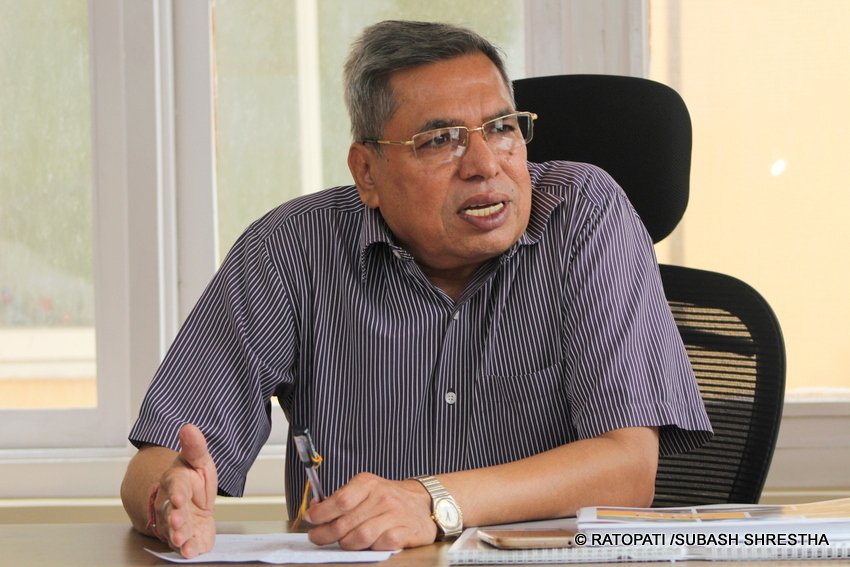
President Agrawal says, 'We already have regulatory bodies like the Rastra Bank for the banking sector, the Insurance Authority for insurance, the Securities Board for the stock market, and the Department of Revenue Investigation and the Department of Money Laundering Investigation for revenue. Imposing another body on top of these is like crushing the already burdened private sector.'
Sur Krishna Vaidya, Vice President of the Federation of Nepalese Chambers of Commerce and Industry (FNCCI), shares a similar view. He stated that the CIAA was established to prevent the abuse of authority by public office holders. He questioned how the definition of corruption applies to the private sector, which operates in an open economy by bearing profits and losses.
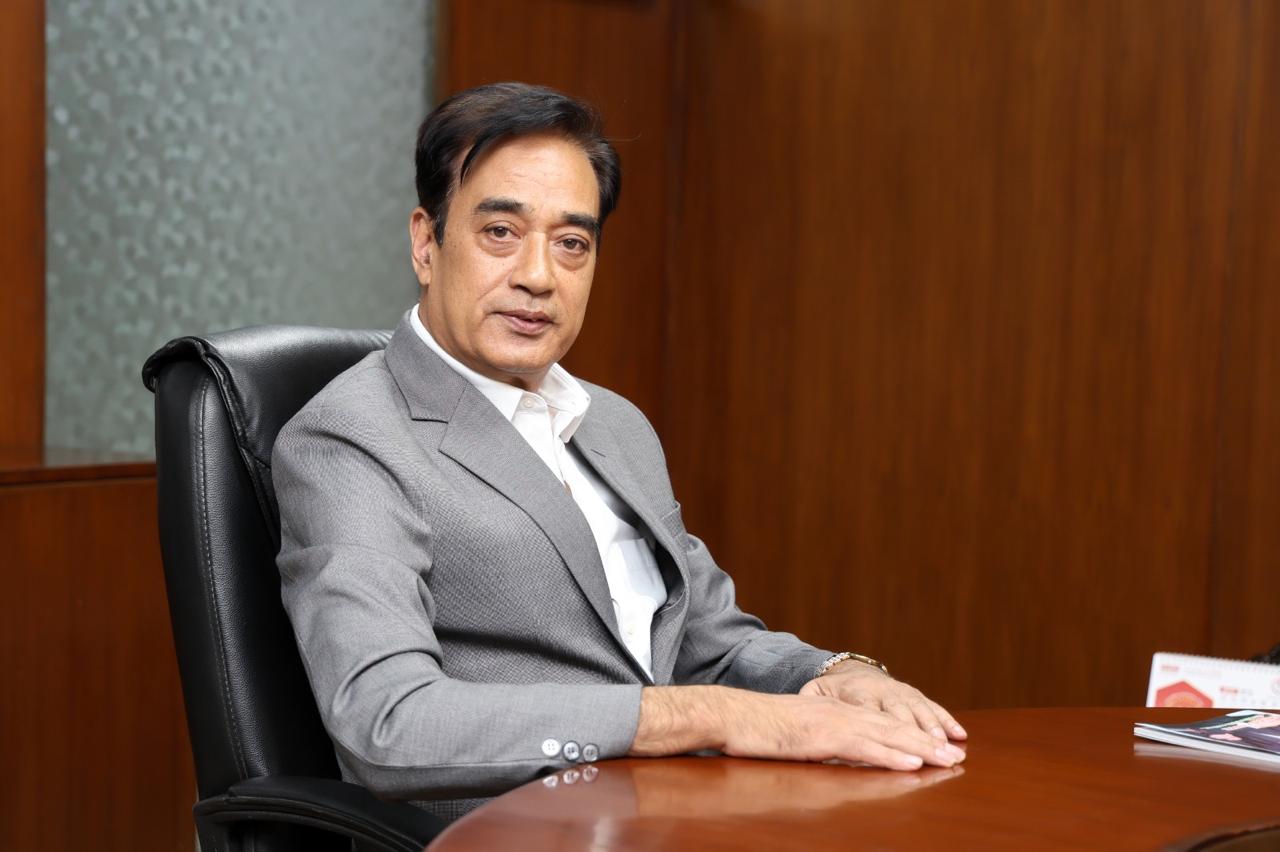
Vice President Vaidya says, 'If the private sector makes more than 20 percent profit, is it black marketing or corruption? We have separate bodies like the revenue department to investigate us; bringing us under the scope of the CIAA is only meant to intimidate entrepreneurs.'
Rajendra Malla, immediate past president of the Nepal Chamber of Commerce, criticized the tendency of policies to change as soon as the government changes without sufficient discussion. He claimed that the investment climate would deteriorate if the government allows the CIAA to enter the private sector. He suggested that the government should only formulate necessary policies after consulting with stakeholders.
Immediate past president Malla said, 'If policies change as soon as the government changes and entrepreneurs are intimidated, it sends a negative long-term message. If such a policy is introduced, domestic investors will stop investing, and foreign investors will not come at all.'
Meanwhile, Ganesh Karki, President of the Independent Power Producers' Association, Nepal (IPPAN), expressed a similar sentiment. He stated that the government's move to prosecute the private sector for corruption is not justified. He said that such a policy would further terrify entrepreneurs who are raising billions in investment for the energy sector. He warned that allowing the CIAA into the private sector would lead to a disaster.

President Karki said, 'In the next few years, an investment of 60 to 70 trillion is required in Nepal's energy sector alone. At such a time, the talk of involving the CIAA will drive away not only domestic but also foreign investors.'
Manoj Shrestha, President of the Nepal National Business Federation, also opposed the government's proposed arrangement. He stated that the government's plan to involve the CIAA without sufficient discussion has terrified the private sector. He claimed that while many of the government's actions are welcome, this particular issue is wrong.
President Shrestha said, 'There are already plenty of bodies to oversee the private sector. This new policy is entirely anti-private sector and anti-investment. It will do nothing but stir up the market and cause industries to flee. We are extremely saddened by this and strongly oppose it.'
What is the government's strategy?
The Office of the Prime Minister and Council of Ministers has recently prepared a draft of the Second National Strategic Plan against Corruption (Fiscal Year 2082/83–2087/88) and made it public for feedback. Through this strategy, the government appears to be preparing an environment where corruption-related offenses in the private sector can also be investigated.
Pillar 3 of the strategy clearly mentions criminalizing corrupt acts in all sectors and improving policy and legal arrangements to provide opportunities to correct misconduct, except in cases where the state has suffered losses or undue benefits have been taken/given.
The action plan mentions making necessary arrangements to prevent corruption in cooperatives, private or public companies, and private organizations. The strategic plan aims to enact a new Anti-Corruption Act within 2 years, which will define corruption in cooperatives, public or private companies, or any other private organization, specify corruption-related offenses and punishments, and designate bodies for investigation, inquiry, prosecution, and adjudication, including the recovery of embezzled or lost private sector assets.
In the new act, giving/taking bribes in the economic, financial, or commercial activities of the private sector will be made punishable. To discourage irregularities in companies and partnership firms, the Muluki Civil Procedure Code, 2074, and other acts and rules related to real estate documentation will be amended.
Not only this, there is a plan to amend the Company Directive, 2072, to regulate share transactions by the private sector, requiring buyers to submit original bank statements and vouchers or checks showing the deposit of funds into the seller's bank account for institutional or individual share transactions exceeding 1 million rupees.
The strategy also includes strict provisions to monitor whether established internal audit standards of the private sector are being followed and to punish those who fail to do so.
Balen government revives failed past attempts
Previous governments had also attempted to bring the private sector under the CIAA. Past governments had made such attempts through the Commission for the Investigation of Abuse of Authority (Third Amendment) Bill and the Anti-Corruption (First Amendment) Bill. A subcommittee was formed under the then State Affairs and Good Governance Committee, coordinated by MP Hridayaram Thani, to study the second amendment bill of the Commission for the Investigation of Abuse of Authority Act, 2048, which was pending in Parliament.
The bill, registered in the National Assembly on Magh 6, 2076, and passed on Chaitra 27, 2079, before reaching the House of Representatives, had a clear recommendation from the Thani committee not to include public companies in the list of public institutions.
Previous governments backed down after a consensus was reached among parties that public companies operated by the private sector should not be considered public institutions for CIAA investigation. However, after the dissolution of the previous House of Representatives on Bhadra 27, the bill, which had been pending since Bhadra 31, 2080, became inactive.
The current government has now reintroduced these repeatedly failed attempts through its strategic plan.
This specific news has been automatically translated by AI. As a result, there may be some inaccuracies or language errors.

_jxKX1kXOlf.jpg)

_htFaNqpIDJ.jpg)