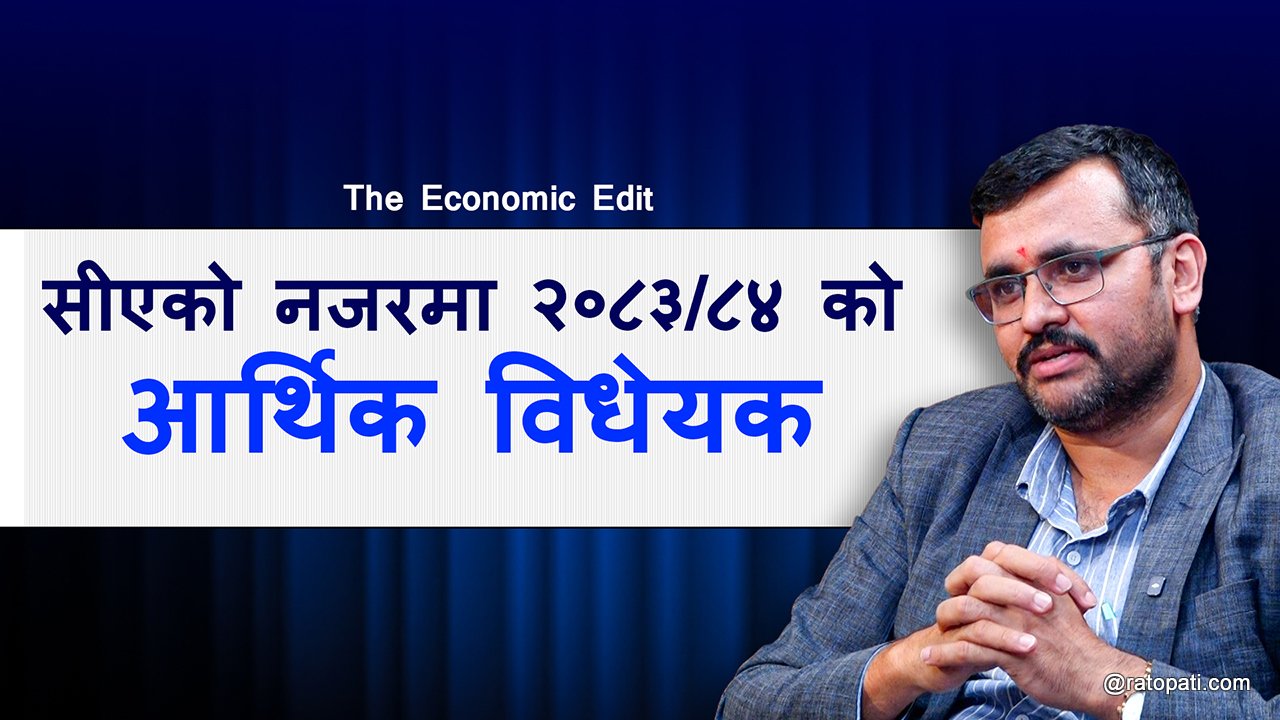
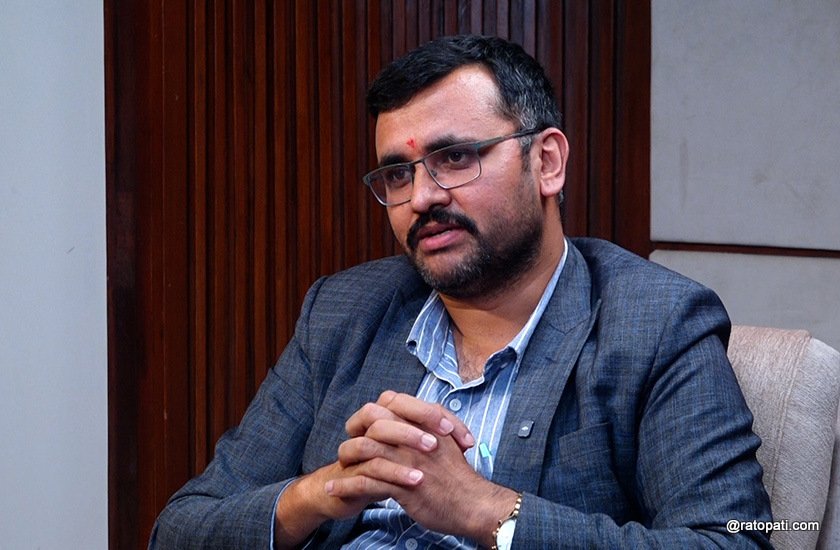
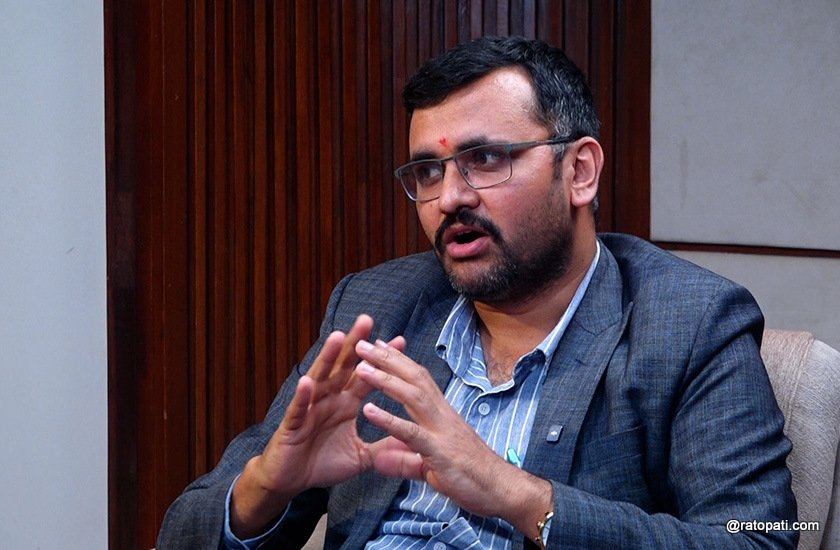
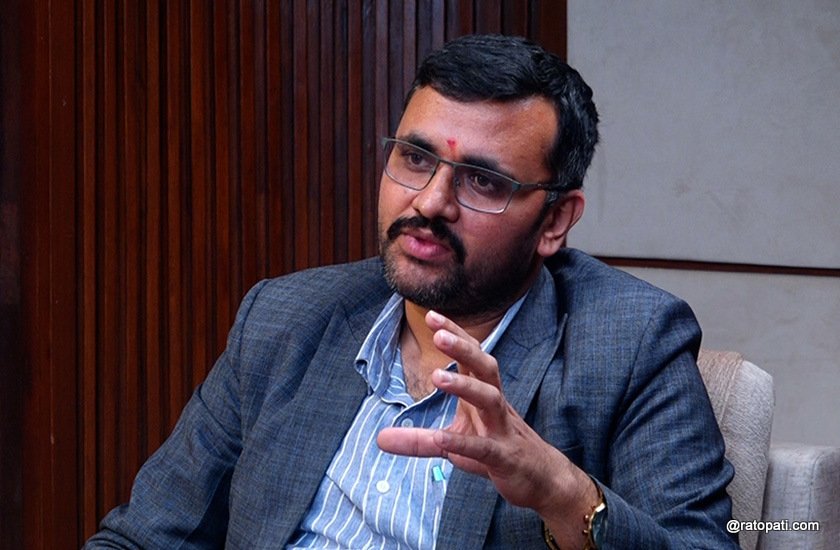
CA Madhu Pokharel Discusses Budget and Economic Act

Kathmandu. The government has made significant changes to tax rates and scope in the Economic Act, which was released along with the budget for the upcoming fiscal year. The increase in the income tax limit, revision of tax rates on electric vehicles, equalization fees on education and health, and the practice of multiple rates on VAT are currently being discussed in economic circles.
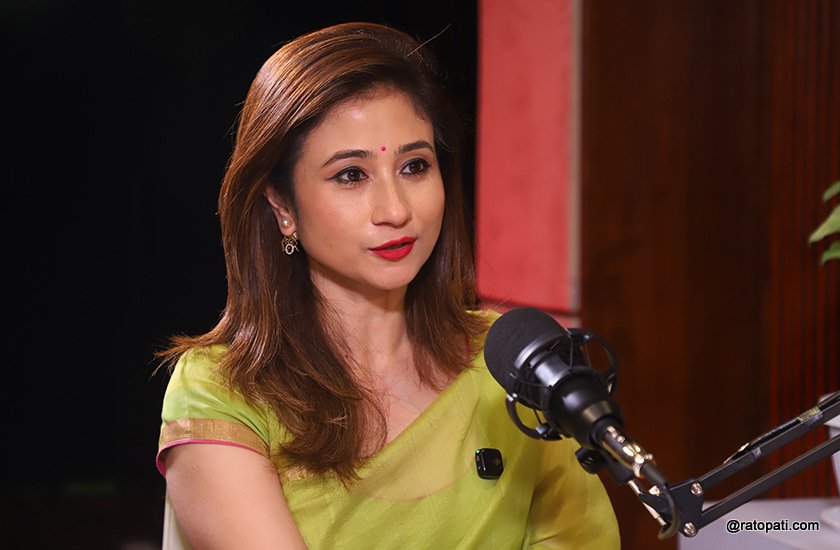
How practical are these tax policies brought by the government? What impact will they have on the living standards of the middle and lower classes and overall industry and business? Chartered Accountant (CA) Madhu Pokharel was interviewed in Ratopati's 'Economic Edit' focusing on these contemporary economic issues and the challenges of budget implementation. The following is an edited excerpt of the interview (detailed video can be watched and listened to):
How do you view the budget and economic act brought by the government? Specifically, how do you evaluate the income tax provisions?
There were many expectations from Finance Minister Dr. Swarnim Wagle as an economic expert. Looking at the budget and economic act he brought, it is mixed. It has largely met the expectations of salaried employees. While some issues of industrialists and businessmen have been addressed, some important matters have been missed.
There are provisions for applying VAT outside the principles of taxation, and some confusion has been created by linking issues of the Company Act with the Economic Act, apart from income tax. However, some aspects are extremely positive and good.
What are the good aspects and what are the aspects that should not have been there? Specifically, how were the expectations of salaried individuals met?
The salaried class, those employed, are the most honest taxpayers in Nepal. Since tax is deducted from their source, there is no possibility of tax evasion. When the limit was 5 lakh and 6 lakh previously, it was very difficult to live in cities like Kathmandu. Even those who earned 5 lakh and spent it all had to pay tax. The government has now increased that limit to 10 lakh and has made a provision of only 1% tax on it. This has resulted in a tax saving of up to 50-56 thousand rupees for employees earning up to 10 lakh. This is a very positive step. Also, increasing the insurance deduction for residential houses from 5 thousand to 10 thousand is a good aspect.
The tax rate of 39% for higher earners has been reduced to 29%. The lower class has benefited, but who benefits more from reducing this upper range, and what is its justification?
In Nepal, high-earning CEOs or top managers of banks and public institutions had to pay up to 40% tax to the government. When earning 100 rupees, paying 40 rupees in tax created a situation where the morale of working and earning decreased. This upper tax rate in Nepal was the highest in South Asia. Reducing it to 29% has provided great relief to high earners.
This discourages the tendency to hide income or seek other avenues due to the fear of paying high taxes, and it gives them psychological satisfaction that at least 70% of their earnings are for themselves. This helps in making the tax system more transparent.
Previously, the tax exemption limit was 5 lakh for individuals and 6 lakh for couples. Now, both are considered the same and set at 10 lakh. Is this practical? Doesn't this benefit unmarried individuals more?
People did not understand the previous concept of individual and couple well. Couple means adding the income of both husband and wife and claiming a 6 lakh exemption on it. But in practice, even if both were working, only one would take the couple's benefit and take advantage of the 1% tax. For example, if both husband and wife earned 4 lakh each, the total would be 8 lakh. According to the rules, they should have received a joint exemption of only 6 lakh and paid 10% tax on the remaining 2 lakh. But people were using it incorrectly. Now, the government has abolished that hassle and clearly provided that anyone, whether an individual or a couple, will pay only 1% tax up to 10 lakh. This has made administration easier, and since the slab itself has increased to 10 lakh, no one has been disadvantaged.
After the reduction in the tax slab for natural persons, what is the impact on corporate tax? What is the possibility of small private companies evading tax by increasing the salary of the director rather than showing profit?
Now, the maximum tax on personal income will be 29%. On the other hand, for ordinary companies, there is a 25% corporate tax, and an additional 5% dividend tax has to be paid when distributing profits. In this way, the company's tax also reaches around 30%. Therefore, there is not much difference between 29% and 30%. Small companies earning only 20 to 30 lakh in profit might do some tax planning by increasing the director's salary. However, for large companies, since all expenses incurred by the institution can be deducted from profits, the possibility and benefit of evading tax solely through salary is not that significant.
Let's talk about Value Added Tax (VAT). This time, multiple rates have been applied to VAT. Specifically, VAT has been imposed on electricity and ride-sharing. How do you analyze this?
The universal principle of VAT is that tax is levied on the value addition of any goods or services. Having multiple rates on VAT according to the nature of the goods is not bad. But it is not clear how VAT is applied to which goods here. For example, regarding electricity, a hydropower company sells electricity to the Nepal Electricity Authority, and the Authority sells it to consumers. Here, the Authority does not sell by adding any value.
It is said that 50 units will be free, and VAT will be applied above that. Imposing VAT where there is no value addition is not theoretically correct. This is just a type of luxury tax or service tax imposed on those who consume more. In ride-sharing, the government may have chosen this sector because it can easily collect taxes and regulate it.
Neighboring India has various GST slabs, but why is it so difficult for the government to implement multiple VAT rates in Nepal? What is the reason for saying that it needs to be studied?
VAT is inherently a regressive tax. Because both the rich and the poor have to pay tax at the same rate. Since the entire income of low earners is spent on consumption, VAT is levied on their 100% income, but since only a small portion of high earners' income is spent on consumption, they pay less VAT.
Implementing multiple rates means imposing zero or very low VAT on essential goods (like food, medicine) and high VAT on luxury goods. For this, a thorough technical study is required on which goods fall into which category and what their supply chain is like. Therefore, the government must have intended to fully implement this system after studying it, rather than acting hastily.
What are the changes in customs duty and excise duty? How do you view the tax adjustments made on electric vehicles (EVs)?
The government's policy of exempting customs duty on industrial raw materials is very positive. This helps make domestic production cheaper and competitive. In the case of EVs, the government has made policy adjustments. Previously, tax was levied only based on the motor's capacity (kilowatt), due to which expensive and luxury EVs were also imported at a low tax rate.
Now, the government has set the tax based on both kilowatt and CIF value. This means that ordinary EVs priced below 5 million rupees will now be cheaper, while the tax burden on luxury EVs priced above 5 million rupees will double. As the import of petrol and diesel vehicles decreases, the government faced the risk of losing revenue, so it is clear that the government has increased taxes on expensive EVs to balance the revenue source.
Excise duty has been abolished on many goods this time, and new provisions like clean infrastructure investment fees have been introduced. What is the objective of this?
Whatever name the government gives to the tax, it is ultimately a tax. These taxes are imposed as countervailing or protection duties to make it easier for goods that can be produced or assembled in Nepal to compete with imported goods.
Additional taxes have been imposed on imported goods to protect industries producing goods like shoes and leather in Nepal. The clean infrastructure investment fee is also just a consolidation of taxes levied on EVs under various headings into a single name. The government's goal is understood to be to use the revenue collected from this for infrastructure development.
The education and health service fees, which were abolished in the past, have been revived in the name of education equalization fee and health equalization fee. How does this affect the general public?
The constitution itself guarantees education and health as fundamental rights of citizens. Imposing taxes on such basic necessities is theoretically wrong. Due to the poor condition of government schools and hospitals, people are forced to go to private ones. The government has imposed this tax by creating a narrative that those who go to private institutions have the capacity to pay. However, the direct impact falls on the general public.
The OPD ticket for a hospital, which used to cost 850 rupees, will now cost 1100 to 1200 rupees with the addition of tax. School fees for children will increase. This will certainly increase the overall cost of living and inflation for citizens.
The government aims to expand the middle class. Will this tax policy truly help expand the middle class?
The expansion of the middle class means creating employment and uplifting the lower class. However, the budget has not introduced any concrete new programs for job creation. Simply increasing the income tax limit to 10 lakh and providing tax savings is not the expansion of the middle class.
This will save some money in the hands of the limited middle-class people who are currently employed, but the real expansion of the middle class cannot happen until an environment is created for starting new businesses or increasing employment. On the other hand, the increased taxes on education and health risk pushing the lower class further into poverty because they do not get the benefit of income tax exemption but have to bear the brunt of inflation.
What facilities are there in the budget for startups and the IT sector? What changes have been made in the provisions related to company registration and dissolution?
The budget has given good priority to the Information Technology (IT) sector. The provision of up to 75% tax exemption for companies exporting IT services or freelancers working from Nepal has been clarified. In agriculture, instead of subsidies, a provision has been made to provide preferential loans of up to 40% of the capital for those investing up to 20 million rupees, which will promote commercial agriculture.
The process of starting a company has been automated. Provisions have been introduced to easily close companies that have been registered but have not conducted any business, and to waive penalties for companies that have not submitted their statements on time. This has provided great relief to those who wish to close their businesses and exit.
How optimistic are you about the implementation of these budget and tax policies brought by the government? Will the government succeed in its goals?
From a policy perspective, the budget has many positive aspects such as promoting IT, increasing the tax exemption limit, and automating government services. But Nepal's main problem is implementation. Capital expenditure is barely reaching around 20%. Such low expenditure cannot make the economy dynamic.
No matter how good the policies the government brings, if it cannot take the private sector into confidence, the results will not come. So far, the private sector is not fully convinced of the government's policies. If the government can keep the morale of the private sector high by streamlining the administrative machinery and facilitating the process of foreign direct investment (FDI), then only this budget will be successful.
Video/Photo: Manoj Khadka, Ayush Dhami/Rato pati
This specific news has been automatically translated by AI. As a result, there may be some inaccuracies or language errors.