Social Security Fund Prioritizes Investment in Hydropower and Renewable Energy

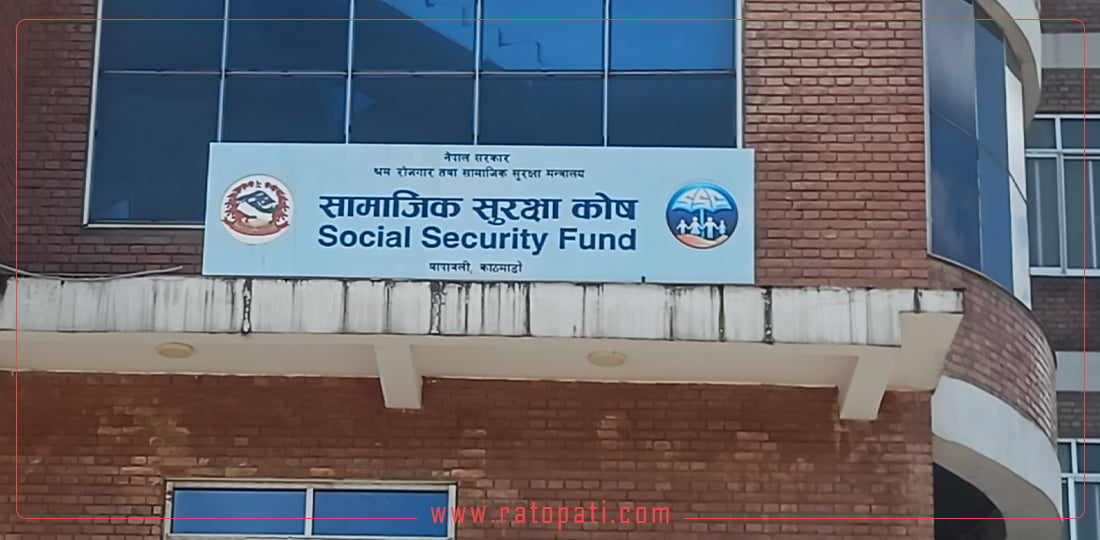
Kathmandu. The Social Security Fund has determined priority sectors for investment in loans or co-financing in industries that invest in hydropower projects, electricity transmission lines, solar, and renewable energy production. As of May 20, a total contribution of NPR 111.0705085 billion has been deposited in the fund. The fund has concluded that the scope of investment needs to be expanded as the amount increases daily. Based on this, the fund has adopted a policy to invest in hydropower and renewable energy projects in collaboration with government-owned companies. Discussions are ongoing for two out of four proposals received by the fund. With the objective of investing in the country's energy sector, proposals collected in the fund are being moved forward. Fund Director Rohit Regmi informed that efforts are being made for investment diversification. He stated that the fund is exploring additional sectors because depositing the collected amount in banks and financial institutions does not contribute to economic development and prosperity. The budget for the upcoming fiscal year has adopted a policy to utilize funds held in various funds. Director Regmi also mentioned that the fund has a policy to invest in projects that produce 'clinker' domestically within the mining sector for cement production. According to him, 23,476 employers and 2,958,429 contributors have been registered in the fund so far. The fund has made a total claim payment of NPR 20.452610738 billion. The claim amount for medical treatment, health, and maternity is NPR 3.235102911 billion. Director Regmi of the fund provided information that the amount for accident and disability security is NPR 0.284430188 billion, for dependent family security is NPR 0.349573398 billion, and for retirement security is NPR 1.6583504241 billion. The fund has made arrangements to invest in the tourism sector, construction sector, information and technology sector, service sector, and agriculture sector through institutional or co-financing loans. Arrangements have been made to provide institutional loans by taking adequate collateral or guarantees in sectors deemed appropriate by the board of directors. When providing loans, arrangements have been made to provide fixed capital loans, working capital loans, or revolving loans for the establishment and operation of projects to companies with the capacity to repay. The fund has a policy not to invest in electricity projects with a capacity of less than 20 megawatts, Director Regmi stated. He mentioned that the policy is not to invest in projects where there are conditions or restrictions on electricity purchase, or if the Nepal Electricity Authority does not purchase electricity at any time, or if the substation as per the connection agreement has not yet been completed. According to him, the policy is also not to invest in projects that do not have at least 30 percent equity, projects operated by private companies, and projects not prioritized by the fund.
This specific news has been automatically translated by AI. As a result, there may be some inaccuracies or language errors.