The Peasantry at a Historic Crossroads: Post-Election Nepal from Peasants Perspectives


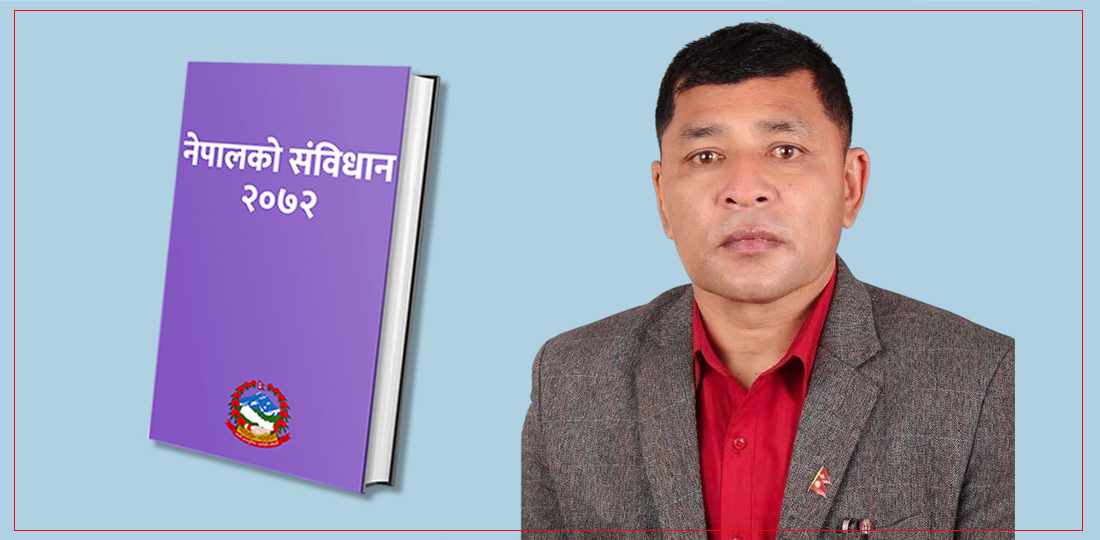
Balendra Shah, a 35 years old former mayor of Kathmandu and a rapper, is going to take oath as the Prime Minister of Nepal leading a two third majority government. In the "political earthquake" of March 5, 2026, the new party has swept the election while traditional parties especially the left are heavily defeated. More interestingly a country which suffered hung parliament and political instability will have almost two third majority of Rastriya Swatantra Party (National Independent Party, RSP).
How the rise of RSP and Balendra Shah will impact Nepal’s politico-economy is yet to assess. But for those of us in the peasant movement, who view the land and food not as commodities but as the source of life and sovereignty, the results represent a paradox. While the electorate has rejected a stagnant establishment, the rise of a "post-ideological", populist and technocratic force—RSP—raises urgent questions about the future of food systems, public policies, and rights as tillers of the soil. As Nepal is known for few progressive public policies on food sovereignty and agroecology taken as example by many movements and countries, what will be the future scenario in agriculture and peasantry is the matter of concern even outside Nepal.
- The Fragile Shield of Food Sovereignty
Nepal has been a global pioneer in enshrining Food Sovereignty as a fundamental right in its Constitution. Over the last decade, we fought tirelessly for the Right to Food and Food Sovereignty Act (2018) and the subsequent regulations of 2024. This legal shield was intended to protect smallholders from the volatility of global markets and ensure that those who produce the food have a say in how it is governed. This was possible by the support of two major communist parties of Nepal, Communist Party of Nepal (Unified Marxist Leninist) and Communist Party of Nepal (Maoist Centre) along with the consensus of the Nepali Congress (NC), the tradional national democratic bourgeoisie party. These three largest parties of Nepal had ruled the country since the establishment of democracy in Nepal. But now these all three parties have less to say as RSP has nearly two third majority in the parliament.
It is clear that having law is only as strong as the political will behind its implementation and despite having few public policies, Nepali peasants still suffers from many of the problems of neoliberal markets. The 2026 results occur at a moment when the institutionalization of law and policies are in process. With the new government’s focus on "efficiency" and "digital delivery," there is a risk that the nuanced, human-centric requirements of food sovereignty—such as ensuring land access for the landless may be sidelined in favor of macro-economic indicators. Can a technocratic administration, which views agriculture as an "industry" rather than a "way of life," truly defend the constitutional spirit of food sovereignty?
- The Karnali Vision: Agroecology under Threat?
One of proudest achievements for Nepali Peasants movement has been the declaration of Karnali as an Organic Province. This was more than a slogan; it was a move toward an Agroecological Nepal, rooted in traditional wisdom and ecological sustainability. Despite the slow progress and the creeping return of chemical pesticides, Karnali remained a laboratory for a future where Nepal could feed itself without poisoning its people.
The RSP’s "Bacha Patra" (Promise Letter) emphasizes "modernization" and "infrastructure-led growth." While modernization may be necessary to intrigate science and technology in agriculture, we must ask: whose modernization? If the new government prioritizes high-input, industrial farming to achieve rapid GDP growth, the fragile organic mission of Karnali may be sacrificed. Agroecology requires patience, subsidies for bio-inputs, and local seed-saving—elements that often clash with the fast-paced, private-sector-led growth model currently being proposed.
- Rights of the Tiller: UNDROP and the Peasantry
At the international level, Nepal has been a vocal supporter of the United Nations Declaration on the Rights of Peasants and Other People Working in Rural Areas (UNDROP). We are currently at the critical stage of formulating a dedicated Peasant Rights Law to internalize these global protections.
The concern now is whether a "non-communist" and "non-ideological" government will view peasant rights as a barrier to "Ease of Doing Business." The UNDROP framework demands that states protect collective tenure and prevent "green grabbing" by corporate interests. As the 2026 government seeks to streamline bureaucracy, we must ensure that the rights of the peasantry—the right to seeds, the right to land, and the right to participation—are not "streamlined" out of existence.
- The Red Lines: GMOs and FDI in Primary Production
Two "red lines" have historically protected Nepal’s smallholder farmers: the resistance against Genetically Modified Organisms (GMOs) and the restriction on Foreign Direct Investment (FDI) in primary agricultural production.
Recent policy shifts have already begun to blur these lines, with the "automatic route" for FDI opening up sub-sectors like animal feed and processing. However, the peasantry remains firm: primary production—the act of planting and harvesting—must remain in the hands of Nepali farmers. Opening our fields to multinational agribusiness would lead to a "corporate takeover" of our food system, turning independent peasants into laborers on their own land. Similarly, a push for GMOs under the guise of "productivity" would sever our connection to our ancestral seeds and create a cycle of debt and dependency.
- An Optimistic Path Forward?
Despite these concerns, the 2026 shift offers an opportunity. The new leadership’s obsession with "transparency" and "ending syndicates" could, if applied correctly, dismantle the cartels of middlemen who currently exploit both the farmer and the consumer. If the government uses its "National Identity Card" integration to ensure that subsidies reach the actual tiller rather than the "paper farmer," it would be a significant victory.
We do not seek to blame the new government before it has begun its work though the conspiracy theory already tag them as neoliberal populist force heavily backed by USA. Instead, we hope that the new government in the leadership of young man will further advance these progressive moves towards implementation. We are optimistic that both the Prime Minister and Finance Minister will prioritize sovereign national economy and agriculture will be protected from the neoliberal markets. As a movement, from peasants’ perspectives, we raise these questions as a "Peasants’ Manifesto." We ask the new leaders:
• Will you uphold the ban on FDI in primary production to protect local livelihoods?
• Will you finalize the Peasant Rights Law in the spirit of UNDROP?
• Will you choose the path of an Organic, GMO-free Nepal over the short-term gains of industrial agribusiness?
• Will you prioritize the implementation of food sovereignty law as a move towards self reliant economy ?
The soil of Nepal does not belong to any party; it belongs to the people who sweat upon it. The 2026 political earthquake has cleared the ground, but what we plant next will determine the sovereignty of our nation for generations to face. We, the peasants, are watching.