Analysis of Communist Party Defeat in Nepal from a Leftist Perspective

The communist movement in Nepal, which achieved significant and respectable results in elections across different eras, secured a historic success in the 2074 BS (2017 AD) elections. The leftist alliance between CPN-UML and CPN (Maoist Centre) won 174 out of 275 seats in the House of Representatives, achieving nearly a two-thirds majority.
At that time, the two major communist parties merged to form the Nepal Communist Party (NCP), and the country received a powerful communist-led government. Although the mandate from the people was for five years, before five years elapsed, instead of implementing Leninist organizational principles, the government and the party collapsed due to the leadership's arrogance, ego, and unilateral style.
In the 2079 BS (2022 AD) elections, those two parties suffered a major defeat. The Nepali Congress emerged as the largest party with 89 seats, while UML was limited to 78 and the Maoist Centre to 32 seats. CPN (Unified Socialist), a party split from CPN-UML, failed to become a national party, shrinking to just 10 seats.
In the elections held on Falgun 21, 2082 BS (March 5, 2025 AD), CPN-UML and the Maoist Centre suffered humiliating defeats, securing 25 and 17 seats respectively. It is unnecessary to mention that these parties, which were major and in power until a short time ago, could not even secure 10 percent of the total seats.
This defeat is not just significant in terms of seat count but also ideologically and politically. From a leftist viewpoint, this defeat raises serious questions about the ideological deviation, internal division, institutional weakness, and decline in the sense of responsibility towards the people seen in the Nepali communist movement.
This article attempts to analyze the main reasons for the defeat of the communist parties from a leftist perspective. Furthermore, it will discuss the message this holds for the future of the communist movement.
- Ideological Deviation
The focal point of leftist analysis is ideological clarity and class perspective. The first and primary reason for the defeat of Nepal's communist parties is ideological deviation. After the establishment of the republic, the communist parties that came to power gradually diluted their revolutionary edge and moved towards compromising with the capitalist system.
To put it more clearly, they fell into the trap of comprador capitalism. Leftists themselves took the lead in signing the anti-national Mahakali Treaty. Consumed by the lust for power, they made fatal agreements like the MCC under various pretexts, and it was the leftist forces that pushed for its ratification through the sovereign parliament.
UML Chairman KP Sharma Oli, while serving as Prime Minister, wasted his time on nonsensical issues such as investing in Hindu religious projects, replacing statues of Ram and Lakshman, and claiming that Ram's birthplace was Thori in Nepal.
Activities like organizing religious processions tarnished the secular and scientific socialist outlook of the communist party. Instead of leading the people, the communist party began to promote the agenda of reactionary Hindu nationalism. This severely damaged public trust in the party and the communist movement.
Similarly, in the elections, UML formed an alliance with the Rastriya Prajatantra Party (RPP), which advocates for monarchism and Hindu nationhood. This alliance raised questions about the ideological identity of the communist party. When a party that fought a war against feudalism enters into an electoral understanding with a force seeking the restoration of the monarchy, it created serious confusion among the public.
The fundamental basis of the leftist movement is ideological clarity. When this was attacked, the people could see little difference between the communist parties and the feudal and capitalist parties, and they voted for the US imperialist-aligned Rastriya Swatantra Party as an alternative force.
In this manner, the Nepali people rejoiced, thinking they had chased the tiger away from the front door, but they failed to notice the wolf entering through the back door.
- Internal Strife and Leadership Crisis
Marxism holds that internal conflict plays a role in the development of any movement according to dialectical materialism. However, the internal conflict seen in Nepal's communist movement turned out to be destructive rather than creative. The unification of CPN-UML and CPN (Maoist Centre) in 2075 BS (2018 AD) was a golden opportunity for party unity. But the power struggle and personal ambitions at the leadership level shattered that unity.
The agreement for party unification stipulated that Oli would serve as Prime Minister for two and a half years and then hand over the post to Prachanda. However, Oli did not honor that agreement. This created an environment of deep mistrust within the party. Eventually, the party split by the order of the bourgeois court.
The lack of wisdom and arrogance of the communist leaders led to the separation of UML and Maoist Centre. Not only that, but CPN (Unified Socialist) also broke away from UML under the leadership of Madhav Nepal. The fragmentation of leftist forces, mistrust among leaders, and personal ambitions created deep disillusionment among the public regarding communist parties.
When the people see their leaders competing only for power and position, their faith weakens. The moral basis of leftist politics is sacrifice, dedication, and public service. The leaders' visible greed for power deeply disappointed the people.
- Collusion with the Capitalist Class
Viewed from the perspective of Marxist class analysis, Nepal's communist parties gradually transformed from institutions representing the worker and peasant classes into institutions shaking hands with the capitalist class. In various elections, a large number of contractors, businessmen, and industrialists were elected from various communist parties. Not only that, but individuals like Binod Chaudhary, Rajendra Khetan, and Rajyalaxmi Golchha were made proportional representation MPs. This indicated a change in the class nature of the communist party itself.
Corruption issues also caused significant damage to the communist parties in the elections. Many communist leaders were implicated in major corruption scandals, while various controversial decisions made by the Oli government remained in the spotlight.
The growing luxury among leaders and cadres and the abandonment of a simple lifestyle increased the distance between the people and the leadership. The moral foundation of the communist movement is a corruption-free, simple, and pro-people lifestyle, but as that faded, the people began to look for alternative forces.
- Detachment from People's Issues
The core basis of leftist politics is connecting with the daily problems of the people. However, the communist parties in government failed to focus on the basic needs of the people—such as employment, education, health, and price hikes. KP Oli's government's attempt to control social media and the violence during that period generated deep resentment among the youth.
The KP government fell without realizing that the 'Gen Z' movement was being utilized by reactionary forces. Elections were necessary to bring democracy back on track, but the leftists failed to secure them in their favor.
As a result, young and urban voters embraced the Rastriya Swatantra Party (RSP) in the elections. RSP converted the anger against established parties into votes. The wave that brought the communist parties victory in 2074 BS turned against them now. This shows that the communist parties failed to win the hearts of the people, failed to keep the people's issues central, and lost dialogue with the masses.
- Influence of External Powers
In leftist analysis, the international balance of power and imperialist influence are equally important. The development of a communist government in Nepal is linked to the interests of powers like India and the United States. During the Oli government's tenure, closeness with China and strained relations with India failed to satisfy the Indian establishment.
According to analysts, India's wishes and pressure are directly visible in Nepal's politics. There were whispers that a conspiracy was hatched to topple his government after Oli returned from his China visit. Even if we give the benefit of the doubt to this, the influence and interference of external powers in Nepal's politics are a reality.
Anti-communist forces constantly play a role in destabilizing communist governments in Nepal. The struggle against imperialism and expansionism is an integral part of the leftist movement, but once in power, communist parties became silent on this issue.
- Neglect of Marginalized Communities
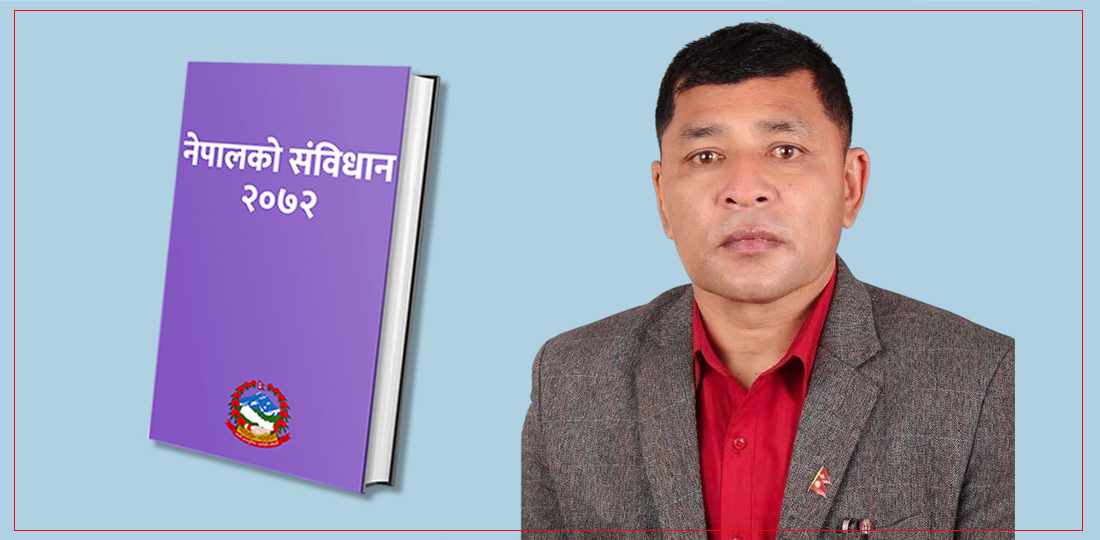
Marxism attempts to resolve not only class exploitation but also ethnic and gender oppression through Marxist analysis. Nepal's Constitution of 2072 BS (2015 AD) promised secularism, federalism, and inclusion. However, the communist-led government failed to fulfill these promises.
Representation of Dalits, indigenous nationalities, Muslims, and women decreased further in the elections. In direct elections, only one Dalit candidate was victorious, and no Muslim candidate was directly elected. The dominance of high-caste Brahmins and Chhetris became even stronger.
Communist parties relegated the issues of inclusion and the liberation of marginalized communities to a secondary concern. This increased resentment among these communities towards the communist parties, leading them to remain neutral or oppose them in the elections.
- Opportunism in Electoral Alliances
The alliances formed in the 2079 BS (2022 AD) elections were ideologically contradictory. UML allied with RPP, while the Maoist Centre allied with Congress. Even after the election, the Maoist Centre left Congress to form a government with UML, and after some time, formed a government with Congress again.
This trend of forming alliances without an ideological basis and making any compromise for power weakened the mass base of the communist parties. Political opportunism hollowed out the communist movement. The people realized that these parties lacked any ideological clarity, and all their strategies were merely for gaining power. This created space for the RSP as a new force.
- Reconstruction of the Leftist Movement
The defeat of communist parties in Nepal has exposed a deep crisis in the leftist movement. This crisis is not just one of electoral loss but an ideological, organizational, and moral crisis. From a leftist viewpoint, this defeat teaches the following lessons:
First, communist parties must re-establish their ideological clarity. Secularism, scientific socialism, and class perspective must be kept central. Collusion with Hindu nationalist proponents and reactionaries weakens the communist movement.
Second, internal democracy must be developed within the party. Personal ambition and power struggles at the leadership level have weakened the party. It is necessary to develop collective leadership and ideological debate.
Third, they must be free from corruption and capitalist influence. Leaders must re-establish themselves as servants of the people, not as contractors and businessmen.
Fourth, the issues of the people—employment, education, health, and price hikes—must be kept central. They must understand the aspirations of the youth and urban voters and address them immediately.
Fifth, the issues of liberation and representation for marginalized communities—Dalits, indigenous nationalities, Muslims, and women—must be prioritized.
The communist movement in Nepal carries a long history of struggle and sacrifice. The defeat of 2082 BS is temporary; it indicates the need for reconstruction, not the end of the movement. History has proven that defeat is temporary in the face of sacrifice.
If continuity and activism, the correct ideological path, and fulfillment of commitment to the people are achieved, the communist movement can be revived. But for that, a long journey of self-criticism, reorganization, and the re-establishment of public trust must be undertaken.
(Baskota is a leader of the Communist Party of Nepal)
This specific news has been automatically translated by AI. As a result, there may be some inaccuracies or language errors.