Former President Dr. Ram Baran Yadav Reflects on Democracy Day and Nepal's Political Future


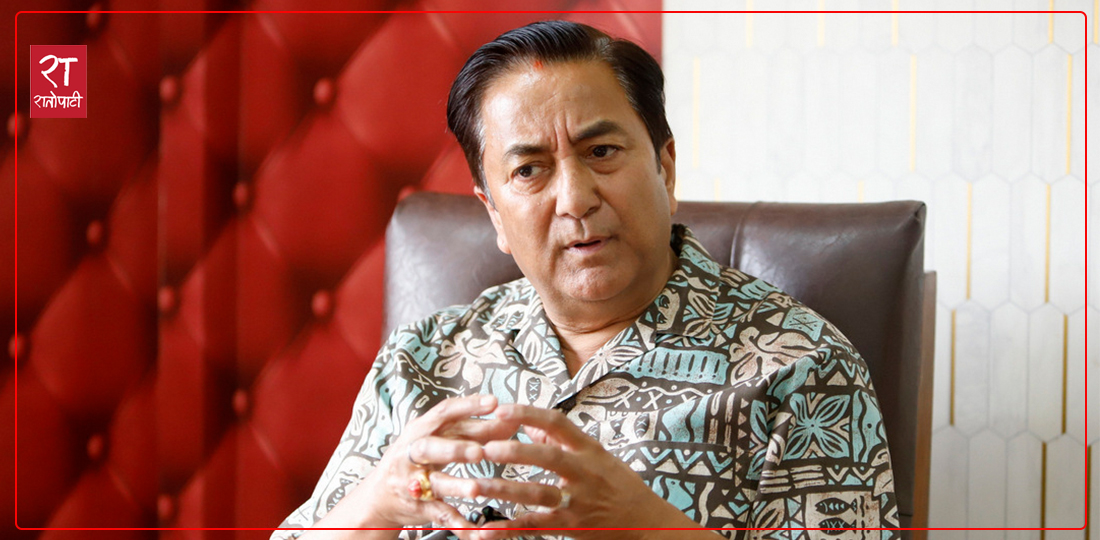
Dr. Ram Baran Yadav, the first President of the Federal Democratic Republic of Nepal, was elected in Shrawan of 2065 BS. Prior to this, he played a leading role in various capacities within the Nepali Congress party for a long time and also served as the Health Minister. Serving as the country's President from Shrawan 8, 2065 BS until Kartik 11, 2072 BS, he oversaw the promulgation of the Constitution of Nepal on Ashoj 3, 2072 BS. The first meeting of the Constituent Assembly, formed on the foundation of the 2062-63 People's Movement, declared the Federal Democratic Republic on Jestha 15, 2065 BS.
He interprets Democracy Day not merely as a celebration, but also as a day for responsibility and self-assessment, viewing it as a symbol of the historic achievement resulting from the long struggle, sacrifice, and martyrdom of the Nepali people. He particularly stressed the need for the younger generation to understand the historical significance and uniqueness of this day. Presented below is an interview with the first President, Dr. Yadav, on the occasion of Democracy Day:
Democracy Day reminds us of the struggle and achievements of the Nepali people. How do you view the relevance of Democracy Day?
Democracy Day, observed every year on Falgun 7 in Nepal, is not just a day of historical remembrance, but also an occasion for reaffirming democratic values, fundamental rights, and national unity. Democracy Day recalls the revolution of 2007 BS when the Nepali people attained their rights. On this important occasion, I extend heartfelt greetings to all Nepali brothers and sisters and call upon everyone to unite for the protection, strengthening, and prosperity of democracy. Falgun 7, the day the door to the rights of the Nepali people opened, is an unforgettable day. The rights gained by the people through long struggle were usurped in 2017 BS but were regained in 2046 BS.
Democracy was hijacked by direct monarchical intervention in 2059 BS, and those rights were returned to the people through the movement of 2062-63 BS. While the movements of 2007, 2046, and 2062-63 BS each hold their own significance in Nepal's history, the foundation of all these movements is the revolution of 2007 BS. The Nepali people struggled against autocratic rule to establish democracy.
Democracy, achieved through the long-term struggle, sacrifice, and martyrdom of the Nepali people, is the heritage of our national pride. This historic achievement established the sovereignty of the people and set the country on a democratic path. Democracy Day is interpreted not just as a celebration, but also as a day for responsibility and self-assessment. On the occasion of this historic day, I heartily call upon all Nepalis to embrace democratic values and norms and contribute actively from their respective fields towards building a prosperous, just, and self-reliant Nepal.
What initiatives do you think should be taken to increase youth belief in and participation in democracy?
The fundamental basis of democracy is the supremacy of the people. In a democracy, the people are sovereign; they are the masters. The real test of democracy is putting into practice the principle that governance must proceed according to the will of the people. Democracy cannot be strengthened without the active participation of the people. Along with utilizing the rights granted by the Constitution, citizens must also fulfill their duties. The events of Bhadra 23 and 24 last year severely impacted democracy and the Constitution following the events of 2017 BS in Nepali politics. The demonstration by young people on Bhadra 23 was correct, but the incident on the 24th signals a danger to democracy. Since Democracy Day is a symbol of the historic achievement of the Nepali people's long struggle, sacrifice, and martyrdom, it is especially important for the younger generation to understand its historical significance and uniqueness.
Good governance is considered indispensable for the success of democracy. What effective measures can be taken to control corruption and promote transparency?
We can move towards building a prosperous and self-reliant Nepal through good governance, transparency, corruption control, social justice, and ensuring equal opportunities. Development, good governance, corruption control, and ensuring equal opportunities are the measures for gauging the success of democracy. The success of democracy is linked to improvements in the standard of living of citizens, transparency, corruption control, and service delivery. Political stability, good governance, transparency, corruption control, judicial independence, and effective service delivery are essential for strengthening democracy.
What role should democratic leadership play in maintaining social harmony and national unity in a diverse Nepali society?
Nepal's multi-ethnic, multi-lingual, and multi-cultural characteristics can be considered the strength of democracy. Democracy is not just a means of acquiring rights; it also strengthens a sense of duty, tolerance, national unity, and mutual respect. Democracy is meaningful only when all citizens of the state feel equal opportunity and respect. The concepts of inclusivity, federalism, and social justice are seen to be strengthened at this stage. The main necessity today is to build a prosperous nation through development, good governance, transparency, and corruption control while maintaining social harmony. Protecting and strengthening democracy is the shared responsibility of the state, political parties, and citizens alike.
General elections are approaching in the country under difficult circumstances. How do you view this situation?
The political situation arising after the incidents of Bhadra 23 and 24 last year has severely 'damaged' the democratic constitution achieved through nearly eight decades of sacrifice for democracy. Let us hope that the elections scheduled for Falgun 21 will help in strengthening democracy and protecting the Constitution. This should be viewed positively. Such incidents will continue to occur until the people are vigilant. The people must be conscious. We are building an inclusive, democratic system as provided by the Constitution. We are hopeful that the election can repair the damage done on Bhadra 24. All Nepalis must be vigilant now to prevent such accidents from happening again and to ensure that peace, stability, and tranquility are not disturbed.
What would you like to say to the voters regarding the general election scheduled for this Falgun 21?
This election holds great political significance as it is not just a periodic election, but one to repair the damage done to the Constitution. This will be a positive aspect for the country's stability. It is necessary to choose the right party to move the country forward. I urge all countrymen to cast their votes keeping national interest in mind, rather than being swayed by cheap popularity and hype. Protecting democracy and the sovereignty of the country is the main issue now. Finally, I heartily call upon all Nepali sisters and brothers to adopt democratic values and norms as a way of life and to contribute positively from their respective positions through the election for the country's stability, prosperity, and good governance.
This specific news has been automatically translated by AI. As a result, there may be some inaccuracies or language errors.