Maoist Insurgency's 30th Anniversary: Dev Gurung Discusses Unaddressed Demands and Current Political Crisis

Thirty years have passed since the Maoist People's War. However, the 40-point demands raised by the Maoists before launching the insurgency remain unaddressed.
In the two decades since entering the peace process, the Maoists, who have repeatedly led the government, have been accused of abandoning their revolutionary roots to focus solely on power.
The CPN (Maoist Centre), which has faced continuous setbacks since the 2070 election, has recently distanced itself from the identity of 'Maoism.' How the public will evaluate this party, which has transformed into the Communist Party of Nepal through mergers with various factions, will become clear only after the results of the upcoming elections.
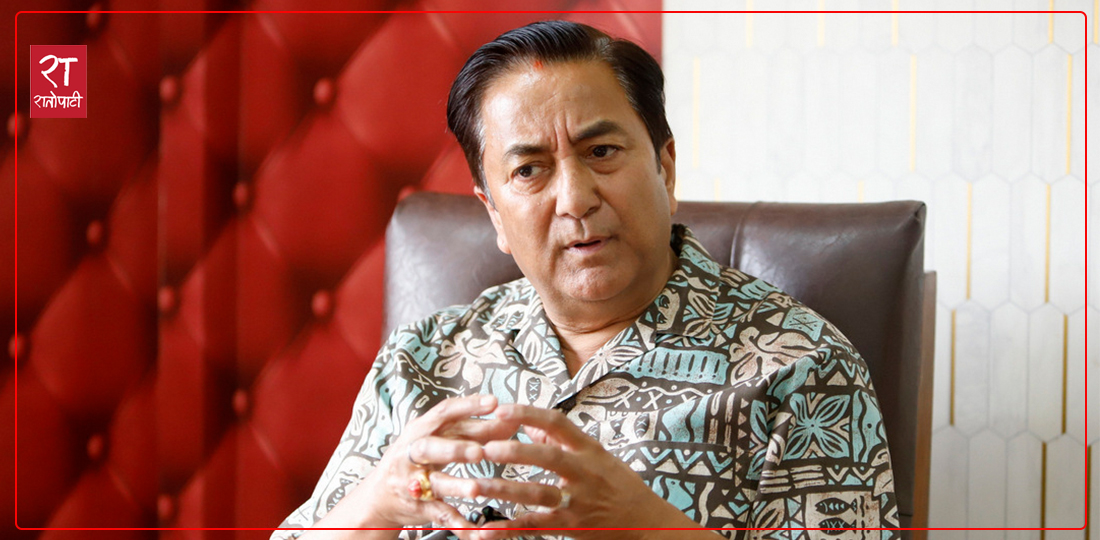
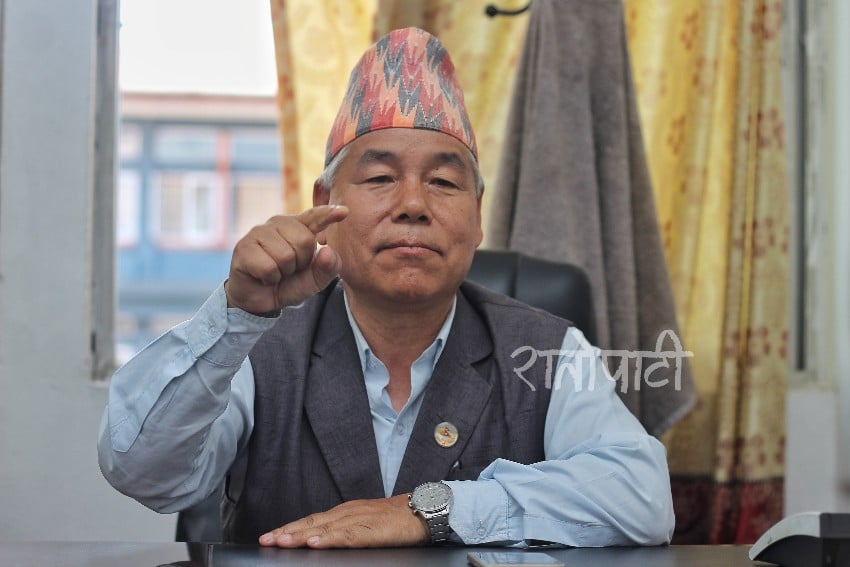
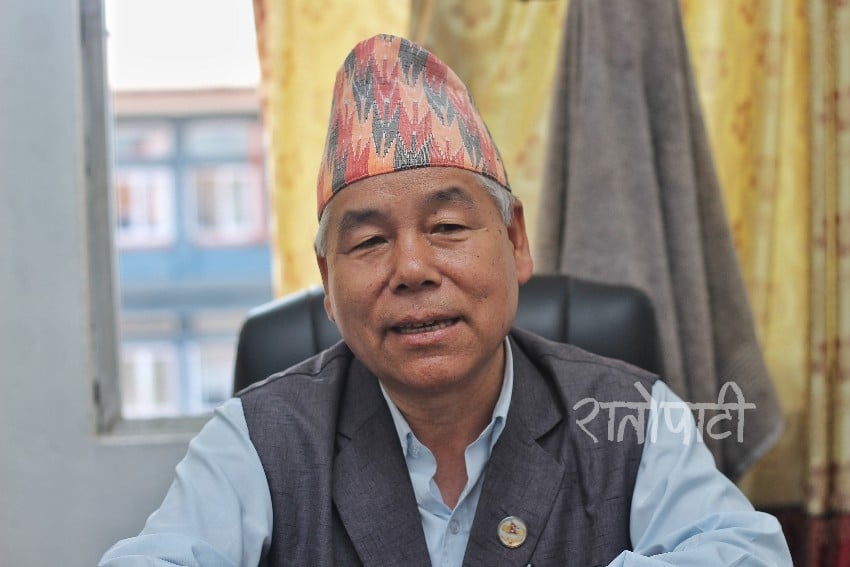
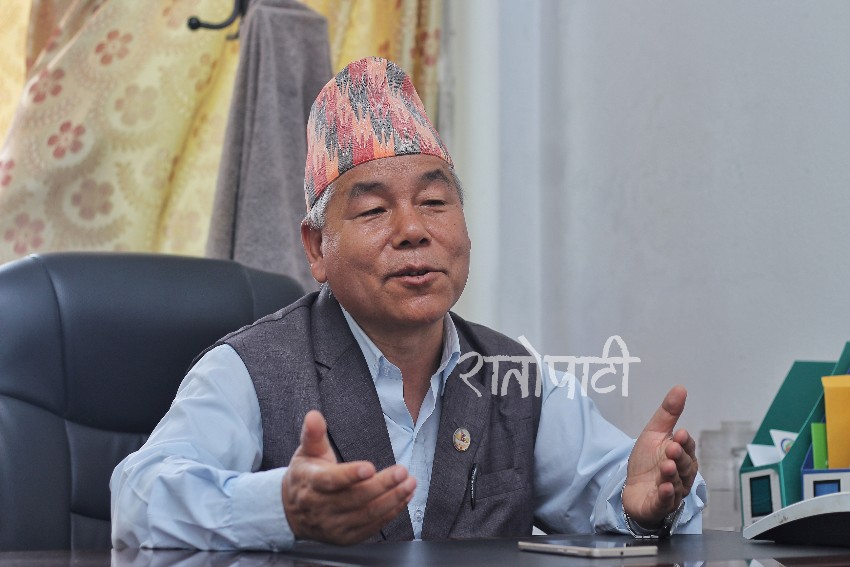
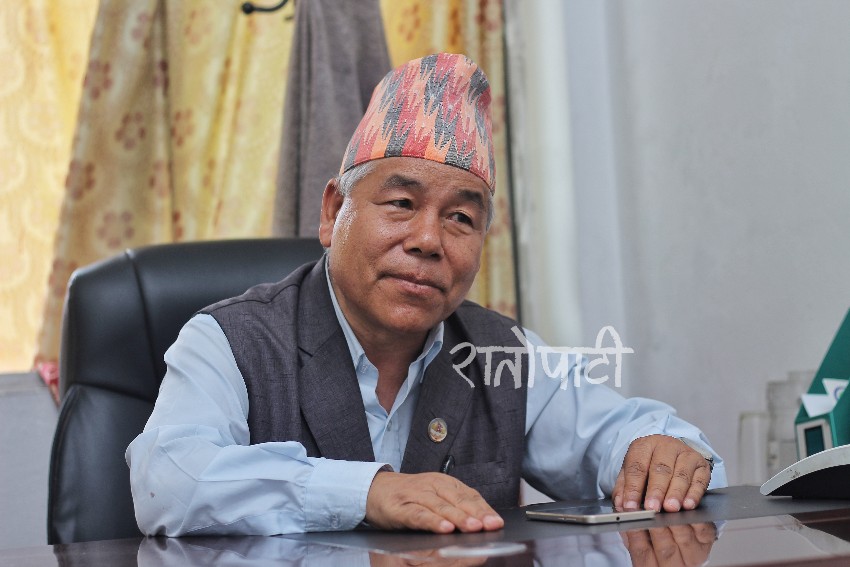
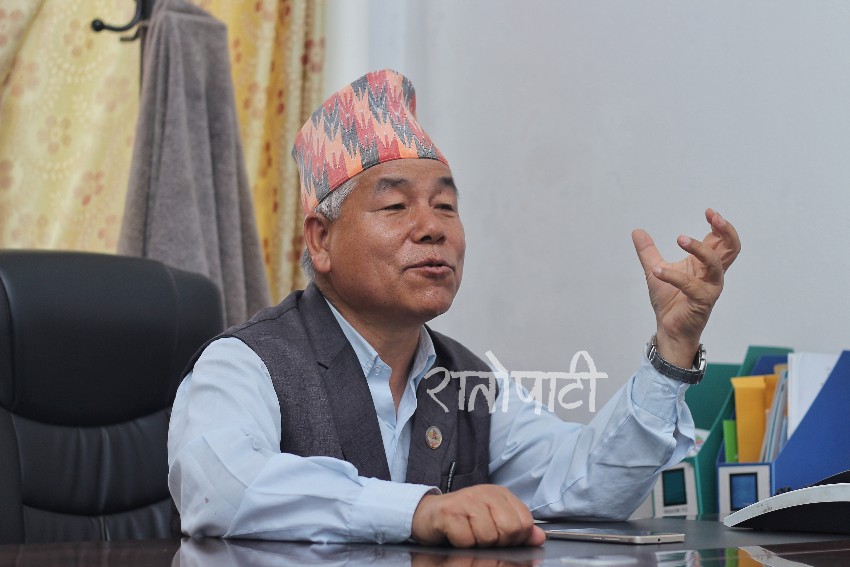
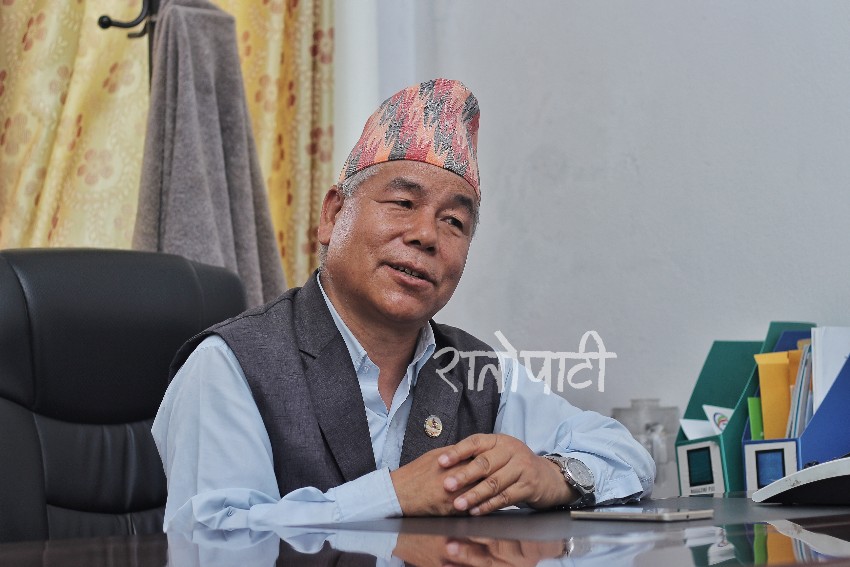
In this regard, Ratopati correspondent Ganesh Pandey spoke with Central Committee member of the Communist Party of Nepal, Dev Gurung. Presented below is the edited excerpt of the conversation with Gurung:
- In 2052 BS, you launched an armed rebellion by presenting 40-point demands to the then government. As you complete thirty years, how do you recall the People's War?
The 10-year People's War is an important and historic part of Nepal's history. As a result of the sacrifices, contributions, and dedication during the People's War, the Comprehensive Peace Accord was signed, leading to the establishment of a Federal Democratic Republic in the country. The People's War successfully brought about a fundamental end to the system based on a long-standing feudal monarchy. Therefore, it holds historical and epoch-making significance.
In the journey following the Comprehensive Peace Accord, the process of drafting a new constitution to institutionalize it moved forward. A new constitution was indeed created, and despite several limitations and weaknesses, it was formed through consensus among political parties. This is certainly positive. Based on this, the path forward involves socio-economic transformation—changing the economy based on financial monopoly comprador capitalism to build a self-reliant and independent economy, building a production-oriented economy including agriculture and industry, making the national economy self-reliant, and advancing towards the development of a socialist system on the foundation of that self-reliance, as outlined in the constitution's course.
The recent events and developments have put the achievements gained from the constitution, the Comprehensive Peace Accord, the People's War, and the Joint People's Movements, into jeopardy. The constitution is in a coma. Following the events of Bhadra 23 and 24, the constitution and multi-party democracy are currently in a coma. The country has entered a serious crisis. Therefore, elections are being discussed now. If the elections are held in a fair and independent manner, the Federal Democratic Republic will be reinstated. The constitution will regain its activity, and democracy will continue once again.
If the elections are not held in a fair and independent manner, the constitution and multi-party democracy, which are currently in a coma, will all be jeopardized. In the current political situation, Nepal's national sovereignty itself will be at risk. Therefore, looking at the 30-year journey, we stand at a crossroads: whether the achievements of the 10-year People's War, the Joint People's Movement of 2062/63, the achievements of various phases of joint people's movements, the Comprehensive Peace Accord, and the new constitution will be lost or whether they will continue.
The adoption of a consensus-based democracy was necessary, but the adoption of a traditional parliamentary democracy, with ruling and opposition parties, created a serious division among the proponents of the Comprehensive Peace Accord. That division created a situation akin to 'when brothers fight, outsiders benefit.'
Efforts are underway to reinstate this through elections. We are hopeful that if the elections are conducted fairly and independently, the constitution will become active, and the comatose democracy will return. Otherwise, if the elections are fraudulent or sponsored, not only the republic but the nationality itself will be destroyed.
- At that time, you prominently raised the three main issues of Nationality, Democracy, and People's Livelihood. Upon reaching the Federal Democratic Republic, it seems partially fulfilled, but there is an accusation that after 20 years of the republic's establishment, work has not been done according to public expectations?
To protect and stabilize the achieved gains, consensus and collaboration among the signatories of the Comprehensive Peace Accord were essential. The practice of consensus-based democracy was necessary. A fully proportional electoral system was needed. In the parliament, there should have been sides based on agendas, not ruling and opposition parties. Absolute ruling and opposition should not have been the case, as this should not have created walls of division.
Government formation should also have been based on consensus, proportionally representing all communities. Instead of adopting consensus-based democracy, the adoption of a traditional parliamentary democracy with ruling and opposition parties created a serious division among the proponents of the Comprehensive Peace Accord. That division led to a situation where 'when brothers fight, outsiders benefit.' This division not only prevented socio-economic transformation but also failed to replace financial monopoly comprador capitalism with a self-reliant economy. It failed to establish even basic good governance. The commission-based system, which prevailed based on the financial monopoly comprador capitalism, further fragmented the parties. Instead of uniting against the system of governance through corruption or commission networks, they failed to do so. Consequently, financial monopoly comprador capitalism succeeded in widely dividing the companions of the Comprehensive Peace Accord.
While the proponents of the Comprehensive Peace Accord and the constitution drafting were divided and fragmented, regressive foreign and domestic power centers found an opportunity to assert themselves. As a result, the destructive incident of Bhadra 23 and 24 occurred. Currently, the constitution and multi-party democracy are in a coma. From the perspective of nationality, the country is in the most serious crisis in Nepal's history.
The proponents of the Comprehensive Peace Accord should have adopted consensus-based democracy for a transitional period. The failure to adopt this consensus-based democracy gave an opportunity to the elements practicing 'divide and rule.' We also failed to reform many procedures. We failed to reform the process of traditional parliamentary democracy. We failed to reform the electoral system. They got a chance to take undue advantage.
There is no point in talking about constitutional amendment now. As I said earlier, if the elections are held fairly and independently, the party system will return.
Learning from this, the principle of consensus-based democracy must be adopted again. The electoral system must be reformed. The traditional parliamentary system must be reformed. The process of government formation must be reformed. Political parties must unite against financial monopoly comprador capitalism for good governance. Parties need to unite on these fundamental national agendas. If we move forward through consensus and collaboration on these basic national agendas, we can still move the country towards the journey of socialist revolution by transforming it socio-economically, based on this very constitution.
- It is stated that the constitution will be reviewed every 10 years after its promulgation. That ten-year period has passed. What is your suggestion regarding the improvement of the shortcomings seen in the constitution?
Firstly, the constitution itself is at a crossroads, questioning whether it will survive. There is no point in talking about constitutional amendment now. As I said earlier, if the elections are held fairly and independently, the party system will return. The return of the party system means the parliament will be restored. Only when the parliament is restored will the parties become active, and the constitution will become active. Only then will the constitution gain vitality.
What articles, clauses, or provisions of the constitution need to be reformed will be decided based on mutual agreement among the parties. If any citizen has even a little patriotic thought and vision remaining, they must move towards the process of holding fair and independent elections to protect this constitution and democracy. The parliament must be revived through elections. If it cannot be done through elections, then we must state that we should revert to the process of the old parliament. If we go through the old process, there is currently a case pending in the court. We cannot comment on a case under judicial review. The only option is to urge the court to decide quickly on this matter. It is the judiciary's role to examine whether the constitution has been violated or not. Ultimately, the judiciary must settle constitutional matters according to the interpretation of the constitution. The constitutional provision for resolving such matters is through the Constitutional Bench. When the constitution is in a coma and the parliament is dissolved, the Constitutional Bench has the authority to rule on whether the actions were in accordance with the law, justice, and the constitution. If the Constitutional Bench is accountable, it must determine whether the responses regarding the protection of the constitution and democracy are right or wrong. This is because the Constitution of Nepal envisions three organs of the state: the legislature, the executive, and the judiciary. Currently, the legislature is absent. Only the executive and the judiciary remain. The judiciary must resolve constitutional disputes.
- Is it not felt that the republic is in danger due to the Maoists' own shortcomings in the twenty years since entering the peace process?
The People's War was necessary for the fundamental transformation of the country and for all oppressed communities—the people, peasants, laborers, women, Dalits, Janajatis, Madhesis, Muslims—for social justice, freedom, equality, their own system of governance, a democratic system, and a socialist system. This is a chain of ideology. Future generations, hundreds or thousands of years later, will embrace it based on whether it is a scientific idea or not.
It is about how much we internalize Marxism or this ideological chain.
Since Maoism or Marxism-Leninism is a correct scientific ideology, the journey of Marxist development will not stop just because some individuals deviate. This is science. Since it involves correctly identifying the laws of social development and developing a scientific worldview, it is a continuous process of implementation. The agents implementing it may deviate slightly, and they do.
- You have now formed the Communist Party of Nepal by uniting various leftist components. Some accuse you of abandoning Maoism. There is talk that after Falgun 21, the 'Red Revolution' is being pushed back by the 'Blue Revolution.' What will be the state of your party after that?
Communist ideology is an ideology that moves forward by internalizing the development chain of class struggle and adopting a scientific materialist worldview. In this process, what name the party adopts or what terminology it uses are merely technical matters. The main issue is whether Marxism-Leninism, which is the fundamental scientific worldview, has been internalized. Has that roadmap been internalized? As for the use of the term Maoism, it is also a developed form of Marxism. Mao made significant contributions to the development of Marxism. Using the terminology does not automatically make one Maoist, nor does not using it mean one is not Maoist.
It is about how much we internalize Marxism or this ideological chain. Do we internalize this philosophy? Do we follow it as a guiding principle? Therefore, the ideology cannot be contaminated by focusing on technicalities like what name or terminology is used.
- There are various apprehensions that the old party system will collapse after the elections; what do you say about that?
This entire history is a history of class struggle. Therefore, in the history of class struggle, sometimes the oppressed class wins, and sometimes the reactionary class wins. World history is full of class struggles. Class originated with the emergence of private property. In the slave era, the slave owner class and the slave class developed. In the feudal era, feudalism and the working peasant class were born. In the capitalist era, the capitalist class and the working class develop. In the age of imperialism, two classes emerge: monopolistic authoritarian fascist powers on one side, and oppressed nations and peoples on the other.
We are currently in the age of imperialism, where world imperialism is on one side, and oppressed nations are on the other. The class struggle between these two is constant; the only question is who will win. Therefore, if imperialism wins, nations will be destroyed. Language, religion, customs, culture, civilization, values, and traditions will all be destroyed. The world is on the verge of becoming a stateless entity in the name of a unipolar world. It will remain under the rule of imperialist military dictatorship. There are nearly 192 member states in the United Nations, and over 200 nations if we consider others. The current arrogance of world imperialism is to collapse all these nations and create a unipolar world. A global campaign in the form of military fascism is ongoing.
There may be ideological differences and disagreements among Nepalis. Regardless of the differences, political parties and political forces in Nepal must stand together on the issue of saving the Nepali nation.
A global military terror is being created to maintain a unipolar world, to maintain unipolar totalitarianism, a direction that is currently underway. If we can break free from this and become independent, the Nepali nation will survive. If the Nepali nation survives, the right to self-determination, the right to make decisions, will remain with the Nepali people. What happens if the existence of the country is lost? Nepal will fall into the hands of imperialist military fascism. This struggle between the two classes exists globally, and it naturally has an impact in Nepal.
Therefore, fundamentally, there may be ideological differences and disagreements among Nepalis. Regardless of the differences, political parties and political forces in Nepal must stand together on the issue of saving the Nepali nation. They must adopt some form of consensus and collaboration. If we proceed in that manner, Nepal will be saved. If we do not proceed that way, Nepal will be finished.
- Leaders who were active in the People's War are facing action right before the elections. Won't that put the party in further difficulty?
In the parliamentary system, the current electoral process requires the party to issue tickets, and one must contest elections based on the party ticket. If someone disagrees with this and rebels, there is a disciplinary action process, which is being followed.
The current election is a tactical matter. Being tactical means that changes can occur in the constitution. Leaders and cadres must follow the party's methods and procedures regarding tactical issues. Whether they agree or disagree, they must follow, but is this electoral process the one that will decide everything? No. It is one link in a chain of various processes. It is a technical link. There is a state of political liquidity right now, where one cannot predict what will happen at any moment. This is because the authority is not in the hands of the parties. Nothing will happen just because a party says so now. The government says it will hold elections, and we say, 'Fine, we will participate.' We say we will participate if it is fair and independent. That is all.
- What suggestion would you like to give on the occasion of the 30th anniversary of the People's War?
Falgun 1st is the occasion of the People's War Day. Thirty years have also passed since the People's War began. On this occasion, I want to extend heartfelt best wishes to all comrades, leaders, the people, and all parties involved in the People's War. The People's War has sent a new message in Nepal's history. It has displaced traditional feudalism and brought Nepal, at least, into the era of the capitalist system. In this sense, the People's War holds a very significant role in Nepal's history.
However, financial monopoly is world imperialism. It is the dominance of world imperialism. Therefore, displacing financial monopoly is not possible through the separate efforts of one or two parties.
The goal of the People's War is to reach socialism, but while striving for that, considering the immediate balance of power, we reached an agreement with many capitalist forces through the Comprehensive Peace Accord, thereby displacing feudalism to a certain extent.
On the other hand, let us displace the financial monopoly capitalism, which is protected by world imperialism, and build a national, independent, and self-reliant economy. We should move forward in collaboration with capitalist forces willing to embark on that journey. This is because, compared to feudalism, the current financial monopoly comprador capitalism is many times more powerful. Therefore, we fought for 10 years to displace feudalism. Parties struggled in various ways. Joint People's Movements took place. All forms of struggle were adopted. Movements by Madhesis, Janajatis, Tharus, and all other groups were completed. As a result of the contribution of all, feudalism has been displaced. It was being displaced globally and had reached a weak state in Nepal as a remnant.
However, financial monopoly is world imperialism. It is the dominance of world imperialism. Therefore, displacing financial monopoly is not possible through the separate efforts of one or two parties. A broad national consensus is necessary for that.
Only if we can move forward with this understanding can we be freed from financial monopoly comprador capitalism. Otherwise, it is impossible, which is why we formed a front against financial monopoly comprador capitalism. We sought to move forward by forming a front in that manner. But perhaps some friends were not clear on that perspective. Consequently, instead of struggling against it, they started falling into the network of commission and corruption spread by them.
In terms of methods and procedures, instead of adopting consensus-based democracy, we adopted our traditional form of parliamentary democracy, which involves one side negating the other. This gave the financial monopoly forces an opportunity to 'divide and rule.' Learning from these limitations, in the days ahead, there is a need to adopt a course of consensus and collaboration until financial monopoly comprador capitalism is displaced again.
This specific news has been automatically translated by AI. As a result, there may be some inaccuracies or language errors.