Seven Provinces Prioritize Energy Sector in Budgets

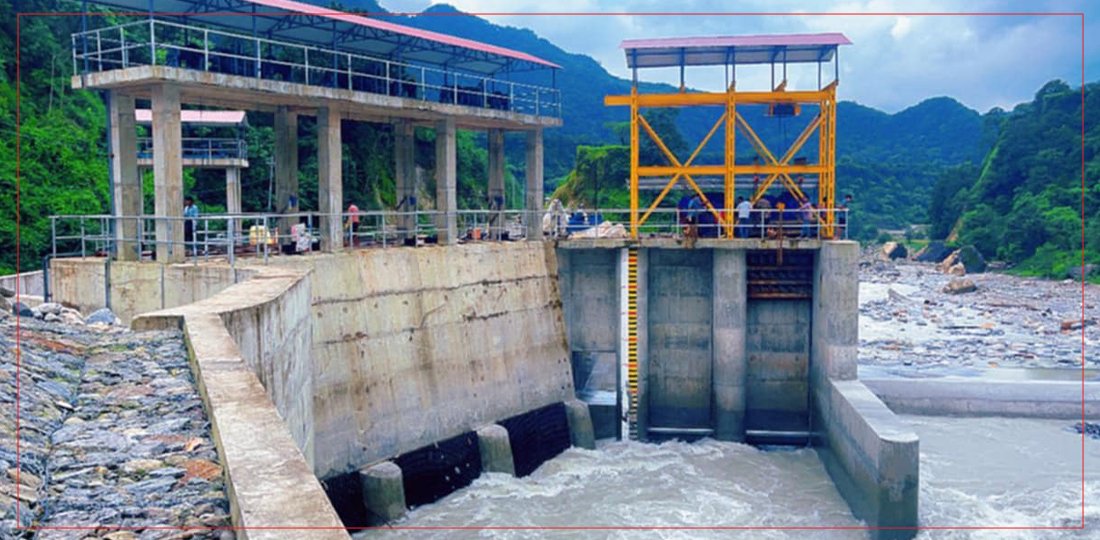
Kathmandu. Along with the federal government's budget, all seven provincial governments have put forward the energy and water resources sector as the main engine of prosperity.
The federal government has prioritized the hydropower sector in its budget for the upcoming fiscal year 2083/84. Accordingly, all seven provincial governments have also allocated budgets with the energy sector as a major priority.
Provincial governments have adopted strategies to integrate energy not only in electricity production but also with agriculture, industry, and the daily lives of citizens. All provinces have adopted policies to invest billions in renewable energy, small hydropower, and solar systems to realize the common dream of an illuminated province.
The Koshi Province government has put forward an innovative effort to connect the energy sector with the direct investment and ownership of citizens.
The province has given high priority to the People's Hydropower Program. The province has allocated a special budget for the construction of small hydropower projects in geographically remote but water-resource-rich districts like Taplejung and Solukhumbu.
This program aims to economically empower local citizens by making them shareholders in hydropower. In addition, Koshi has brought a plan to promote the use of energy in areas with irrigation and drinking water shortages by operating small solar irrigation programs for marginalized farmers.
The province has allocated a large budget through the Ministry of Drinking Water, Irrigation, and Energy, which will further strengthen access to energy in the rural economy in the coming days.
Illuminated Madhesh Province
The Madhesh Province, however, has directly linked energy with agricultural productivity and increased farmer income. The Madhesh budget has announced a 50 percent subsidy on electricity tariffs for farmers for irrigation and cold storage operations.
The farmer-targeted program is expected to play a significant role in reducing agricultural costs and promoting commercial farming. In addition, it has announced further expansion of the Illuminated Madhesh campaign. Similarly, a budget of billions has been allocated for the installation of high-tech solar lights in public places, main commercial centers, and roads. This will reduce electricity consumption on one hand and contribute to urban beauty and security on the other.
Bagmati: 50 Percent Discount on Company Registration
The Bagmati Province has announced policy reforms to attract private sector investment in the energy sector. The province has made a provision of a 50 percent discount on registration fees for companies to encourage domestic investors to invest in hydropower and solar energy.
It is believed that the concessions provided by the government will bring a new wave of energy entrepreneurs to the Bagmati Province. Bagmati has also intensified the installation of solar energy systems in major administrative bodies to make government buildings energy self-sufficient.
The province has allocated a budget of more than 115 million. Bagmati has prioritized infrastructure development by arranging a budget of more than seven and a half billion for the integrated implementation of drinking water and energy projects.
Illuminated Gandaki Province Campaign
The Gandaki Province has taken a step forward in energy security and technological use by including the concept of net metering in its budget. The Gandaki government has further strengthened the Illuminated Gandaki Province campaign with the goal of providing electricity access to all households in the province within the next year. The Gandaki budget includes an ambitious plan to install solar panels on the roofs of government hospitals, community schools, and public institutions and connect the excess electricity produced there to the national grid.
This will reduce the electricity expenses of government offices to zero and contribute to the national energy system. Gandaki has allocated a budget of approximately five billion for the energy and water resources sector, linking lift irrigation with energy.
Lumbini Province 'Illuminated City Program'
The Lumbini Province has presented energy in its budget by linking it with urban development and underground irrigation. The province plans to increase the use of solar energy on the roads of major urban areas through the Illuminated City program.
Lumbini's special priority is to provide year-round irrigation to arable land. A large budget has been allocated for the expansion of solar energy-based underground irrigation systems for this purpose. It will solve irrigation problems, especially in the Terai districts, and promote the use of clean energy instead of fuel-based pumps. Lumbini has also considered the energy sector as a basis for electrification and access to information technology in community schools.
Karnali Province and Sudurpashchim Province: Micro Hydropower and Solar Energy
Considering their difficult geographical terrain, Karnali Province and Sudurpashchim Province have placed special emphasis on rural electrification. The Karnali Province has allocated a special budget to provide light through micro hydropower and solar energy in remote settlements not connected to the national transmission line.
Karnali's plan to revive micro-hydropower projects that are operational but closed due to lack of maintenance appears very relevant. The Sudurpashchim Province, with electricity reaching about eighty-seven percent of households, aims to achieve 100 percent access within the next year. Sudurpashchim has put forward a plan to spend billions in collaboration with local levels for small hydropower projects and solar energy in remote hilly districts.
The common essence of the budgets of all seven provinces is that energy has been made the basis of self-reliance. The mix of lift irrigation, solar pumps, solar energy in government buildings, and private and government investment in hydropower will further strengthen Nepal's energy security.
The investment made by the provinces in the energy sector and the plans put forward will not only remove darkness but will certainly make a significant contribution to industrial development, agricultural commercialization, and environmental protection.
The encouraging budget allocation and commitment to implementation seen in the budget can be expected to lead all seven provinces to achieve significant progress in the energy and water resources sector in the coming days and pave the way for the country to become energy self-reliant.
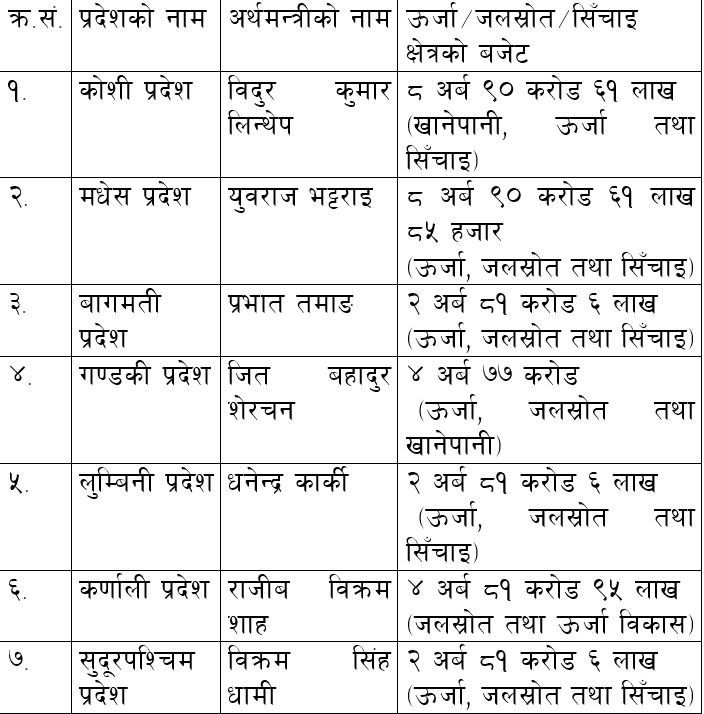
Ministry-wise Budget Allocation Related to Energy in All Seven Provinces
This specific news has been automatically translated by AI. As a result, there may be some inaccuracies or language errors.