Nepali Peacekeepers Recognized for Courage, Discipline, and Professionalism in UN Missions

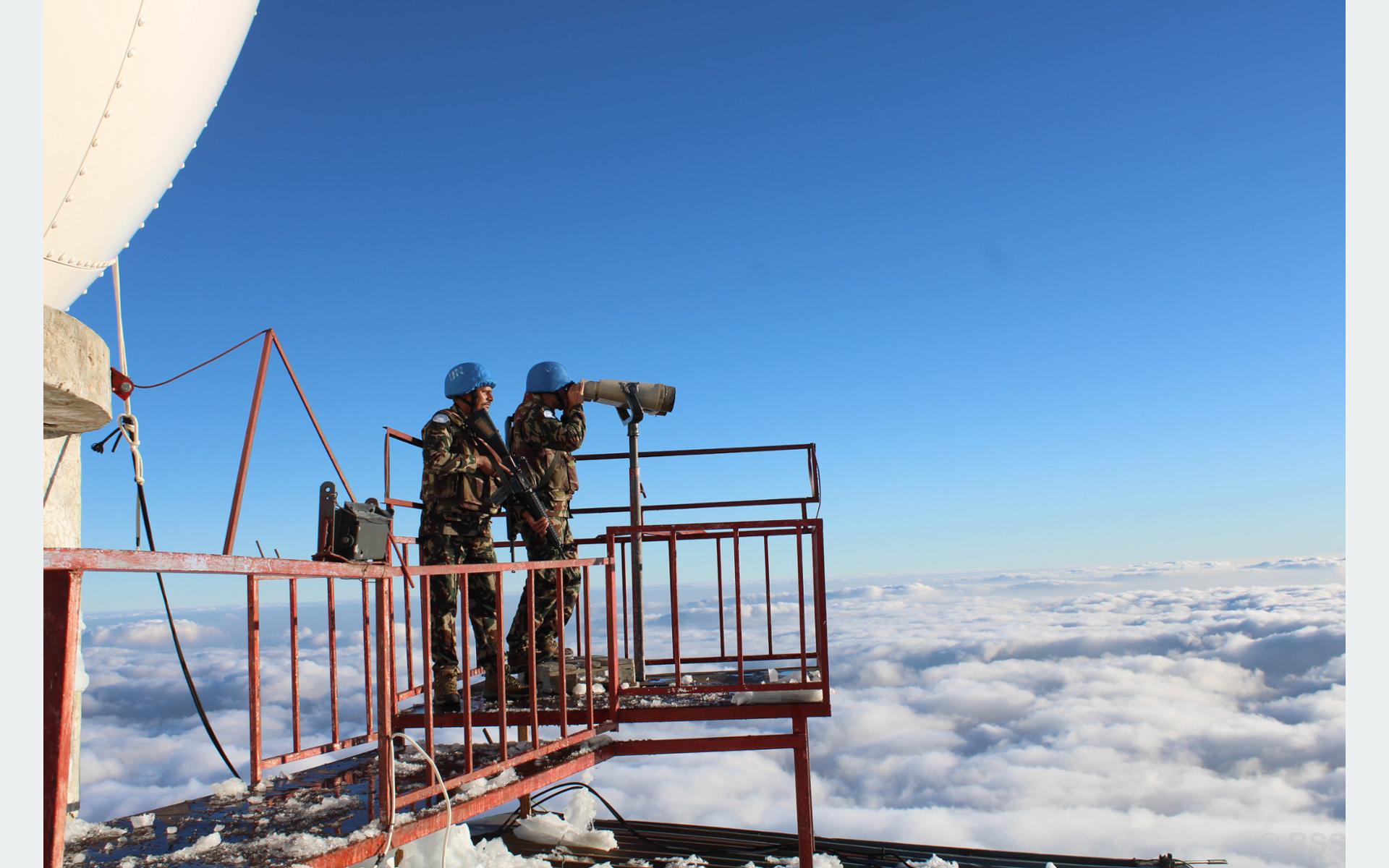
Nepali peacekeepers have succeeded in establishing themselves as courageous, disciplined, and professional forces in global peacekeeping efforts. The Nepali Army began its collaboration with the United Nations peacekeeping operations in 1958 by deploying five military observers in Lebanon, and it has since become a strong partner in the global arena.
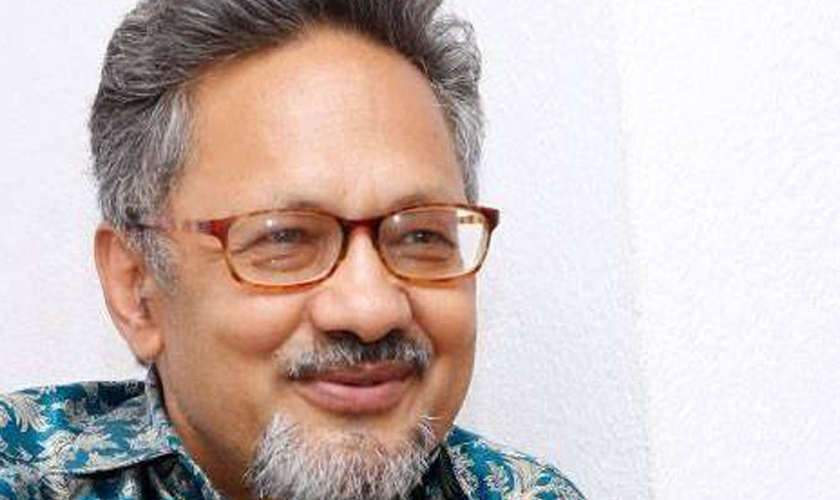
Former Force Commander of the UN Mission in Syria, Ishwar Hamal, states that under the umbrella of the United Nations, the Nepali Army has readily accepted risky tasks and responsibilities, successfully portraying itself as a champion soldier who is honest, professional, and obedient to orders.
Former Lieutenant General Hamal says, "Nepali peacekeepers are known as experienced, disciplined, neutral, professional, obedient, and reliable soldiers. They are liked by everyone because they can be mobilized instantly even in risky situations."
Nepal joined the global forum, established with the common objective of world peace, security, equality, and mutual respect, on December 14, 1955. Nepal has also successfully served as a non-permanent member of the UN Security Council twice, in 1969–70 and 1988–1989. Furthermore, the principles of the UN Charter are given the highest priority in Nepal's foreign policy. Nepal has adopted a national policy to only send peacekeepers to conflict-affected countries under the UN flag.
At the call of the nation, the Old Gorkha Regiment was first deployed in Egypt in 1974. Since then, it has been an active participant in most of the UN peacekeeping missions. During this period, 162,496 'Blue Helmet' Nepali peacekeepers have contributed to 44 missions and received the 'UN Peace Medal' in equal numbers. More than 3,666 Nepali women peacekeepers have contributed to the world peace campaign. In the meantime, the army has been making significant contributions to UN peacekeeping by deploying specialized forces such as engineering, medical, and special task forces.
Former Force Commander of the Nepali Army in the Cyprus Mission, Lieutenant General Victory Shamsher JB Rana (Retired), views being appointed as a Force Commander in a conflict-ridden country to lead a mission on the international stage as a great opportunity for the nation and the organization. He says, "At that time, about 1,700 peacekeepers from 15 countries, including Europe, Australia, and Argentina, were deployed there. As the Force Commander, I had the responsibility of leading it."
The dedication and excellent performance of Nepali peacekeepers towards their duties have consistently received high praise from the United Nations and other bodies. So far, 74 Nepali peacekeepers have made the ultimate sacrifice, and 77 have been seriously injured while deployed in the cause of establishing world peace.
Recently, due to financial constraints at the UN, the number of peacekeepers deployed in missions established in conflict-affected countries has been reduced. Following the deployment of peacekeepers in the Central African Republic in Mangsir 2079 BS, Nepal reached the top position in the list of countries deploying troops to missions. At that time, the number of Nepali peacekeepers reached its peak at 6,016.
Currently, 4,302 Nepali peacekeepers, including 391 women, are deployed in 10 missions worldwide. Nepal remains at the forefront among countries deploying women soldiers. Nepali peacekeepers have made a significant contribution to the Nobel Peace Prize awarded to the United Nations for peacekeeping work.
Nepal has always emphasized peace and equality on the international stage. Nepal is always committed to world peace and harmony. The Directorate of Public Relations and Information of the Army stated that the necessary equipment and additional manpower are ready to be deployed in a mission within 60 days if requested by the United Nations.
The physical infrastructure upgrade is underway with the goal of making the Birendra Peacekeeping Operations Training Centre a 'Centre of Excellence'. Various exercises related to the UN peacekeeping operations are being conducted at that location to enhance mutual understanding and partnership among multinational peacekeepers in peacekeeping operations.
Accordingly, four specialized UN-related training sessions were conducted over one year with the participation of 31 foreigners and 64 Nepalis. During the same period, 3,531 personnel from 12 peacekeeping units received 'pre-deployment' training at the center. Nepali peacekeepers serve as a significant means and mechanism for Nepal to achieve diplomatic relations in the international arena.
The funds received by Nepal for providing troops to the United Nations are an important source of foreign exchange earnings. While working in peacekeeping missions, Nepali peacekeepers have introduced Nepal's values, beliefs, culture, language, and lifestyle to the world. Along with that, they have gained the opportunity to learn about various systems, technologies, and best practices from around the world.
In terms of expanding foreign relations, peacekeepers deployed in areas without embassies indirectly assist in expanding relations. For example, to strengthen the UN peacekeeping effort, a ministerial-level meeting is held every two years with the participation of foreign and defense ministers of UN member states to discuss various issues related to peacekeeping. This meeting is helping to expand Nepal's relations with various countries around the world.
The United Nations celebrates October 24 every year as United Nations Day in memory of the day the UN Charter came into force on October 24, 1945. In line with this, the Nepali Army also celebrates 'United Nations Day' by organizing various programs at the Birendra Peacekeeping Operations Training Centre. Since the beginning of the Nepali Army's peacekeeping journey, senior officers of the Nepali Army have held responsibilities as Sector and Force Commanders in UN peacekeeping missions.
Previously, former Lieutenant Generals Krishna Narayan Singh Thapa (Kuwait), Lieutenant General Victory Shamsher JB Rana (Cyprus), Lieutenant General Balananda Sharma (Israel/Syria), Lieutenant General Pawan Jung Thapa (South Sudan), Lieutenant General Purnachandra Thapa, Lieutenant General Ishwar Hamal, and Lieutenant General Nirmal Kumar Thapa (Syria) successfully completed their responsibilities as Force Commanders in missions. Currently, Lieutenant General Ganesh Kumar Shrestha is serving as the Force Commander in South Sudan.
Following the principle mentioned in the Divyopadesh by the nation-builder Shree 5 Prithvi Narayan Shah, "A soldier must keep his word," the Nepali Army is proving itself among the world's best armies based on professional skills and expertise.
The Nepali Army has succeeded in winning the gold medal three times in the extremely difficult and risky Cambrian Patrol exercise held annually in Brecon, Wales, United Kingdom, and in the patrol exercise held in Pakistan. The results achieved by the Nepali Army, surpassing 121 international military teams from 37 nations in the UK competition and 38 military teams from 17 nations in the Pakistan competition, have established the Nepali Army as a skilled, professional, and dedicated military force worldwide.
In this extremely challenging patrol exercise, the Nepali Army highlighted the bravery, courage, and professionalism of its Gorkha contingent in tasks such as protecting its troops in complex situations to complete the mission, gathering intelligence, destroying enemy weapons, treating the wounded and sick, capturing the enemy, and conducting night attacks.
Nepali Army Spokesperson Rajaram Basyal states that Nepali peacekeepers deployed in various conflict-ridden nations worldwide are making a significant contribution to enhancing the prestige and honor of the United Nations and Nepal. In this context, while celebrating its 263rd anniversary, the Nepali Army has succeeded in establishing an identity as a disciplined, trustworthy, and reliable peacekeeping force among the global community.
This specific news has been automatically translated by AI. As a result, there may be some inaccuracies or language errors.