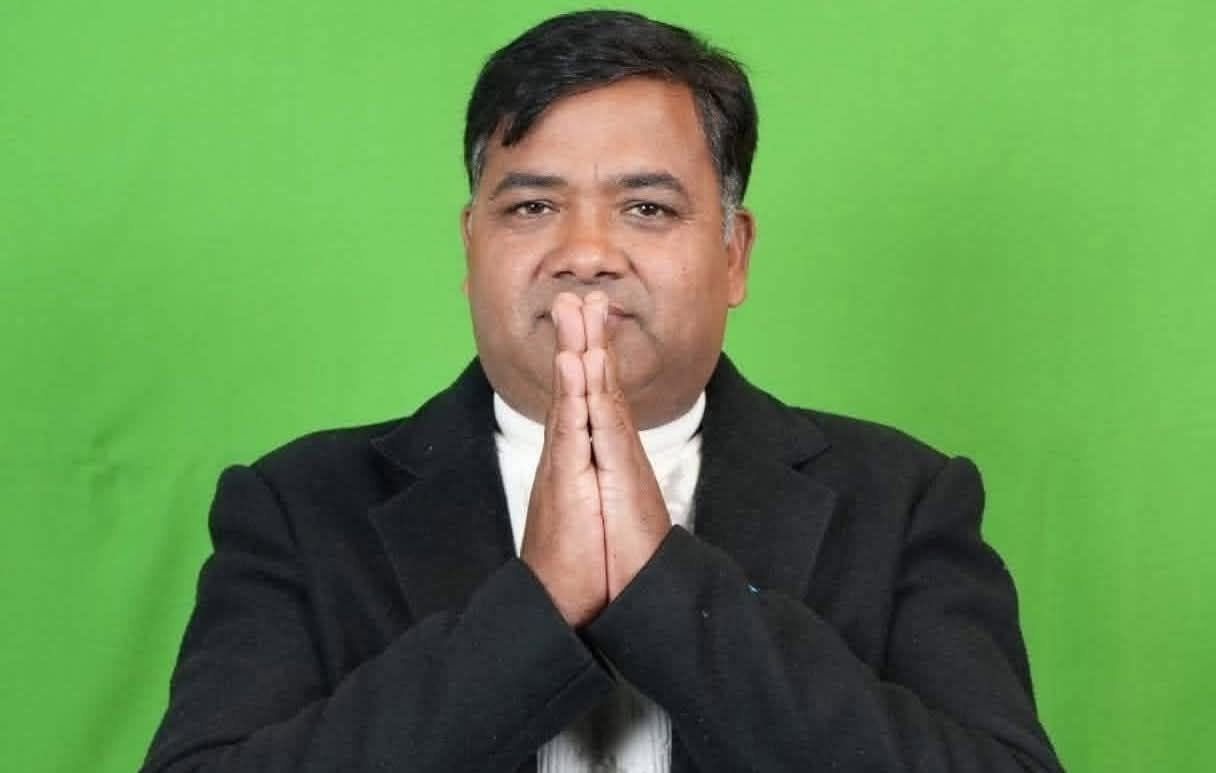
Infrastructure Expert Surya Acharya Advocates for Metro Rail in Kathmandu

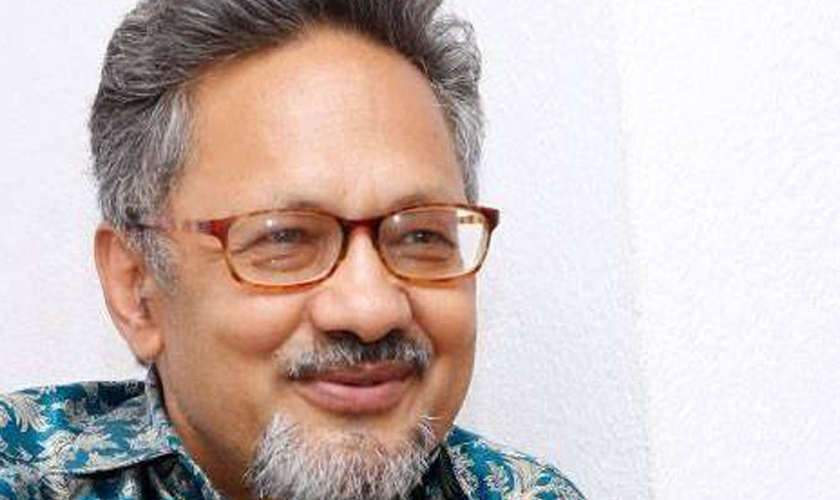
Infrastructure expert Surya Acharya has pointed out the need to build a high-capacity public transport system, 'Metro Rail,' in the Kathmandu Valley, considering its increasing population density and the dire state of road infrastructure.
Acharya stated that there is no alternative to the metro rail in the major corridors to sustain Kathmandu as the country's capital and economic center in the long run. Sharing his views on social media, he presented the reality that Kathmandu's urban transport system cannot cope without a metro rail.
Although it is one of the most densely populated cities in the world, Kathmandu's road infrastructure is extremely weak. However, Acharya believes that there is no seriousness at the state's policy-making level regarding the potential role of the metro rail.
He mentioned that some technical experts also have confusion and incomplete understanding on this subject. Currently, it is often heard in society and policy-making circles that 'We, who cannot even fill potholes on the roads and cannot operate a normal bus service properly, are dreaming of a metro for no reason.'
While such arguments may sound practical and strong at first glance, Acharya claims they will not pave the way for the country's long-term development and progress. He stated that the idea of not building necessary modern infrastructure by showing existing weaknesses is wrong. Instead, he emphasized that the debate should focus on how modern infrastructure can be built by overcoming current weaknesses.
Acharya recalled that similar discouraging situations and negative arguments in Kathmandu were also raised in Delhi, India, before the decision to build a metro rail there.
The first metro rail project in India, which started in Kolkata in 1973 and was 17 kilometers long, took 23 years to complete.
Due to the bitter experience of excessive time and cost overruns, decision-makers in Delhi were skeptical about building and operating a metro. However, following the opinion of experts that there was no alternative to the metro to solve Delhi's urban transport problem, the 'Delhi Metro Rail Corporation Limited (DMRC)' was established in 1995.
Although the Japanese government agreed to provide loan assistance, no one was ready to lead this complex project. Subsequently, retired Indian Railways engineer Shreedharan, who had successfully completed the Mumbai-Goa railway project, was requested to take the lead.
Initially, he refused the responsibility due to fear of government procedures, delays, and political interference. He later agreed to take the leadership only after setting strict preconditions.
He agreed to work only after the government accepted conditions such as 'there should be no political interference in the company's work, the company should be given full autonomy, it should be allowed to work independently within the bounds of law and regulations, files should not be unnecessarily shuttled between any ministry, and if any obstacles arise, the government should immediately remove them.'
Some prominent experts and academics strongly opposed the metro rail, calling it an expensive and unsuitable technology for a developing country like India. However, Acharya mentioned that overcoming those objections, Shreedharan created history by completing the first phase of the Delhi Metro, a 56-kilometer section, two years and nine months ahead of schedule and within the estimated budget.
Following that success, Shreedharan became known worldwide as 'Metroman.' Citing the Delhi Metro as a project that boosted India's national confidence for infrastructure development, and with the knowledge and capacity gained from that project, metro rails are now being built in dozens of cities across India, Acharya stated that a metro rail is not impossible in Nepal with strong willpower and management free from political interference.
This specific news has been automatically translated by AI. As a result, there may be some inaccuracies or language errors.