
Federal Government's Directive on Vehicle Registration Ignored by Province


Kathmandu. The Department of Transport Management of the Federal Government sent a letter a few days ago to the ministries looking after transport in all seven provincial governments and all local levels, directing them to stop the registration of public transport vehicles.
The letter cited that the scientific management of public transport has not been done, leading to excessive air pollution, increased vehicle pressure and traffic jams, causing difficulties in commuting, rising fuel prices, and inconvenconvenience and hardship in public transport and travel. It was stated that registration should be halted until further notice to manage these problems appropriately.
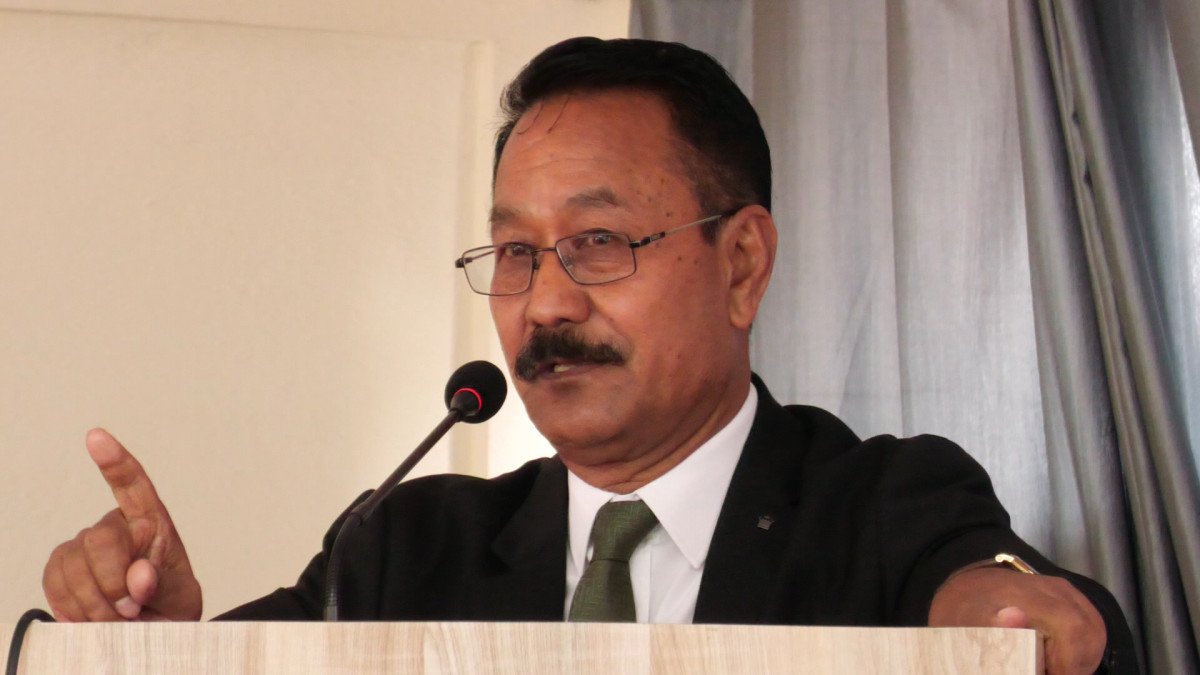
Following the center's directive, registration was indeed halted everywhere for a few days. However, just last week, the Bagmati Province government decided to resume this registration. Khagendra Poudel, director at the Ministry of Labor, Employment and Transport of the province, informed that registration has been reopened considering the problems faced by transport entrepreneurs and their investment status.
“We had halted registration for a few days based on the center's decision. However, as many entrepreneurs complained of facing problems, we have reopened registration based on the minister's directive,” he said.
This is the latest example of the province not adhering to the center's directive.
Currently, the government at the center is led by the Rastriya Swatantra Party, while the province has a joint government of the Congress and the UML. Therefore, it is not unusual for disagreements to arise between two governments with different ideologies.
However, this issue is not limited to this. A similar incident occurred with ride-sharing. There was a dispute between the two governments.
The Gandaki Province government introduced a ride-sharing regulation last year. However, the center issued a directive to stop it, stating that it conflicted with the federal law related to transport, which strained the relationship between the federal and provincial governments. Now, the Gandaki government has brought a second regulation to manage ride-sharing.
According to the current constitutional system, provinces must formulate their laws within the framework of the constitution and federal laws. Apart from this, provincial governments are free to make other decisions. In the mentioned incidents, it appears that the province has tried to challenge the federal law.
In the first incident, the federal government seems to have issued a directive to the provincial government under the Transport Management Act, 2049 BS. Sub-section (3) of Section 24 of the Act states that the Department may order any or all transport management offices to halt the registration of any type of vehicle if it deems it appropriate in the public interest due to environmental pollution, vehicle pressure, road conditions, difficulties in vehicle movement, or similar reasons.
However, the federal government issued a circular to the transport offices to halt vehicle registration without specifying any particular reason. The Ministry of Physical Infrastructure did not inform the provincial governments about when the
This specific news has been automatically translated by AI. As a result, there may be some inaccuracies or language errors.


-(2)_QJLjKxR87n.jpg)