Candidate Campaigns in Surkhet: Rural Voters Absent as Focus Shifts to Urban Electorate

Surkhet. With the House of Representatives election set for Falgun 21, election discussions have taken over social media and urban hubs, from city squares to community resting places. However, the rural electorate remains untouched by the election fervor.
The villages are populated mainly by older voters; most young voters are abroad for employment, or are in the provincial capital, Birendranagar, for jobs or studies. Most party cadres are also currently concentrated in Birendranagar.
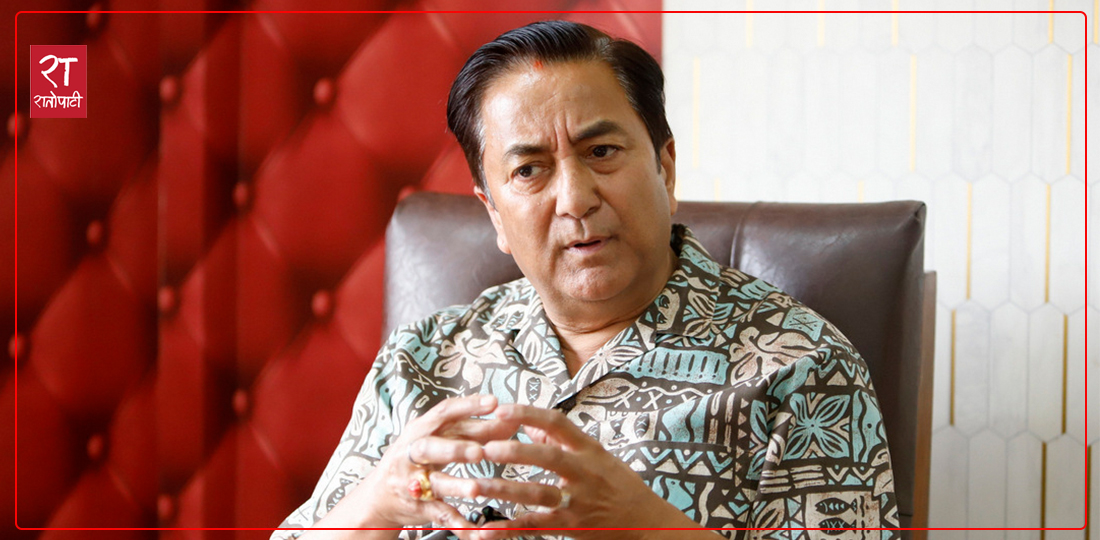
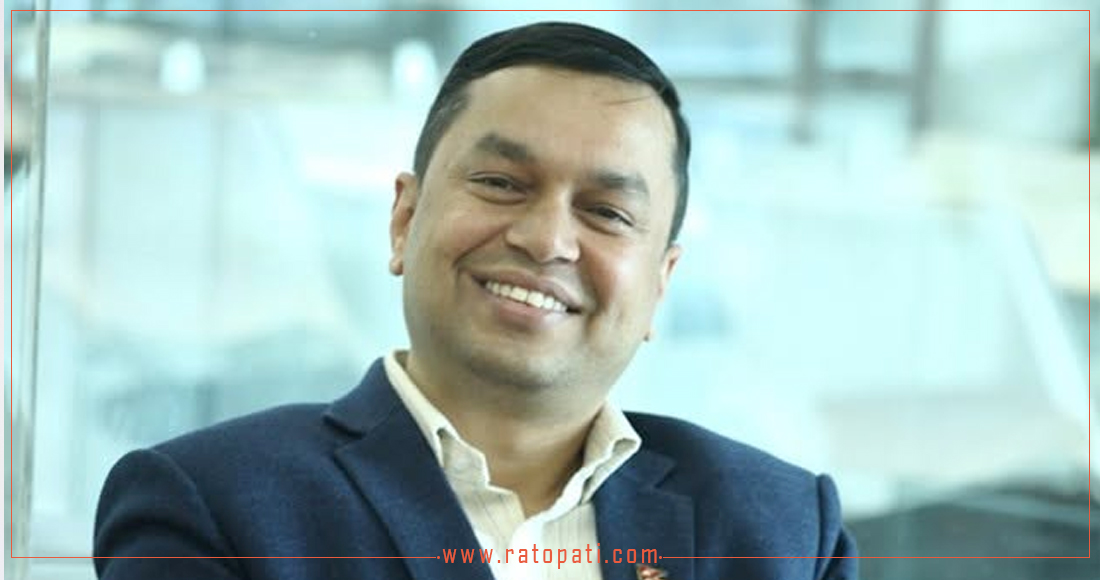
Candidates who have reached out to the villages are now finding themselves having to come to the city to find voters. Most voters from West Dailekh reside in the provincial capital, Birendranagar. In this constituency (Dailekh-2), CPN candidate Yogendra Bahadur Shahi was found in Birendranagar after completing one round of campaigning, searching for voters residing in the city.
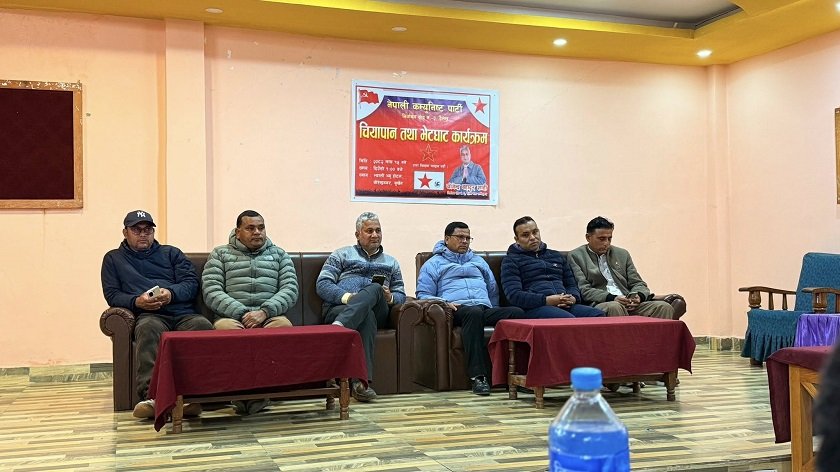
He organized a meet-and-greet and tea session with voters in Birendranagar on Thursday. He says, 'Most voters are still in the city; I came to meet and discuss with the voters in the city, and to listen to what they have to say.'
Dailekh-2 is a constituency where the Maoists have never won any election. In the 2048-2051 elections, the contest was between Nepal Workers' and Peasants' Party (NWPP) and Congress. Since then, the competition has been between UML and Congress. In a sense, it is a stronghold of UML and Congress. Congress won the election in 2056 BS, and UML maintained dominance continuously until 2074 BS.
Congress won the election in 2079 BS. Now, Shahi from CPN states he is entering the electoral field with the preparation to challenge both UML and Congress in this very constituency.
He previously contested the Provincial Assembly (2) election in 2079 BS but was defeated by a narrow margin. Nevertheless, he got the opportunity to serve as the Vice-Chairman of the Karnali Province Planning Commission. The intellectual leader Shahi holds an MPhil in Regional Development from Jawaharlal Nehru University.
RatoPati spoke with him about the election during his visit to Surkhet.
You have come to Surkhet searching for voters in the city. What is the election situation like in the villages, and how are you conducting your campaign?
– After filing nominations, we first went to the local level and met people. We also conducted some door-to-door campaigns to discuss with the people in the villages. We found a sentiment in the villages that was different from what we expected. Voters seem to want to test a new candidate this time. Personally, since I contested an election once before and was defeated by a small margin, I found sympathy towards me. I hope to receive sympathy from young friends in almost all parties.
What kind of agendas did you find among the voters in the villages? Are they the same as before, or are there some new ones?
– It's not that development hasn't happened in the villages; roads and drinking water have reached many places. But the people are not satisfied. They are witnessing misgovernance. We failed to systematize the system. We didn't develop the system, there was no good governance and transparency, and the government was not accountable.
Therefore, while there are some traditional hopes among voters, some agendas have changed. Good governance seems to be a major issue. Gen Z youth have also raised their voices demanding good governance and an end to corruption.
You lost the previous Provincial Assembly election but are now seeking to enter the House of Representatives. Why?
– The country is in a complex situation right now. Geopolitics is also tricky. Nepali politics is at a critical juncture. There are pressing desires of the youth. The major political parties have failed to manage the country.
In this situation, I feel that a capable person must go to the parliament. Although many leaders from our constituency have reached parliament before, we rarely heard them speak or raise the voice of Dailekh. I have filed my candidacy because I feel I must reach parliament to address the issues of my constituency and the youth, and to address the issues of national development.
In the case of Dailekh, there are large prosperity projects like petroleum exploration, the route from here via the Silk Road to Hilsa leading to Kailash Mansarovar, and Upper Karnali. These are also gateways to national prosperity, and a person is needed to speak up and advocate for them. I believe I can do that, and I can contribute to the prosperity of Dailekh and Nepal by fulfilling that responsibility.
Dailekh-2 is a stronghold of UML-Congress. They have their traditional voters. Wouldn't it be difficult for you to win there? Even when there was a Congress-Maoist alliance previously, you couldn't win.
– When I contested the previous election, I came in suddenly (moving from UML to Maoist); there was a lot of ambiguity. Although it seemed like an alliance, we thought we would win. There were also many aspirants within Congress, and the major organization was Congress itself. I have returned to the field this time thinking I must fight to build the party. However, I found the public's perception to be completely different now. I am more enthusiastic than in the previous election. And this time, the public will not vote as they did before; the public will choose a new person.
Everyone considers my candidacy appropriate. In some places, I found that people had already made their decision before I even arrived. Looking at it this way, it seems I will win.
So, by how many votes do you think you will win?
– I think I will win by securing around 12-13 thousand votes.
What is the basis for winning the election?
– Firstly, voter turnout will be very low this time. There are no voters in the villages. It appears to be a three-way contest. There is extreme dissatisfaction within Congress and UML. There is an attraction towards RSP among youth on social media. Most of them are living abroad. Among them too, I found discussions ongoing about who, other than Congress-UML, could be a winnable candidate. Thus, I believe favorable conditions are being created for us this time.
In 2079 BS, the CPN's proportional representation vote was around 8,000. I will get 1-2 thousand personal votes from independent youth. Thus, while others' votes decrease, mine will increase. Pulling two to two and a half thousand votes from other parties will lead to a winning position. RSP will also cut 4-5 thousand votes from Congress-UML.
But Congress and UML say this is our fortress, we have organizational votes, and the competition will be between Congress-UML?
– It won't be as they think. Gyanendra Shahi won in Jumla in 2079 BS, didn't he? People from all parties voted for him. Mine is a kind of common candidacy now. Because I have also shed my blood and sweat in UML. When I lost the previous election, many factions of Congress came and cried to me; I didn't feel like I had lost the election.
Maoist (CPN) is also an old party, just like Congress-UML. In your view, between which parties will the electoral competition be held?
– This is also a technical matter. I think the competition this time will be between UML and us. If the situation changes slightly, it could even be a three-way contest. We will break the narrative that the Maoists have never won this time. The star will shine in the UML-Congress stronghold. In Dailekh, the Maoists are a new force in a way, and as a candidate, I also fall among the new ones.
This specific news has been automatically translated by AI. As a result, there may be some inaccuracies or language errors.
_Ato2pcdYoE.jpg)