Former Secretary Keshav Kumar Sharma Discusses Nepal's Infrastructure Development Challenges and Solutions

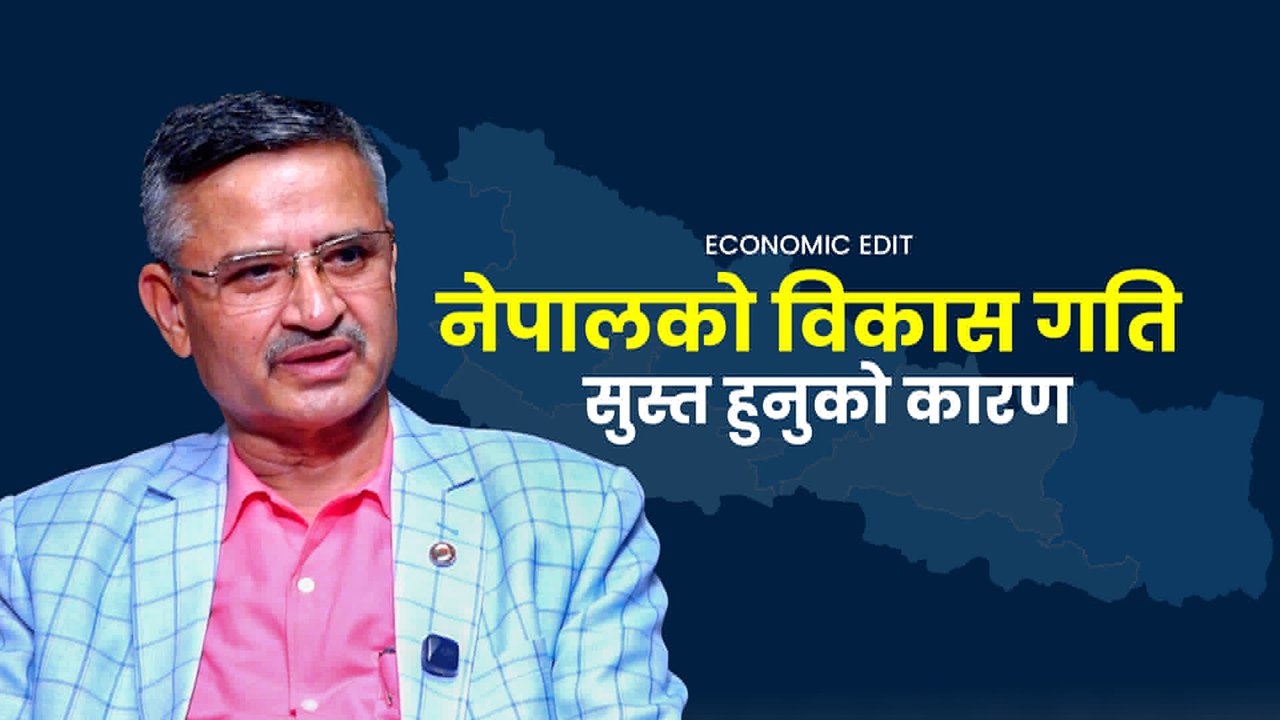
Kathmandu. Slow pace of infrastructure development, national pride projects not being completed on time, and the weak condition of road safety and public transport have been major challenges for Nepal for a long time. Recently, the government has started the practice of merging the Ministry of Physical Infrastructure, Ministry of Urban Development, and Ministry of Water Supply into an integrated 'Ministry of Infrastructure Development' to streamline performance, enhance coordination, and eliminate duplication of work. Along with this, a serious review of Nepal's overall infrastructure development policy and practical ground, and the way forward, has become necessary.
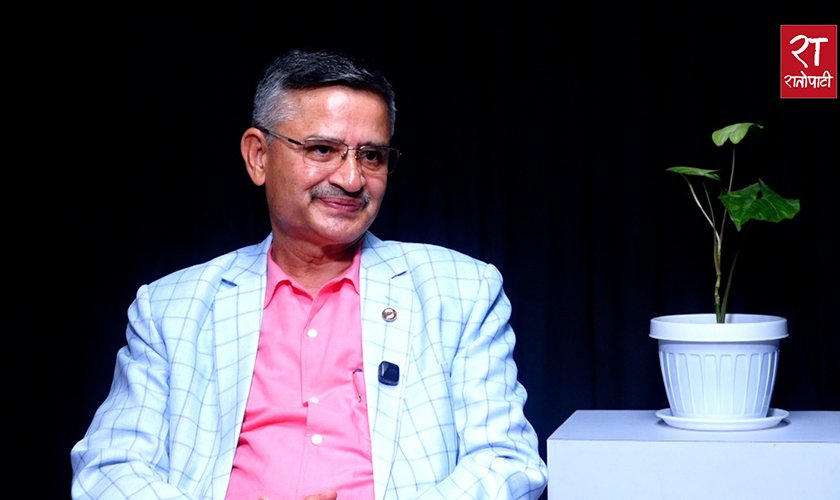
Keshav Kumar Sharma is a former secretary of the Ministry of Infrastructure Development (formerly Ministry of Physical Infrastructure and Transport). In Ratopati's 'Economic Edit', Sharma was interviewed focusing on the overall state of Nepal's infrastructure development, the structural reasons for the delay in development projects, the relevance of the proposed 'Sunset Law', the technical and economic feasibility of tunnels and railways, as well as measures to improve road safety and public transport. The following is an edited excerpt of the interview:
The government has merged the Ministry of Physical Infrastructure, Ministry of Water Supply, and Ministry of Urban Development into a powerful 'Ministry of Infrastructure Development' with a substantial budget. How do you view this?
When physical infrastructure work was scattered across many ministries, there was a lack of coordination, duplication of work, and policy ambiguity. This new arrangement will solve those problems. With a single ministry, a single leadership, and various departments under a single secretary, the division of work becomes clear. Bringing water supply, urban development, and road transport under one ministry is expected to remove implementation difficulties and bring good results through effective coordination.
What are the main benefits of merging the three ministries?
The main benefit is the elimination of duplication. In the past, the Ministry of Urban Development, the Department of Urban Development and Building Construction, the Ministry of Water Supply, and the Department of Roads all operated road and water supply projects in their own ways. Sometimes, when projects received budget allocations from two or three bodies, it caused technical and administrative difficulties.
Now that the ministry is unified, it is easier to select projects and eliminate duplication. Furthermore, administrative processes become much smoother as coordination among various bodies related to water supply, urban development, and physical infrastructure comes under a single umbrella.
You have spent three decades in Nepal's infrastructure sector. How do you recall your major contributions and the main challenges in your field during this period?
I had the opportunity to work at various levels during my service. While in the field, the responsibility was to complete assigned tasks on time and with quality. At the policy level, I worked in ministries and departments from 2005 BS. Apart from some sectoral work like the Tamakoshi-Manthali-Khurgot project under the ADB's Project Directorate, I contributed mostly at the policy level at the center. This gave me good experience at both the field and policy-making levels.
When I worked in the field, the Government of Nepal itself built few bridges. Most of the work was done by donor agencies. In the 1990s BS, I had the opportunity to work on the construction and maintenance of many bridges and roads in the districts of Chitwan, Pyuthan, Rolpa, Nawalparasi, Rupandehi, Siraha, and Udayapur.
At the policy level, I participated in the formulation of the 20-year Master Plan for the Road Transport Sector, the Priority Investment Plan, and the five-year Strategic Plan (2017-2022) of the then Ministry of Physical Infrastructure. Concepts related to the upgrade of the East-West Highway, tunnels, and viaducts (high bridges) currently in implementation are outcomes of those plans. After the 2015 earthquake, I worked as the coordinator for the 'Post Disaster Needs Assessment' for the reconstruction of the transport sector. While in the Maintenance Division of the Department of Roads, I contributed to making the maintenance system technology-friendly and preparing a road inventory.
During my tenure at the Foreign Cooperation Division of the Department of Roads, the Mugling-Narayangadh road upgrade project began. As the Director of the ADB Project Directorate, I secured investment from ADB for the Narayangadh-Butwal, Pokhara-Mugling, and Kamala-Kanchanpur road sections. As the Director General of the Department, work progressed on the remaining sections of the East-West Highway, the Nagdhunga Tunnel, and the Siddhababa Tunnel. During the COVID-19 lockdown, we took advantage of the reduced traffic to accelerate and complete the maintenance work on major roads in Kathmandu (e.g., Gaushala-Chabahil, Tripureshwor-Thankot, Boudha-Sankhu, Satdobato-Chapagaon).
After becoming a secretary, I worked in the Ministry of Irrigation for about 3-4 months and at the Water and Energy Commission, where the 'River Basin Master Plan' was approved. Upon returning to the Ministry of Physical Infrastructure, work progressed on important projects such as the Butwal-Gorusinghe-Chandrauta section, the Kamala-Bagmati-Pathlai section (with World Bank assistance), and the Kakarbhitta-Itahari section (with ADB assistance). Administratively, we initiated the process of clearing audit irregularities and making the employee transfer system transparent by posting it on the website.
What political and administrative challenges did you face during this period?
The biggest challenge was the frequent change in political leadership. During my three years at the Ministry of Physical Infrastructure, I had to work with 6 ministers. New leadership would not get enough time to understand the ministry's priorities and start work before changes occurred, so a lot of time was spent in a transitional state. Another challenge is the limitation of budget and resources. In some cases, even after the work was completed, there was an inability to make payments.
Natural and unexpected challenges were also significant. When I was the Director General of the Department of Roads, managing health protocols and labor during the COVID-19 lockdown to keep work going was very difficult. I was the Deputy Director General of the Department of Roads during the earthquake. After the Tatopani border crossing was completely closed, I conducted a field study and submitted a report to open the Rasuwagadhi border crossing. Difficulties in the availability of construction materials, tree cutting, and environmental clearances still persist. Similarly, during my tenure as secretary, a major nationwide flood and landslide in October 2081 BS completely blocked the BP Highway and Kanti Lokpath. Even during the Dashain festival, we worked in the field and managed to reopen those roads.
Compared to other countries, Nepal's development pace appears very slow. What are the main reasons for projects that should be completed in one or two years dragging on for decades?
There are some global and some specific reasons for project delays. During a visit to Washington D.C. in the USA, I was surprised to hear that it would take seven years to improve a junction. There too, environmental impact assessments and utility material management take time. In our country's context, we are behind the global average. The main reason for this is the lack of inter-agency coordination. Each government agency holds a narrow view of protecting only its domain instead of taking development as a shared national responsibility, which causes problems. The lack of a system to advance national pride projects through special laws or fast-track mechanisms also leads to project delays.
Who is primarily responsible for project delays – contractors, government employees, or the Ministry of Forests?
It is not possible to blame just one party; there are multi-faceted problems. Regarding the government side, insufficient budget allocation is a major reason. We cannot expect contractors to complete work on time if only 15 million is allocated for a bridge that requires 200 million. Besides this, delays in approving technical designs and the very long administrative decision-making process are also problems.
Lack of inter-agency coordination is another problem. When there is no coordination in tasks like obtaining consent for tree cutting in forest areas, relocating electric poles, and managing water pipes, work cannot start even after the contract is signed. Local-level issues: Work is obstructed due to the vested interests and stances of local bodies and residents in the excavation and use of construction materials (stones, gravel, sand).
Contractor weaknesses are another reason. Many projects have been left incomplete due to contractors taking on more work than they can handle, main contractors subcontracting the work, and failing to deploy the necessary technical manpower and equipment at the work site.
The government is preparing to introduce a 'Sunset Law' to ensure projects are completed on time. What kind of law is this?
A 'Sunset Law' is a temporary law that is effective only for a specific period. There are two types: Project-specific laws: For example, in India, a separate 'Sunset Law' was enacted for the Delhi Metro construction to facilitate it. Under this, powers related to environmental clearance, compensation determination, and decision-making were delegated to the project head, preventing other laws from becoming obstacles.
National legal framework is another type. Under this, for a specified period (e.g., two or five years), laws related to development and construction are placed above other prevailing laws (e.g., Forest or Environment Acts) to expedite the decision-making process. In summary, a sunset law is a law that exists only until the specified goal is achieved and is automatically repealed thereafter.
With the Nagdhunga Tunnel about to open soon, Nepal is entering the era of tunnels. How necessary are tunnels given Nepal's topography, and what is their feasibility?
Given that 83 percent of Nepal's territory is hilly and mountainous, the need for tunnels is extremely high. For example, the East-West Highway is about 1,027 kilometers long, while the Pushpalal (Mid-Hill) Highway passing through the hilly region is nearly 1,800 kilometers long. The length has increased due to inclines, declines, and curves on the hilly routes. Tunnels and high bridges can significantly shorten this distance. Furthermore, tunnels are also useful for safety in areas with a high risk of landslides.
However, tunnel construction is very expensive. Tunnel construction costs 15 to 20 times more than normal roads. Therefore, they should only be used on roads where sufficient traffic and economic returns are ensured. Constructing tunnels on roads like the Kathmandu-Terai Expressway (Fast Track) is economically beneficial as it saves fuel, time, and reduces vehicle wear and tear. In the future, for the construction of feasible tunnels like Khurkot-Chiabari or Thankot-Chitlang, domestic engineers and contractors should be involved, which can reduce construction costs by 50 to 60 percent through technology transfer.
The traditional practice of rushing budget spending and development work only in the month of Asar has become a major disease of Nepali development. How can this be ended?
Behind this are multi-faceted reasons including our mentality, geographical conditions, and budgetary system. First, we have a habit of not working systematically. Second, Nepal's seasonal cycle also affects this. Work is not done in Saun-Bhadra due to floods and landslides. The main festivals fall in Asoj-Kartik. Productivity is low from Mangshir to Magh due to cold and short days. Therefore, Phalgun, Chaitra, Baisakh, and Jestha are the main working months.
Third, the budgetary system. Our budget is a deficit budget. Even though the budget is allocated on paper, the actual cash flow in the treasury is not timely, leading to delays in payments even after the work is completed. Fourth, statistical illusion. The fact that about 30 to 40 percent of the expenditure occurs in Asar is due to cumulative payments. Quality testing of work done in Chaitra or Baisakh (e.g., 28-day test for concrete setting) and completion of administrative procedures result in payments being made in Asar, making it appear as if work was only done in Asar.
The government has recently amended the Public Procurement Act. Will this address the existing problems in the construction sector?
Partial amendments to the act alone will not solve all problems. The amendment of the act has its own long parliamentary process. For now, some pressing issues have been attempted to be addressed. However, clear and simple legal provisions are still lacking for specific sectors such as information technology and software procurement, health equipment procurement, and fertilizer procurement. The procurement process itself tends to be slow due to the lengthy evaluation process. Procurement processes in emergency situations like disasters and pandemics need to be made more practical.
On average, seven people are losing their lives daily on Nepal's roads. What is the main cause of this horrific road accident rate?
There are three main reasons for this. The first is the geographical structure. Since a large part of our country is hilly, even a minor accident can cause vehicles to fall directly down cliffs or into rivers, leading to high casualties. Second is the condition and regulation of vehicles. Old vehicles, displaced from cities, operate on rough and remote hilly roads. Accidents are more frequent when vehicles carry more passengers and goods than their capacity and when the road conditions are not suitable.
Third is the weak engineering of roads. Most rural roads have been dug with bulldozers without proper technical surveys and engineering standards. Even on major highways, there has not been sufficient investment in widening roads at necessary curves, ensuring super-elevation and camber, and installing road safety structures (e.g., crash barriers, parapets, signage).
In addition, driver negligence, lack of traffic awareness among road users, speeding, and fatigue from driving continuously for long hours (more than 8 hours) are also major causes. The tendency of 'ribbon development', where settlements and markets develop right along the roadside, also increases the risk of accidents.
What measures should be adopted to reduce road accidents?
First, 'Road Safety Audits' must be made mandatory during the design and construction phases of roads. Second, only vehicles suitable for the width and capacity of the road should be given route permits. Third, adequate road safety infrastructure such as caution signs, barriers, and delineators should be provided. We have examples where safety improvements on the Mugling-Narayangadh and Surkhet-Jumla road sections led to a significant reduction in accidents. The budget for this year has allocated a good amount for road safety; its effective implementation will help reduce accidents.
Nepal's public transport sector is in disarray. What model should the government adopt to improve it?
First, public transport should be moved to a company model. The competition among small entrepreneurs with limited vehicles has increased speeding and lane-cutting tendencies. If transport operates under large companies, revenue and profit sharing will be organized, and competition will be healthy.
Second, route management should be done clearly. In urban areas, public transport should be divided into primary, secondary, and tertiary routes, and a clear policy should be implemented regarding which type of vehicle operates on which route.
Third is passenger-friendly infrastructure. Urban roads should not just be places for vehicles to run but should be made pedestrian-friendly. Adequate footpaths, public toilets, and waiting shelters will encourage people to walk for short distances instead of using vehicles.
Political parties often present grand agendas like railways and water transport during elections. How feasible and necessary are water and rail transport in Nepal's context?
Regarding water transport, there are two aspects. There is good potential for internal water transport (e.g., steamers or shallow-depth vessels) on the country's major rivers (Koshi, Gandaki, and Karnali). This is currently working effectively on the Chatara to Bhojpur section. A separate government unit is needed to regulate and promote this. The second aspect is that Nepal, as a landlocked nation, needs to study and prepare to utilize its international maritime transit rights.
Regarding rail transport, a 54-kilometer railway is currently in operation on the Janakpur-Jayanagar section, with expansion to Bardibas underway. The main reason for the railway operating at a loss is the expensive import of technical and administrative personnel (e.g., train drivers) from India. If domestic personnel are trained and deployed by enacting necessary laws, the operating costs can be significantly reduced, and losses can be minimized.
Regarding the East-West railway, Nepal's main trade and transport flow is more north-south (towards India and China) rather than east-west. Therefore, in the current situation, constructing an East-West railway is unlikely to yield significant economic returns. North-south railway lines like Kathmandu-Kerung or Kathmandu-Raxaul are very expensive and technically challenging (requiring more than 90 percent tunnels and high bridges), so investment in such large projects should only be made after a detailed analysis of the existing road network and economic returns.
How do you evaluate the new government's approach to infrastructure development and budget allocation?
Since the new government has been in office for a short time, it is not yet time for a full evaluation of its working style. However, the budget and policy programs include good concepts for infrastructure development. The concepts of road safety, maintenance, and integrated road networks are positive. The main challenge will be its effective implementation.
Video/Photo: Manoj Khadka, Ayush Dhami/Ratopati
This specific news has been automatically translated by AI. As a result, there may be some inaccuracies or language errors.