Cooking Oil and Rice Prices Surge in Nepal Ahead of Elections, Prompting Regulatory Scrutiny

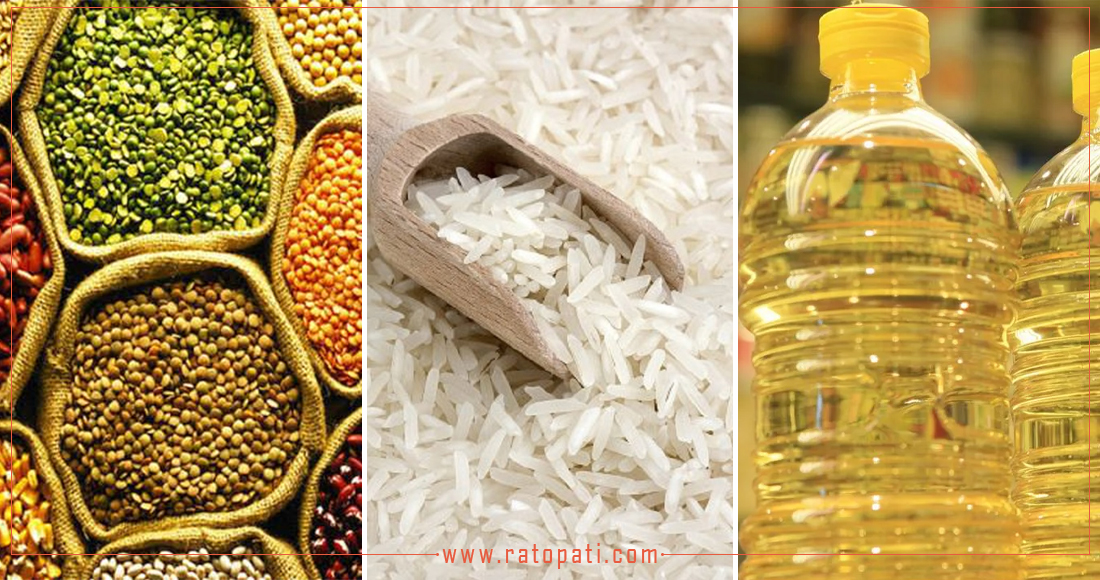
Kathmandu. The prices of rice and edible oil have increased in the market just before the elections. The Department of Commerce, Supply and Consumer Protection stated that complaints have been received regarding edible oil prices rising by up to NPR 500 per carton. Similarly, complaints indicated that rice prices have increased by up to NPR 100 per sack.
The Department of Commerce, Supply and Consumer Protection has initiated monitoring following complaints of unnatural price hikes in rice and edible oil, the department announced.
According to an official from the department, the MRP for a bottle or carton of oil is NPR 290, but traders are selling it between NPR 265 and NPR 270. "Since sales are happening within the MRP, it is legally difficult to take action, but it is a fact that prices have practically increased," the official said, adding, "It appears the price increase originated from the factory itself."
Preliminary monitoring and analysis by the department suggest that the main reasons for the rise in oil prices in the market are price increases in the international market and daily price setting. It is claimed that the price of raw material for edible oil in the international market has increased by about NPR 3,000 per barrel currently. Businesspersons determine oil prices similar to gold rates. Even if the oil in stock is old, the trend of increasing market prices the very next day when international market prices rise has been observed.
Department officials report that monitoring has revealed shortages appearing alongside the price hike in edible oil. "There is a problem with supply from the industry; there isn't much stock. There hasn't been a smooth supply for the last 3-4 days," the official stated.
Reasons for Oil Shortage
Three main reasons are evident behind the price hike and creation of shortages for edible oil. According to an industrialist, high demand in the Indian market, the attraction of cash transactions, and the rise in raw material prices have caused the problem.
The statistics of the department mention that during the first six months of the current fiscal year (Shrawan–Poush), soybean oil worth NPR 57.437128 billion, equivalent to 366,984.11 liters, was imported. Of this oil, soybean oil worth NPR 56.082426 billion, equivalent to 272,275.99 liters, was exported to India.
"Due to the cold weather and the approaching Holi festival in India, consumption and demand for oil are high. Since most transactions in Nepal are done on credit, but cash payment is received when exporting or selling to India, businesspersons are attracted towards exports," the industrialist said, "The effect of the rise in international raw oil prices is also visible."
His understanding is that prices have increased due to rising demand in India because of the Holi festival and winter, and the ease of cash transactions compared to Nepal.
What is the status of oil import-export?
Imports appear to have increased compared to the previous year. Customs department statistics show that during the first six months of 2081/82 (Shrawan–Poush), soybean oil worth NPR 24.408328 billion, equivalent to 170,113,341 liters, was imported, whereas in the same period this year, soybean oil worth NPR 57.437128 billion, equivalent to 366,984,110 liters, was imported.
However, sunflower oil imports have decreased. Last year during the same period, oil worth NPR 13.722763 billion, equivalent to 98,878,847 liters, was imported, while in the same period this year, sunflower oil worth NPR 436.777 million, equivalent to 56,169,741 liters, was imported, the data states.
The department's statistics mention that during the first six months of the current fiscal year (Shrawan–Poush), soybean oil worth NPR 57.437128 billion, equivalent to 366,984.11 liters, was imported. Of that oil, soybean oil worth NPR 56.082426 billion, equivalent to 272,275,918 liters, was exported to India.
It is mentioned that during that period, sunflower oil worth NPR 436.777 million, equivalent to 56,169,741 liters, was imported, while sunflower oil worth NPR 4.784488 billion, equivalent to 22,267,148 liters, was exported.
Reason for Rice Price Hike
The price of rice in the Nepali market has started to rise, citing increased rice exports from India to third countries, according to industrialist Vibhog Agarwal, who stated that the price per sack of rice in the Nepali market has increased by up to NPR 100.
The analysis by businesspersons is that because domestic production cannot meet demand and there is reliance on imports, even small fluctuations in the Indian market are making Nepali kitchens more expensive.
According to Agarwal, even though the paddy harvesting season has just concluded in Nepal, the price increase is not considered normal. Generally, prices rise only three months after paddy procurement, but the price hike occurred in just a month and a half. The main reason for this, the industrialist argues, is India's agreement to export 200,000 metric tons of rice to Bangladesh.
"Nepal is not self-sufficient in rice; we have to depend on Indian paddy," he said. "After it became certain that rice would go from India to Bangladesh, the price of paddy increased in India itself, which has had a direct impact on the Nepali market." Currently, both coarse and fine varieties of rice have seen an average price increase of NPR 100 per sack.
The analysis by businesspersons is that because domestic production cannot meet demand and there is reliance on imports, even small fluctuations in the Indian market are making Nepali kitchens more expensive.
This specific news has been automatically translated by AI. As a result, there may be some inaccuracies or language errors.