CPN Discusses Provincial Government Formation with Nepali Congress and CPN-UML

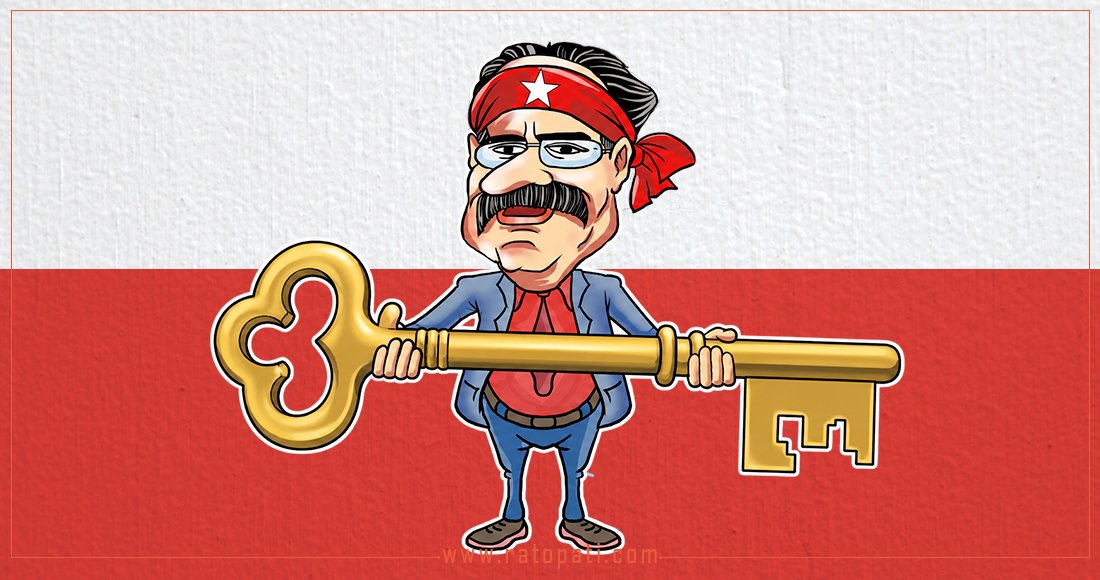
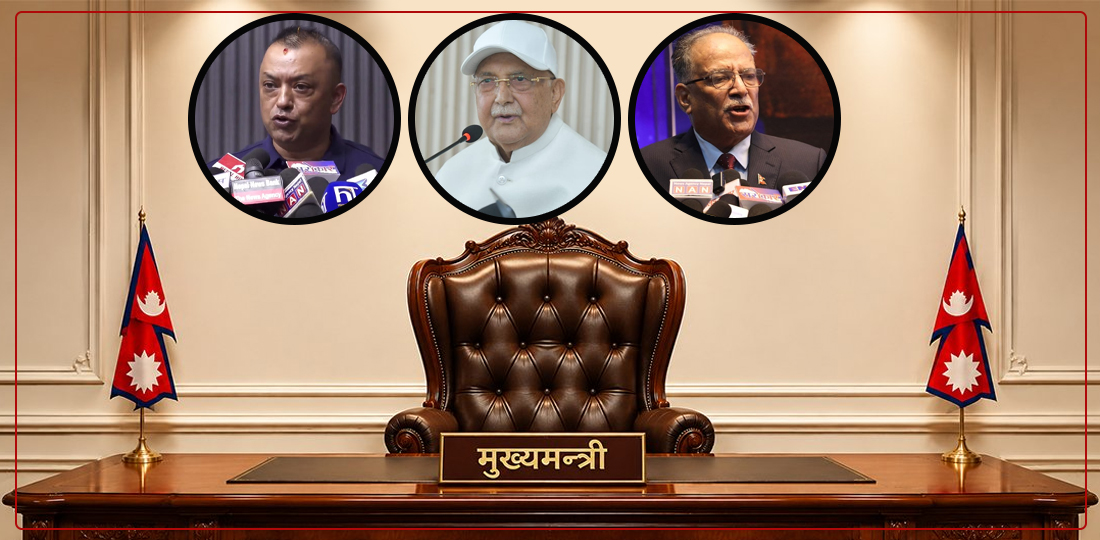
Kathmandu. The Communist Party of Nepal (CPN) is continuously holding dialogues with the ruling Nepali Congress and the main opposition CPN-UML for the formation of provincial governments. The alliance between Congress and UML had collapsed after the prior agreement for rotational government operation was not implemented. The CPN, which is being courted by both Congress and UML for government formation, has not yet made an official decision public. CPN Coordinator Pushpa Kamal Dahal 'Prachanda', who left for a three-day visit to Sri Lanka to participate in the South Asian Regional Conference, discussed this matter with Co-coordinator Madhav Kumar Nepal on Monday. The two leaders concluded that the party should only join the government if a consensus government involving Congress, UML, and CPN is formed, and the party should take the initiative for it. Both Prachanda and Nepal appeared to be in agreement that the party needs to make a concrete decision on what to do if a government cannot be formed. Prachanda's personal secretary Govinda Acharya clarified that the party will not rush into participating in provincial governments. Acharya informed that the party is taking initiative to form consensus governments in all seven provinces. "We are not in favor of forming a government by allying only with Congress or UML. There is a need for all leftist, progressive, and patriotic forces to unite in favor of the constitution, republic, and nationality," he told Ratopati. "The party has already made a decision on this matter. Based on that, we are taking initiative to form a government including Congress and UML. Informal discussions are ongoing among the three parties, but no conclusion has been reached." Acharya also stated that discussions are underway from both sides regarding the meeting that was supposed to take place between UML Chairman KP Sharma Oli and Prachanda. CPN's Organization Department Chief Barsaman Pun and leader Parmesh Hamal are continuously in discussions with Congress and UML for forming provincial governments based on consensus. From Congress, Vice-president Bishwaprakash Sharma and General Secretary Gagan Kumar Thapa are in dialogue, while from UML, Vice-chairman Ram Bahadur Thapa and General Secretary Shankar Pokharel are continuously involved in discussions. Similarly, CPN's Publicity Department Chief and Spokesperson Prakash Jwala stated that they are not in favor of forming provincial governments by allying only with Congress or UML. Jwala informed that although discussions were held with Co-coordinator Nepal regarding provincial government formation, the dialogue with Oli has not been confirmed. Prachanda and Nepal are going to Janakpur at 4 PM to participate in a program of the Madhesh Province Party Committee. Jwala said that a meeting might take place after their return. "Discussions were held yesterday with Coordinator Prachanda and Co-coordinator Madhavji regarding provincial government formation. Our clear stance is that it is not appropriate to form a government by allying with only one party at present. It would be best if the three parties form the government together. The party will make a policy decision on what to do if a government cannot be formed at all. Discussions will also be held with Congress and UML on this matter," Jwala said. With a month left to take a vote of confidence in Sudurpashchim and Karnali provinces, the CPN does not appear to be in a hurry. Both parties have not officially informed that the Congress and UML alliance has broken. These three parties, which have become quite weak at the federal level after the Janji movement, are compelled by circumstances to stand together in the provinces. After the House of Representatives elections held last February, the seat count for Congress, UML, and CPN has shrunk to 80. With about a year left in the term of provincial governments, CPN concludes that engaging in power games again will not send a good message externally. Therefore, it has emphasized the formation of a consensus government. Two Opinions within CPN Two factions have emerged within the CPN regarding participation in provincial governments. Leaders like Jhalanath Khanal, Narayan Kaji Shrestha, Pampha Bhusal, and Shakti Basnet are in favor of CPN not engaging in power games. On the other hand, leaders like Coordinator Prachanda, Co-coordinator Nepal, Barsaman Pun, Parmesh Hamal, and Prakash Jwala are in favor of participating in the government if a consensus environment is created, and if there is no consensus, the authority to decide should be given to the respective provincial committees. However, leader Shakti Basnet informed that no conclusion has been reached as discussions are ongoing within the party on this matter. "Internal discussions are being held on whether to participate in provincial governments. No conclusion has been reached yet. We will respond only after a decision is made," he said. According to one leader, the CPN is divided on which party to cooperate with, Congress or UML. Prachanda and Nepal do not appear to be in favor of cooperating with UML in the current situation, citing that Oli's working style has not improved. Similarly, some leaders, including Jhalanath Khanal, are against cooperation with Congress. "There is no consensus within the party on forming a power alliance in the provinces. Some colleagues do not appear to be in favor of forming a power alliance with UML at this time, as Oli's working style has not improved. Some colleagues say that cooperating in power when Congress itself is divided would be counterproductive. The party will reach a conclusion on how to proceed," said the leader. Another CPN leader clarified that cooperation with Congress would be more practical than with UML. The leader believes that Oli's arrogant statement on the occasion of the birth anniversary of the late UML leader Madan Bhandari on June 14th is an obstacle to leftist unity. At the program attended by former President Bidya Devi Bhandari, former Prime Minister Oli, along with Prachanda, Nepal, and Khanal, were present. At that program, Prachanda emphasized the need for immediate unity and cooperation among leftists if possible. However, Oli rejected Prachanda's proposal, stating that party unity was not possible and that those who wished to join UML could be welcomed. "Oli's statement at Madan Bhandari's birth anniversary program clearly shows that his arrogance has not diminished. Congress has proposed cooperation with us out of compulsion because they are in a power crisis," the leader said. "In terms of power cooperation, it is easier with Congress. However, since Congress is divided into two parts, there is no certainty about what will happen when. The Deuba group is dominant in the province, and the Gagan group is dominant in the center. When Deuba was dominant from the center to the local level, there was an explosion in Koshi and Bagmati." Meanwhile, CPN provincial leaders are awaiting the central decision. The government formation process has not moved forward concretely because there is no clear decision from the center on which party, Congress or UML, to cooperate with. A negotiation team has been formed under the leadership of Sudurpashchim Parliamentary Party leader and province co-in-charge Khagaraj Bhatta. Bhatta informed that although dialogue has been held with both Congress and UML, a central decision has not been made. "We have initiated dialogue with both sides to form a government under our party's leadership. No decision has been made by the center regarding the power equation," he said. Meanwhile, leader Ramkumar Bhattarai said that the party will make policy decisions that are convenient for the provincial committees. "We are not in favor of joining the government except in the process of forming a consensus government. However, if a government cannot be formed in the province without the CPN, the party will make a policy decision," Bhattarai said.
This specific news has been automatically translated by AI. As a result, there may be some inaccuracies or language errors.
_mKzzIyOWNL.jpg)
_kE6hmvuewe.jpg)