MP Narbahadur Bista Questions Election Commission's Independence

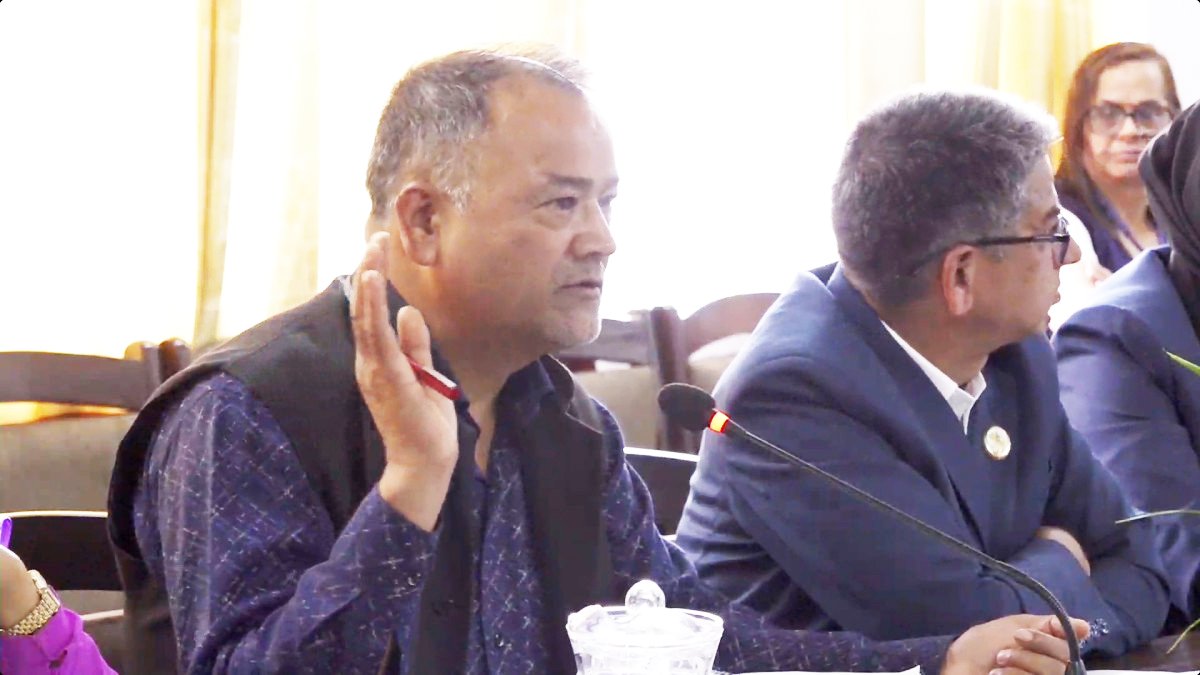
Kathmandu. Member of Parliament (MP) of Nepal Communist Party (NCP) Narbahadur Bista has said that it feels like the Election Commission has not been able to be completely free from the government's influence.
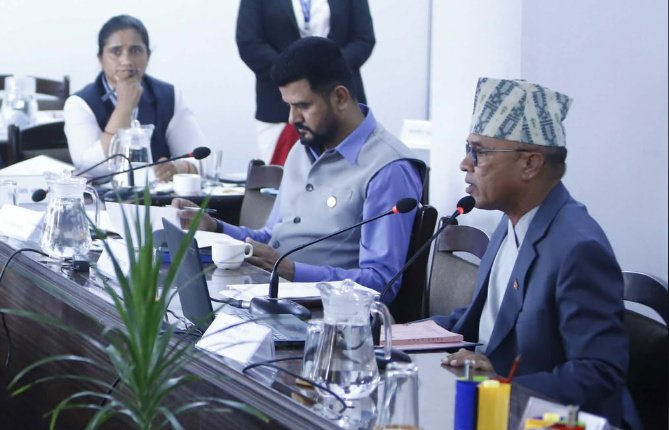
During the hearing of proposed Election Commissioner Guru Prasad Wagle in the (joint) Parliamentary Hearing Committee, he questioned the impartiality of the commission.
MP Bista cited the decision related to the special general convention of the Nepali Congress as an example and accused the commission of making decisions under the influence of the then-ruling power. He said that the special general convention, which excluded the leadership that came from the regular general convention, was recognized.
He alleged that the commission rejected the complaint against the special general convention and recognized the special general convention itself. He mentioned that even though the matter reached the Supreme Court, the court also upheld the commission's decision, claiming that institutions in Nepal work under the pressure of power.
Stating that both the court and the Election Commission should be able to work independently and impartially, he also said that a mechanism is needed to immediately take action against bodies or officials who make wrong decisions. 'Regarding impartiality and transparency, regarding freedom, just one example, yesterday the then Nepali Congress party held a special general convention,' he said, 'The 14th General Convention filed a complaint with the Election Commission against the decisions made by the special general convention. Even when a complaint was filed seeking legality, the Election Commission certified the special general convention.'
Commenting that the commission and the court could not be impartial, he added, 'The case went to the Supreme Court, and the Supreme Court did the same. Therefore, even though Election Commissioners are said to be impartial, it is felt that they are under the government's shadow in one way or another. That shadow is visible in both the court and the Election Commission. What is your method to work impartially during your tenure and to take action against what is wrong?'
Similarly, he also said that the current limit on election expenditure is difficult to implement in practice. He mentioned that the expenditure limit of up to 3 million rupees is low. He suggested that a system could be implemented in Nepal where the state bears some of the election expenses of national parties and the Election Commission monitors it. He said that implementing such a system would help control election expenditure.
MP Bista also said that due to voter migration and voting arrangements, candidates face additional financial burdens. He argued that the candidate's expenses increase due to the need to bring voters living outside their home constituency to the constituency for voting. He said that election expenses could be reduced if voters could vote at their place of residence.
This specific news has been automatically translated by AI. As a result, there may be some inaccuracies or language errors.
_rZqnTEtR2X.jpg)
_UDRkZGoH3o.jpg)
_l49KIKmtZX.jpg)