Discontent Grows in CPN-UML and CPN Over Three-Point Agreement

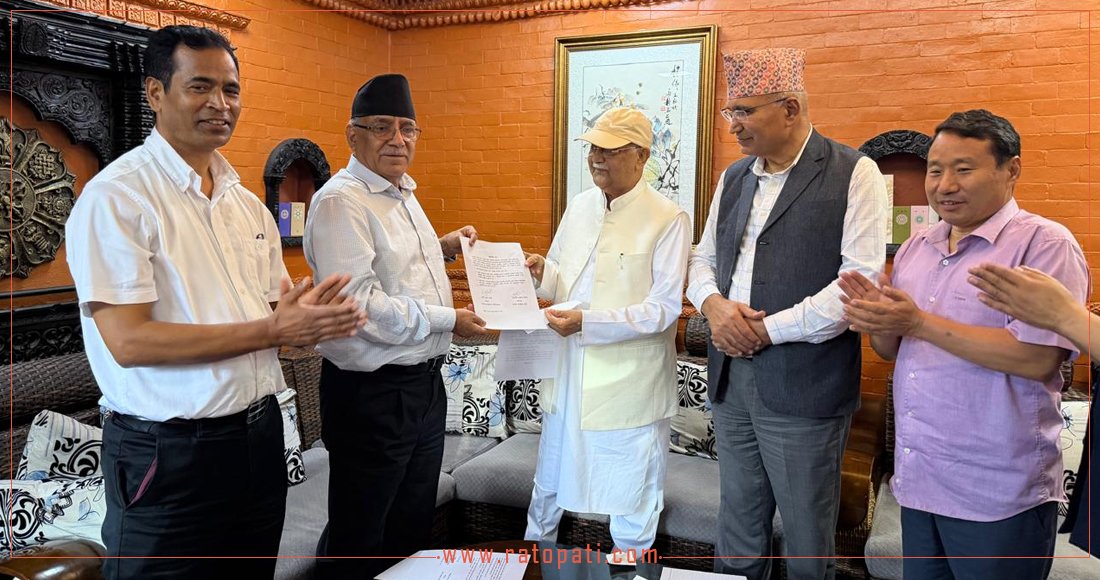
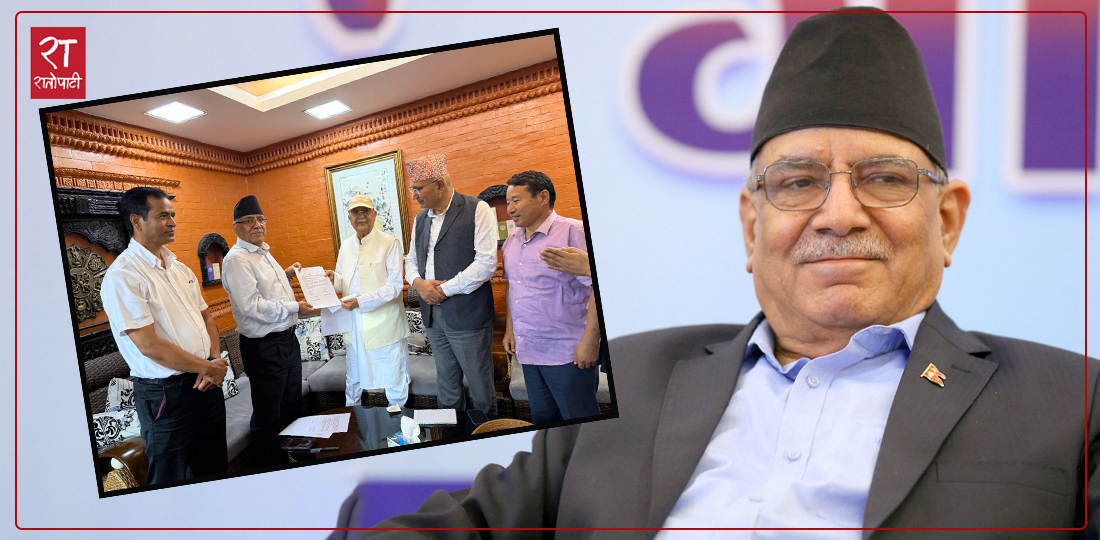
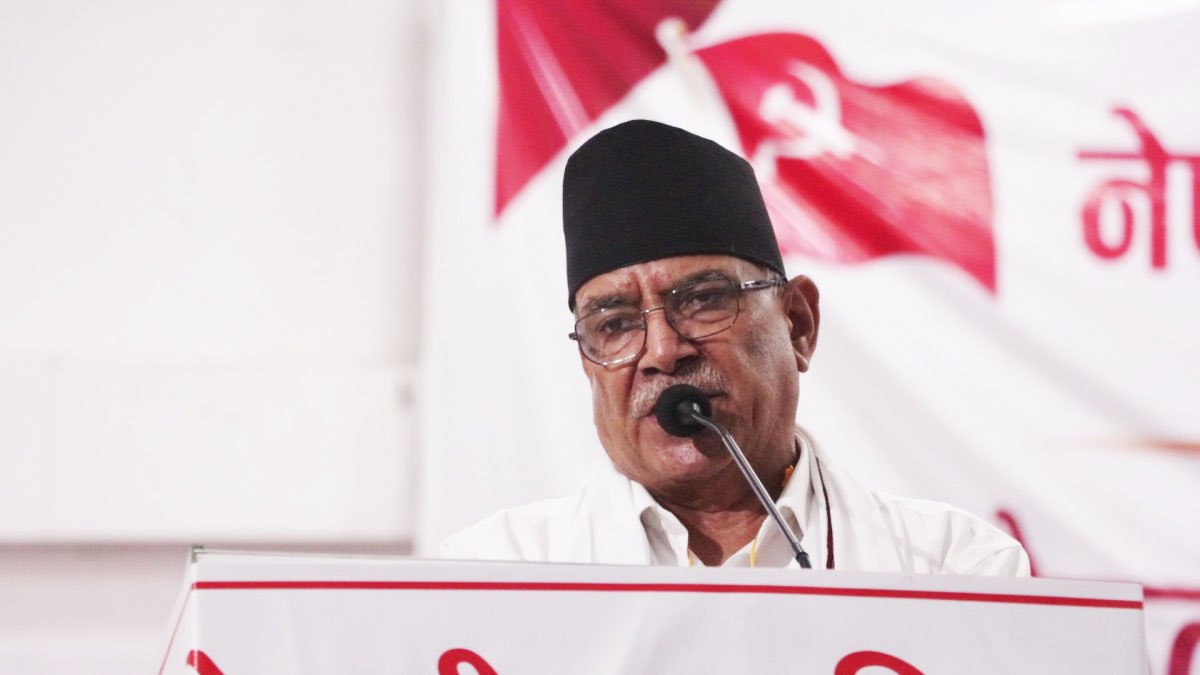
Kathmandu. Dissatisfaction has increased in both parties, CPN-UML and Communist Party of Nepal (CPN), regarding the three-point agreement reached between them. It appears that dissatisfaction has grown in both parties, alleging that UML Chairman KP Sharma Oli and CPN Coordinator Pushpa Kamal Dahal 'Prachanda' have reached a consensus focused on self-interest without a serious review of past shortcomings.
After the 7-point agreement between UML and Nepali Congress broke down in Asar 081, Oli and Prachanda were in continuous discussion to form a leftist alliance. To bring the discussions to a conclusion, both parties held continuous dialogues at the task force level.
From UML, Vice Chairman Ram Bahadur Thapa, Bishnu Paudel, General Secretary Shankar Pokharel, and from CPN, Barshaman Pun, Pramesh Hamal participated in the dialogue. Regarding cooperation with UML, CPN Coordinator Prachanda had repeatedly communicated with Co-coordinator Nepal. Prachanda, who returned to the country on Shrawan 2 after completing his Sri Lanka visit, held a two-hour-long discussion with Oli on Shrawan 5, as per Nepal's agreement.
According to top leaders, Prachanda and Nepal discussed forming a power equation with UML on the evening of the 8th and the morning of the 9th. However, Nepal and leaders close to him did not participate when it was time to sign the agreement.
Nepal had been emphasizing the need to reach an agreement with Congress, not just UML, on the issue of forming provincial power equations. Nepal appears dissatisfied with the hasty agreement with Oli without a policy review. Leader Ramkumar Bhattarai stated that Nepal seemed dissatisfied with the lack of an agreement that would lead to a working unity and future leftist unity.
_QrB2irqZF2.jpg)
'It seems there was no agreement on what new things the new government formed by the alliance of UML and CPN would offer to the people. His point is whether it was rushed or not mature,' he said. The Madhav group itself appears divided over the agreement. Former Chairman of ANNFSU, Sudesh Parajuli, protested the agreement, stating it was focused on power without correcting past weaknesses.
'Talking about heaven and hell all the time is not enough. Without reviewing past shortcomings, the agreement is only about who gets to be Chief Minister and who gets to be a minister. Power-centric activities will further increase public disappointment. Ultimately, this will weaken the leftist movement,' Parajuli said.
According to sources, leaders close to Nepal discussed the three-point agreement at Aryal Hotel in New Baneshwor on Sunday. Co-coordinator Nepal, task force members Pramesh Hamal, Jeevan Rai, Mohan Gautam, Sudesh Parajuli, and other leaders close to Nepal participated in the discussion. It is understood that the leaders questioned Nepal regarding the three-point agreement. In response, Nepal stated that he would discuss it with Prachanda.
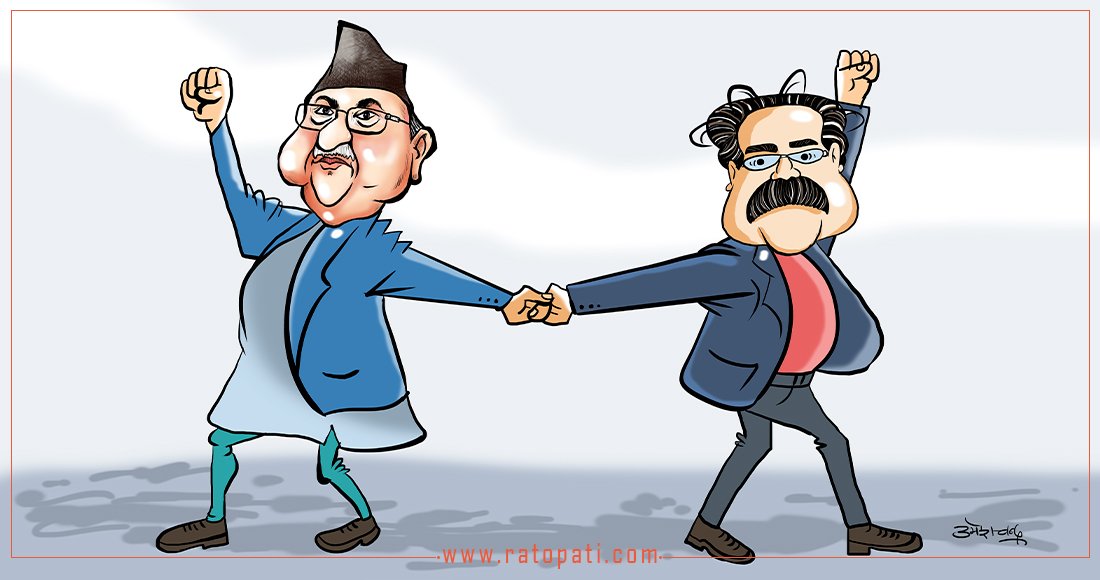
'He (Madhav) had discussions with some leaders regarding the three-point agreement. It appears that Co-coordinator and task force member Pramesh Hamal were also not included during the signing of the agreement,' a source said. 'Leaders questioned Comrade Madhav about this. He has said he will discuss it with Prachanda. He was in favor of not rushing into an agreement with Oli due to repeated betrayals.'
While some leaders close to Madhav expressed disagreement with the agreement, leaders like Spokesperson Prakash Jwala, Dr. Beduram Bhusal, and Jananath Khanal supported the agreement. They claim that the agreement with Oli was made with Nepal's consultation. Leader Jagannath Khanal asserted that the current need is for cooperation and unity among leftists. He stated that it was a good step for Oli and Prachanda to come together again after both parties suffered significant setbacks in the last election.
'The three-point agreement was made with the understanding that cooperation and unity among leftists are needed now. The agreement was made with Madhav ji's consultation,' he said.
Leaders close to Prachanda have also supported the three-point agreement. Cooperation with UML was established under the leadership of Organization Department Chief Barshaman Pun. Senior leader Narayan Kaji Shrestha also defended the agreement.
'When the situation arose where Nepali Congress and CPN-UML would not sit in the same government, we were compelled to make a decision to participate in the government to prevent the immediate dissolution of provincial assemblies,' Shrestha said, defending the agreement.
Meanwhile, dissatisfaction has also grown within UML regarding the three-point agreement. Leaders who support party transformation and leadership transfer have reacted to the three-point agreement as a 'relationship tied to self-interest without reviewing the past.' Leader Gokul Baskota stated that with the power equation between UML and CPN, they have the capacity to defeat even Deuba. He commented that the fact that only a few key leaders of the party knew about the agreement, as Vijay Malla said, might be the 'final feast'.
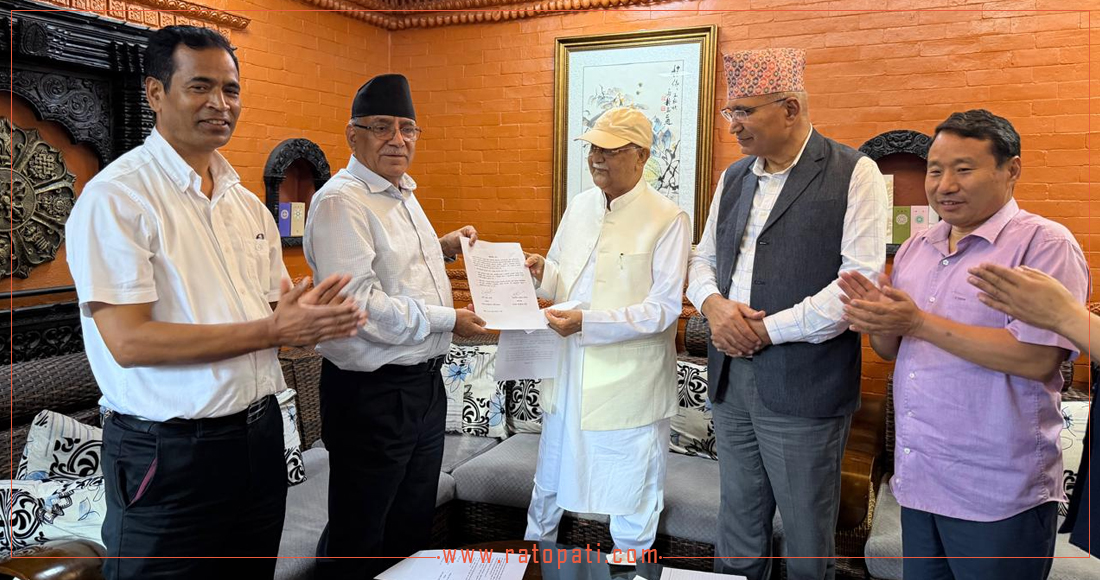
'UML and Maoist (currently CPN) have gained the capacity to defeat even Deuba in the power equation. Why are coalitions formed and broken so easily?' he questioned, writing on social media, 'It has become a tradition that except for a few members of those assemblies and key leaders, others don't even get a hint. They are scattered like the wind, heading towards heaven or hell. Could this be Vijay Malla's final feast? It's surprising.'
Youth leaders protested the three-point agreement by organizing a program in Kathmandu on Sunday. Former Chairman of ANNFSU, Madhav Dhungel, emphasized the need for leftist unity representing the lower class, as they have been deceived many times in the past.
'There is a discussion about unity among leftists. We have been deceived many times. Yesterday too, unity was broken despite continuous efforts. We have bitter experiences. If we don't act according to class character after seeing bitter experiences, we must correct it,' Dhungel said. 'UML is the party representing the lower class. The communist movement should unite on that foundation. If we can bring the leftist movement together, we can revive the declining movement.'
He stated that while some see provincial power equations as a necessity and others as a compulsion, there is no satisfactory place in provincial governments. He stressed the need to prioritize party reform and transformation while considering such matters.
Another leader, Thakur Gaire, questioned why the situation has arisen again to cooperate with CPN after breaking the agreement with Congress and UML.
'Yesterday, after the half-half bargaining between Congress and UML ended, we should have supported Congress by leaving the positions we led. Why is the situation arising today where UML is uniting with Maoist (CPN) again? Did this decision bring a new message and awakening to the country? Did it boost the morale of the cadres?' Gaire questioned the leadership.
He stated that a review of all these matters is necessary. Gaire believes that leftist unity cannot be achieved without drawing conclusions from the overall situation based on that review.
He said, 'Will the leftist movement gain new life just by shaking hands and saying KP, Prachanda, and Madhav Nepal have united today? Rather, if the three of them proudly announce their resignation from executive roles, it will create a great awakening. That is the need of the hour. If they do so, it will be justice for this movement. It will be sacrifice and justice for the entire communist movement. People will applaud and carry them on their shoulders again. The country and the movement will respect them.'
Gaire asserted that the country's needs are in one direction, while actions and roles are in another. He stated that the communist movement cannot move forward in its current state if we fail to review and evaluate these matters.
This specific news has been automatically translated by AI. As a result, there may be some inaccuracies or language errors.

_cvUCBlwFTZ.jpg)