Gray Divorce Trend Rises Among Older Couples in Asia

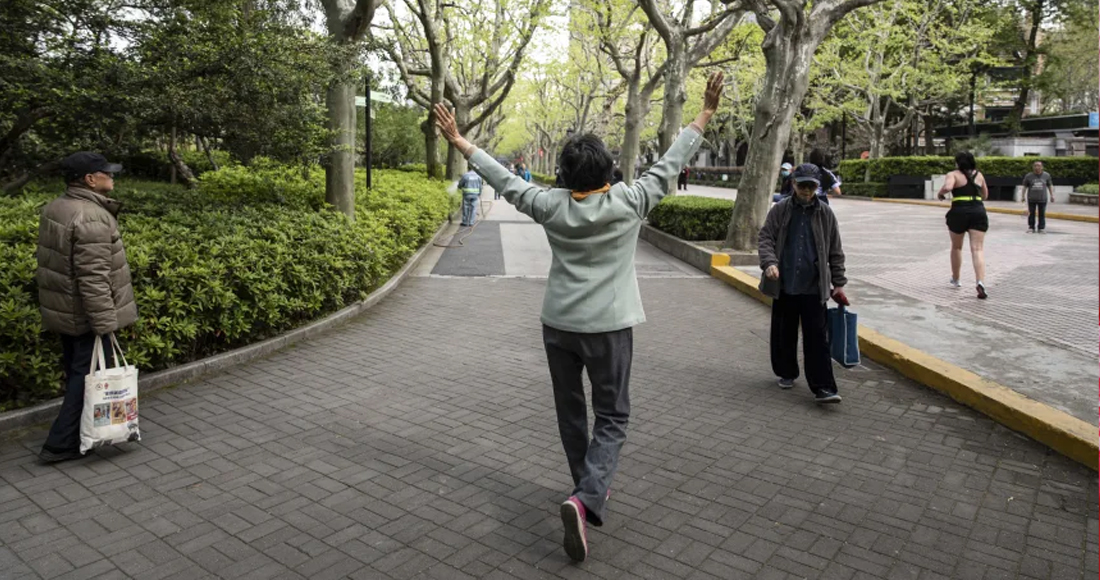
Japan's Eiko Toyama waited 32 years to divorce her husband. According to her, throughout her married life, she did all the housework, raised two children, and financially supported the family. However, her husband tried to control everything from social relations to business ambitions, making her feel like a prisoner and extremely unhappy. Despite this, she continued the relationship for the future of her two sons. But, when she turned 60, the situation changed. Both her sons had become adults, and her husband was also healthy. She was not so old that she needed constant care. This was a rare opportunity in Toyama's life, which she did not miss.
'I was just happy after the divorce. That was my only feeling,' she said, 'I was so happy that I felt like running everywhere.'
- 'Gray Divorce' or 'Sesame Divorce' is a growing trend
Stories like Toyama's are increasing worldwide. Divorce among couples aged 50 or older is called 'gray divorce' or 'sesame divorce'. Its numbers are increasing every year. This trend is seen in America and other countries. However, it has special significance in Asia because people in these countries have a longer average lifespan. Countries like South Korea, Japan, Hong Kong, Taiwan, and China are currently facing demographic crises due to declining birth rates and an aging population. The rise of gray divorce is particularly driven by women. In traditional Asian societies, women have long faced gender discrimination, legal and financial difficulties, and social pressure. However, the situation is now changing.
For example, in Japan, in 2024, among couples divorcing after decades of marriage, the number of divorces filed by women was double that of men. According to experts, this could change the face of Asia's aging population in the coming decade. More elderly people are likely to live alone and depend more on social security. But on the other hand, they will also be more capable of living life on their own terms.
- Divorce was never easy
For women who grew up in the 1960s and 1970s, divorce was a very rare subject. At that time, divorce was associated with social criticism and ostracism. Sangyub Park, an associate professor of sociology at Washburn University in Kansas, USA, says, 'Back then, divorce for women was considered the end of life.'
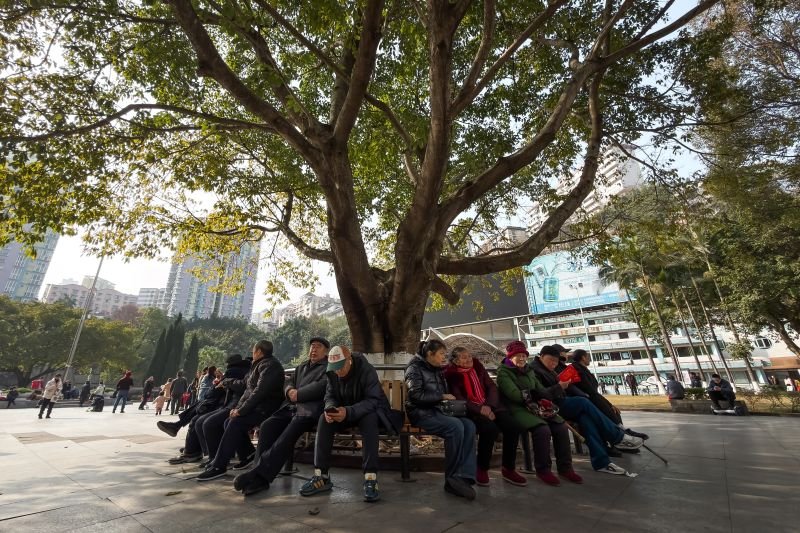
However, from the latter half of the 20th century, the situation began to change as women entered employment and higher education. According to Park, especially in the last decade, gray divorces have increased significantly as Generation X (born between 1965-1980) people entered their 50s. This generation was the first Asian generation to grow up under the influence of globalization. Through American television, movies, and popular culture, they learned values that prioritized personal choice over family duty and personal freedom. This also changed the perception of divorce.
- Statistics also show change
In South Korea, for the first time in 2025, the number of divorces among couples who have been married for more than 30 years will exceed the number of divorces among couples married for less than five years. Taiwan's government statistics also show an increase in divorces among couples in long-term marriages. Many law firms in Hong Kong have also reported a significant increase in gray divorces.
In China, divorces among the elderly have doubled in the last 30 years. However, one reason for this is the increase in the elderly population. As the number of elderly people increases, divorces among them naturally increase. On the other hand, divorces among young people are decreasing as fewer of them are getting married.
- Legal reforms have given women a basis
Legal reforms for women have also brought about significant changes. In 2014, South Korea decided that future pensions and retirement benefits could be included in asset division during a divorce. This gave housewives, who managed all household responsibilities and supported their husbands' careers, the right to receive a share of their husband's old-age pension after divorce. Japan also implemented a similar system in 2007.
These provisions are considered extremely important, especially in Asia, due to the high rate of poverty among the elderly. Among OECD member countries, South Korea has the highest poverty rate among citizens over 65. The situation is similar in Hong Kong, and Japan's rate is also above the world average.
- Economic independence is still a challenge
Although legal reforms have been made, gender inequality still persists. Toyama says, 'The main reason women cannot divorce is the inability to be economically self-reliant.' According to her, women in Japan receive lower wages. Once a full-time housewife, it is very difficult to leave her husband and start an independent life.
'I have two sons. If I had a daughter, I would always tell her - no matter what, never leave your job.'
- 'A new chapter in life'
According to sociologist Park, a common characteristic of Asia is its long lifespan. 'When people have an additional 20-30 years left in their lives, they start looking at the final phase of life differently,' he said. According to him, many people are now willing to choose a new life rather than stay in an unhappy marriage. He says, 'Divorce is no longer a failure, it is a new beginning.'
Hong Kong's 50-year-old Iman Lau experienced the same. She understood marriage merely as a relationship for eating together, spending time together, and living a normal life. Even after years of her husband's infidelity, she kept blaming herself. Finally, the divorce proposal came from her husband.
According to Lau, that moment was the biggest shock of her life. But after that, she realized that she had lost her friends, interests, and her own identity.
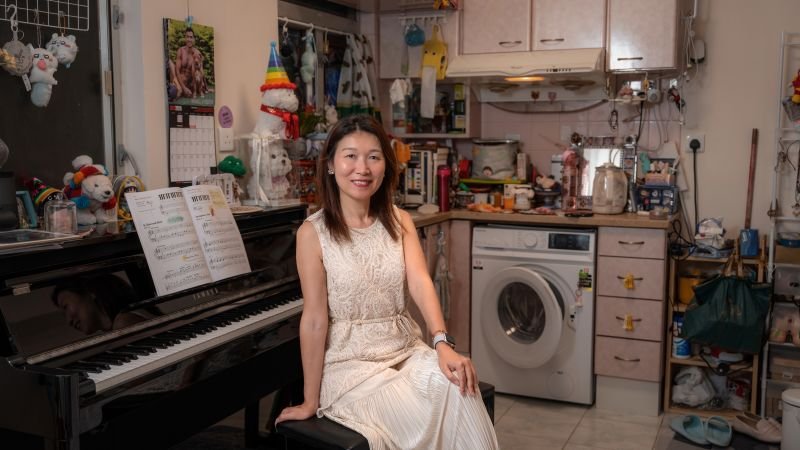
After the divorce, she started a new life. She made new friends. She started hiking, swimming, kayaking, and snorkeling. She started learning piano and developed a liking for jazz music. After traveling to Europe, she decorated her travel photos on her walls, which she calls her 'wall of happiness.'
'I had no idea that life alone could be so beautiful,' she said.
- 'The most important thing - freedom'
Currently, 63-year-old Toyama is also living a new life after her divorce. She livestreams on TikTok, counsels people through messaging apps, and plans to start a marriage agency and a live event management company.
'For 32 years, I couldn't do anything. Now I can do everything I want,' she said. According to her, the divorce process was not easy, but any difficulty now is much better than the worries she had while living with her ex-husband.
'The most important thing is - I have freedom now.'
- Different perspectives of the new generation
Both women have experienced different generational reactions when they shared the news of their divorce. Toyama received mostly positive reactions. Some even expressed envy towards her decision. But Lau says, 'My friends of the same age consider this a tragic event, like the death of someone in the family. They just say, 'I'm sorry.''
'But young people from the Gen-Z generation congratulate me.'
- What happens in the future?
According to sociologist Park, the rise of gray divorces may stabilize somewhat when the millennial generation reaches old age, as their marriages and social environments were different from the previous generation. However, since it will take about another decade for that stage to arrive, gray divorces are likely to continue to increase until then.
Lau gives a message to those who will divorce in the future, 'In Asian society, divorce is still seen as a mark of failure or a taboo subject. But that is not true.' She added, 'Consider it another opportunity to make your life brighter, freer, and more energetic. For that, you just need the courage to take the first step.'
This specific news has been automatically translated by AI. As a result, there may be some inaccuracies or language errors.