Road Conditions Cause Frequent Jeep Accidents in Far-Western Nepal

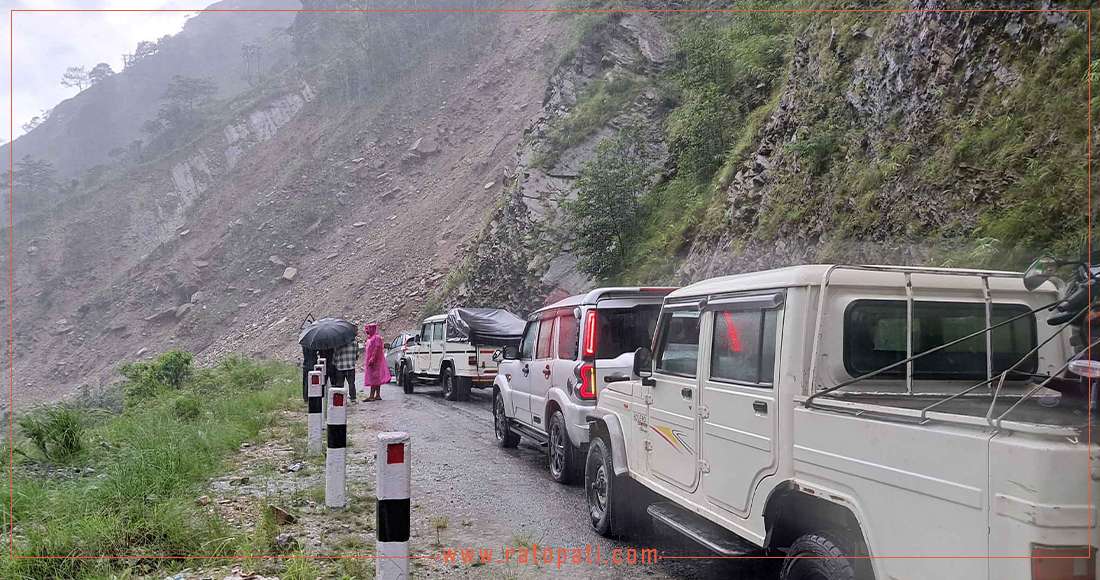
Dhangadhi. With the onset of the monsoon in the hilly districts of Sudurpaschim, travel becomes risky. This is not a one-time problem, but a recurring issue every monsoon.
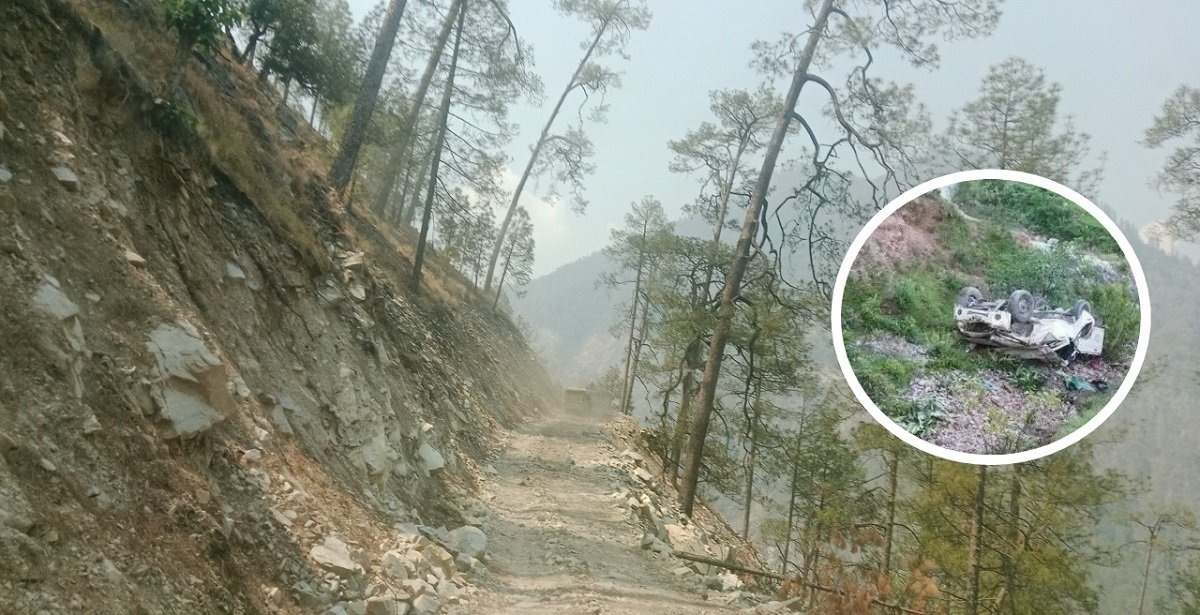
Until a decade and a half to two decades ago, road networks in the hilly districts of Sudurpaschim were limited only to district headquarters. For the past 10-12 years, roads have reached villages in Sudurpaschim. Most of these narrow, unpaved roads connecting villages become treacherous with mud and landslides during the monsoon. Police investigations show that Bolero jeeps plying in the hilly districts are at high risk of accidents due to this.
Bir Bahadur Nepali of Chhabis Pathibhera Rural Municipality-1 in Bajhang says he is afraid to travel once the monsoon begins. Although Bolero is a reliable means for daily work, market visits, and transporting goods, travel becomes unsafe during the rainy season, he said.
“After it rains, the roads become muddy. There is a fear of the vehicle slipping at any moment. We wonder when we will be able to travel freely on paved roads,” he said.
The situation is similar not only in Bajhang but also in most hilly districts of Sudurpaschim, including Darchula, Bajura, Baitadi, Doti, Achham, and Dadeldhura. Local levels, after receiving budget grants from federal and provincial governments, have expanded rural roads for years, but many roads have not been constructed according to engineering standards. Some roads are extremely narrow, while on some turns, it is difficult to maneuver vehicles. During the monsoon, mud, landslides, and runoff make those roads even riskier.
This year too, as soon as the monsoon started, Bolero jeeps became victims of accidents due to road conditions.
On July 18, a Bolero jeep traveling from Dhangadhi to Dadeldhura met with an accident in Kharsyan of Amargadhi Municipality-7, Dadeldhura, resulting in two deaths and three injuries, including the driver. According to the police, the jeep fell about four hundred meters below the road.
Prior to that, on July 13, three people lost their lives in a jeep accident in Kedarsyun Rural Municipality, Bajhang. On June 22, a jeep rolled back about two hundred meters down a slope while trying to ascend in Sigaas Rural Municipality, Baitadi. The driver managed to save his life by jumping out in time.
On July 19, two people died during treatment from injuries sustained in another accident in Himali Rural Municipality, Bajura. Seven others were injured in that accident.
The series of accidents is increasing. According to the police, the main problem causing the accidents is the condition of the roads along with the rain.
Most rural roads in the 88 local levels of Sudurpaschim are still not constructed according to standards. The problem of muddy roads, landslides, and slippery vehicles recurs every year during the monsoon.
According to Deepak Bisht, Police Inspector at the District Police Office, Bajhang, although the main highways have not been closed due to rain this year, the dilapidated condition of rural roads is causing accidents.
According to him, narrow roads, lack of adequate turning points, roads constructed against standards, and the tendency to carry more passengers than capacity are increasing accidents.
“Our data also shows that the main cause of accidents is the road itself. Carrying more passengers than capacity by the driver is another reason,” he said.
The police stated that they are conducting regular awareness programs for drivers and transport entrepreneurs to reduce accidents. Efforts are being made to remove vehicles with more seats installed than permitted, to control vehicles found carrying excess passengers, and to reduce risks in coordination with local levels, according to the police.
The police also face another challenge: the remote geography.
According to Police Inspector Bisht, it takes more than three hours for the police to reach the accident site. Therefore, rescue operations are also very difficult.
Accidents are also blamed on drivers, but Bolero jeep drivers have their own difficulties. Bhim Buda, a Bolero driver from Bajura, says they drive steering wheels every day, risking death.
“Some roads are such that we don’t know if we will return after driving. It is very sad when accidents happen. But we have to drive this vehicle to serve the people of the village,” he said.
According to him, the lives of citizens have become easier with the arrival of roads in the villages. Boleros have played a big role in helping patients reach hospitals, students go to school, farmers take their produce to market, and bring necessary materials to the villages, but due to the lack of road improvement, the same vehicles are now involved in the most accidents.
Most rural roads in the 88 local levels of Sudurpaschim are still not constructed according to standards. The problem of muddy roads, landslides, and slippery vehicles recurs every year during the monsoon.
This specific news has been automatically translated by AI. As a result, there may be some inaccuracies or language errors.