1,001 Impoverished Families in Siraha and Saptari Receive Permanent Homes

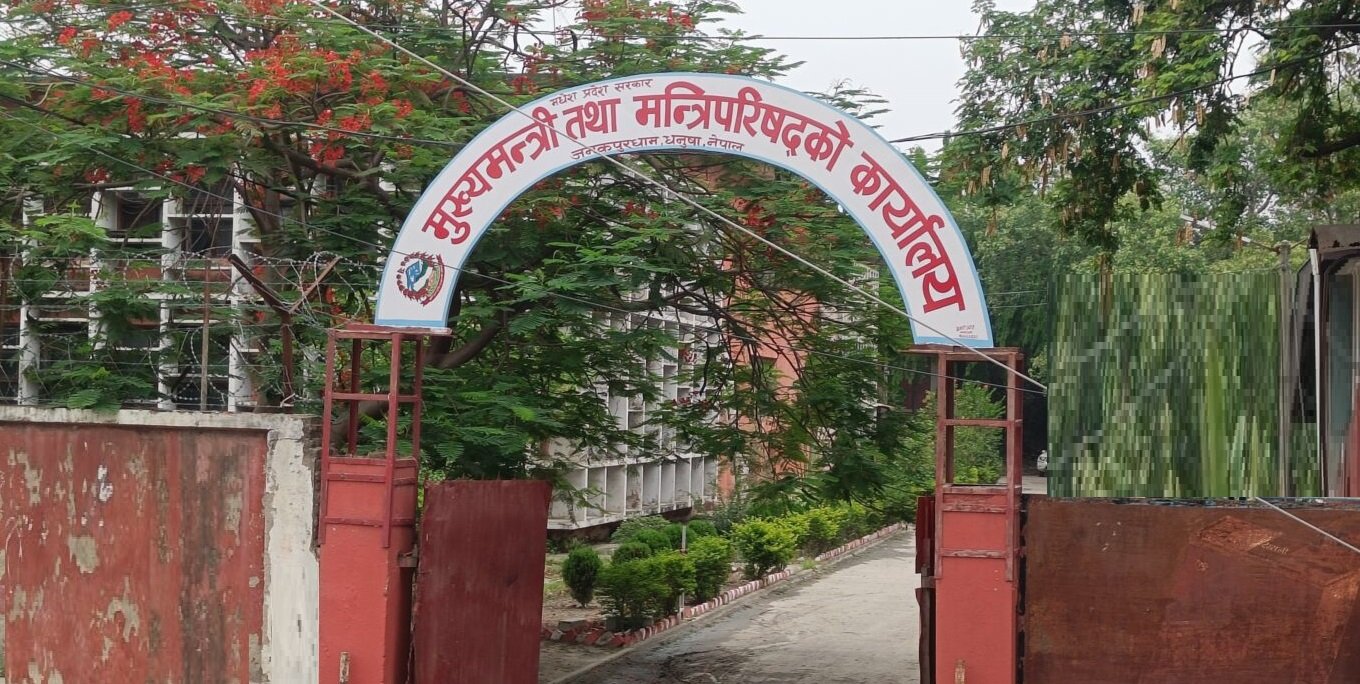
Janakpurdham. For some years, as soon as the rainy season started, thatched roofs would leak, sleep would be lost all night during storms, and days were spent in fear of fire, but for 1,001 impoverished families in Siraha and Saptari, life has now changed.
With the move from temporary thatched huts to permanent houses, the daily lives of these impoverished families have become safe, dignified, and hopeful. Under the Madhesh Province government's Janata Awas, Mahendra Narayan Nidhi Vipanna Awas, and Vipanna Sangha Madan Bhandari Vipanna Awas programs, 1,001 families from Siraha and Saptari have received permanent houses. It is becoming established as a social campaign to uplift the living standards of the Dalit, impoverished, and marginalized communities.
Most of the Dalit and impoverished families in these districts had been living in thatched huts for years. "As soon as the rainy season started, water would leak inside the house, we had to endure extreme heat in the summer, and the risk of fire was a constant worry," says Rashmadevi Ram, a resident of Siraha-9, Siraha district. "Now, after receiving a permanent house, I feel free from all worries." She adds, "I never dreamed I would get to sleep in a permanent house in this lifetime, but I am extremely happy to have received one."
The lives of the beneficiary families have undergone a significant transformation after receiving permanent houses under the government's housing program. According to Jivachh Kumar Yadav, Sub-Engineer at the Infrastructure Development Office, Siraha, 612 families have benefited in Siraha through three housing programs from the fiscal year 2078/79 to 2082/83.
Among these, 512 families have received permanent houses under the Janata Awas program, 69 under the Mahendra Narayan Nidhi Vipanna Awas program, and 31 under the Vipanna Sangha Madan Bhandari Vipanna Awas program. In Aurahi Rural Municipality of Siraha alone, 447 houses have been constructed and handed over under the Janata Awas program. Locals say this has greatly improved the housing conditions of the impoverished communities in the Aurahi area.
Similarly, the housing program has been progressing effectively in Saptari as well. According to Ramakar Jha, Sub-Engineer at the Infrastructure Development Office, Saptari, 589 families have received new houses, including 515 under the Janata Awas program, 56 under the Mahendra Narayan Nidhi Vipanna Awas program, and 18 under the Vipanna Sangha Madan Bhandari Vipanna Awas program.
With the new houses, many families have left their unsafe huts and started a dignified life, according to Jha. However, the program is not yet fully completed. In Siraha, about 40 houses under the Janata Awas program and 27 houses under the Mahendra Narayan Nidhi program are under construction.
In Saptari, although 791 houses have been contracted under the Janata Awas program, only 515 have been completed so far. 288 are under construction, and the construction of 88 houses has not yet started, according to technician Jha.
According to him, out of 92 houses contracted under the Mahendra Narayan Nidhi program, 56 are completed, 34 are under construction, and work on five is yet to begin. Housing is not just a building; it is a basic necessity connected to a family's security, health, education, and dignity.
Krishna Dev Jha, Chief of the Infrastructure Office, Rajbiraj, Saptari, says that with safe houses, the environment for children to go to school has improved. According to him, women can now perform daily chores safely inside the house, and permanent houses have provided a comfortable life for the elderly and disabled.
The housing program has also had a positive impact on poverty reduction, social inclusion, and the improvement of human development indicators, according to Chief Jha. According to Chief Jha, the construction work of the housing program has not been able to proceed at the expected pace due to difficulties in land management, lack of budget, and some administrative processes.
He states that it is challenging to operate the housing programs as the market prices of construction materials increase significantly every year, but the budget for the housing programs has not increased.
This specific news has been automatically translated by AI. As a result, there may be some inaccuracies or language errors.
_ke6hmvuewe_XLPTtgxmKE.jpg)