Nepal's Economy Faces Internal Challenges Despite Positive External Indicators
Looking at the fiscal year 2082/83 from an economic perspective, the external sector of the economy appears positive. According to the central bank, the total foreign exchange reserves have now reached 37 kharba 55 arba 64 crore rupees. This reserve is 61.5 percent of the Gross Domestic Product (GDP).
For an economy like ours, this is sufficient. It can cover the purchase of foreign goods and services for approximately 19.1 months. Meanwhile, in the last eleven months, the number of Nepalis who obtained final labor approval for foreign employment was 367,211, and those who obtained re-approval was 355,735. In the same period last year, these numbers were 452,324 and 308,067 respectively. In this period, 21 kharba 20 arba 80 crore rupees in remittances have entered the country, which is an increase of 38.2 percent compared to the same period last year. Therefore, our balance of payments situation is also positive.
However, looking at the internal indicators of the economy, the situation is dire. The contraction in the economy, price increases, and the declining purchasing power of consumers do not seem to be allowing our market to become dynamic. The decrease in our production, weak consumption, and the imbalance of demand and supply are slowing down economic activities.
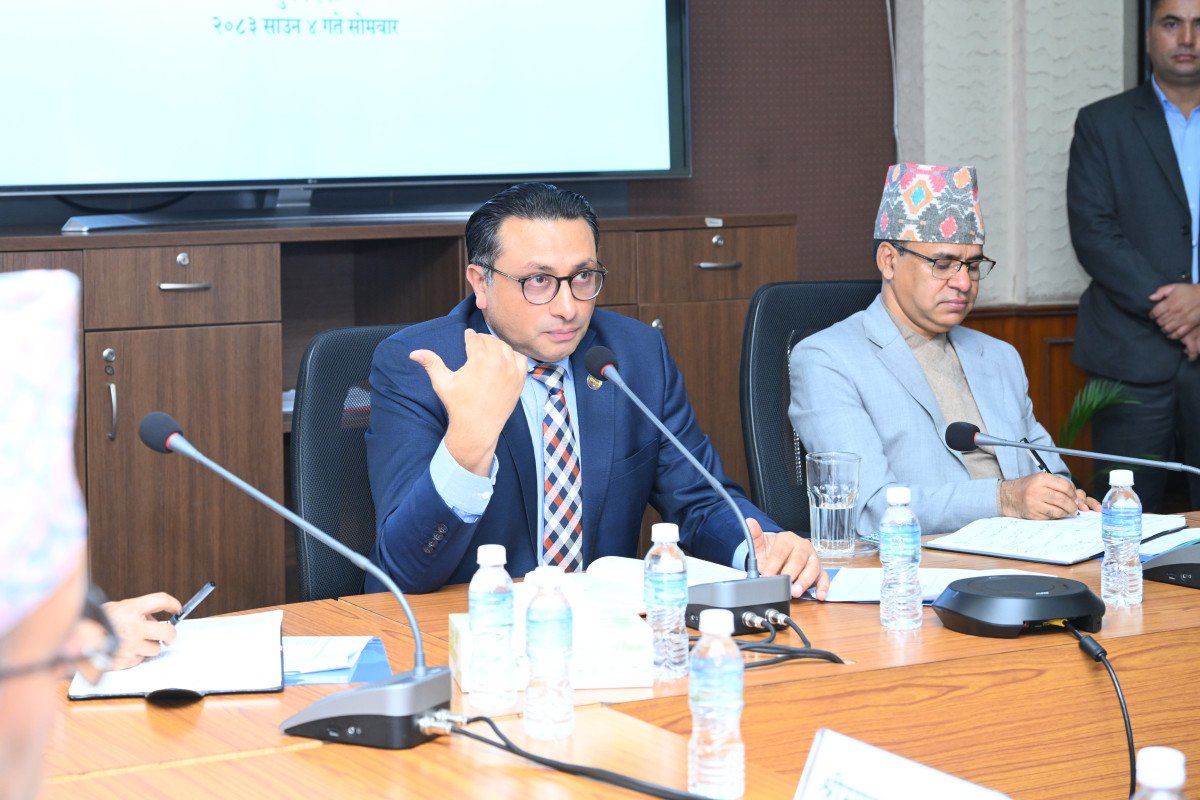
The distrust and fear in the private sector, delays in investment, and the weak performance of the real estate and construction sectors are also putting pressure on the economy. In fiscal year 2082/83, the government's capital expenditure has been extremely low. In this fiscal year, the government's capital expenditure is only 46.79 percent. Last fiscal year, the government had allocated 4 kharba 7 arba 88 crore 80 lakh rupees for capital expenditure through the budget, but only 1 kharba 90 arba 84 crore 66 lakh rupees were spent. Compared to the target, 2 kharba 17 arba 4 crore 66 lakh rupees in capital expenditure could not be achieved. The fact that even half of the development expenditure could not be spent this year, despite no major natural disasters, raises many doubts about the efficiency of the government and the finance minister.
Similarly, last fiscal year, the government had allocated 11 kharba 80 arba 98 crore rupees for current expenditure through the budget, of which 10 kharba 43 arba 99 crore 62 lakh rupees, or 88.4 percent, was spent. Out of the 3 kharba 75 arba 24 crore 20 lakh allocated for financial management expenditure, 3 kharba 47 arba 33 crore 6 lakh rupees, or 92.56 percent, was spent. This also confirms that the government is weak in terms of spending. Despite such a situation, the government appears to have an impossible target of achieving a seven percent economic growth next year, whereas according to the National Statistics Office, this growth rate is estimated to be limited to 3.85 percent. Achieving a seven percent economic growth with a budget allocation of four kharba seems impossible, and the government's claim of not being able to spend even 50 percent of the allocated development expenditure is certain to be just a way to deceive the public.
The state needs revenue to operate, for which the tax net needs to be widened. However, under the guise of widening the net, collecting taxes from students and patients to increase the perks of personal secretaries cannot be considered good at all.
Looking at revenue collection, out of the target of 14 kharba 80 arba set in the last budget, only 12 kharba 80 arba 65 crore rupees, or 83.51 percent, was collected. Compared to the previous fiscal year 2081/82, the revenue collection growth rate in the last fiscal year 2082/83 has shrunk. The revenue growth rate, which was 10.48 percent in the previous fiscal year, was limited to about 5 percent in the last fiscal year. This shows that the government is more focused on imposing taxes on essential services for the public (education, health, electricity) rather than collecting revenue.
The state needs revenue to operate, for which the tax net needs to be widened. However, under the guise of widening the net, collecting taxes from students and patients to increase the perks of personal secretaries cannot be considered good at all. Imposing taxes that make it difficult for the poor to survive is contrary to the concept of a welfare state. After widespread protest, the government has finally backed down from this move.
The government seems to have taken the wrong path by adding taxes in areas that are easy for them but difficult for the public, instead of identifying and taxing many areas that are still outside the tax net. The government has not been able to reach hundreds of areas such as celebrities, real estate businesses, consultancies, and legal consulting firms that have not yet come under the tax net. Looking at this fact, it seems unlikely that the government will reach its revenue collection target in the coming days.
Since the formation of the new government, share investors have lost about 6 kharba rupees. This sector has been weakening because the government increased the tax on share sales from 7.5 percent to 10 percent, has not taken concrete steps to improve the market, and investors do not trust the government. There is no sign of the market moving in a positive direction in the coming days.
Although Nepal seems to have set a record in exports, a large portion of it is soybean oil, which is imported from third countries and then exported to India, so it is not sustainable.
According to the Department of Customs, in the last eleven months of this fiscal year, imports accounted for 87.20 percent and exports for 12.80 percent of the total foreign trade. In this period, the size of foreign trade has reached 21 kharba 72 arba 6 crore rupees, of which imports are 18 kharba 94 arba and exports are 2 kharba 78 arba. The trade deficit has reached 16 kharba 16 arba rupees, which is the highest in history.
Although Nepal seems to have set a record in exports, a large portion of it is soybean oil, which is imported from third countries and then exported to India, so it is not sustainable. With the closure of domestic tea industries and a decline in exports, there is little possibility of improvement in the trade deficit next year.
According to the central bank's data, the average inflation until the end of Jestha was 5.22 percent. Compared to Jestha of fiscal year 2081/82, price increases in the same period last year have increased by 2.5 percentage points.
Although the average price increase is currently stated as 5.22 percent, there has been a 16.68 percent price increase in the non-food and services group and a 15.31 percent price increase in transportation services in the market. Due to price increases of 25 to 100 percent in fruits, vegetables, and daily necessities that are not reflected in the statistics, consumers are facing a huge burden.
The dominance of the service sector is clearly visible in Nepal's economy. The service sector is estimated to account for 61.8 percent of the Gross Domestic Product. The agriculture sector accounts for 24.5 percent, and its growth rate has shrunk to 1.58 percent, whereas in fiscal year 2081/82 it was 3.05 percent. The decline in paddy production by 4.16 percent and low growth in crops like maize and wheat are the main reasons for this.
The slowdown in agriculture, Nepal's largest economic sector, is not a good sign for the economy. Similarly, the industry and construction sector being limited to 13.7 percent indicates weak expansion of a production-oriented economy and a downward trend in job creation.
Capital flight is increasing, and the number of youths migrating abroad due to lack of employment is increasing day by day.
Looking at all these statistics, our economy is in a dire state. Many had hoped for an improvement in the economy and stock market after the budget and monetary policy, but that did not happen. Disappointment among citizens is growing. Commercial banks have ample cash reserves, and the central bank is continuously withdrawing liquidity. Although interest rates are falling, the private sector is not ready to invest due to fear.
Capital flight is increasing, and the number of youths migrating abroad due to lack of employment is increasing day by day. Capable intellectuals are disappointed as nepotism and favoritism shadow appointments. It is unfortunate that incidents of self-immolation are increasing due to laws and regulations not being timely and citizen-friendly.
It is a bitter reality that our economy has not been able to move forward on the path of development compared to its potential. However, it is not that there has been no development since the constitution of 2072, as some new forces suggest, which is also confirmed by the current finance minister's white paper. But, despite having learned finance ministers time and again in Nepal, the country has not been able to gain development momentum, which is also evident in the context of the current government.
Three qualities are necessary to be the Finance Minister of Nepal – first, a deep knowledge of the economy, second, a real understanding of the country's soil, geography, and poverty (being able to identify paddy, wheat, millet, mustard), and third, political acumen and effective leadership skills.
However, we have a kind of misconception. It is not necessary that individuals considered learned solely based on their foreign education or experience working in national and international organizations are also practically successful, as we have seen evidence of this in the past and present.
To bring the country's economy on the right track, one must understand the country's soil. One must be able to assess the current situation, the destination to reach, as well as the path to take and the difficulties that may arise. A person who does not understand the ground knows the destination but not the difficulties of the journey.
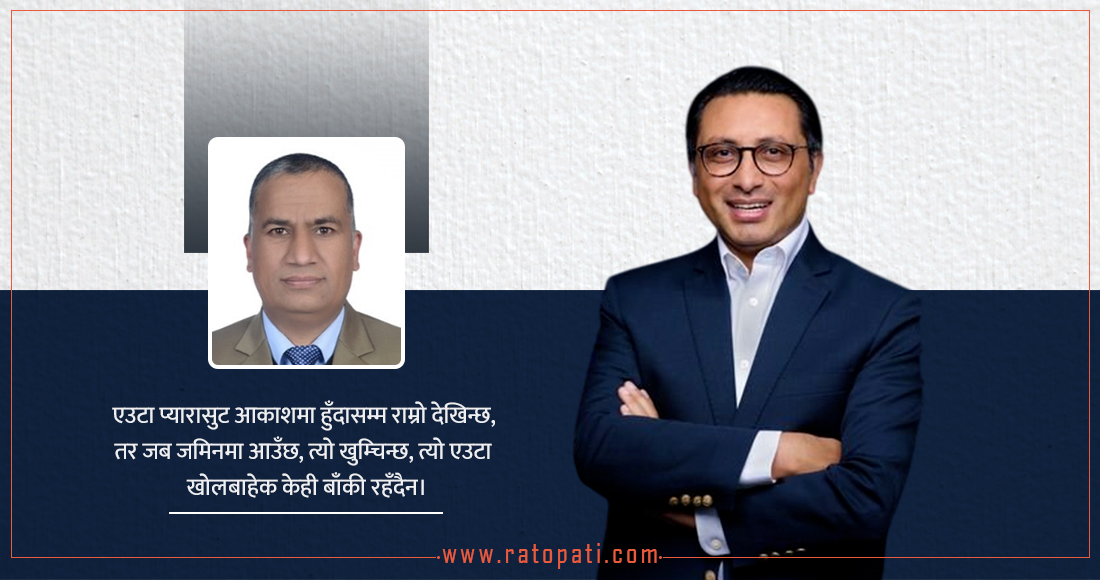
A parachute looks good while in the sky, but when it lands, it shrinks, leaving nothing but a shell. A parachute knows the starting and ending points but not the difficult journey in between because it is only in the sky. Not only that, it cannot fly in storms and rain.
Similarly, individuals considered learned based solely on their degrees and experience working in international organizations, but lacking the ability to address the country's economic and social conditions and challenges, are the main cause of the country's failure. It is foolishness to expect the country to transform under the leadership of such individuals. This author has given them the title of 'parachute economists'.
The current finance minister is no different. His recent statements, the controversial changes in tax rates in the budget, disputes over customs rates, and attempts to delay the process of upgrading to a developing country indicate that he is also far from ground reality.
(The author is an economist teaching at Tribhuvan University)
This specific news has been automatically translated by AI. As a result, there may be some inaccuracies or language errors.

_ufmo8stvl7_xyceyxrbf6_CvCBw1rk0X.jpg)