
Nepali Communist Movement: History, Challenges, and Future


In the modern political history of Nepal, if any political ideology has carried the aspirations of the people, the desire for change, and the campaign for social justice for the longest time, it is the communist movement. This movement, which began with the establishment of the Communist Party of Nepal under the leadership of Pushpa Lal in 2006 BS, has completed a journey of more than seven decades.
This journey is not just the history of a political party; it is also a history intertwined with the political consciousness of Nepali society, social transformation, class struggle, the establishment of democratic rights, and the debate on national independence. During this period, the communist movement has achieved significant accomplishments as well as faced numerous difficult tests.
From the beginning, the Nepali communist movement has not been free from ideological debates, political differences, organizational divisions, and leadership disputes. Shortly after the party's establishment, differences began to emerge on issues ranging from the question of founding leadership to the approach towards the international communist movement, the direction of revolution, participation in parliamentary politics, the interpretation of nationality, and organizational management.
Over time, those differences took the form of divisions. Debates within the movement about who is 'revolutionary,' 'rightist,' and 'opportunist' have repeatedly led to the birth and merger of new groups.
In some instances, the main leadership itself fell victim to ideological deviation. In particular, serious disagreements arose within the movement regarding the political direction of Keshar Jung Rayamajhi. That event pushed the Nepali communist movement towards new ideological polarization.
However, from that crisis, the process of reorganizing the movement, building new leadership, and setting a new political direction also began. This fact, shown by history, clarifies one characteristic of the Nepali communist movement – it is a movement that has progressed by confronting crises.
Although there have been many debates and divisions within the movement, one reality has never changed. The common people of Nepal have not completely lost hope in the communist movement. Workers, farmers, laborers, the lower-income class, oppressed communities, and youth aspiring for change have continued to see the communist movement as their voice.
The agenda of social justice, equality, national self-respect, respect for labor, and expansion of access for common citizens to state power has given the communist movement a special place in the hearts of the people.
Communist forces were not just limited to being the main opposition; they also led the government.
In the general elections of 2015 BS, the parliamentary presence of communist forces was limited. However, the multi-party democracy re-established after the People's Movement of 2046 BS provided the communist movement with a historic opportunity to expand its ideology and organization among the people through open political competition.
Since then, communist forces have not only been limited to being the main opposition but have also led the government. They have also had the opportunity to play a decisive role in national policy-making and to bear the responsibility of state governance.
In this journey, the contribution of Madan Bhandari is particularly memorable. The 'People's Multi-Party Democracy' he presented provided new ideological energy to the then Communist Party of Nepal (Unified Marxist–Leninist). The strategy of winning the people's trust within democratic competition elevated the communist movement to new heights. As a result, CPN (UML) quickly became one of the most influential political forces in Nepal.
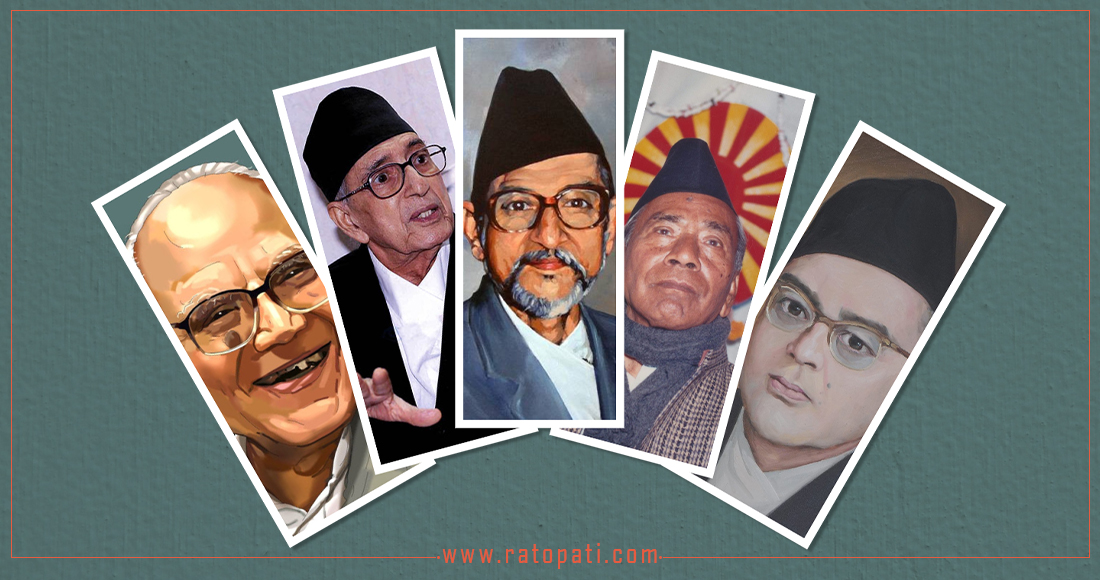
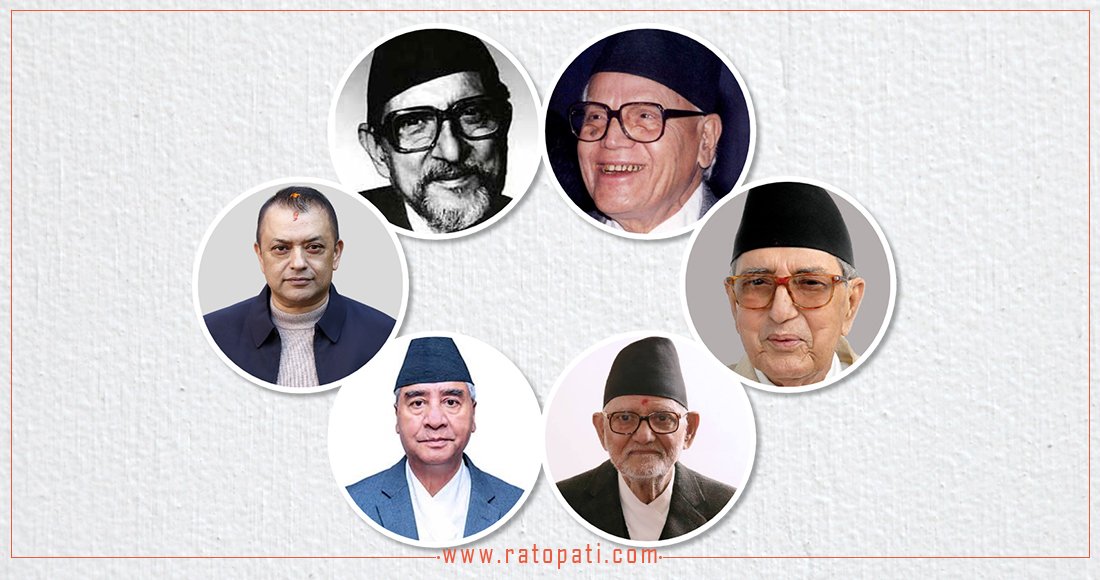
The experienced, simple, ethical, and mature leadership of leaders like Manmohan Adhikari, Bharat Mohan Adhikari, Mohan Chandra Adhikari, Modnath Prashrit, and Sahana Pradhan, along with Madan Bhandari's bold, clear, and ideological leadership, further strengthened the credibility of the communist movement. On one hand, there was visionary and energetic youth leadership, and on the other, there was parental leadership endowed with experience and moral strength. This balance established the communist movement as an alternative among the people.
Then why did a movement that received such immense public trust begin to decline from its own height of achievement? Why have questions arisen today about a movement that the people have repeatedly trusted?
At that time, various communist organizations were active in Nepal. Even if they were not all united in one organization, the influence of the overall communist movement was continuously expanding. The elections of 2048, 2051, 2056, 2064, 2070, 2074, and 2079 BS confirmed the mass base and influence of the communist movement.
Despite divisions, communist parties became major forces in Nepali politics, led the government, and played an influential role in determining the direction of national politics.
This entire history yields an important conclusion – Nepal's social structure, economic condition, political consciousness, and desire for change provided fertile ground for the communist movement. Therefore, the peak of the communist movement was not an accidental event. It was the result of long-standing public trust, struggle, and political commitment.
However, another aspect of history is even more serious. Why has a movement that received such immense public trust begun to decline from its own height of achievement today? Why have questions arisen today about a movement that the people have repeatedly trusted? Finding an honest answer to this question is the most important ideological and political responsibility today.
Understanding the public trust and political influence gained by the Nepali communist movement in history is as necessary as analyzing why that trust has gradually weakened. The evaluation of any political movement is determined not only by its peak but also by its capacity for self-reflection. In this context, the Nepali communist movement appears to be standing at a juncture of serious review and reconsideration today.
The multi-party democratic environment obtained after 2046 BS provided the communist movement with a historic opportunity to expand among the people. However, within this very opportunity, the movement also gained experience in state governance. Although acquiring power was itself successfully done, its practice gave birth to new challenges within the movement. Power became primary over organization, practical alliances over ideological clarity, and immediate political gain over long-term vision.
Over time, the interpretive differences and weaknesses in organizational practice seen in the implementation of this direction gave rise to new types of disputes within the movement.
Over time, the divisions seen within the movement were not just ideological disagreements; they were also largely linked to competition for leadership, power, and opportunity. Debates within the movement about 'who is revolutionary,' 'who is reformist,' and 'who is opportunistic' have repeatedly arisen.
However, in most cases, those debates were more focused on factional polarization than on ideological clarity. This process weakened the organizational unity of the movement and led to a gradual erosion of public trust.
Meanwhile, 'People's Multi-Party Democracy' developed under the leadership of Madan Bhandari showed the communist movement a new path of democratic competition. Through a capitalist democratic program, it made the communist movement contemporary and competitive in the then political context.
However, over time, the interpretive differences and weaknesses in organizational practice seen in the implementation of this direction gave rise to new types of disputes within the movement.
Similarly, the leadership period of Manmohan Adhikari is considered a symbol of the moral credibility of the Nepali communist movement. His simplicity, modesty, and pro-people governance style had further strengthened public trust in the communist movement. However, in the long run, the movement's inability to institutionalize such moral leadership has led to a gradual weakening of its relationship with the people.
Another major reason for the weakening of the communist movement is organizational fragmentation. When forces coming from the same ideological background are divided into various groups, fronts, and parties, the perception among the public that 'the communist movement is not a force with a single direction' developed. This reduced the collective impact of the movement and weakened communist forces in political competition.
Furthermore, the experience of state governance led the movement to focus more on practical politics. Personal ego, ambition, and the pursuit of power led to power equations, alliances, and immediate gains becoming primary over policies, ideologies, and mass organizations. This weakened ideological clarity and distanced the movement from a long-term perspective.
That is why the relationship with the people gradually became formal and election-centric, which is a weak foundation for any mass-based movement in the long run.
Looking at the current state of the Nepali communist movement, it is clear that this movement has now entered not just an organizational challenge but a phase of deep trust crisis.
Reaching the current state, the Nepali communist movement has entered not only an organizational challenge but also a crisis of trust. The people have not rejected communist ideas, but they have questioned the behavior, political culture, and commitment of the leadership. This question is the crux of the current crisis.
Therefore, the need today is not just to remember past achievements but to deeply self-reflect on why those achievements have weakened. The possibility of either losing the opportunity given by history or regaining it is open before the Nepali communist movement.
Looking at the current state of the Nepali communist movement, it is clear that this movement has now entered not just an organizational challenge but a phase of deep trust crisis. This movement, established through long struggle, sacrifice, and martyrdom, has gained significant experience in state governance, but numerous weaknesses have appeared in the process of transforming that experience into public trust.
In today's context, the main question is not whether the movement has ended, but why the movement has weakened its own public trust. The Nepali people have not completely rejected communist ideas; they still feel the need for a political force that sympathizes with social justice, equality, national independence, and the rights of workers and farmers. But the problem lies not only in ideas and programs but also in the deviation seen in practice, the inconsistency of leadership, and organizational fragmentation.
Looking at the political landscape of 2082 BS, the presence of communist forces appears weaker and more fragmented compared to before. Communist parties, once decisive political forces, are currently going through limited influence, internal disputes, and divisions. This has brought the movement to a historic juncture of self-reflection.
In this context, the 'People's Multi-Party Democracy' presented by Madan Bhandari is not just a historical document but a political and programmatic perspective that can serve as a basis for self-reflection even today. Similarly, the path shown by Manmohan Adhikari's simplicity, ethics, and pro-people governance style is an important lesson for the communist movement even today.
For the renaissance of the communist movement, three bases are now considered essential:
First – Ideological clarity. Without clarity in ideology, the movement becomes directionless. The movement cannot stabilize until the clear distinction between revolution, reform, and the use of power is understood.
Second – Ethical leadership and political culture. The people look not only at ideas but also at behavior. The conduct, transparency, and commitment of the leadership are the fundamental basis of public trust.
Third – Self-reflection and organizational restructuring. Building a new future is not possible without honestly accepting past weaknesses. Divisions must be accepted not as a permanent state but as lessons.
Ultimately, the basis for the renaissance of the Nepali communist movement is not just organizational unity but the construction of a political culture based on ideological clarity, self-reflection, accountability to the people, and firm commitment to national interests. As long as the movement does not show the courage to transform itself by honestly accepting its weaknesses, it will be difficult to re-establish public trust.
However, history has shown that the Nepali communist movement is a movement born out of crisis and rising from crisis. Therefore, today's challenge may not be an end but the beginning of new possibilities.
(The author is a central member of UML and the coordinator of the Dolakha district committee.)
This specific news has been automatically translated by AI. As a result, there may be some inaccuracies or language errors.

_6FSvCrCShE.jpg)
_drOmyPMDMX.jpg)

