US President Trump Imposes Naval Blockade on Iran, Threatens Further Attacks
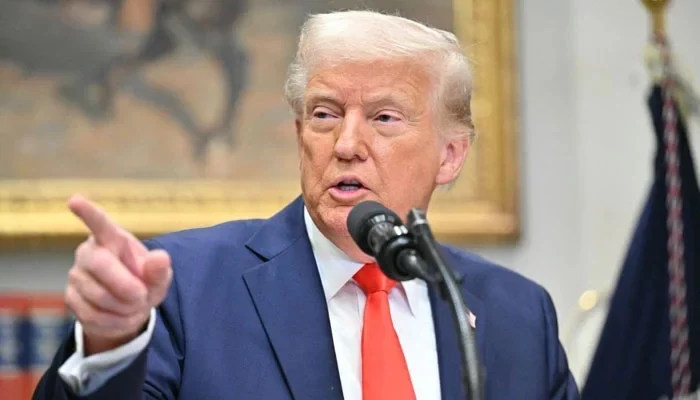
Washington DC. US President Donald Trump has reimposed a naval blockade on all Iranian ports. Trump has also threatened to attack Iran's power plants and bridges next week if Iran does not come to the negotiating table.
The US military has already launched a new phase of airstrikes to destroy Iran's capacity to attack commercial ships in the Strait of Hormuz. Meanwhile, Iran has also announced the re-closure of the strategically important Strait of Hormuz waterway, breaking the short-term ceasefire that occurred last June.
In an interview with Fox News, Trump threatened, 'I will save the energy centers for last, but eventually we will attack there too. If they don't come to negotiations, it will be the turn of power plants and bridges next week.' However, the Geneva Conventions of 1949 on the humanitarian conduct of war prohibit attacks on such infrastructure considered essential for civilians.
As tensions escalate, military clashes have also spread to Iran's neighboring countries. The Iranian army claimed to have launched a drone attack on the US military base 'Azraq' in Jordan on Wednesday morning. Similarly, Iran's Islamic Revolutionary Guard Corps (IRGC) has stated that it targeted weapons and storage centers in Bahrain and Kuwait.
Kuwait has stated that its air force is confronting Iranian drone attacks and has brought the resulting fire under control. In the Strait of Hormuz, one Indian crew member died and eight others were injured when Iran attacked two UAE oil tankers with cruise missiles.
The IRGC, however, claimed to have seized and neutralized two large oil tankers that ignored the warning. Iranian officials have confirmed that the US has fired powerful missiles near Iran's port city of Bandar Abbas and the southern Iranian islands of Sirik and Qeshm.
Earlier, Trump had proposed imposing a 20 percent transit fee on ships passing through the Strait of Hormuz, but he withdrew the proposal after strong criticism from a United Nations agency. Instead, he has adopted a strategy of signing investment agreements with Gulf countries.
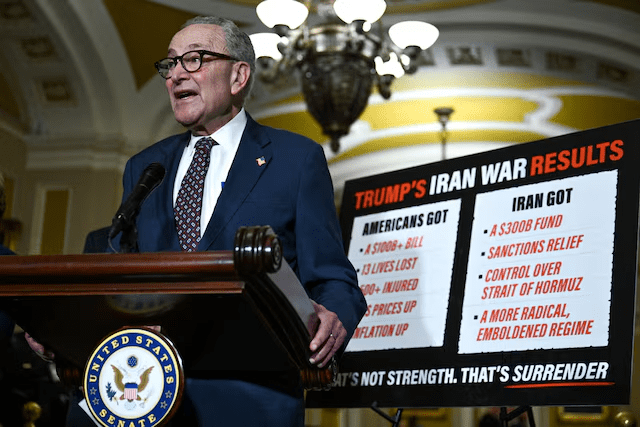
The US has currently deployed more than 20 warships and hundreds of military aircraft in the region. Thousands of people, mostly Iranian and Lebanese citizens, have lost their lives so far due to this war, which began in February with a joint attack by the US and Israel.
This war is also becoming unpopular within the US. The US wants to prevent Iran from acquiring nuclear weapons, while Iran wants sanctions against it to be lifted and to maintain its control over the Strait of Hormuz waterway.
Reuters
This specific news has been automatically translated by AI. As a result, there may be some inaccuracies or language errors.

_6BsDewPY2j.jpg)