Supreme Court to Decide Legality of Assets Investigation Commission

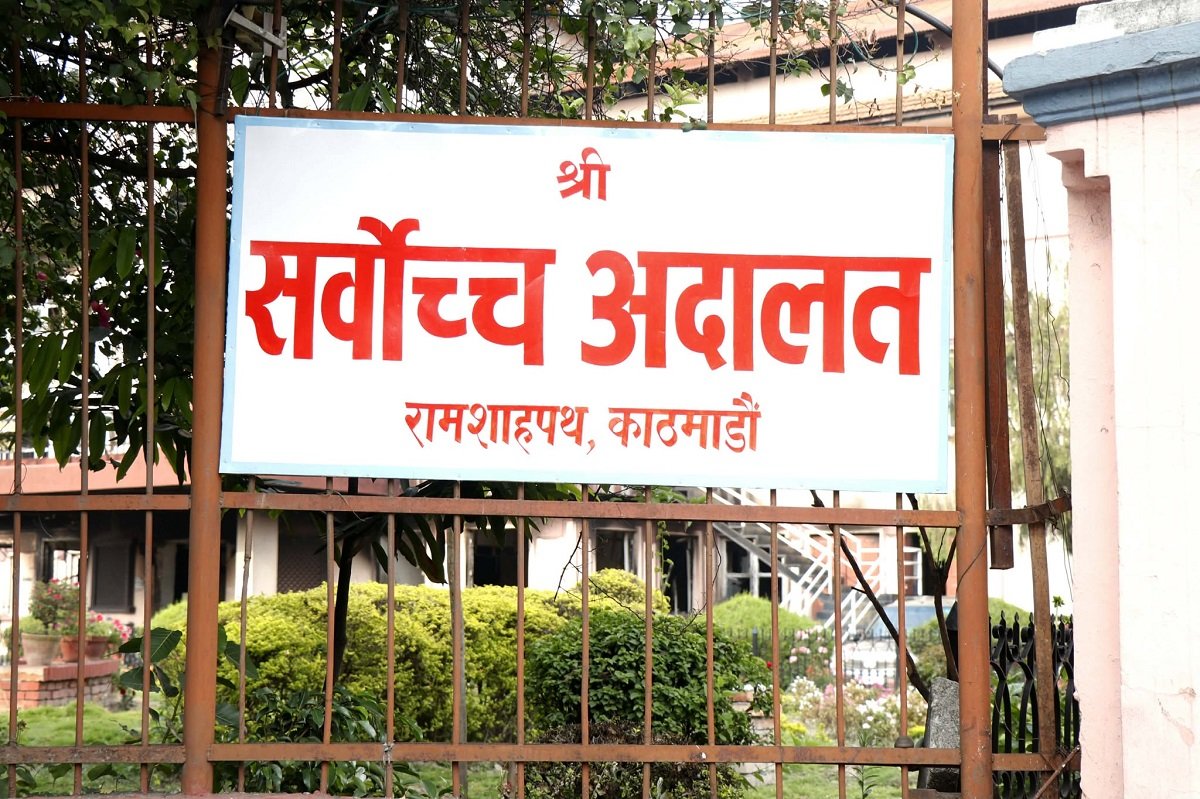
Kathmandu. The legality dispute of the 'Assets Investigation Commission' formed by the government led by Balendra (Balen) Shah will now be decided by the 'Full Bench' of the Supreme Court.
On Friday, the joint bench of Justices Tekprasad Dhungana and Shreekant Poudel, deeming that the case involves serious and complex constitutional questions, ordered it to be sent to a full bench of three or more judges.
The joint bench has ordered the case to be presented to the full bench to interpret various issues on why it should be taken to the full bench.
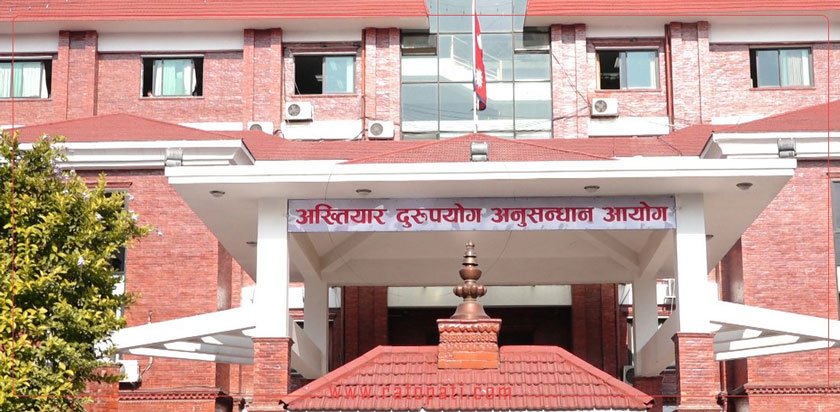
The court stated that Article 239 of the constitution assigns the responsibility of investigating corruption and improper conduct to the 'Commission for the Investigation of Abuse of Authority'. In such a situation, the court's conclusion is that a serious question has arisen as to whether it is constitutional for the government to form a separate commission and assign it similar work, and the final interpretation of this should come from the full bench.
The court raised the second question regarding the legal complexities in the investigation of judges and the army. For sitting judges and the Nepali Army, the constitution and laws have prescribed separate investigation procedures.
Legal clarity is needed on whether the commission formed by the government can investigate the assets of these specific individuals.

Similarly, the Supreme Court pointed out the issue of the right to privacy and the principle of equality. The order mentions that a thorough legal debate is necessary on whether the constitutional right to keep personal asset details confidential (Article 28) and the right to equality when investigating specific individuals or groups (Article 18) are violated.
Furthermore, the order mentions the review of old precedents. Previously, the Supreme Court had delivered various judgments (precedents) regarding asset investigation and commission formation in 2062, 2069, and 2074 BS.
The joint bench has sent this to the upper bench for balancing the interpretation of these precedents with the legality of the current commission.
This specific news has been automatically translated by AI. As a result, there may be some inaccuracies or language errors.