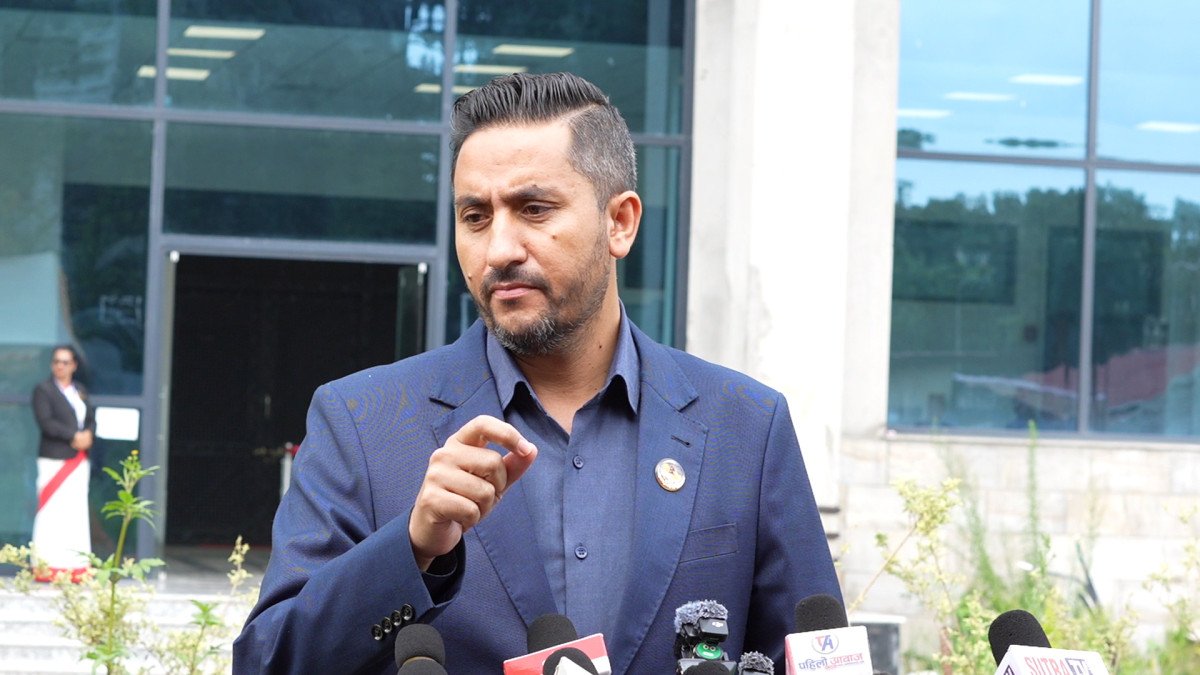
Home Minister Questions Kathmandu Metropolitan Police Role in Self-Immolation Incident

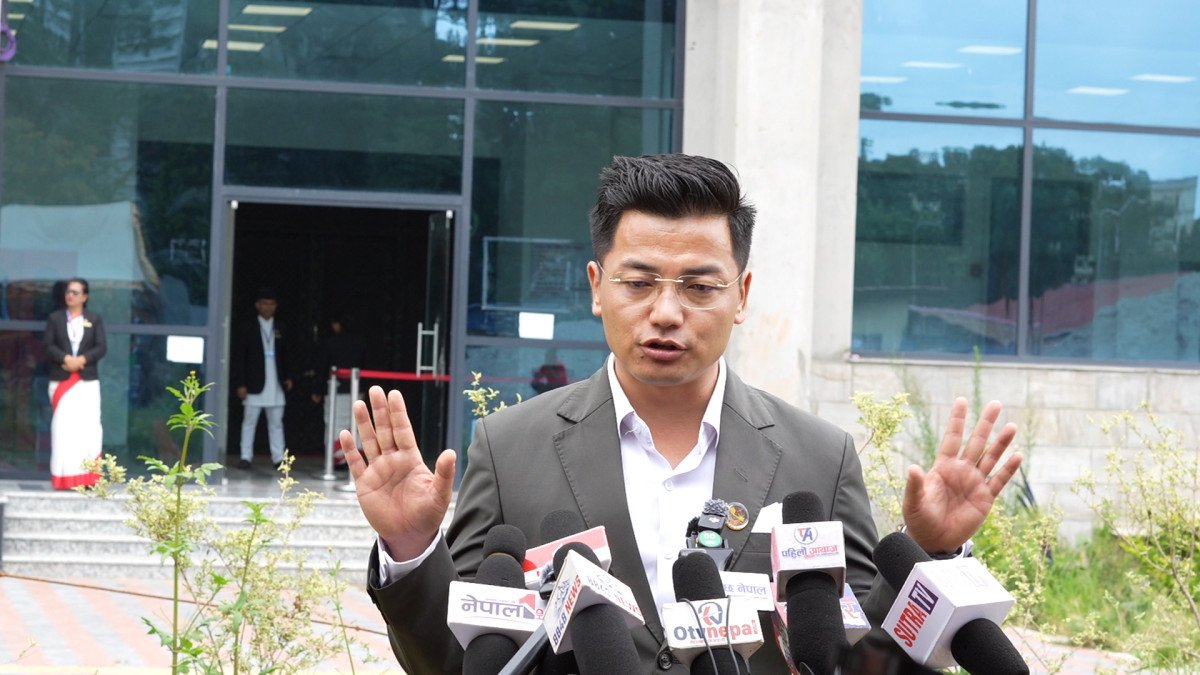
Kathmandu. Home Minister Sudhan Gurung questioned the role of Kathmandu Metropolitan City and local administration in the case of Ganesh Nepali, who self-immolated in Tripureswor. He claimed that video evidence shows the Metropolitan Police, not traffic police, locked Ganesh Nepali's bike.
Targeting opposition MPs, he asked, 'Under whose leadership are the local and provincial governments now?' He stated that he was only implementing the laws and regulations made by past governments, arguing that old laws were the root of some of the current problems. He questioned the role of the metropolitan police.
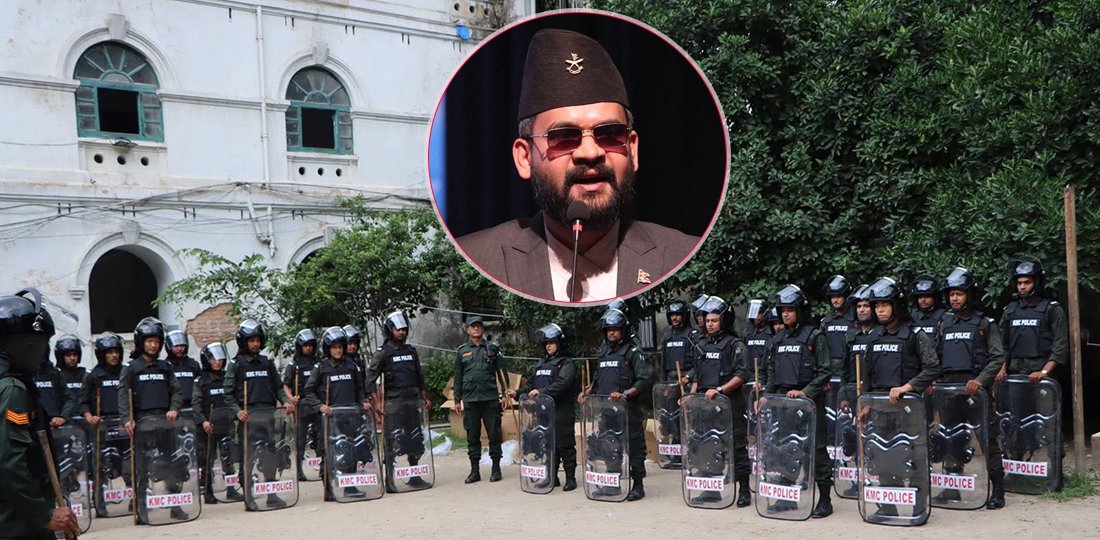
However, the current situation of the metropolitan police is due to the role of Balendra Shah, the former mayor of Kathmandu Metropolitan City and current Prime Minister. When Balen was elected mayor of Kathmandu Metropolitan City in Baishakh 2079, Nagar Police Superintendent Dhanapati Sapkota was in charge of the Kathmandu Metropolitan Police Chief. On Bhadra 6, 2079, Balen removed Sapkota from the position of Nagar Police Chief and appointed Police Superintendent Raju Pandey as chief. After that, the metropolitan police became aggressive. Pandey has now resigned and is a Member of Parliament from Rastriya Swatantra Party, where Balen is a senior leader, representing Kathmandu Constituency No. 3.
Aggressive Metropolitan Police Under Pandey's Command
Shortly after Pandey took charge, on Assoj 13, 2079, street singer Manjadar (MJ) Tamang was arrested by the Kathmandu Metropolitan Police from Basantapur. He was singing in Basantapur to collect donations for the treatment of 13-year-old Subita Khadka from Lalitpur. Kathmandu Metropolitan City took Tamang to the office along with equipment like microphones and loudspeakers, stating that begging was not allowed in the metropolis.
He had been raising funds through social media posts, stating that help was needed to continue Khadka's treatment at the cancer hospital. Accordingly, when the metropolitan police picked him up while he was singing in Basantapur for donations, 14,000 rupees had already been collected.
Prior to that, on Saun 17, 2079, the Metropolitan City had issued a notice warning that anyone caught begging or making others beg in 10 public places would be prosecuted according to the law. After that, the Metropolitan City began to adopt a ruthless approach towards footpath vendors and small stall owners.
On the night of Fagun 17, 2080, around 7:45 PM, a group of Nagar Police suddenly physically attacked footpath vendors in Sundhara, Kathmandu. According to the footpath vendors, the team led by Nagar Superintendent Manoj Lamichhane, accompanied by about 50 Nagar Police, started lathi-charging them. For a moment, the footpath vendors didn't even understand what was happening.
The injured vendors protested against the metropolitan police, saying they were chased and beaten so severely that they couldn't even escape. About 50 Nagar Police were on the field, and about 30 were in vehicles, carrying stones and bamboo sticks, and beat the footpath vendors.
At that time, Kathmandu Metropolitan City Mayor Balen and Nagar Police Chief Rajunath Pandey were clearing the footpaths ruthlessly under the strategy of not allowing business on the footpaths. Activists like E:, Raksha Bam, and Prasuj Mainali had been protesting against the brutal treatment of footpath vendors. They protested on the streets, and strong voices were raised in parliament as well.
Rajunath Pandey maintained an aggressive style, calling himself Balen's order follower. Pandey was even suspended when there was a dispute between Mayor Balen and Chief Administrative Officer Saroj Guragain in the metropolis. On Jestha 20, 2082, Chief Administrative Officer Guragain suspended him for six months.
Balen's Police Conducted Riot Training Not Mentioned in Law
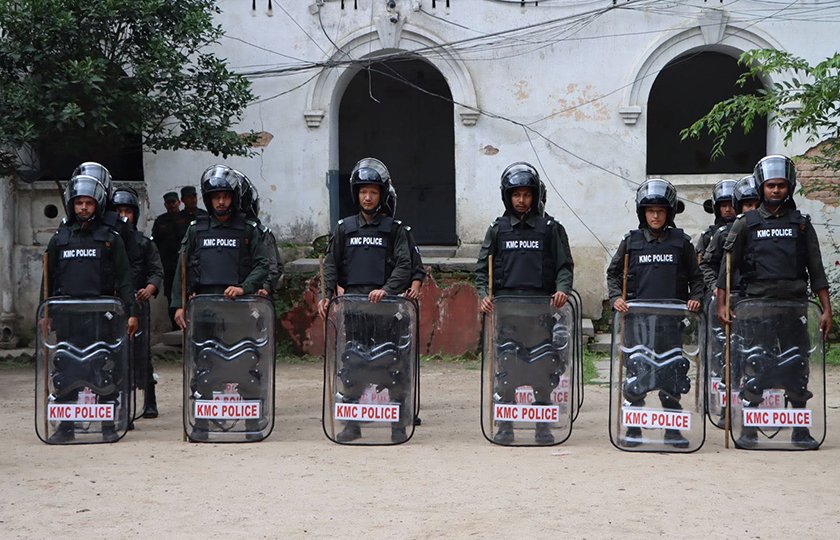
In Mangsir 2079, after the Nagar Police suffered losses while trying to remove a slum settlement in Thapathali without preparation, Balen purchased riot control equipment not mentioned in the law for his Nagar Police. The Nagar Police, who did not even have the authority to use batons, were equipped with helmets, safety guards, modern equipment, and batons.
On Asar 10, 2082, the Nagar Police even underwent riot control training, which was unimaginable. 160 Nagar Police personnel from the Metropolitan Police Force were given training at the Bagdarbar office, similar to that conducted by the Nepal Police and Armed Police Force. According to senior officials of the Kathmandu Metropolitan Police Force, the training was to carry batons and shields and to engage in combat as their performance was being obstructed.
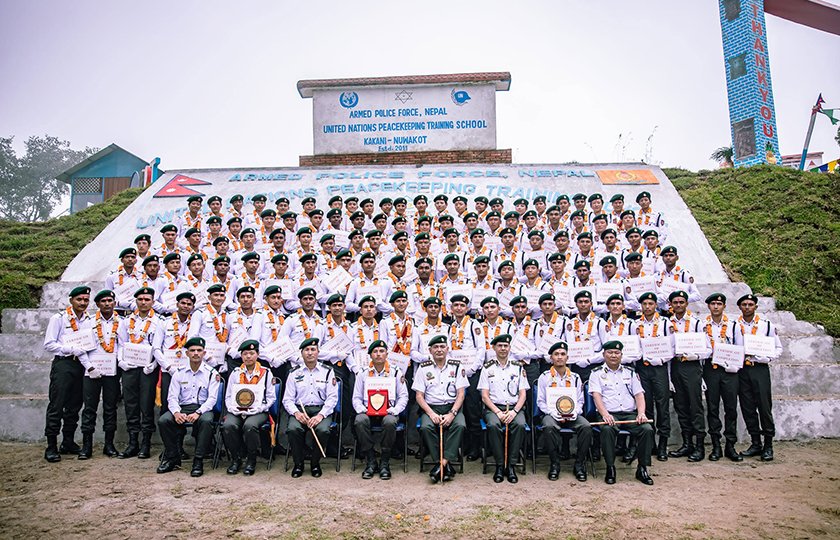
According to those officials, 160 Nagar Police personnel were trained by 10 instructors. 'Mainly, self-defense and how to control riots are taught in the training,' said the official. There was also protest that the uniform of the Kathmandu Metropolitan City's Nagar Police was made similar to that of Nepali Army officers. However, the formal uniform is still the same.
A Nagar Police officer who worked during Balen's tenure as mayor says, 'We never received direct instructions from Balen; Raju Pandey would issue orders in Balen's name. The metropolitan police became even more ruthless then. The style hasn't changed even now.'
Raksha Bam Recalls Metropolitan Police's 'Planted' Tendency
Activist Raksha Bam has raised serious questions about the working style of Kathmandu Metropolitan City regarding the tragic incident of Ganesh Nepali's self-immolation in Tripureswor. She claimed that the inhumane, insensitive, and forceful style established within the metropolitan police during Balen Shah's tenure as mayor is responsible for creating a situation where citizens like Ganesh Nepali have to resort to self-immolation. She argued that supporters of the Rastriya Swatantra Party (RSP), who have shouldered the burden of 35 years of politics from old parties, should now be ready to review Balen's three-year term and bear its consequences.
She mentioned that the metropolitan police have continuously attacked the dignity of the poor, street vendors, and slum dwellers, and the leadership has never viewed this from a humanitarian perspective.

Activist Bam accused Shah of suddenly transforming after taking command of the metropolis, despite making grand claims during his mayoral campaign about the easy management of street vendors. According to her, after becoming the mayor, Shah's policies became intolerant towards the weaker sections. She recalled that even when the Chameli campaign and activist E: protested for the rights of street vendors by standing outside the Metropolitan City office for 199 hours, the leadership made no attempt to dialogue. Only when a situation of rebellion arose within his own secretariat did the metropolitan leadership become somewhat flexible, and the speed of the bulldozers, which were operating uncontrollably, slowed down only after a court order.
The activists argue that this harsh style developed in Kathmandu Metropolitan City has been established structurally at the lower levels and its impact is now being seen in other parts of the country. Raksha Bam interpreted the mistreatment of a woman selling 'kafal' by the roadside in Karnali and the incident of a poor person's auto being pushed off a cliff under the guise of forest employees as a continuation of this tendency. She believes this tendency is growing due to serious social deviations where a large section of society encourages such ruthless actions, and the tears of the oppressed poor become a subject of laughter and 'memes' on social media.
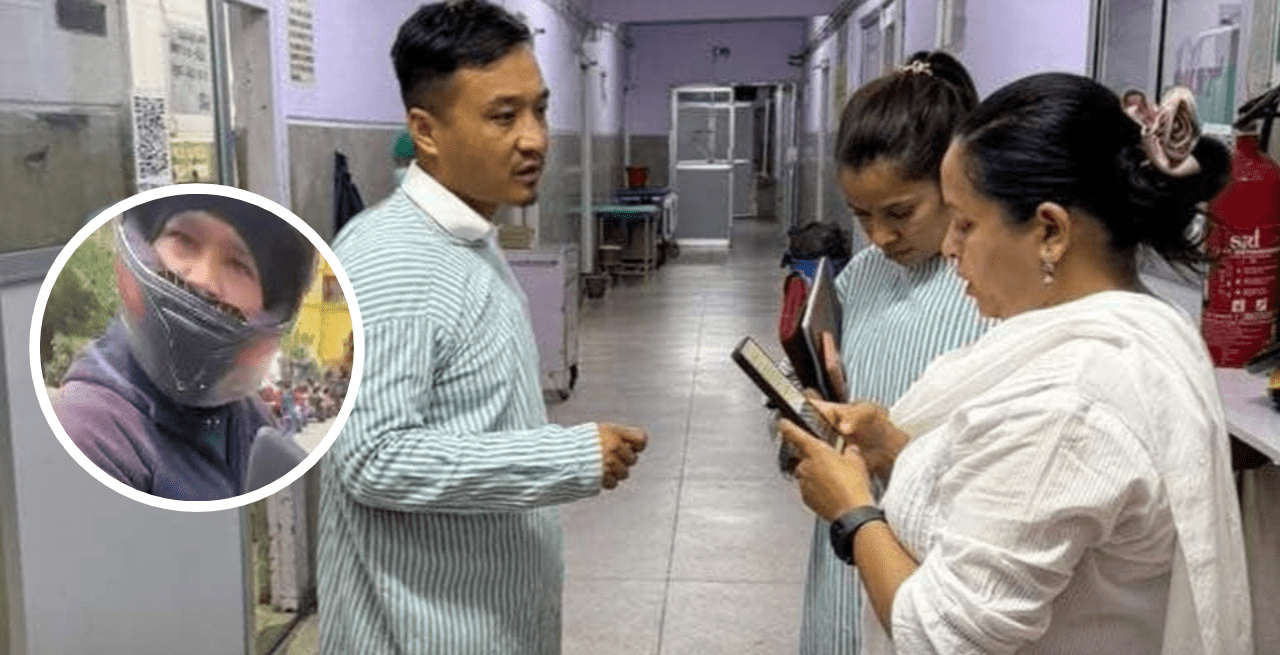
Activist Bam suspects that after the incident of Ganesh Nepali's self-immolation, a section of society will start making various accusations against the deceased, and the state will try to shift the blame to the metropolis led by Sunita Dangol. She mentioned that it is a common tendency to bring up new tricks and controversial issues as trump cards to divert attention when public anger rises over such serious matters.
She claimed that just as the issue of investigating the palace massacre was raised in the context of reinstating Sudhan Gurung, and bulldozers were run over the slum settlement in Thapathali without preparation to quell the strong criticism generated by Sudhan Gurung, new tricks will be created now.
The activist concludes that such tragic incidents will continue to occur as long as Shah does not correct his working style and his fans, who constantly cover up his mistakes, do not make him realize the responsibility of managing the metropolis. As long as the leadership does not adopt a citizen-friendly and humanitarian approach, the weaker sections will continue to suffer persecution from the state, and ordinary people like Ganesh Nepali will continue to lose their lives, expressing sorrow over the indifference of the state and its mechanisms.
Legal Authority Came During Balen's Tenure
'Metropolitan Police Act, 2080', issued when Balen was the mayor of Kathmandu Metropolitan City, provided legal validity to the metropolitan police to remove unauthorized obstructions in vehicle parking and on sidewalks. This new act has further clarified and empowered the work, duties, and rights of the metropolitan police, addressing the legal and practical complexities faced in the past when working based on procedures or administrative directives. Section 7 under Chapter 3 of the Act defines the scope of the metropolitan police's work and duties.
Clause (c) of Sub-section (1) of Section 7 of the Act assigns the responsibility of overseeing, monitoring, and managing market areas and vehicle parking lots within the metropolis to the metropolitan police. With the implementation of this provision, the metropolitan police have gained legal authority to control business activities that encroach on footpaths and regulate unauthorized and haphazardly operated parking lots.
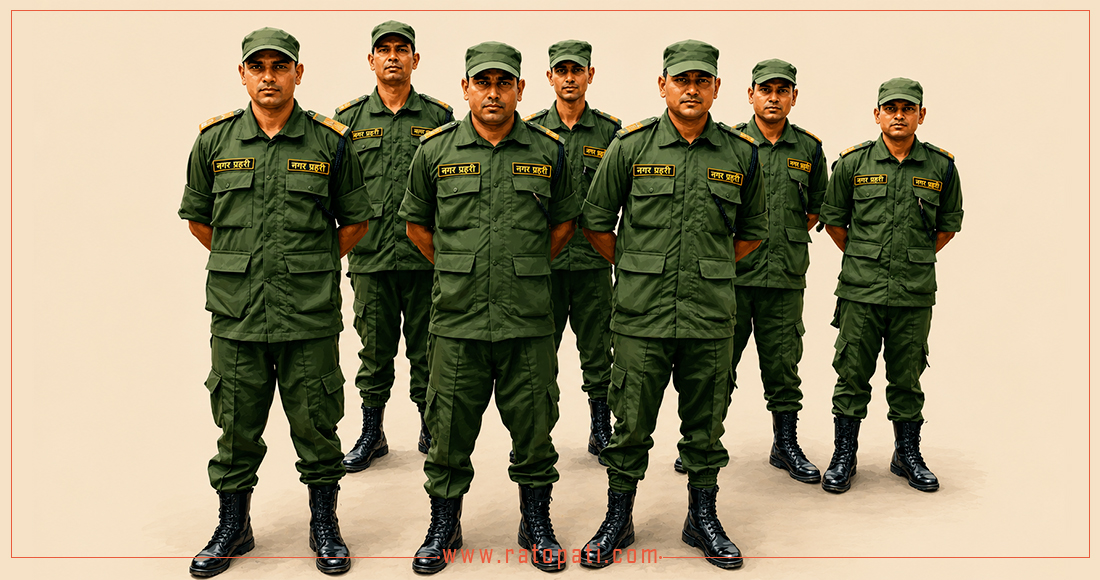
Similarly, the Act has made strict provisions to discourage the practice of obstructing public movement by haphazardly piling construction materials on roads and alleys within the metropolis. According to Clause (th) of Sub-section (1) of Section 7 of the Act, the metropolitan police have the authority to immediately remove construction materials such as stones, sand, bricks, or rods if they obstruct public movement.
In addition, other supplementary provisions in the Act entrust the metropolitan police with the responsibility of protecting public property, preventing the construction of unauthorized structures, and preserving squares and alleys. With legal clarity, it is believed that market monitoring and enforcement actions by the metropolitan police will become more transparent and just, which will help in making the daily lives of the city dwellers easier and maintaining urban order. Seeing this practice of Kathmandu Metropolitan City, other metropolitan police forces in the country have also been seen apprehending stall vendors and footpath vendors.
This specific news has been automatically translated by AI. As a result, there may be some inaccuracies or language errors.