Four Ordinances Issued by Balen Shah Government to Expire

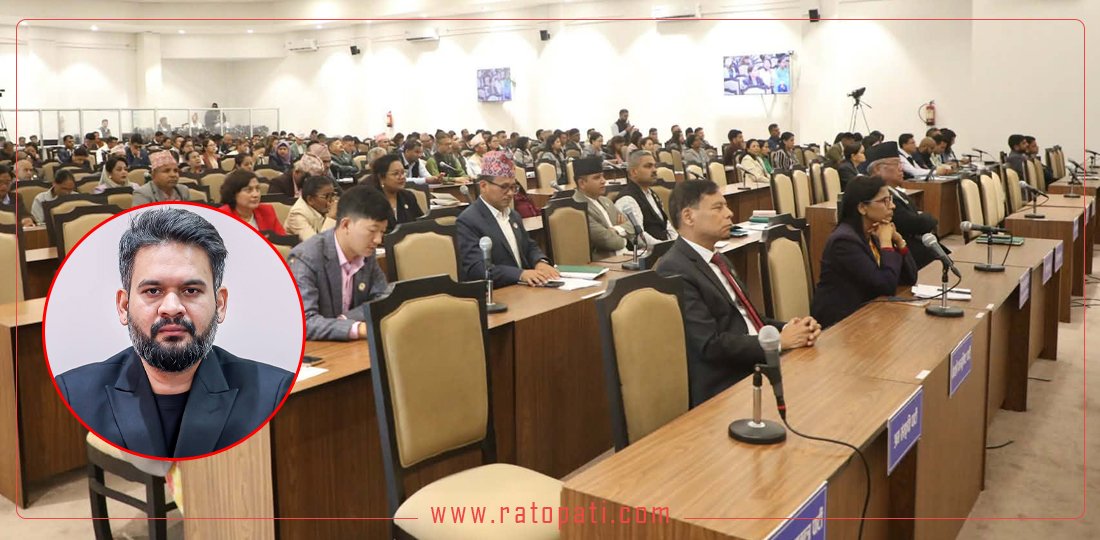
Kathmandu. Four ordinances issued by the Balen Shah-led government in April will automatically become invalid as they were not approved by the Federal Parliament within the 60-day period stipulated by the constitution. These ordinances will automatically become invalid from June 27 (tomorrow) as they could not be approved by the Federal Parliament within the 60-day time limit set by the constitution.
The Banen government had issued eight ordinances in April. Four of these ordinances are in the process of becoming law in the Federal Parliament.
At the recommendation of the government, President Ram Chandra Paudel had issued eight ordinances from April 17 to 22. The issued ordinances were tabled in both houses of the Federal Parliament (House of Representatives and National Assembly) convened on April 28. According to Article 114 of the Constitution, if a bill replacing an ordinance is not passed by both houses within 60 days of its presentation in the Federal Parliament, the ordinance automatically becomes invalid.
The 60-day constitutional deadline for the ordinances tabled on April 28 is until the night of June 25.
The ordinances had been politically controversial from the beginning after their issuance. These ordinances were kept on 'hold' without being advanced through the regular parliamentary process.
The Constitutional Council (Functions, Duties, Powers and Procedures) (First Amendment) Ordinance 2083, issued by President Ram Chandra Paudel on April 22, the Ordinance to Amend Some Nepal Laws 2083, issued on April 20, the Special Arrangement Ordinance on the Dismissal of Public Office Holders, 2083, issued on April 17, and the Ordinance to Amend Some Nepal Laws Related to Universities, 2083, were kept on hold without being advanced in the parliamentary process.
The government, in agreement with the opposition Congress and UML, advanced four ordinances and kept the other four on 'hold'.
The government has replaced the Cooperative (First Amendment), Public Procurement (Second Amendment), Money Laundering (Prevention) (Third Amendment) and some Nepal Laws related to Health Sciences Institutions Ordinances with replacement bills, which have already been passed by the House of Representatives and sent to the National Assembly.
Even after reaching the National Assembly, the process for these bills is not yet complete. The Legislation Management Committee of the National Assembly passed the replacement bills for the Money Laundering (Prevention) Ordinance and the Ordinance Related to Health Sciences Institutions with suggestions on Wednesday.
The replacement bills for the Public Procurement (Second Amendment) Ordinance and the Cooperative (First Amendment) Ordinance are still under discussion in the committee.
The government has a time crunch to complete the process of discussion, decision, and subsequent authentication of the bills by Thursday, so that all four replacement bills can be passed and sent for authentication. However, the Parliament Secretariat is stating the deadline as Friday, calculating the time from April 29.
However, Article 114, Sub-section 2 (1), Clause 'A' of the Constitution states, 'Every ordinance shall be presented in both houses of the Federal Parliament after its issuance, and if not accepted by both houses, it shall automatically become invalid.'
Regarding the 60-day calculation, the constitution states, 'The day of the meeting of both houses shall be understood as the day the Federal Parliament's both houses commenced their session or the day of the first meeting, and in the case of meetings of the houses of the Federal Parliament held consecutively or at different times, the term shall refer to the day on which the meeting of the house that convened later took place.'
The meetings of both houses of the Federal Parliament were held on April 28, and all eight ordinances were presented in both houses on the same day.
This specific news has been automatically translated by AI. As a result, there may be some inaccuracies or language errors.
-_2PjKM4pgMQ.jpg)