Government's Decision to Abolish Internal Exams for Grades 1-5 Ignored by Some Schools

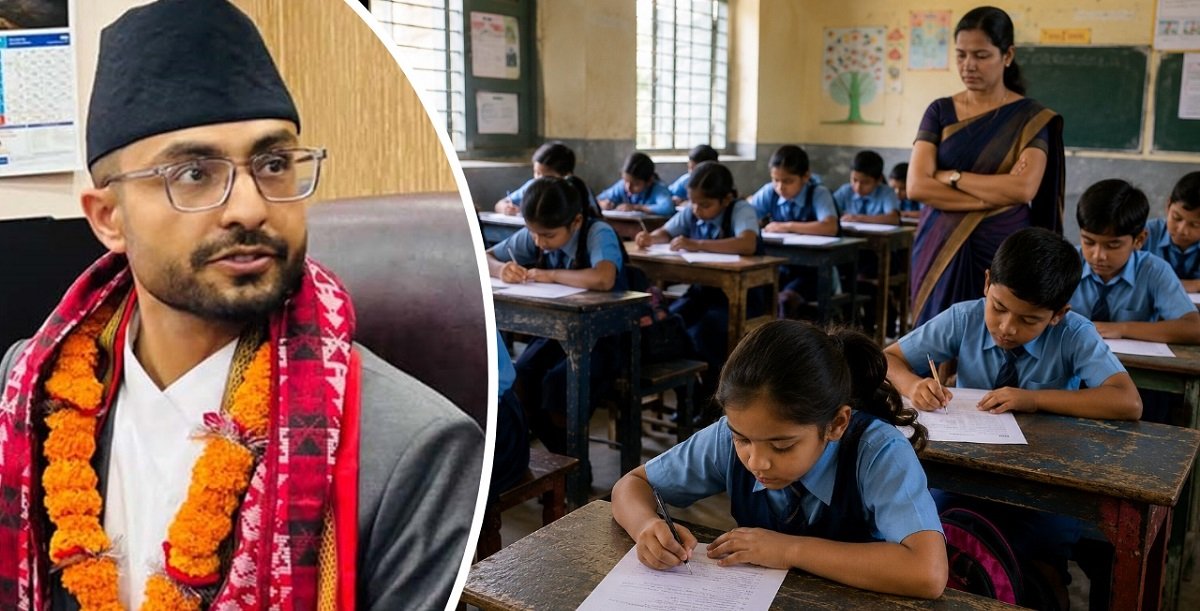
Kathmandu. Although the government has announced the complete closure of the internal examination system for students from grades 1 to 5, some schools have been defying the government's decision.
Some schools have even made public their examination schedules and started conducting first-trimester examinations in the name of 'tests'.
According to parents, schools conduct internal examinations in the name of tests, project work, and objective questions. They stated that they conduct examinations for younger students (grades 1-5) at the same time as internal examinations for other classes (grades 6-10).
Sita Upreti, a parent from a school in Kathmandu, said, 'They say they won't conduct exams. When I admitted my daughter to grade 4, they even conducted an entrance exam. Now, the examination schedule for July has also arrived.'
Previously, continuous student assessment was implemented for grades 1 to 3, but this time, 100% continuous student assessment has been established for grades 4 and 5 as well, according to the Ministry of Education and Sports.
Although it was stated in the '100-Point Agenda for Governance Reform' that primary level students would not have to face the pressure of traditional written examinations, this decision has not been fully implemented. Moreover, some private schools even conduct entrance examinations for admission to classes.
Point number 89 of the governance reform agenda states, 'The practice of conducting internal examinations for students up to grade 5 will be stopped from the upcoming academic session. Alternatives will be prepared for assessment systems that do not cause psychological impact and pressure on students.'
The Curriculum Development Center has issued the Student Assessment Guideline 2083 for the basic level, grades 1-3 and grades 4-5. For grades 1-3, student assessment should be continuously used to improve learning by integrating it with classroom activities as an integral part of the learning process.
According to government data, there are 76,731 schools across the country. Among them, 58,817 are community, 15,963 are institutional, and 1,951 are religious schools.
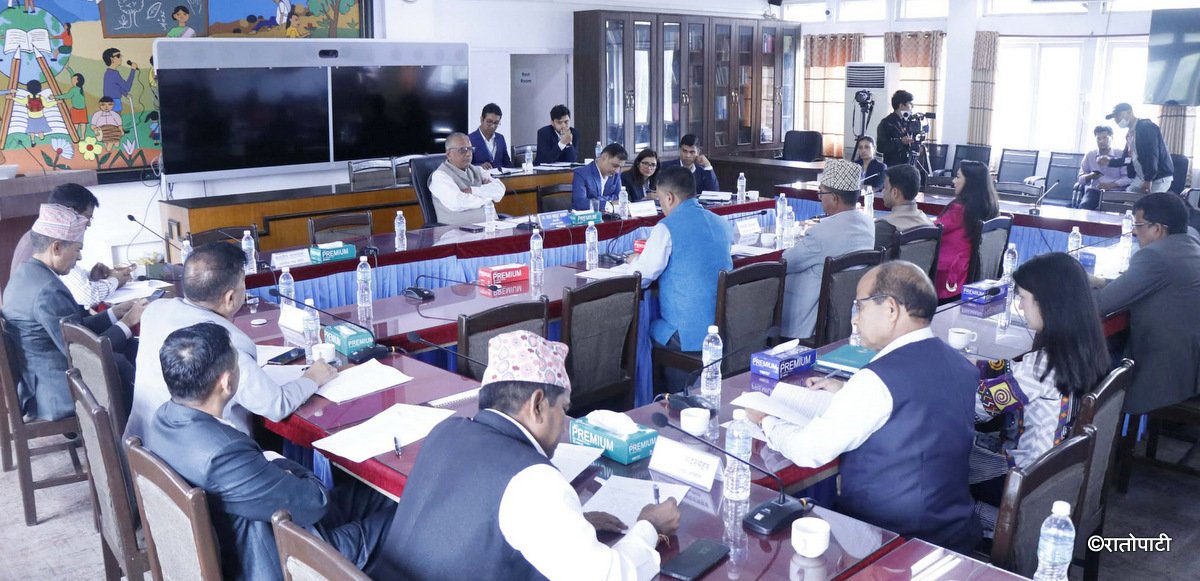
RB Katuwal, General Secretary of PABSON, the umbrella organization of private schools, said that this government decision is in the implementation phase. He said, 'We will implement the decision not to conduct internal examinations for students up to grade 5. Some schools may have also fulfilled the demands of parents. It might be that in some schools, parents have asked to conduct examinations, which is why it happened, but we will implement the government's decision.'
He stated that some schools ask objective questions during internal assessments but do not conduct them as examinations.
What is in the Grade 1-5 Student Assessment Guideline?
The Curriculum Development Center has issued the Student Assessment Guideline 2083 for the basic level, grades 1-3 and grades 4-5. For grades 1-3, student assessment should be continuously used to improve learning by integrating it with classroom activities as an integral part of the learning process.
The guideline mentions that learning achievements and their elaboration should be prepared, and accordingly, assessment methods, processes, and tools should be prepared. According to the guideline, daily classroom activities should be used to assess student learning, and remedial learning processes should be provided to students lagging behind to ensure minimum learning, as well as to provide opportunities for advanced and higher-level learning for all students.
According to the guideline, when assessing the learning level of students, it should primarily be tested whether students have achieved the expected learning outcomes in various learning areas. The guideline states that real-world tasks should be included in student assessment as much as possible.
It is mentioned that the portfolio should be updated based on students' classwork, project work, achievement tests, observation of practical changes in students, attendance, etc.
The subject matter includes using appropriate tools and processes to test students' competencies in acquiring essential practical skills during assessment, as well as analyzing, evaluating, and creating as needed in subject-specific learning areas. It is mentioned that learning activities should be improved as needed by assessing the competencies acquired by students in acquiring essential practical skills during assessment.
The guideline states that if a student does not achieve the expected results after assessment, their learning should be improved through remedial teaching-learning processes. For students who cannot achieve minimum learning outcomes even after repeated remedial teaching-learning processes, remedial education should be arranged, as stated in the guideline.
Similarly, for grades 4-5, instead of assessing student learning within a fixed period, assessment should be used as a regular part of classroom activities. The guideline emphasizes that the planning and execution of learning activities in the classroom should be done in a way that enables students to achieve the set learning outcomes.
It is mentioned that the portfolio should be updated based on students' classwork, project work, achievement tests, observation of practical changes in students, attendance, etc.
The directive states that parents should be informed about the subjects taught in school and student achievements every month or after the completion of a specific topic or subject area, and records should be maintained. According to the directive, methods and tools that can be used for regular assessment of students during learning facilitation in grades 4 and 5 include class participation, written and oral work, project work, behavioral observation, student work demonstration, anecdotal records, self and peer assessment, and parent feedback.
If a student has not achieved learning outcomes or requires remedial learning for learning outcomes, their achievement level will be considered below basic. According to the directive, if a student has partially achieved learning outcomes but requires remedial learning, their achievement level will be considered basic. Similarly, if learning outcomes are mostly achieved, the achievement level will be considered proficient, and if learning outcomes are fully achieved, the achievement level will be considered high.
What do Stakeholders Say?
Bir Bahadur Dhami, Information Officer at the Ministry of Education and Sports, informed that while continuous student assessment was previously only for grades 1-3, it will now be implemented for grades 4-5 as well. He believes this will reduce psychological pressure on students.
Dhami said, 'The guideline clearly includes the basis for continuous student assessment. It is not appropriate to say anyone is pass or fail. Based on the guideline, it is appropriate to use presentation, classwork, and other assessment criteria after completing a lesson.'
Regarding this matter, Man Bahadur Khadka, Senior Education Officer of Tulsipur Sub-Metropolitan City in Dang, stated that the guideline prepared by the Curriculum Development Center is being implemented. He said, 'We have oriented private schools for internal assessment. We will fully implement the assessment booklet.'
He mentioned that a meeting of principals of institutional schools has also been convened to implement the guideline.
Suprabha Bhandari, former president of the Parents' Association, believes that parents should not be financially exploited in the name of examinations. He said, 'The practice of schools conducting examinations for grades 1 to 5 is a defiance of the government's policy decision. Monitoring, regulation, and action should be taken in this regard. Collecting money in the name of examinations is financial exploitation of parents. Assessing students is not just about giving question papers and making them write answers. Assessment should also be done in a modern way.'
This specific news has been automatically translated by AI. As a result, there may be some inaccuracies or language errors.


_hXuKAenRlA.jpg)