Mahashila: A Giant Rock in Parbat with Rich History and Mythology

There is a song - Let's go for a trip, let's go for a trip, let's go to Nagarkot.
What is so special about Nagarkot? Just the hilltop, rhododendron forests, and the line of mountains visible across. Other than that?
I don't feel anything special.
There are thousands of such unremarkable places in Nepal. In those unremarkable places, beauty found nowhere else in the world is etched and preserved. Whether such beauty exists in Da Vinci's Mona Lisa painting is debatable; one has to ponder for a moment.
One such place that can be added to the list of those lost in the thousands is Mahashila in Parbat.
Youngsters today imagine what true beauty is by looking at Dutch beauties. It's not just girls from Scandinavian countries who are beautiful; girls from Ghana and Nigeria are equally beautiful. What if their skin is dark? Beauty is not just about the color of the face, is it?
Mahashila is also like a Nigerian girl. It might look a bit dark, but its beauty fulfills all standards.
Elders often say in villages - beautiful when seen from behind, like the Howrah Bridge when seen from the front.
Mahashila is beautiful even when seen from the front.
Now you might wonder, what is this Mahashila? What is the word Mahashila, which is also the name of a rural municipality, actually named after?
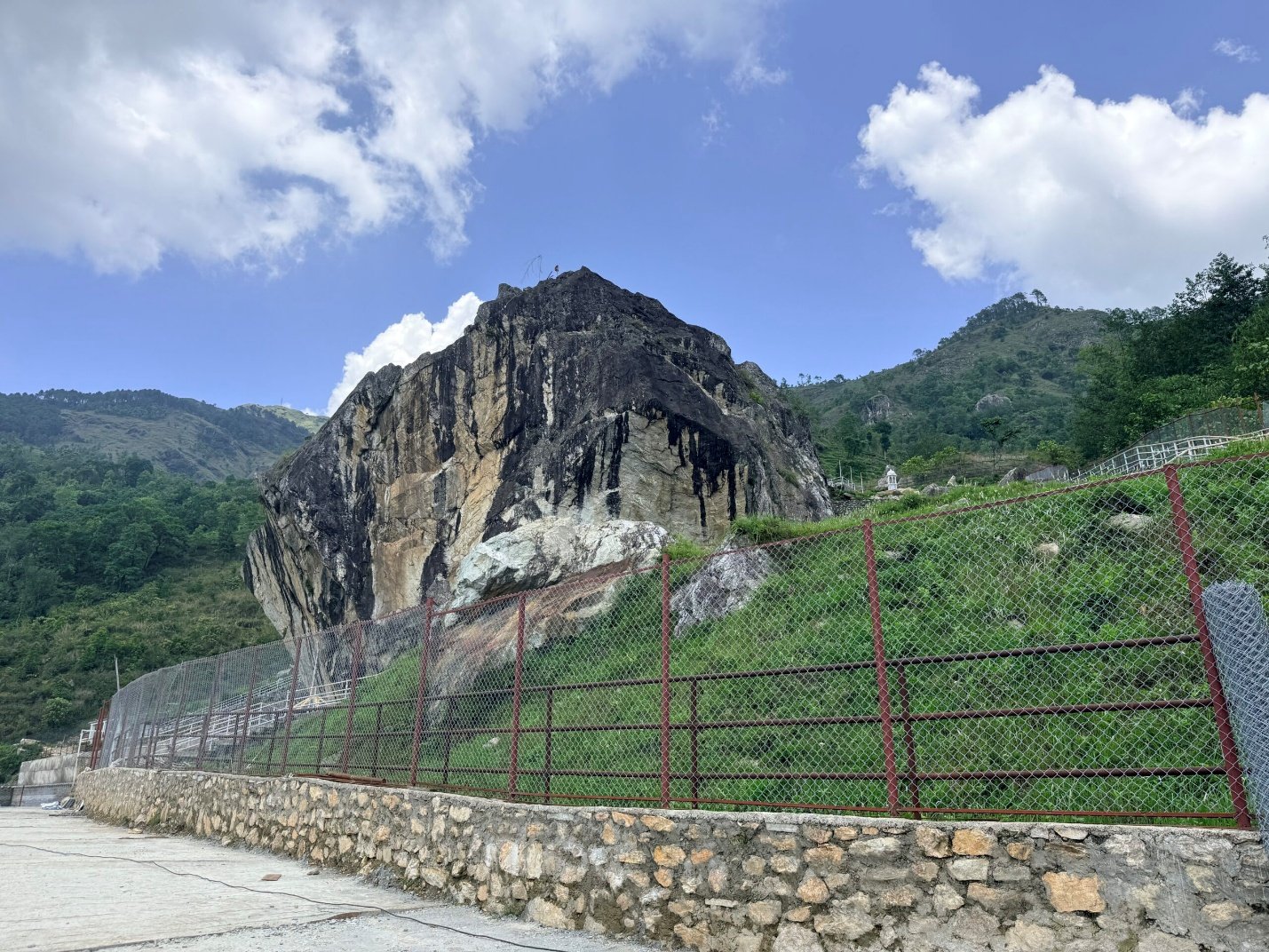
If you are thinking so - Mahashila is the name of a large rock. It also claims to be the largest rock in South Asia. How large? Elders say that in the past, if one placed a bowl of rice at its base and circumambulated the rock, the rice would be cooked by the time they returned.
Mahashila is a local level unit in Parbat. The rock that gave its name to the municipality is named Mahashila. If such a giant rock were not here, what would this municipality be called? Such questions I repeatedly ask the elders here. But the answer comes as soft as a flower petal - just a faint smile. I have never heard an alternative from anyone's mouth.
Let's talk about that giant rock Mahashila, whose old name is Maldhunga. The municipality is named after it. Some also call this municipality the Kalikot of Parbat. I used to say that too. Sometimes I still do. But Kalikot itself is a jewel of the country. In this sense, Mahashila is also a jewel. Is it of gold? Or diamond? Even if it's of iron, a jewel is still a jewel.
It's about that Maldhunga, which has Mahashila as its name on its birth certificate. There are some interesting stories behind its name, which few people know.
Story No. 1 - This is Maldhunga.
During the time of the Chaubise states, strong things and strong people were referred to as 'Mal' according to some historical accounts. The fact that a person who fought bravely in wrestling was called 'Mal' is documented in the history of the Parbat state. Yes, this is such a 'Mal' rock.
Perhaps it received the word 'Mal' due to its grandeur - 'Mal'. A colossal rock to behold. If you look from the bottom, let alone its sides, you have to place your palm on your forehead to look at its height. If you are wearing a hat, you have to hold it in place. Such a huge single rock, and all of the same kind. Decorated with colors in the middle.
Another story that explains why it is called Maldhunga is still alive in the villages. In olden times, distance was not measured in meters or kilometers. Rather, those who returned from Assam introduced the word 'mile'. From their mouths came the measure of this rock's distance - this is a mile-long rock. That gradually corrupted into 'Mile-dhunga'.
Later, for ease of pronunciation, it became 'Mayal-dhunga'. And even later, in a catchy style, it came to be known by the name 'Dunga' - Maldhunga. The unit of measuring distance gave it a name of sorts.
Story No. 2 - This is Miyaldhunga.
The story of Story No. 1 is about a century old. But the time of this story is about five hundred years ago. During the time of the Chaubise states, the second king of the Paiyu state, in which this region was located, was Labhasingh. While returning from observing the iron mine of Dhuwakot, King Labhasingh rested for a while on this very rock.
A little below, near the old resting place, the 'Miyal' fruit was ripe and abundant. The king ordered some fruits to be picked from the 'Miyal' tree. He ate the 'Miyal' fruits with Queen Suruchisitting at the head of the rock. It is said that Parbat princess Suruchi used to eat fruits sitting at the head of such rocks when she was in Dhoralthana. She named this rock - 'Miyal ko dunga' (Miyal's rock).
Story No. 3 - This is Muldhunga.
Elders say - according to what has been heard, the story is about 600 years ago. At that time, the chief of Balakot, Ganjhu Ale, spent a night on this rock, and in a dream that night, Goddess Kali gave him initiation. In that initiation, she instructed him to bring a Rajput king to this region, establish him as king, and build a temple for her to worship.
According to the fruit of that dream, the Paiyu state was later formed in this region. In that sense, this rock became the main source for the establishment of the Paiyu state. Later, the first king of this region, following Ganjhu Ale's instructions, named this rock Muldhunga.
These are the stories of this rock that live on the lips of the elders of this region. Some religious aspects are also associated with this place.
According to evidence written in Gujarati script, in 1795 AD, Swaminarayan meditated on this very rock. Followers of that religious sect believe that Swaminarayan, who set out on a pilgrimage to Muktinath, meditated for about three months in the cave located at the head of this rock.
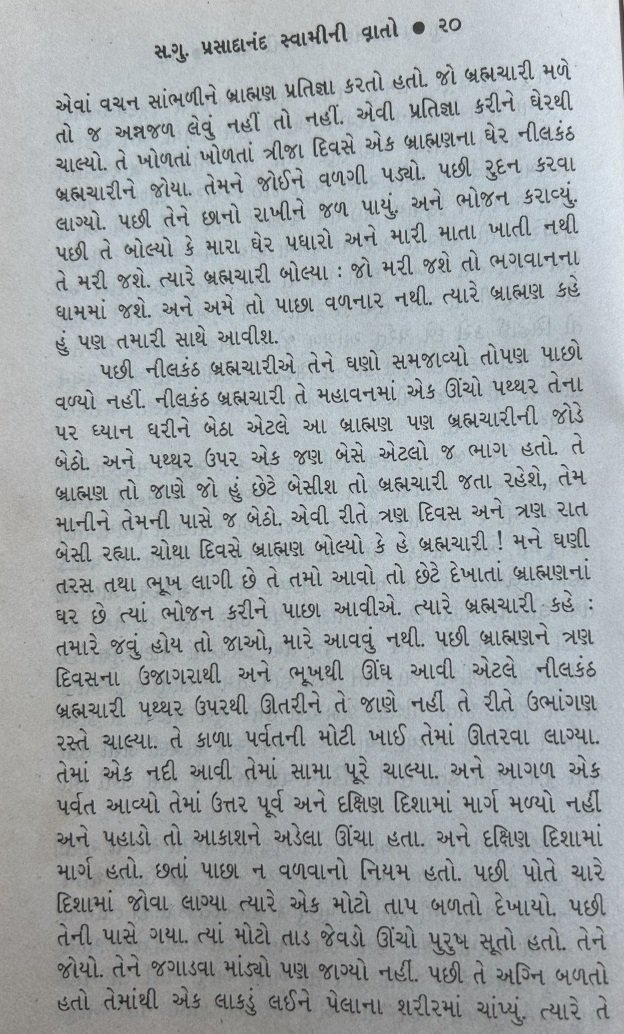
Perhaps for this reason, a statue of Swaminarayan has been installed here with the special initiative of Gujarat's Akshardham. A plaque detailing the full story of Swaminarayan's connection to this place has also been installed here.
Elders in this region tell a story connecting a passage from Hinduism to this rock. It is said that in the time of the gods, to distract the sages, demons came, and Lord Shiva, in the guise of his vehicle Nandi, came to this place to defeat them. In the battle fought as Nandi, one of his horns broke. That broken horn took the form of a giant stone, and this Mahashila became a huge rock, as the elders here enthusiastically narrate.
In this sense, this giant rock is the incarnation of that broken horn of Nandi. That is, a disguised incarnation of Lord Shiva.
A strange incident occurred on this very rock. This was only a few decades ago.
A Brahmin ascetic who was meditating in a small cave at the base of this rock suddenly disappeared. While he was meditating, water sprang from the rock, forming a small well. When he disappeared, that well also dried up. Much later, that Brahmin ascetic returned and came back here, resuming his meditation and worship. On the very day he returned, the dried-up spring of water reappeared and formed a well. That well is still there. Water still springs from the rock.
Now, a curiosity might arise in the reader's mind.
What is it? I wish I could go there and take a photo. I wish I could see that colossal rock. But how to get there?
Although the municipality's geography is a bit difficult, reaching this religious and historical rock is not too hard. If you set off from Kushma, after about an hour's journey on a paved road, you reach Lunkhudeurali, where the old crossroads are located. Near there, by the side of the blacktopped road, is this rock. Coming back, you have to climb the uphill road of Falebas. Otherwise, from Waling, crossing the Andhikhola, you reach Huvash Bazaar, the center of Paiyu Municipality, in about twenty kilometers.
From there, if you go uphill for about twelve kilometers on a blacktopped road, you reach its base. No matter which way you come, the road does not seem difficult.
This article, with an invitation to visit Mahashila, carries within it the story of this rock until now. But, once you come here, a place you must not miss is the Paiyunkot Temple. This temple is the place that was the capital of the Paiyu state, which was then part of the Chaubise state. The historical facts are slightly distorted, but if you search, records show that this was the first Sen dynasty kingdom of Nepal.
Five hundred and eighty years ago, the Sen dynasty kings first began their reign within the territory of present-day Nepal, right here. The view from the area of Paiyanchaur, where this temple is located, is beyond the description of this author. Many words are inadequate in themselves.
Another place you must not miss is the iron mine. The beautiful landscape here is no less than the hills in the Ramaroshan area. From here, you can see the line of Himalayas from Gorkha in the east to Mugu in the west, right before your eyes. These Himalayas appear so close as if they have settled right in front of your eyes.
The entire range of Himalayas comes together. Moreover, in the winter season, if there is a long spell of rain, how can I describe the joy of playing and frolicking in the snow that falls on these hills?
On this iron mine hill, there is not only beauty for the eyes, but also many iron mine tunnels like Rane Khani and Dhane Khani. You can play with iron ore in your hands, extracted from those iron mines reached by a path through pine forests.
The rest?
The rest is a welcome to you in this beautiful Mahashila. This land is waiting for you. The wind here is waiting for an opportunity to rustle your hair.
Don't you still feel like going - to Mahashila?
(The author is the Chief Administrative Officer of Mahashila Rural Municipality, Parbat.)
This specific news has been automatically translated by AI. As a result, there may be some inaccuracies or language errors.

_hXuKAenRlA.jpg)