Nepal Faces Severe Shortage of Entomologists for Vector-Borne Disease Control

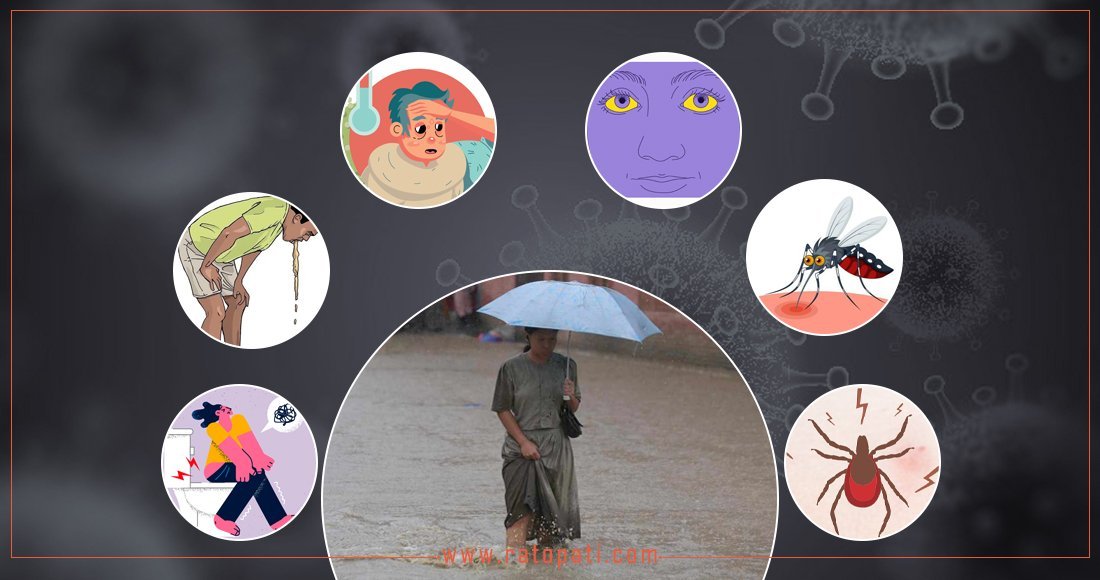
Kathmandu. Nepal is facing an extreme shortage of technical manpower called 'Entomologists' (insect experts) for identifying and controlling vector-borne diseases such as malaria, dengue, scrub typhus, Japanese encephalitis, kala-azar, filariasis, and chikungunya.
Due to the lack of such skilled manpower, considered primary for scientifically controlling and managing epidemics and outbreaks, limited control efforts are currently being made relying on trained general health workers.
These diseases are rapidly spreading even to hilly and mountainous districts due to climate change and rapid urbanization. From a public health perspective, in this highly sensitive field, there are currently only two sanctioned positions for entomologists in government service nationwide.
The government's lack of attention to human resource management has left the vector-borne disease control system weak and vulnerable.
According to the Epidemiology and Disease Control Division (EDCD) under the Department of Health Services, there was previously a system of appointing malaria inspectors in every district. These inspectors effectively monitored and controlled insects at the local level, according to the division.
However, the government has not created new positions for insect experts recently. As old personnel retire one after another, new vector inspectors have not been appointed to fill the vacancies, the division stated.
Currently, only two positions for entomologists are approved in the government system. According to the Ministry of Health, one position is at the Vector Disease Research and Training Center and the other is at the Division, Teku.
Although 'focal persons' have been designated for vector-borne diseases at the district level, their work is limited to administrative and general technical activities due to their lack of specialized academic knowledge.
Dr. Bhim Prasad Sapkota, Director of the Vector Disease Research and Training Center, stated that the problem has become complicated because universities in Nepal do not offer studies in vector-borne disease control.
Director Dr. Sapkota said, 'Major government universities and health science academies in Nepal have not yet offered undergraduate and postgraduate level education in insect control. Reputable institutions like BP Koirala Institute of Health Sciences, Madan Bhandari Health Science Academy in Hetauda, Patan Academy of Health Sciences, and the National Academy of Medical Sciences (NAMS) under Bir Hospital do not teach entomology. While some individuals have returned after completing academic courses in this subject through personal efforts, they are forced to work in other positions due to the lack of suitable government vacancies.'
Due to the shortage of skilled manpower, the government is currently training existing health workers, according to Dr. Sapkota. He says, 'Entomologists actually go to the field to identify insects, collect their larvae and eggs, and determine appropriate chemical or biological control methods in the laboratory by studying their life cycle.'
They possess the technical knowledge to control insects without negatively impacting the environment and implement it in the field, according to Dr. Sapkota. He added, 'This year, the Vector Disease Research and Training Center conducted three batches of training.'
He informed that a total of 30 health workers, 10 in each batch, were trained and this will continue in the coming years.
'We are sending trained manpower to the field. Under this process, health workers, health assistants, lab technicians, and lab assistants working in government health institutions across the country are taught skills to identify insects and understand their life cycle,' he said. 'Priority is given particularly to health workers from areas with a high prevalence and reporting of vector-borne diseases.'
Role of Trained Manpower
This training only provides basic skills to health workers at a time when conducting high-level scientific research and complex technical work during epidemics is difficult, according to Dr. Sapkota.
According to the center, a skilled 'entomologist' identifies various types of disease-carrying insects around human settlements, collects their larvae and eggs, and conducts detailed studies of their life cycle in the laboratory.
Based on the study, they determine which pesticide to use in which situation, the insects' resistance to drugs, whether to adopt biological methods instead of chemical drugs, and how to control insects without harming the environment.
Furthermore, Dr. Sapkota stated that they are also responsible for collecting accurate data of infected individuals in outbreak areas and implementing control programs in multi-sectoral collaboration.
'To fulfill this need, it has become imperative to start undergraduate study and teaching of entomology as a specialized subject under public health, similar to nutrition, epidemiology, or health promotion,' he said.
If the Ministry of Health does not immediately create permanent positions for entomologists and universities do not focus on producing skilled manpower, there is a risk that the prevention, control, and management of vector-borne diseases will face further crisis in the future.
Similarly, Dr. Anuj Bhattarai, acting Director General of the Department of Health Services and Director of EDCD, emphasized the need to produce insect experts in collaboration with universities and academies.
He stated that the department is taking this issue seriously. Informing that health workers are on standby 24 hours a day for the management of weather-related diseases, Dr. Bhattarai said, 'The risk of diseases increases during the monsoon. Necessary medicines and materials have been stocked for this. Rapid response committees and rapid response teams have been formed at all levels, and the capacity of these teams has been enhanced at the local level.'
This specific news has been automatically translated by AI. As a result, there may be some inaccuracies or language errors.