Nabil Bank CEO Manoj Gyawali Calls for Reforms in Banking Sector

Kathmandu. Nabil Bank Chief Executive Officer (CEO) Manoj Gyawali has stated that practical and legal complexities in the banking sector need to be improved.
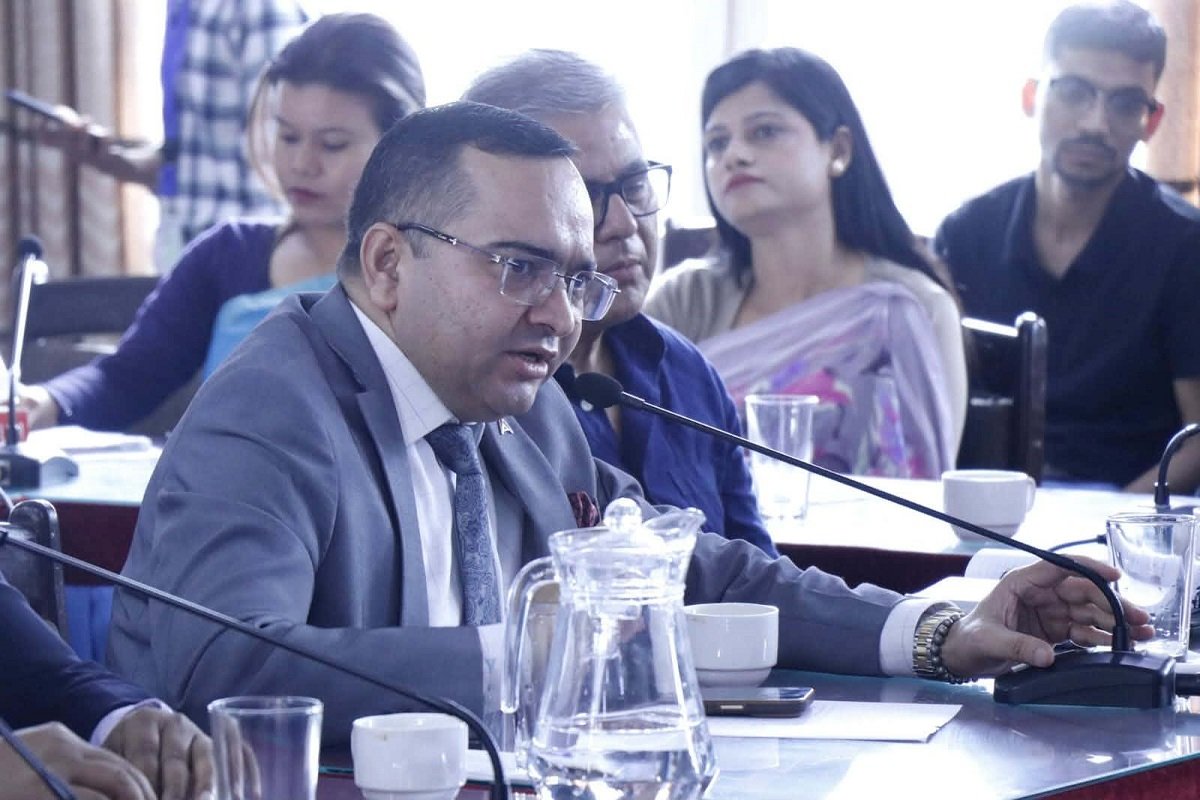
Speaking at a discussion in the Finance Committee under the House of Representatives on Sunday, he expressed this view. He opined that the monetary policy should focus more on key financial goals and policy rates rather than on minor operational matters.
He stated that the central bank should address operational issues through a separate mechanism, as frequent changes through circulars create confusion when included in the monetary policy.
Demanding revisions in the existing provisions related to loan classification and blacklisting, Gyawali said that those unwilling to repay loans and those unable to repay due to circumstances should not be put in the same category. He argued that the current provision of classifying loans as non-performing and blacklisting them within a year not only hurts the self-respect of businessmen but also increases the risk of their businesses collapsing.
He suggested that while strict action should be taken against those who intentionally do not repay loans, some time and flexibility should be given to businessmen facing difficulties.
Gyawali drew the committee's attention to the significant risk posed to the banking sector by the problems of construction entrepreneurs. He warned that approximately 5 kharba in loans are at risk due to the government's failure to make timely payments to construction entrepreneurs, which could significantly increase banks' non-performing loans (NPLs). In such a situation, he emphasized the need for effective coordination between the monetary policy and the government's payment system.
Similarly, he stated that the current policy, which allows interest rates to be lowered but makes it difficult to raise them, prevents banks from offering flexibility in interest rates even if they want to, and this also creates difficulties in liquidity management in the market.
He expressed concern that despite the policy of mandatory investment in productive sectors, results have not been as expected in areas other than energy. He specifically mentioned that agricultural loans, in some cases, have been diverted to unproductive sectors like land plotting instead of reaching the actual sector, and urged for a policy of demand-based and results-oriented loan disbursement.
He suggested resolving the issue of Nepali banks not receiving interest on deposits held in Indian banks and managing them in a way that allows Indian Rupees (INR) to earn interest like other foreign currencies.
Highlighting the need for legal reforms to simplify banking processes, Gyawali demanded the removal of the cumbersome requirement for signatures of all family members when pledging collateral. He stated that if legal certainty is provided to recognize only the signature of the actual owner of the collateral, loan disbursement will be faster and more efficient. He also believes that service charges should be practical, as banks' operating costs are currently high due to technology and digital security.
Stating that banks contribute 13 percent to the state's total revenue, he emphasized that the return in the banking sector is lower compared to other sectors, and therefore, it should be made more transparent and equitable.
This specific news has been automatically translated by AI. As a result, there may be some inaccuracies or language errors.
_9vOMJFFy7S.jpg)