Political Analyst Puranjan Acharya Discusses Rastriya Swatantra Party Convention and Nepali Congress Politics
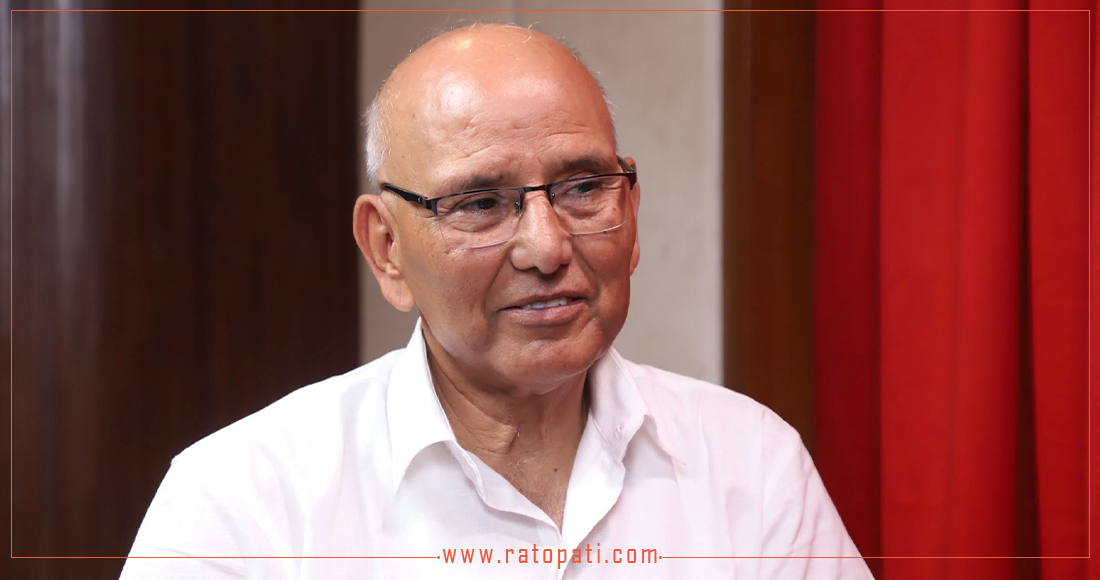
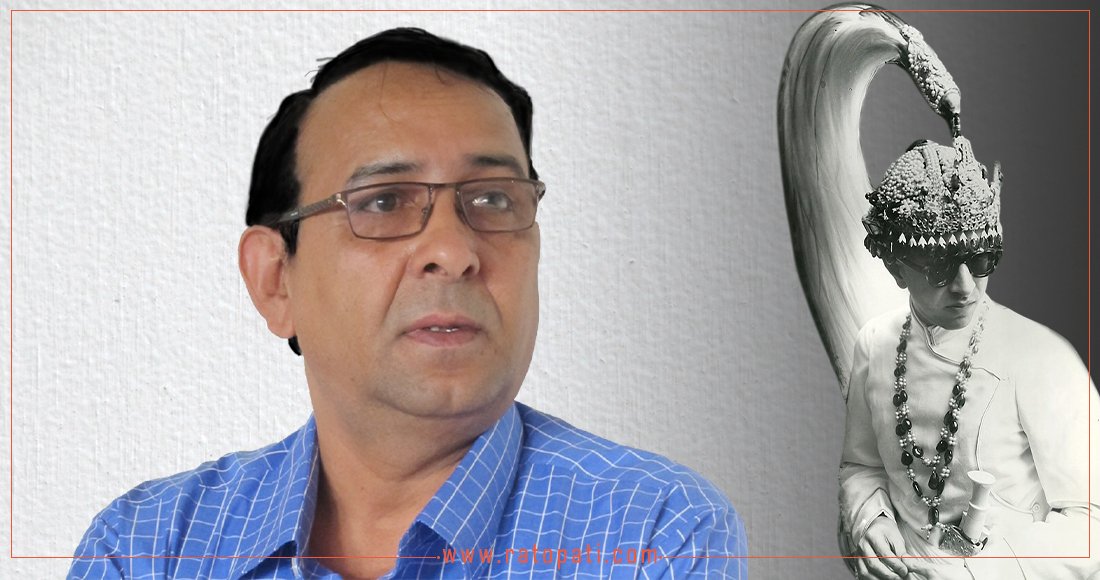
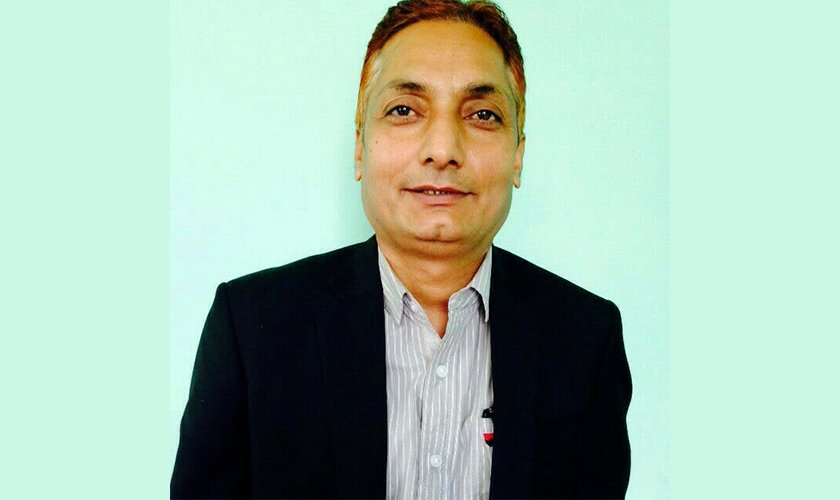
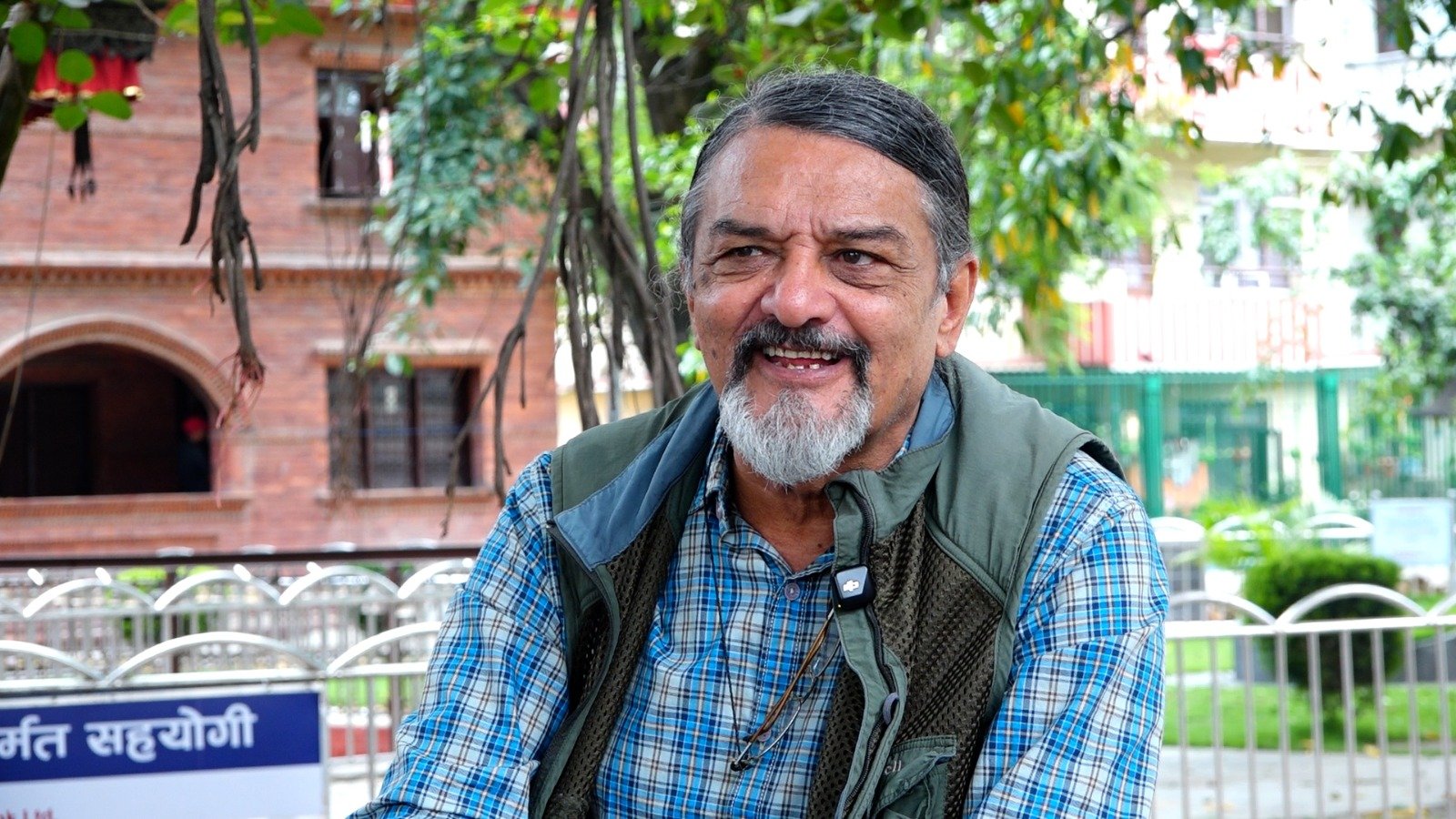
Puranjan Acharya is a fearless and influential political analyst of Nepal. He is known as an intellectual personality who minutely analyzes internal politics, democratic processes, and contemporary political developments in Nepal. He is known as a person who plays an important role in political coordination and strategy formulation. He is particularly known for his strong criticism against the individualistic tendency, undemocratic style of functioning, and leadership failures that have been growing within the parties. Acharya's analysis, which presents logical and realistic perspectives in debates, is characterized by showing the right direction to society and politics by rising above the self-interest of power and authority.
Acharya had a long conversation with Rato Pati's 'Warpar' program on various topics including the convention of Rastriya Swatantra Party (RSP), the ideological ambiguity seen in that party, the internal politics of the Congress which is on the verge of division, and the many questions raised about Prime Minister Balendra Shah. Edited excerpts of the conversation with Acharya (detailed conversation can be watched and listened to in the video):
- The convention of Rastriya Swatantra Party (RSP) invited the top leaders of other political parties. Only Nepali Congress General Secretary Gagan Thapa attended as a party leader at the last moment. How can this attendance be analyzed politically?
We have to understand this in the context of Nepal's political culture. There has always been a very good and mature democratic tradition of leaders and representatives from other parties being invited to the conventions of political parties in Nepal and attending them. In the past, whether it was the convention of the Madhesi Janadhikar Forum, Congress, UML, or Maoist – leaders from all parties used to attend depending on their convenience. There is also a historical reason behind this. So far, no political movement in Nepal has been successfully completed by a single party alone. In the 2007 revolution, the King and Congress united; in the movements of 2036 BS, 2046 BS, and 2062/63 BS, collaboration was also necessary. Whenever any national or political crisis arose, a spirit of collaboration and mutual coexistence was seen among the parties. Regarding the RSP's convention, at least Nepali Congress General Secretary Gagan Thapa attended and preserved that tradition, which is a positive thing. As for CPN (UML) Chairman KP Sharma Oli, it would have been very difficult for him to go there. I felt it was politically appropriate that he did not go.
_q64KEVOc53.jpg)
- Was KP Sharma Oli's absence due to political reasons or his personal health?
His absence was mainly due to political reasons, and it was appropriate. The platform might have been a bit uncomfortable for him. Because the youth sentiment against him has not yet subsided. It is uncertain what kind of situation would have arisen if he had gone there. However, UML leader Pradip Gyawali attended and addressed the convention, which was appropriate. Maoist Center Chairman Pushpa Kamal Dahal was willing to attend and probably would have, but he could not due to ill health.
- Nepali Congress General Secretary Gagan Thapa initially seemed hesitant to attend but went at the last moment. What is the inside story?
Initially, Congress had decided to send a Vice-President or another leader like Pushpa Bhusal. Sending a female leader was not inherently bad. But at the last moment, some elders and friends suggested that Gagan should go himself. I was also involved in that, I admit it. I told him that you must go yourself. Perhaps due to various pressures and discussions like these, he reached the conclusion to go. After that, I also met him.
- Was it appropriate for Gagan Thapa to go there?
Yes, I think it is the responsibility of the Nepali Congress to continue this tradition in Nepali politics. Regardless of who is in power now, the foundation of the country's current constitution, its basic principles, values, and system was laid by BP Koirala in 2007 BS. Gagan has also accepted that he carries BP's shoes and burden. After returning from there, we, the President, Vice-President, and other friends, sat for a discussion. He told me, 'You also said I should go, and it gave me more strength.' In fact, if Gagan had not gone there, RSP would have prepared to create a huge buzz on social media by saying, 'Gagan Thapa did not come out of fear.'
- RSP Chairman Ravi Lamichhane's cooperative case and the subsequent judicial process were initiated by Gagan Thapa in Parliament. Therefore, Gagan Thapa was under double pressure – being uncomfortable going there and being accused of running away if he didn't, wasn't he?
Yes, there was such a dilemma. But one thing is true, people carve their own path. The way the Nepali Congress and the state treated Ravi Lamichhane in Parliament had a hint of excessive revenge. Even then, I had discussed with Gagan that this is a matter of 'law and order', the system will resolve it on its own, and one should not present oneself in a way that pushes someone against the wall by paralyzing Parliament.
- Did you suggest Gagan not to pursue Ravi Lamichhane?
My intention was that state mechanisms or Parliament should not be used to make someone a 'hero' or a victim. At that time, the situation was such that on one hand, KP Oli was preventing Balen Shah from working by using employees and administration, and on the other hand, Congress was paralyzing Parliament by raising the issue of Ravi Lamichhane. Both were extreme steps. In a parliamentary system, there should always be room for retreat (exit door) for political understanding. Taking an extreme stance makes it difficult to compromise later without damaging one's own prestige.
_o2hyqbmrfZ.jpg)
- But Gagan Thapa said at the Bharatpur convention during his good wishes, 'We are friends, competitors, but not enemies,' how did you take that?
That was an extremely brilliant and mature political expression. In politics, there are no permanent enemies or permanent friends. If countries do not have permanent relationships, then parties should not have enmity.
- Overall, how did you find Gagan Thapa's presentation and good wishes at that forum?
The speech was good. However, I feel it would have been better if he had not spoken about the internal weaknesses and old issues within his own party on that stage. Instead of digging too much into history, one should learn from the past and 'move on'. Old discussions should be left to historians and analysts. It was not the appropriate platform to say defensive things like 'We tried but couldn't succeed.' Now Gagan has the opportunity to move forward with new ideas, new messages, and a new organization to build a new Congress.
- But they also made Gagan ring the bell there! Pradip Gyawali even objected to it.
Ringing a bell does not make anyone small or big. The main thing is that Gagan's presentation there left an impression on the general public and cadres present that there is a promising leader who will lead Congress in the coming days. Currently, various factions are active within Congress. If Gagan had been able to strengthen his party's internal life, he would not have had to listen to sermons from others' platforms.
- There was a tradition of inviting foreign guests to the conventions of political parties. But RSP did not seem to invite foreign guests, what could be the reason?
In recent years, political parties in Nepal have significantly reduced the practice of inviting foreign guests to their conventions. I recall that around 2052 BS, during the ninth convention of the Nepali Congress when Girija Prasad Koirala became president for the first time, representatives from the 'Socialist International', India, and other countries had come. At that time, democracy had just been restored in the country, and international relations were opening up in a new way. In the communist movement too, Madan Bhandari used to go to Calcutta, and leaders from there used to come here.
But later, the relationship between parties overshadowed the geopolitical relationship between countries. Nepal-India or Nepal-China relations have their own ups and downs. Due to issues like MCC, there is also discussion and debate about the relationship between America and Nepal. Ideologically, there has been a decline now. Unlike in the past, communists do not organize rallies or paint walls in support of Palestine. Globalization and liberalization have made everyone practical. Another thing is that conventions with fanfare will gradually shrink. Tomorrow's politics will focus on the economy, science and technology, and the changing structure of society, rather than on ideas and principles. The national and international grandeur seen in the conventions of big parties of yesterday is naturally diminishing.
- There was a lot of chaos and disorganization at RSP's first convention. Many expected everything to go smoothly as it was the first convention. Was this kind of chaos anticipated?
Many did not anticipate such chaos. But it is necessary to understand its depth. In Nepal's history, when Congress came to power, it had already held five or six conventions and had organizational experience. UML and the then-Maoist party had also gained considerable organizational experience. Maoists also had their own background. All three parties had been tempered ideologically and organizationally from the foundation of armed struggle or movement.
But RSP comes from a different background. It has three unique and unusual characteristics. This party, in a short time since its establishment, has reached the vicinity of power and authority with a strong presence in parliament and is holding its first convention, which is novel in Nepali politics. It was born not from an armed rebellion but from the 2079 elections and a 'mass movement'. It held its first convention in Chitwan, the very region from which it emerged. Congress could not hold its first convention in Biratnagar, nor UML in Jhapa. Geographically and in terms of origin, this is positive. It does not have the legacy of long struggle, sacrifice, or history. Its organization is centered on power and authority. It is not unusual to see disorganization at the convention due to lack of experience. Even parties that are 70-80 years old are still on the verge of splitting without resolving disputes over active membership, so some shortcomings in a party that is just in the process of organizational construction should be taken as natural.
_44N9LIf2i6.jpg)
- RSP has been saying that they are different from the old parties, but the commentary suggests they are behaving similarly. On the other hand, this party has a majority of people from Congress, UML, and Maoist backgrounds. So, have the old party's vices been transferred?
One of the signs of political stability and maturity in any democratic country is the easy movement (party change) of leaders or cadres. In neighboring India too, leaders who were in Congress for years have now become chief ministers or influential leaders of the BJP. This indicates that the political system is flexible and democratic. In Nepal too, who goes where is becoming normal. However, its other negative aspect is that those who leave old parties also carry the vices, individualistic thinking, and culture of sycophancy to new parties. If the leadership opens the gates of Koshi Barrage and lets everyone in, there is a danger that the party's original character will be washed away or drowned. While Congress was ideologically pure in 2048 BS, by 2051 and 2056 BS, its purity was lost due to the entry of people from Panchayat backgrounds. They brought sycophancy and individualistic culture with them.
- There seems to be a lot of ambiguity about RSP's ideology and policies. While Chairman Ravi Lamichhane's political report talks about restructuring federalism, Vice-Chairman Swarnim Wagle's economic-political report talks about abolishing the provincial structure. Doesn't the approval of both proposals indicate a policy confusion?
It is positive that various ideological currents emerge and are debated at a party's convention. In the past, within Congress too, there was a group led by Pradip Giri advocating for a directly elected executive. There was a suspicion that RSP's ideology might be limited only to the 'command control' of Ravi Lamichhane and Balen Shah, but Swarnim Wagle bringing a different idea and Ravi bringing a different idea has opened the door for democratic debate within the party.
- RSP is also currently in government. In such a situation, won't raising the issue of abolishing or restructuring the provincial structure lead to political conflict?
Proponents of federalism have not been able to prove the relevance of provinces in the last 10 years. The center has not wanted to transfer financial and administrative powers to the lower levels. Although Madhesh Province seems to have taken ownership of federalism more, Congress, UML, and Maoists have not been able to embrace it. Although RSP appeared anti-federalism at the time of its establishment, it later became more flexible after Balen's speech in Janakpur and the public opinion in the Madhesh region. Federalism actually came about on the foundation of the struggle of Madhesi parties, but they are now weak. In practice, the justification for the provincial structure is gradually disappearing from the minds of many citizens. The center is reducing powers, departments are being added at the center, and employees are reluctant to go to local and provincial levels. Therefore, RSP has only brought this issue back into discussion.
- You understand the Nepali Congress closely and also advise them. What is the possibility of Congress moving forward as a united force in the current situation?
I say clearly – I do not see the possibility of Congress becoming united before the upcoming local elections. Congress is currently in a very tangled state ideologically and organizationally.
_P2fqjb9KhL.jpg)
- So, is Congress moving towards another split?
Rather than the party splitting immediately, the situation of internal conflict, factionalism, and non-cooperation will continue like this. The convention will happen, but it will not be a convention of unity. Currently, many external and internal interest groups are active, preventing Congress from uniting. Party unity is not possible just by the wishes of Gagan Thapa, Shekhar Koirala, or Purna Bahadur Khadka. While it was easy to persuade BP, Girija Prasad, or Krishna Prasad Bhattarai in the past, it is not as easy to reconcile leaders divided into various interest groups now.
- Who is the main obstacle to unity?
There are obstacles both inside and outside the party. Some leaders themselves are not independent. Due to the interests of the powers or groups that have brought them to that position, the leaders are unable to show flexibility. However, the main responsibility of uniting and strengthening the party lies with the party president. While the president shows flexibility in conversations with Gagan Thapa, its implementation is weak.
- How do you view the foreign policy of the current government?
Nepal's foreign policy and diplomacy are currently in a very weak state. It is not enough to just say, 'We will adhere to diplomatic protocol.' To adhere to protocol in diplomacy, one's country must have a strong economic standing, geographical position, and internal capacity. Claiming protocol without having the standing is not enough. The wrong tradition set by Congress or UML leaders in the past of lining up to meet foreign ambassadors was condemnable. However, flexibility is sometimes necessary in diplomacy for national interest. Our foreign policy appears to be in crisis because we have not been able to prioritize national interest above personal gain.
This specific news has been automatically translated by AI. As a result, there may be some inaccuracies or language errors.