
Nepal Navigates Geopolitical Tensions Amidst India-China Competition

South Asia is witnessing increasing competition between India, China, and the United States, making Nepal's geopolitical situation sensitive. In May, Foreign Minister Shishir Khanal visited neighboring countries India and China. Rabi Lamichhane, chairman of the ruling Rastriya Swatantra Party, also visited India.
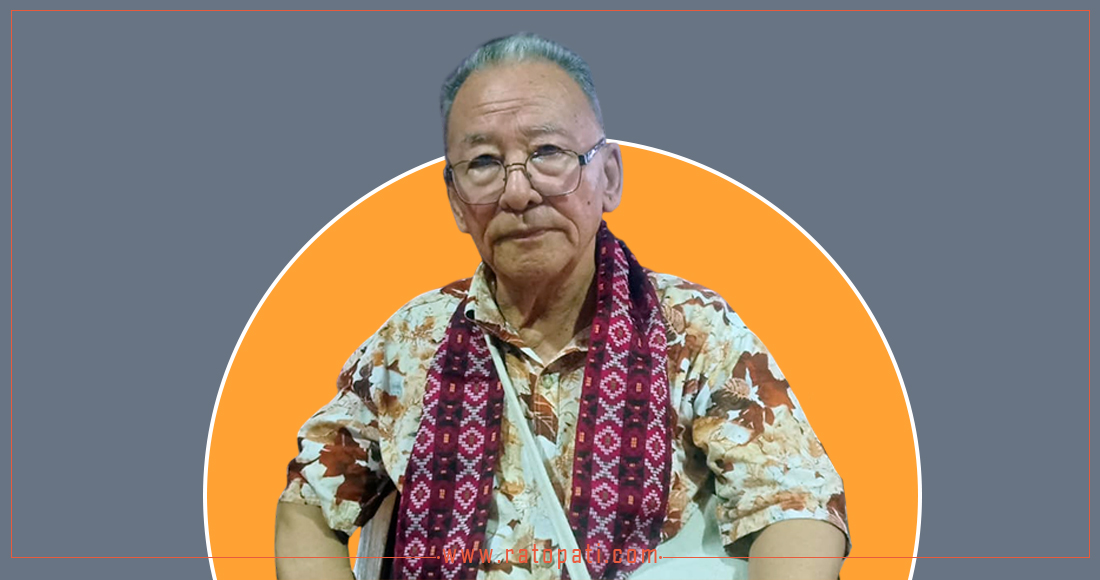
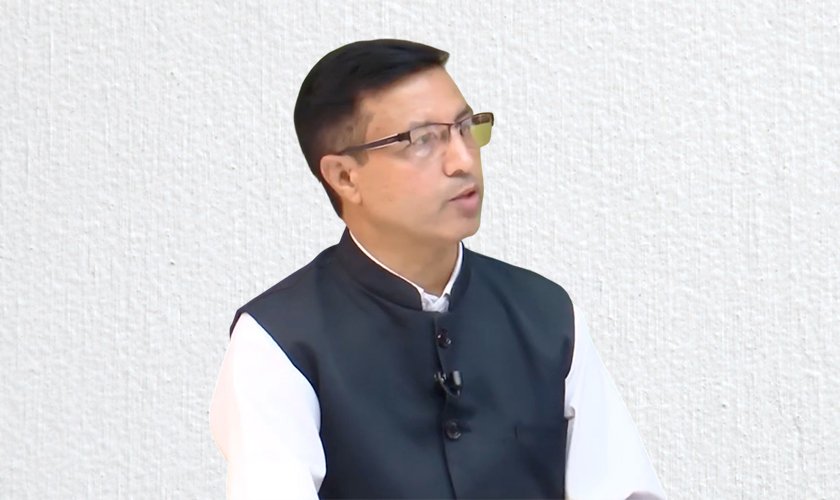
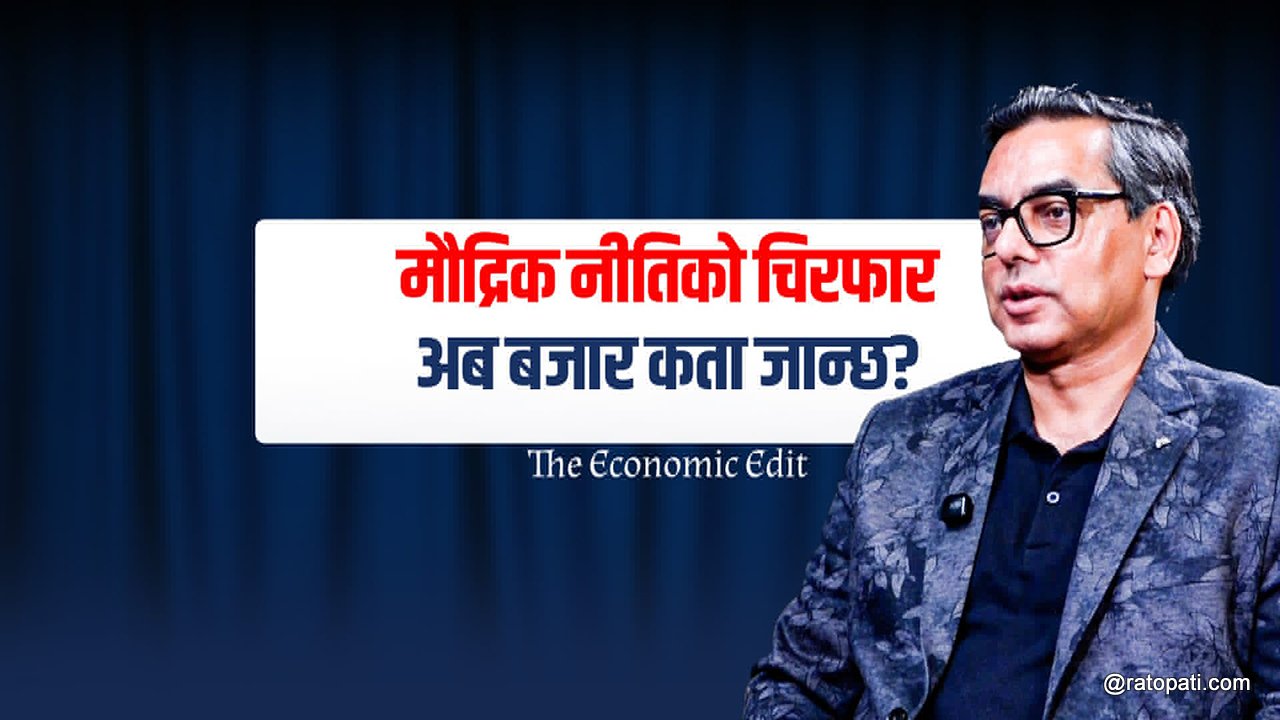
However, Nepal has not seen visits of that level from India and China recently. Nepal is increasingly caught in geopolitical turmoil concerning its borders, trade, and security. What is the diplomatic solution to this? To explore what China, India, and the US want in Nepal, an interview was conducted with former ambassador and international affairs expert Hiranyalal Shrestha.
Here is the edited excerpt of the conversation with former ambassador Shrestha–
- How should the Foreign Minister's visit to India and subsequently China be viewed diplomatically? Was this visit a signal of balanced relations between the two countries, or is there some other diplomacy hidden within?
Traveling to China immediately after visiting India signifies an understanding of geopolitics. The government's effort to maintain balanced relations with neighbors is commendable. In reality, we must maintain good relations with both neighbors. We should not make the grave mistake of antagonizing neighbors to please a power across the seven seas. Therefore, Foreign Minister Shishir Khanal's visit was very significant from the perspective of geopolitical balance.
- The visits to both countries occurred amidst ongoing border disputes between Nepal and India. How did this dispute actually arise?
We said we would take new initiatives instead of continuing old issues, but when Prime Minister Balen Shah spoke about Kalapani, it proved counterproductive. The Prime Minister speaking in parliament was a weakness, but it can be rectified. Such things happen due to a lack of correct information. He did not understand the difference between 'cross-border occupation' and 'border encroachment.' According to Article 7 of the 1950 treaty, there is a right to cultivate, trade, and reside in each other's countries, which is not considered border encroachment. Citizens from both sides are allowed to graze their cattle across the border, which cannot be called border encroachment. Prime Minister Balen erred on this point. He used the language of encroachment for cross-border occupation. That was the weakness.
Prime Minister Balen should have taken a full briefing from foreign affairs experts before giving a written statement. However, if he admits his mistake and has it removed from the parliamentary record, his stature will increase further, but those who encourage him by calling all his mistakes correct will spoil him.
- What impact will the Prime Minister's statement have on our country's geopolitical and diplomatic situation?
It's not about what impact it will have; it has already had an impact. As soon as Prime Minister Balen made that statement in parliament, India stopped the work of the embankment built by Nepal to prevent erosion in Susta. Rastriya Swatantra Party Chairman Rabi Lamichhane was welcomed and honored more in India than our Prime Minister Balen. This shows a difference in the stance of Prime Minister Balen and Rabi ji. In the current situation, Rabi Lamichhane appears to be India's most trusted figure.
- Amidst the border dispute, visits to India and China took place, but why did these visits not show signs of dispute resolution?
Firstly, Nepal could not take a firm stance during its visit. Secondly, it should have stated that talks would only happen after the Indian army was removed from Lipulekh. Indian troops are still stationed in Lipulekh. India's main objective is to occupy Nepali land and water sources, but China's objective is different; it views the shorter route to Mansarovar via Lipulekh from an economic benefit perspective. It wants to use that route for trade purposes.
In diplomatic terms, this is called the 'condominium theory.' For example, in a large apartment, even if a flat (room) is one's own, the stairs and lift are common to all. China wants to make Lipulekh such a common usage area. China desires that all three countries use it for trade purposes, but India is trying to occupy it and merge it with its territory.
- But that won't resolve the dispute, will it?
This time, our Foreign Minister Shishir Khanal raised a good point in China. He clearly expressed his disagreement, saying, 'We will discuss maps and land issues with India, but when you (China) send travelers through a route without our permission, the problem becomes more complicated.' India and China also have a long border; they could have exchanged land among themselves. Trading through Nepali territory is wrong. In the changing geopolitical landscape, China has given concessions to India by using Nepali territory to prevent India from moving into the American camp or to keep it neutral, which is unacceptable to Nepal.
- China, instead of resolving the issue or mediating in Nepal's favor, brushed it off by saying, 'Your dispute is with India, talk to them there.' What is your opinion on this?
Yes, China brushed it off. It is a wrong tradition for big nations to disregard the interests of smaller nations. There are many alternatives to reach Mansarovar, including Hilsa. Therefore, Nepal must firmly present its case to both neighbors. Since foreign policy is a common issue for all, the Prime Minister should speak with the consultation of everyone.
Since the land up to Limpiyadhura is a tri-junction, tripartite talks should be held now. Limpiyadhura should be the zero point of the Nepal-China border agreement. This is an opportune time to determine the tripartite border point when relations between both neighbors are good. Nepal should not be a conflict zone but a bridge connecting Asia in the 21st century and move forward by maintaining balanced relations with its neighbors.
- After the Gen Z movement, China has been viewing Nepal with suspicion. There is a suspicion that America's influence is increasing and that America is maneuvering to encircle China. Did this visit help allay that suspicion?
An effort has been made to reduce suspicion, but it has not been completely dispelled. This is because some individuals in the current government are seen to be close to Tibetan refugees or supporters of the Dalai Lama. Therefore, China suspects that anti-China activities might increase in Nepal after a change in government. This visit has helped allay that suspicion and assured China that Nepal is committed to the 'One China policy.' It has reassured China that Taiwan and Tibet are integral parts of China. China has also conveyed to Foreign Minister Shishir Khanal that connected neighbors are more reliable than distant friends.
- What role do you see the United States playing in Nepal recently?
With the formation of a new government in Nepal, the movement of US envoys has increased. Some envoys have visited Tibetan refugee camps and met individuals there without even meeting Nepali ministers. They have also reached Everest Base Camp. After the MCC was passed, Nepal is no longer just caught between two stones; it is now between three stones. Two land neighbors (China and India) and another aerial neighbor, the United States.
We must exercise great caution, maintain good bilateral relations with all three powers, and not allow our territory to be used against our neighbors. If anyone tries to erase Nepal's existence, they themselves may be fragmented. Therefore, Nepal's geopolitical situation and independent foreign policy must be respected. Declaring Nepal a 'Zone of Peace' is the best option. Now that China is very powerful, India might also be in a position to accept Nepal as a Zone of Peace for its own security.
- In the space the US is seeking in Nepal, whom does it consider the main obstacle: India or China?
Both are obstacles for the United States. Nepal has the largest US embassy in South Asia, whose main objective is to closely monitor China after Hong Kong's annexation. On the other hand, India is buying oil and weapons from Russia, which makes the US not entirely confident about India either. A common point between the US, Israel, and India is the 'anti-Muslim' policy. However, Western nations do not appreciate the discrimination against minorities (Christians and Muslims) by the current Indian government. Now is the time for Nepal to adopt very balanced diplomacy. I would say that Lumbini in Nepal should be made a center for peace talks for Asia and the world. If tension arises in any country, Nepal should facilitate peace talks for them in Lumbini. If Nepal plays this role as an independent nation, it would be beneficial.
- Previously, the US viewed Nepal through India's lens. Is the US now operating with its own perspective and presence, or does it still seek India's assistance?
The US is increasing its influence without antagonizing India. Currently, there are a significant number of MPs in Nepal's parliament who are positively inclined towards American influence. As the US increases its grip, China and India will try to prevent or balance it. China is very pragmatic; it maintains relations with whoever comes to power. Nepal should move forward by being 'pro-Nepal' and not taking sides with any country. We should not become a security appendage to anyone.
- World politics, which was once Europe-centric, is now shifting towards South Asia. Is this a fight between China, India, and the US for dominance in South Asia?
Yes, they are competing with each other. The influence of only one country poses a risk. India, China, and the US are all trying to establish their hold in this region. The competition among all three countries is ongoing. India wanted to establish sole dominance in South Asia, but it has not been able to. It does not have good relations with any of its neighboring countries. The US and China also have a hand in spoiling relations. Therefore, in this situation, Nepal must also adopt balanced diplomacy.
Just as foreign assistance was sought to build the East-West Highway, we should be able to utilize the interests of major powers for Nepal's development. We should be a dynamic bridge for development, not a battlefield for security.
- Currently, the Prime Minister is meeting foreign diplomats collectively rather than individually. Is this a change in Nepal's foreign policy?
It is good to have introductory meetings collectively for the first time. This sends a message that 'we are not in favor of anyone; we have friendship with everyone,' but maintaining a policy of not meeting special envoys or high-level diplomats is not right. The problems and priorities of every country are not the same, so special envoys should not be ignored. The world's power center is shifting from West to East, i.e., towards the Indo-Pacific and South Asia. Boxers hit the 'soft belly' to knock down their opponent. But a friend does not hit the soft belly. Every country has a sensitive point (soft belly). China has Tibet, India has Kashmir, Sri Lanka has Jaffna, Bangladesh has Chakma, and Nepal has the Terai as its sensitive point (soft belly).
Given Nepal's sensitive geopolitical situation, friendly nations should not trouble Nepal. They should not hit the soft belly, i.e., the sensitive point. Nepal should not be made a ground for military parades; it should be made a region of peace and development. Do not trouble Nepal, do not spoil Nepal's geopolitical reality. Do not make Nepal your ground for military parades; make it a region of peace, a region of development. Good delivery is what wins hearts, and for good development diplomacy, diversifying the source of dependence, from India and China to various friendly nations worldwide, is the new approach.
- You yourself have been an ambassador. The government has now opened applications for ambassadorial appointments; is this process correct?
The system of conducting exams for new young individuals might be acceptable, but in my opinion, experts needed by the country will not participate in the process of becoming an ambassador through exams. If the nation requires them, the government should invite experts itself. Priority should be given to foreign affairs experts, journalists, academics with doctorates in international relations, or experts in the diplomatic field. An ambassador is a representative of the nation, not of a political party. If people without expertise or those belonging to a specific party are sent, it could lead to a diplomatic accident.
This specific news has been automatically translated by AI. As a result, there may be some inaccuracies or language errors.

_Eqo5W0NMVM.jpg)