Rastriya Swatantra Party First General Convention Fails to End Factionalism
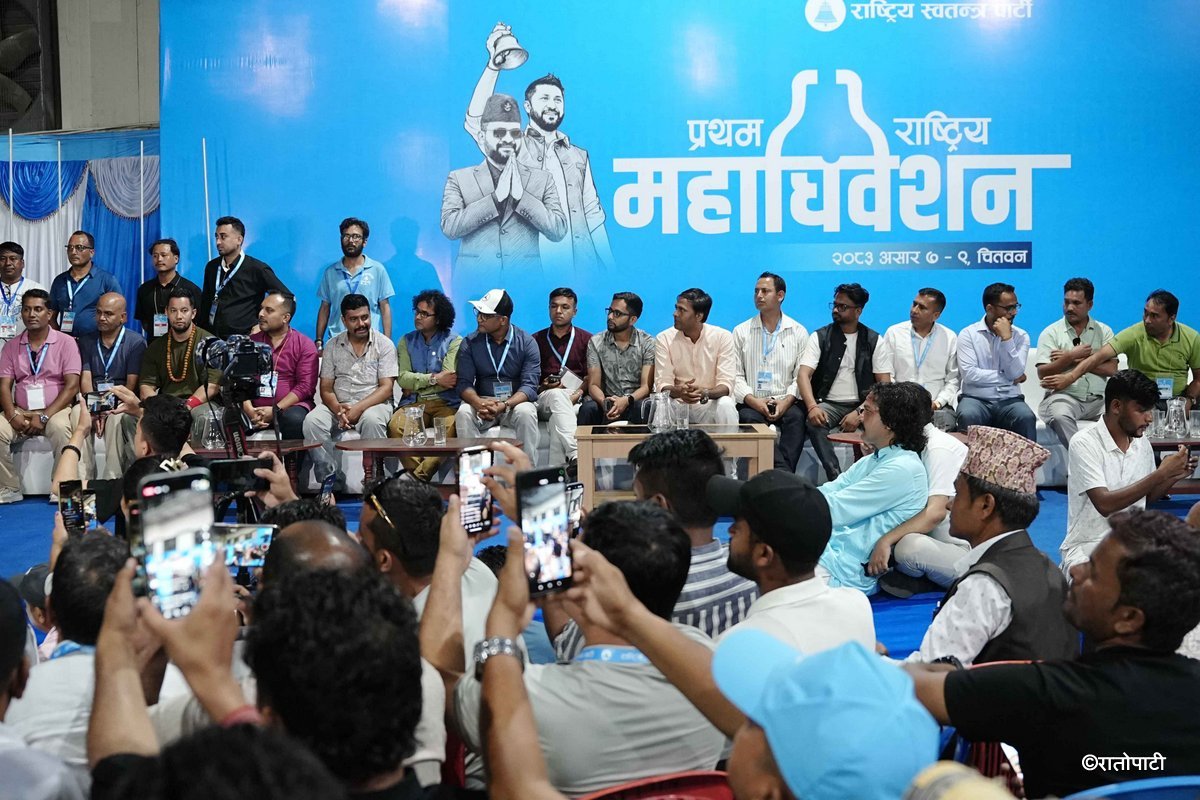
Kathmandu. The recently concluded first national general convention of the ruling party Rastriya Swatantra Party (RSP) has been seen as unsuccessful in ending factionalism. The general convention, which concluded on Asar 12, three days later than its scheduled date (Asar 7-9) in Bharatpur, Chitwan, saw factionalism openly exposed. The activities such as setting excessively high application fees and supporter numbers to prevent anyone from running for leadership, forming alliances between competing candidates within the founding faction, and circulating internal information to ensure the victory of limited candidates by citing the Balen group have raised serious questions about fair internal competition.
_7jwwIipDLX.jpg)
- Ravi-Balen's Warning but Open Factionalism
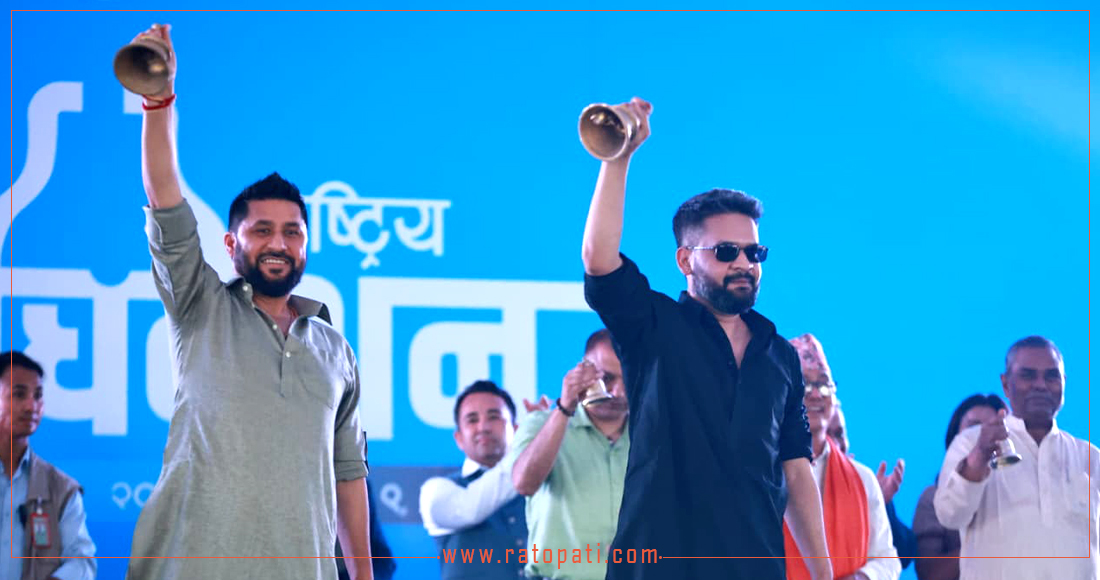
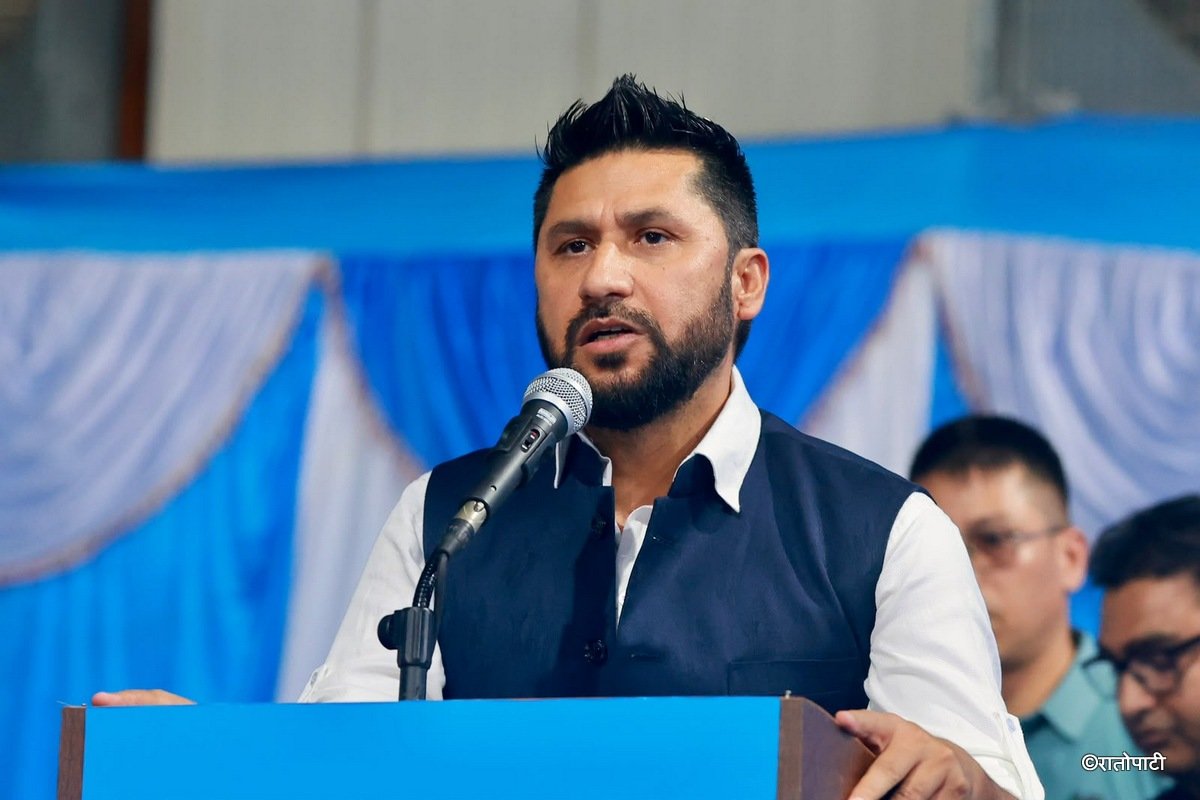
The last central committee meeting of RSP held on Asar 6 had prohibited the formation of panels in the general convention. A directive warning of action was also issued against anyone found engaging in factionalism or campaigning for any candidate in violation of the party's decision. The following day, at the inauguration ceremony held at Guest House Chaur, party president Rabi Lamichhane and senior leader and Kathmandu Metropolitan City Mayor Balendra (Balen) Shah urged against forming factional groups.
They warned leaders and cadres that if the seeds of such factions are sown now, they will have to be uprooted later when they grow into trees.
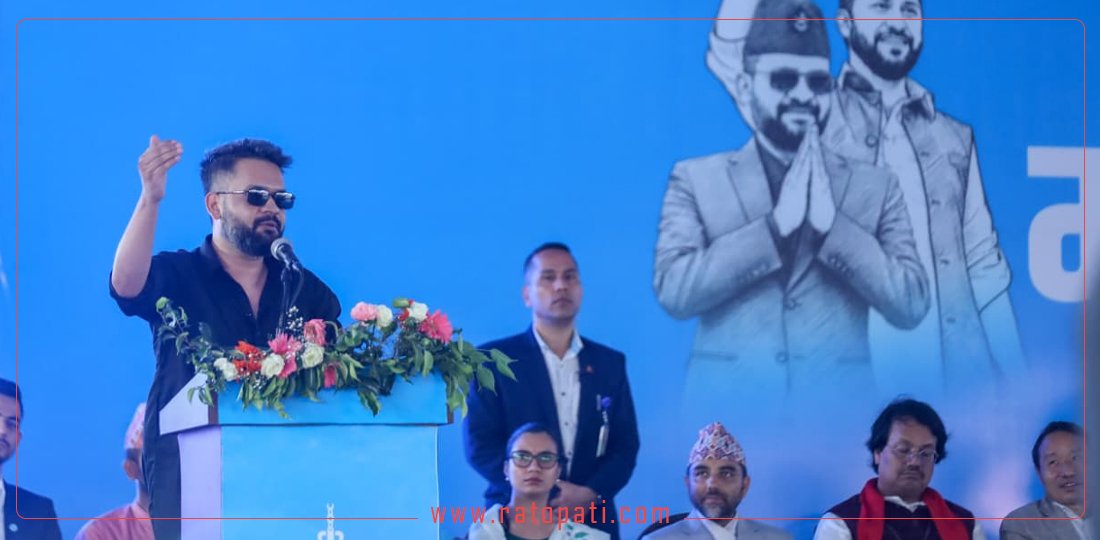
Balen had said, 'I want to tell you clearly that to become a good leader and a good politician, you must win the faith and love of the people; the love of just one group is not enough. Therefore, do not chase after forming groups. Do not sow such seeds now that will have to be uprooted later when they become trees. Let's not sow and grow such seeds; let's learn from the old leaders.'

Supporting Balen's view, Chairman Rabi warned that the seeds of factionalism would yield poisonous fruit in the future. 'Let the practice of forming factions and sub-factions not creep into us. If we sow the seeds of factionalism, it will yield poisonous fruit in the future. As the senior leader said, if such a situation arises, we may have to cut down that tree,' Rabi had said. 'We are at the right time, and the decision of what seeds to sow is in our hands. If we move forward free from factionalism, no force will be able to bring RSP down.'
However, by the time of leadership selection, the directives given by Ravi-Balen had been broken. The representatives interpreted the role played by the leadership before the voting for the six positions of office bearers on Asar 12 as the institutional start of factionalism within the party. Most opined that the unhealthy competition seen for the post of general secretary, considered powerful after the party president, would weaken internal democracy. They believed that if group practices were done as needed, it would be beneficial for the party if done behind closed doors. They felt that if the announcement of withdrawing candidacies through the media was made and silence was maintained regarding support, the election would be fair and the message would be positive. They analyzed that the leadership faltered on such sensitive issues.
- Struggle in Leadership Selection and 'Establishment' Faction's Alliance
For one post of general secretary, only five candidates were in the electoral race until the previous day. When the election results of the central members were announced, the number of aspirants for office bearers increased significantly. As the number of aspirants exceeded expectations, President Rabi's efforts to reach a consensus on leadership selection throughout the night before the second phase were unsuccessful. When consensus could not be reached and the election process could not proceed, angry representatives surrounded the outgoing general secretary Kabindra Burlaakoti and pressured him to either reach a consensus or advance the voting process immediately. While reassuring the representatives, Burlaakoti helplessly replied that although he was ready to proceed with the election process, consensus could not be reached due to some self-interested individuals.

'We have worked hard to build the party. I am ready to withdraw my candidacy to strengthen internal unity and build an even stronger party. However, some friends appeared to ask what they would gain in return for withdrawing their candidacy,' he said helplessly. 'Some who did not appear in the race until the previous day announced their candidacy after securing a large number of votes from central members. The president tried to reach a consensus all night, but no one agreed to withdraw their candidacy.'
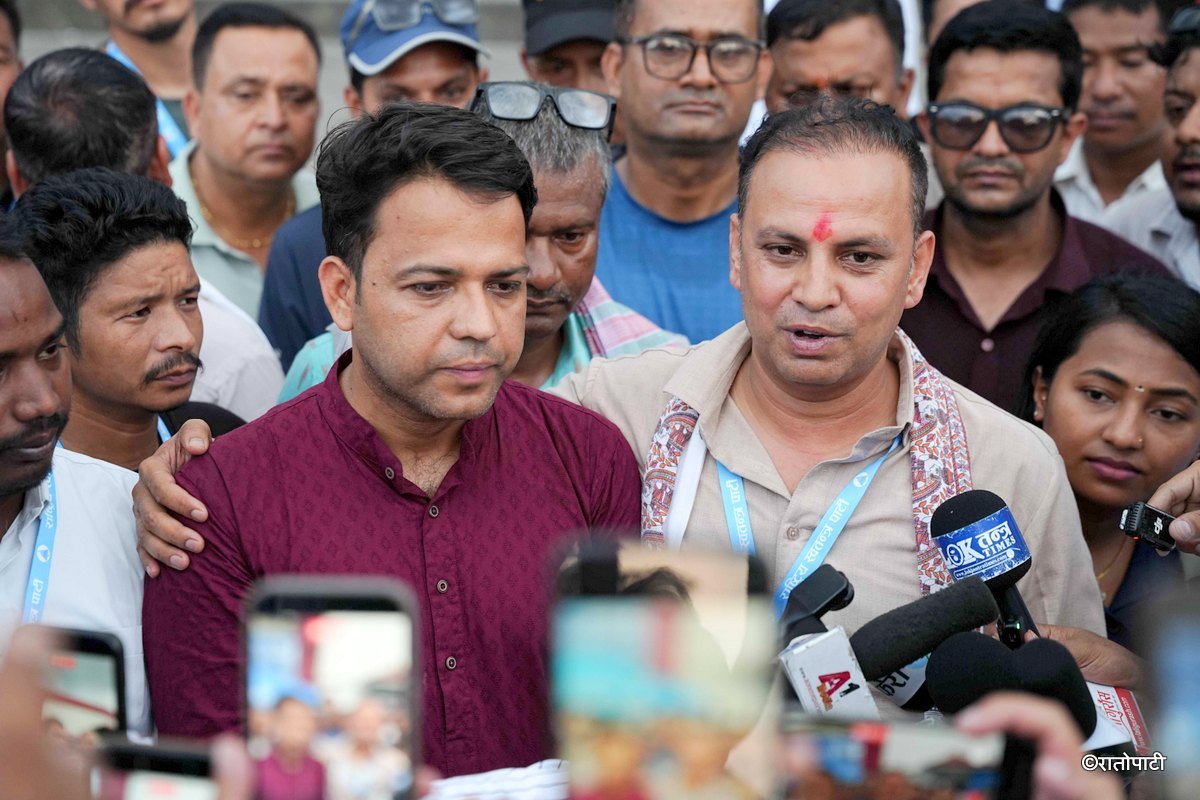
When the attempt to select the leadership through consensus failed, the election committee advanced the process. For the post of general secretary, outgoing general secretary Burlaakoti, joint general secretary Bipin Kumar Acharya, spokesperson Manish Jha, former secretariat member Shishir Khanal, Ganesh Parajuli, Sagar Dhakal, Ganesh Karki, Ranju Darshana, Pramod Neupane, Raju Raj Pandey, and former minister Jagdish Kharel had filed their candidacies. As representatives were entering the closed session hall for voting, Burlaakoti, Parajuli, Neupane, and Darshana withdrew their candidacies and supported Acharya. Khanal and Kharel, who had withdrawn their candidacies the previous day, also informed through a press conference that their support was for Acharya. However, Jha and Karki, from the establishment faction, did not withdraw their candidacies. In the press conference, Jha argued that the group practice in RSP was contrary to the leadership's statements. 'The president asked not to engage in group practice, but if someone is doing it under his shadow, it can be understood that the president is unaware and it is defaming him. I oppose group practice, rather than being against Manish Jha or in support of anyone,' he clarified. Jha argued that while he received information from the leadership to go for consensus, he rejected it, adding that consensus sometimes means not just sacrifice but also gain.
A former member of the secretariat claimed to 'RatoPati' that Bipin Acharya's victory as general secretary was certain, whether through consensus or election. This member insisted that Acharya would become general secretary according to the president's choice. 'If there is a consensus, Bipin ji will become general secretary 100%. If there is no consensus, it will be difficult for him to win through competition. Rabi ji wants to make Bipin the general secretary at any cost, and for that, group practice may occur,' the member had said.
As indicated by that leader, Acharya's victory as general secretary has raised questions about the leadership's impartial role. Acharya has been discussed in RSP circles as Rabi's confidant since Galaxy TV. Although not exposed externally, he is a person who has successfully managed responsibilities behind the scenes. He is known as a studious, modest, and diplomatic leader. It is rumored within the party that another general secretary post was arranged for the Balen group, and when it seemed that Rabi's preferred candidate would not win the electoral competition, the establishment leaders united. Jha and Karki, although from the establishment faction, are considered leaders with a critical perspective. Jha, who has political acumen, was active in journalism for a long time and is considered to be from a Congress background. Karki, who came from the Bibeksheel Sajha background, is considered the permanent opposition within the party. Sagar Dhakal recently joined RSP from the Balen group. It is rumored in political circles that the sudden withdrawal of candidacies by Samiksha Baskota and Ranju Darshana, who came to RSP from Bibeksheel Sajha, was due to pressure from the leadership. Until the morning, Darshana insisted she would not withdraw her candidacy, but while voting was underway inside the hall, she withdrew her candidacy and went to support Acharya. Darshana appeared to be under a lot of pressure during the press conference.
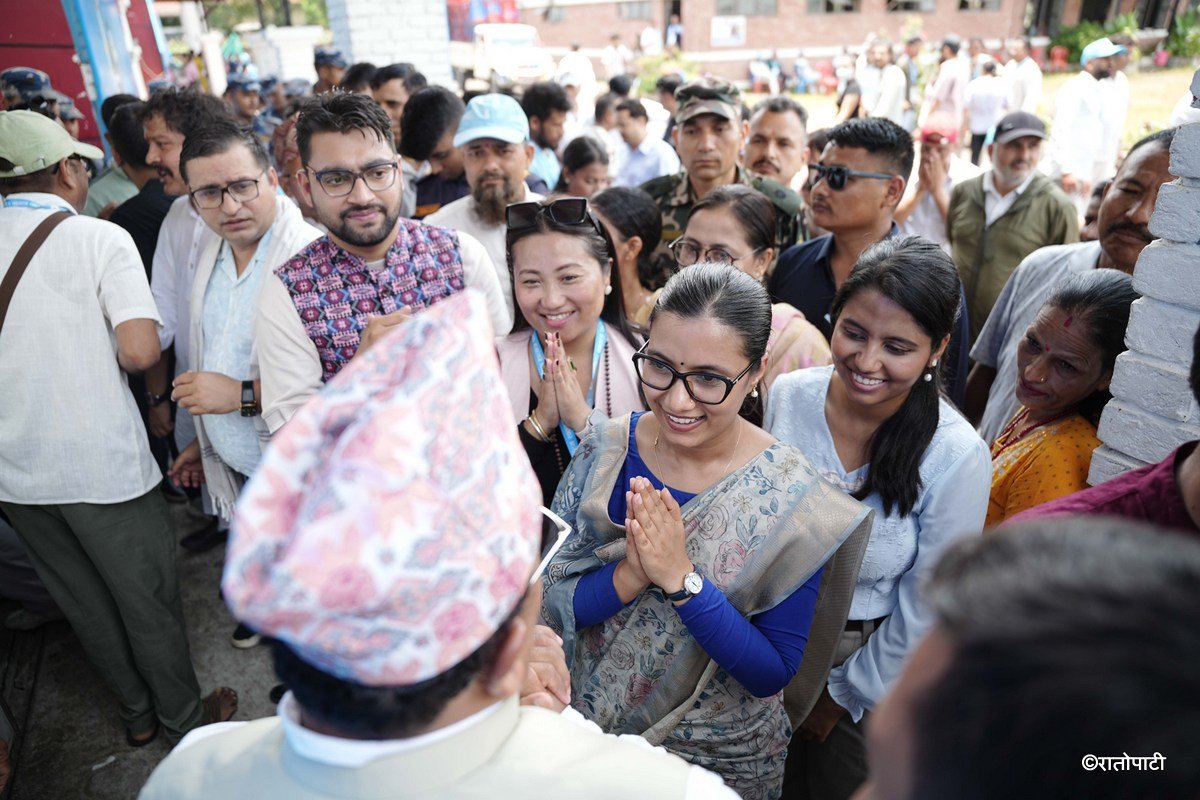
Competition was not limited to the general secretary post; it occurred for other positions as well. In the election for two out of three posts, Finance Minister Dr. Swarnim Wagle was elected unopposed. For one female vice-president position, Samiksha Baskota, Law Minister Sobita Gautam, former Health State Minister Dr. Tosima Karki, outgoing treasurer Lima Adhikari, General Administration Minister Pratibha Rawal, and former Deputy Speaker Indira Rana Magar were aspirants. The leadership's attempt to make Minister Gautam the vice-president through consensus was challenged by Dr. Karki. Although defeated in the electoral competition, Karki's political stature is analyzed to have won. Gautam is being criticized for aspiring for the same position again after having served as a former secretariat member, parliamentarian, and minister. RSP leaders believe that if Karki had supported Minister Gautam and withdrawn her candidacy, Minister Gautam's political stature would have increased. Many hold the view that Karki was deprived of power and position in the party because she strongly opposed the establishment's wrongdoing.
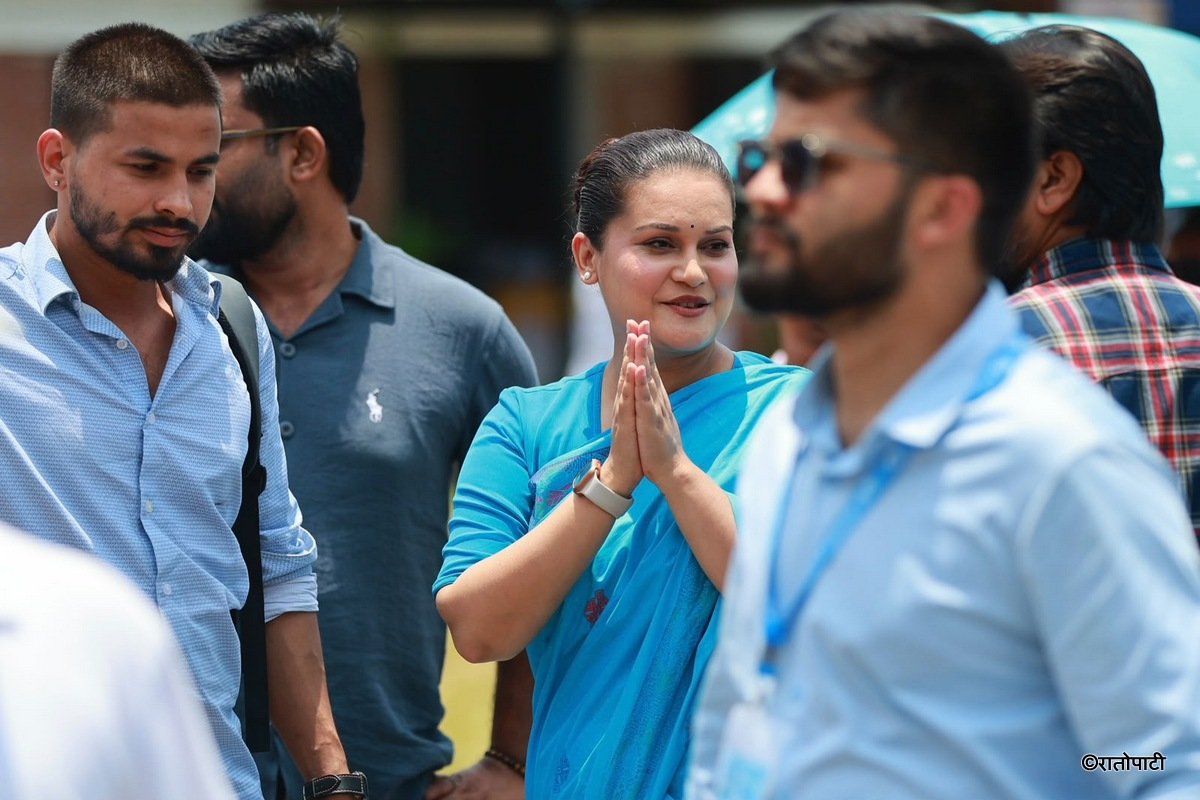
At the president's oath-taking ceremony, she appeared with a somber face and told those close to her, 'I have not lost, I have been made to lose. Even though defeated, I will continue to fight against the wrong tendencies of power and authority and will reform the party.'
Considering all these scenarios and the sentiments of most delegates, it would not be an exaggeration to say that the leadership's weakness in managing the general convention and the factionalism seen in internal competition are a warning bell for the political future of RSP. Becoming a powerful party with a popular vote of 5.185 million in just four years since its establishment is no small feat. The vivid example that the people can overthrow even the most powerful king from his horse if they wish was the 'GenZ' rebellion that took place on Bhadra 23 and 24 last year. The GenZ youth overthrew the two-thirds government of the Congress-UML alliance, seasoned in politics for about 80 years, in 28 hours, setting a record. Seeing a repetition of old parties in the general convention of RSP, which rose on the foundation of that rebellion, the delegates did not seem satisfied with the leadership. However, some delegates argued that the leadership should not be criticized yet, as they are gradually learning due to a lack of political experience. But they appeared firm in their stance that such mistakes would not be tolerated next time.
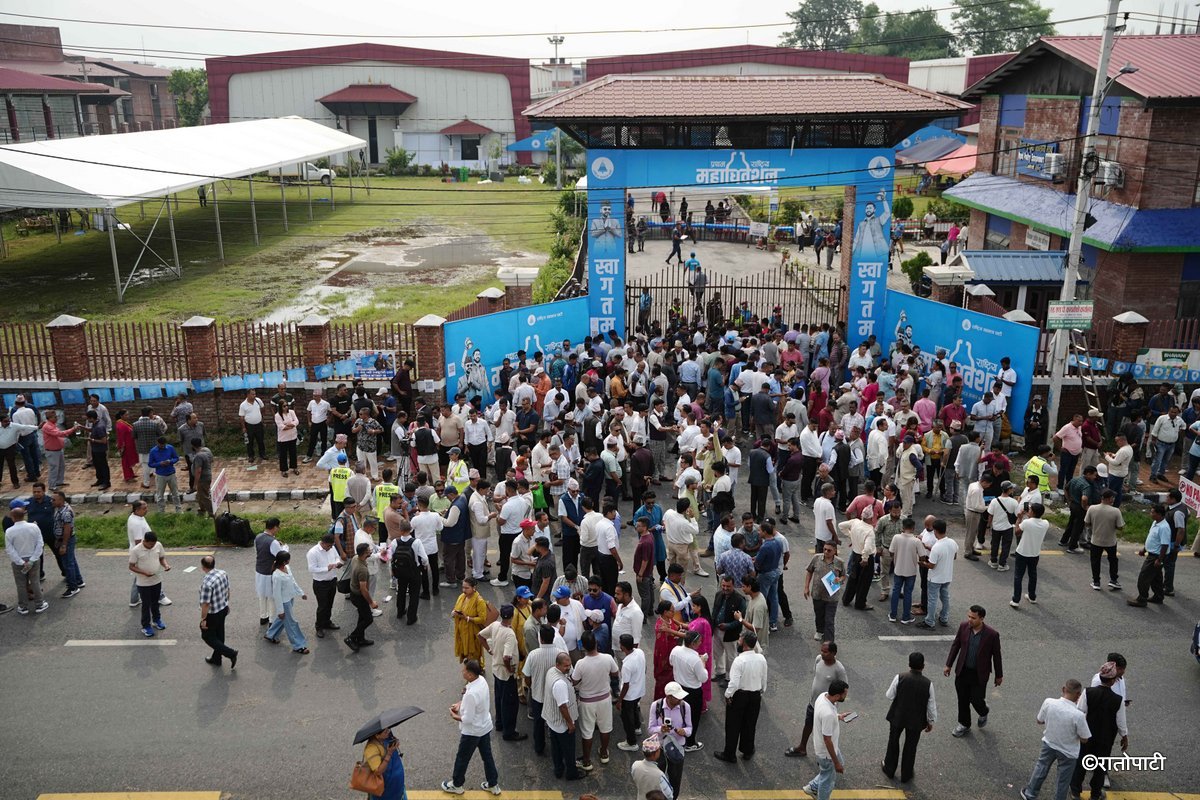
Even after sitting for three days under the scorching sun to elect new policies and leadership, the closed-door session process did not move forward, causing 25 percent of the general convention delegates to return home without voting. According to the final list published by the RSP Election Committee, 3,898 delegates participated in the closed-door session. Only 75.91 percent of them participated in the first phase of the election. In the second phase of the election for office bearers, only 33.07 percent, or 1,289, of the total delegates participated. 2,709, or 66.93 percent, of the general convention delegates did not participate in the voting process.
- Managerial Weaknesses and Concerns for Organizational Future
Throughout the general convention, in conversations with about three hundred delegates, their main concern was the weakness observed in the leadership's managerial capacity. The delegates concluded that it was detrimental to the party for the leadership to give speeches against factionalism during the inauguration session but then encourage it in the closed-door session. A head of a central department of RSP stated that it would be suicidal for a party that emerged from a 'mass base' to transition to a 'cadre base.' He said, 'We became powerful from a mass base. The public voted for Rabi in the 2079 elections. They gave popular votes in the 2082 elections looking at Ravi-Balen. These results show that there is no need for a cadre-based party in Nepal anymore. RSP trying to become a cadre-based party, which has already failed, could be suicidal for its future.'
Most participants in the general convention complained that a party that emerged from digital platforms was focused on old propaganda styles and manual activities. RSP, which achieved unprecedented results in the elections last February, seems to have fallen into a labyrinth of irregularities due to some forgettable activities at its first general convention. In the political report presented by Rabi in the closed-door session, groupism, factionalism, and individualism are acknowledged as systemic problems in the party's organizational life. However, he has failed to end factionalism within his own group.
The report states, 'Although RSP has completed four years since its establishment, it is still in a transitional phase, transforming from a political campaign into an institutional political party. Popularity alone cannot be a long-term basis; ideological clarity and leadership based on principles are essential for that. However, challenges have been observed in building an organization based on responsibility and discipline.' Rabi admitted that tendencies to play on the names of old and new groups for personal gain, factional mentality, and person-centric thinking have challenged unity.
He wrote in the report, 'There are complaints that group protectionism has discouraged capable members. There is a weakness in the sentiment that we are all parts of the same river, regardless of the source. Concerns are also growing that the organization might depend on individuals rather than principles.' He emphasized that after the general convention, the practice of forming former groups and seeking sources for personal gain should stop, and leadership selection should be open, transparent, and based on merit. At the closing ceremony, Rabi also urged to resolve any factional competition within the hall and move forward.
Acharya, who was elected general secretary, defended group collaboration, arguing that competition and prior collaboration are natural processes in an advanced democratic party. He said, 'This has given me more strength. I will work hard to make the party more democratic and fulfill the public's expectations of RSP.'
Political analyst Dambar Khatiwada argues that rather than whether factionalism has been institutionalized in RSP, the act of making the main leadership unopposed and allowing competition only for other positions has narrowed internal democracy. He said, 'In any party, the process of forming and breaking factions continues, but the act of the president and senior leaders forcibly making someone unopposed and ensuring their chosen person wins as general secretary was not fair. All leaders and cadres should be equal in the eyes of the leadership.'
This specific news has been automatically translated by AI. As a result, there may be some inaccuracies or language errors.




_zp49KLQnq8.jpg)