Tribhuvan University Departments Face Declining Student Enrollment

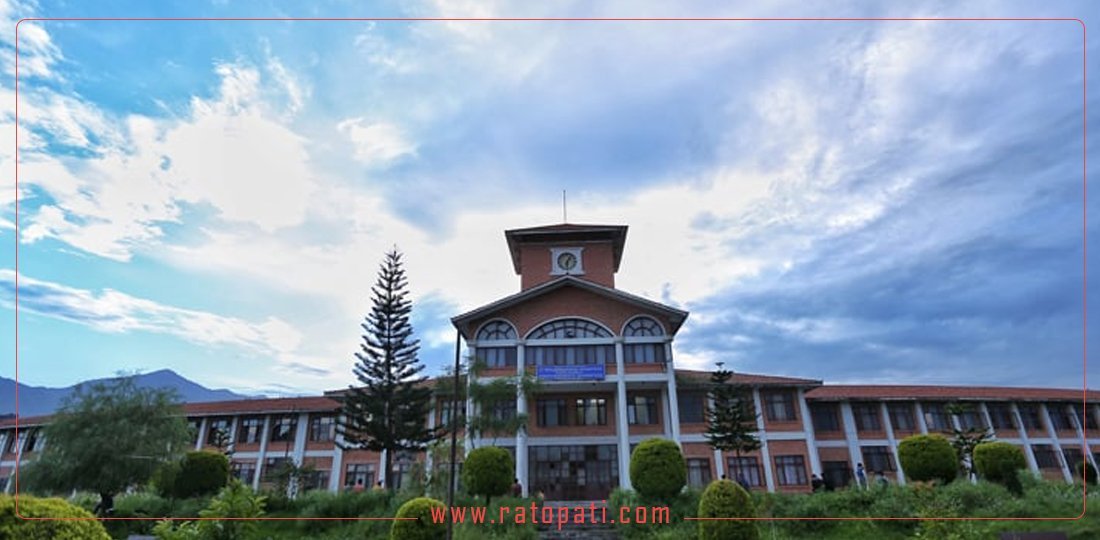
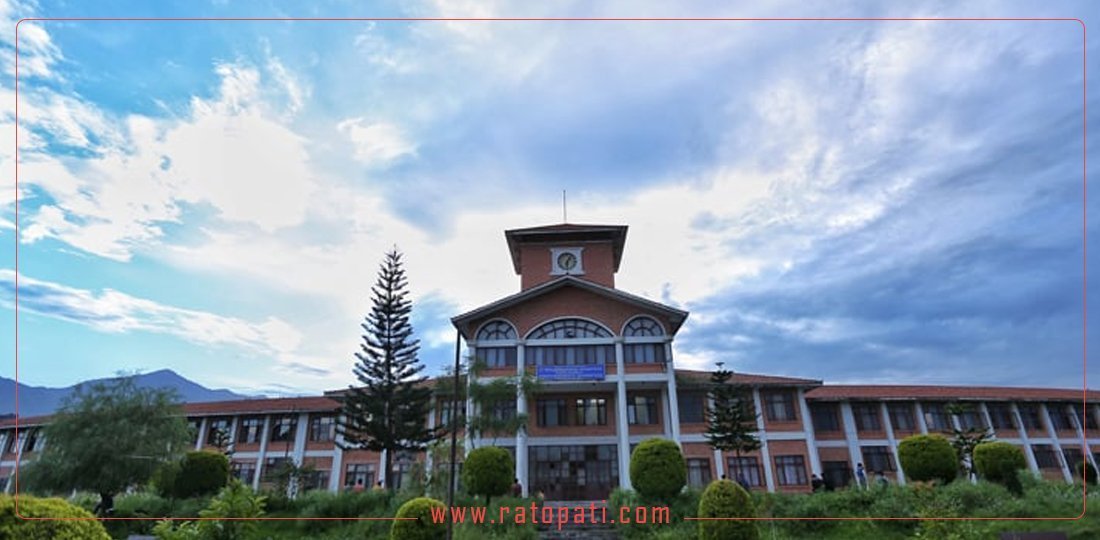
Kathmandu. In some departments of Tribhuvan University, the oldest university in the country established in 2016 BS, student numbers have been declining in recent years. According to TU officials, provisions such as the semester system and the mandatory 80 percent attendance have led to a decrease in student numbers.
At one time, the Central Department of Geography used to have up to 70 students in a single semester at the postgraduate level. However, only 4 students have been admitted to the first semester of postgraduate studies this year. Similarly, there are records of 14 students admitted to the third semester and 4 students to MPhil.
When asked why the student numbers have decreased, Gyanuraja Maharjan, the chief office assistant of the Central Department of Geography, said, 'There is no annual examination system now and attendance is mandatory; this is the main reason.' Informing that 11 teachers are working in this department, Maharjan added, 'When there was an annual system, many students used to study while working and attend classes at their convenience, which led to a high student turnout. Now, with the implementation of the semester system, due to mandatory attendance, internal examinations held intermittently, and assignments, students cannot attend classes regularly. Therefore, student numbers have significantly decreased compared to previous years.'
A head of the department complained that professors do not give students enough time to review their theses and that the number of teachers is also insufficient.
Currently, there are only around 3,000 students under the Central Campus of Tribhuvan University, whereas in previous years, 18 to 20 thousand students used to be admitted. According to TU's data, 587,719 students were studying in the fiscal year 2079/80. This number decreased to 531,399 in 2080/81 and then increased to 561,170 in 2081/82. Looking at this, there are 26,549 fewer students overall compared to 2079/80.
In the first semester of the Central Department of History and Culture of Tribhuvan University, there are 26 students, 28 in the third semester, and 15 in MPhil. 7 teachers are working here. In the Central Department of Sociology, which used to admit nearly 1,200 students during the annual examination system, only 30 students have been admitted to the first semester of postgraduate studies and 16 to the third semester. There are 35 students in MPhil. In this department, 1 professor, 2 associate professors, 5 assistant professors, and 3 part-time teachers are working.
In the Central Department of Hindi, a total of 17 students have been admitted. According to the head of the department, Shweta Deepti, there are 8 students in postgraduate, 5 in MPhil, and 4 in PhD. 6 teachers are working here. Similarly, the Central Department of Political Science has 158 students and 7 teachers.
According to Dr. Chandrakala Ghimire, Associate Professor and Head of the Central Department of Buddhist Studies, Tribhuvan University, there are 60 students in postgraduate, 60 in MPhil, and 20 in PhD. There are only 3 teachers in this department. Dr. Ghimire said, 'Buddhist philosophy is a diversified subject, but the number of teachers teaching it is very low, forcing everyone to teach all subjects.'
In the Central Department of Sanskrit, 15 students are studying, with 3 permanent and 1 part-time teacher working. Similarly, Associate Professor Akash Nilam informed that there are 150 students and 6 teachers in Yoga. There has been some improvement in the Central Department of Psychology, Tribhuvan University. Here, 81 students have been admitted to the first semester and 70 to the third semester, with an average attendance of 58 students regularly. According to the department's information officer, Nodnath Trital, 24 students were admitted to MPhil last year. Trital says, 'The demand for psychology is increasing in society. As subjects like Clinical Psychology, School Counseling, and Organizational Behavior are taught here, student attraction is higher compared to other departments.'
Nabin Upreti, a student studying postgraduate, emphasizes the need to balance the semester system with practical aspects. He says, 'For those who want to pursue employment and studies simultaneously, flexible classes should be available in the morning or evening. Students face difficulties due to the compulsion of attendance and the lack of research and internship opportunities.'
SWO Chairman Deepakraj Joshi stressed the need to connect higher education with employment. 'Although education has been decentralized, making it easier to pursue higher education from villages, the human resources produced by universities should be society-oriented,' he said.
Prof. Dr. Shankar Prasad Khanal, acting rector of TU, stated that student priorities have changed, leading to a decrease in students in the humanities stream. He said, 'Students want to go to the workplace after graduation, so it is necessary to create an environment for 'working while studying'.
Khanal, who is also the Dean of the Institute of Science and Technology, TU, claimed that student numbers have not decreased in the science stream. He added, 'Student numbers in our 13 departments are stable; a slight fluctuation from year to year is normal.'
This specific news has been automatically translated by AI. As a result, there may be some inaccuracies or language errors.