Nepali Congress Active Membership Update Sparks Internal Dispute

Kathmandu. For any political party, organized or active members are energetic forces, who run the party's activities at the grassroots level. Political parties focus on increasing the number of such members through membership expansion campaigns to excel in competitive politics.
Currently, the size of old political parties in parliament has shrunk. Nepali Congress, CPN-UML, and Nepali Communist Party have seen their size decrease since the general elections held in February.
An independent chapter is needed to analyze why these parties, which have been active in politics for decades, have shrunk. Looking at the internal politics of the Nepali Congress, not only has its size in parliament decreased, but the number of active members, which is the party's energy, has also significantly decreased.
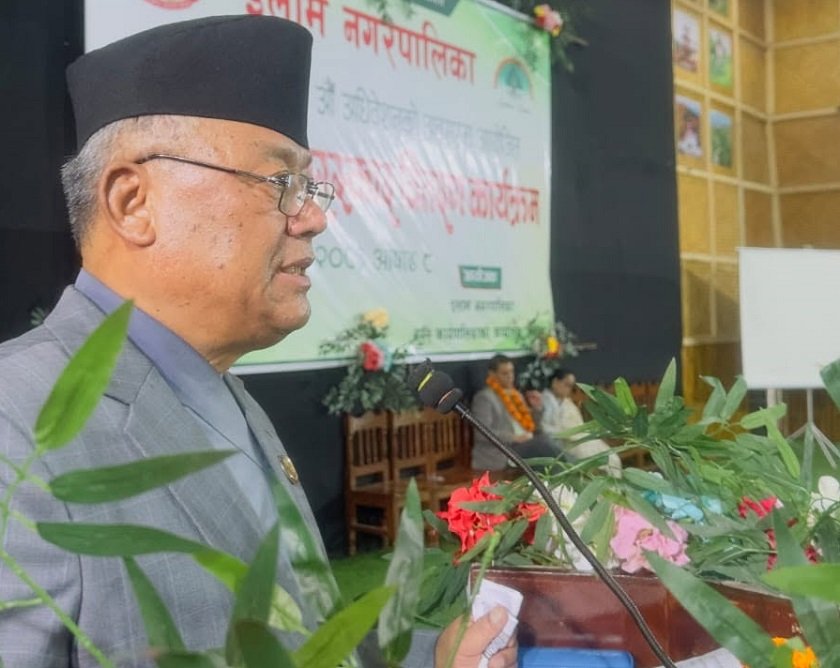
After the special general convention, one faction within the Nepali Congress is without a role. The establishment faction before the special general convention, i.e., the then President Sher Bahadur Deuba's faction, is currently sidelined in terms of role and responsibility within the Nepali Congress. The influential party leader Dr. Shekhar Koirala's faction is also distanced from the leadership.
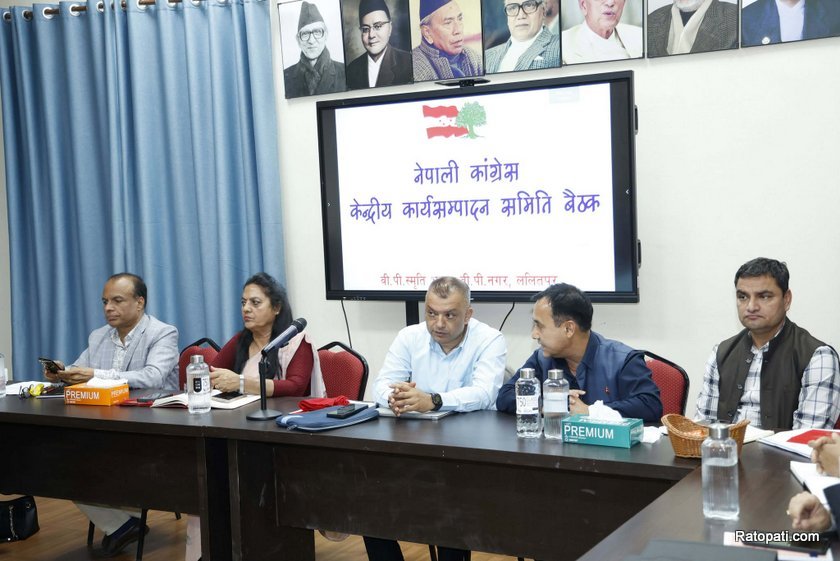
Those who accuse the leadership selected through the special general convention of not working to strengthen party unity are citing the decrease in active membership as an example.
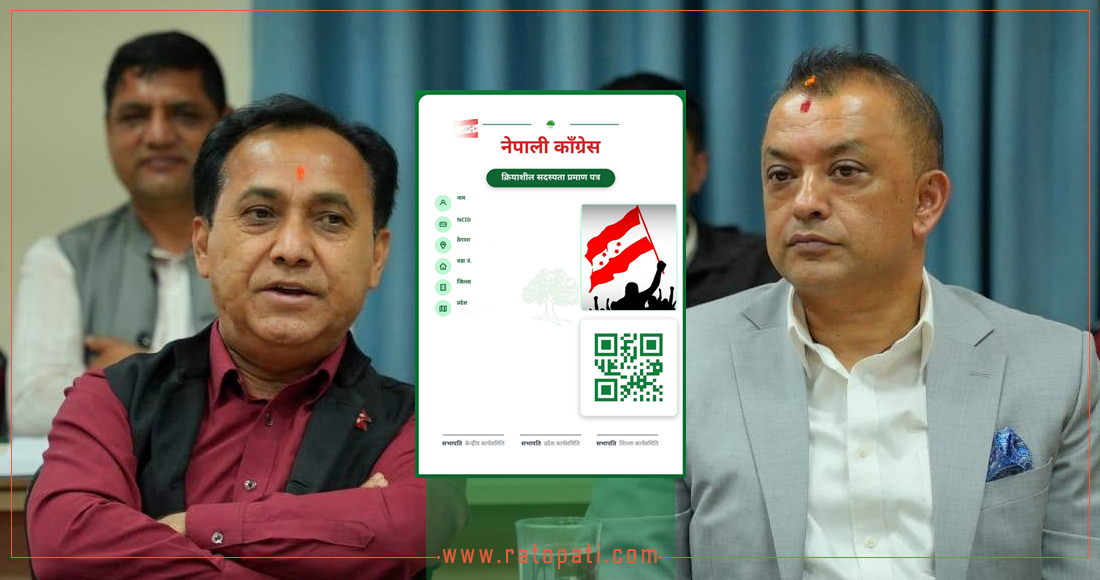
The Nepali Congress's active membership management committee issued a statement on Jestha 30, stating that by 12:00 AM on Jestha 28, a total of 687,931 active members, whose details were updated through the ward level or who had self-updated their forms through the digital system and were in the process of approval at the ward level, had been entered into the digital system. However, 782,209 active members were eligible for update.
The statement also mentioned that 538,622 active members had received their NCID, and 149,309 active members' self-updated forms had been entered into the digital system and were in the process of being updated through the ward level.
However, according to the report presented by Gagan Thapa as General Secretary at the Mahasamiti meeting in Falgun 2080, the number of active members of the Nepali Congress was 866,202 at that time. Based on this, 178,271 active members have not updated their membership in the digital system. It is not difficult to understand that most of them belong to the Deuba-Koirala faction. Some may have also left the party.
_oubAKtcH7X.jpg)
There is a difference of more than two years between the data presented in Falgun 2080 and the number updated now. The extent to which Nepali Congress, one of the oldest parties in the country, could have added and increased active memberships in two years is a separate issue.
The dissenting groups are also expressing doubts about the number of members claimed to have been updated now. 'There is doubt about the updated number as well,' said a leader from the dissenting group, 'It is not transparent. We are outside the reach of the central office. Whatever number they say, it's fine.'
The committee has stated that active members who could not renew and update through the ward within the stipulated deadline due to various reasons can submit an application to the central office with proof of their active membership by Ashar 20, to continue and update. This arrangement is to keep the door open for active members who have not updated their membership.
- Why update active membership?
The leadership selected through the special general convention held from Poush 27 to 30 has launched a campaign to digitally update the party's active membership. The faction removed from the leadership level through the special general convention, elected from the 14th general convention, has been opposing this.
Previously, there was opposition alleging that more renewals were given to those in the establishment based on factional grounds and fewer to the dissenting groups. Now, the dissenting groups are opposing why those who have already renewed are being asked to update again. The establishment faction is explaining that the update is being done to digitize the party in line with the times.
The dispute related to membership, which usually flares up just before the general convention, has appeared in a new form this time with the use of digital technology. The conflict arose between the establishment and dissenting factions after the party leadership started a campaign to digitally update membership.
This has brought the factional divide within Congress to the surface again. Leaders in the party leadership and the committee formed after the special general convention are stating that the active membership update campaign is a method to modernize the party and maintain data of actual members.
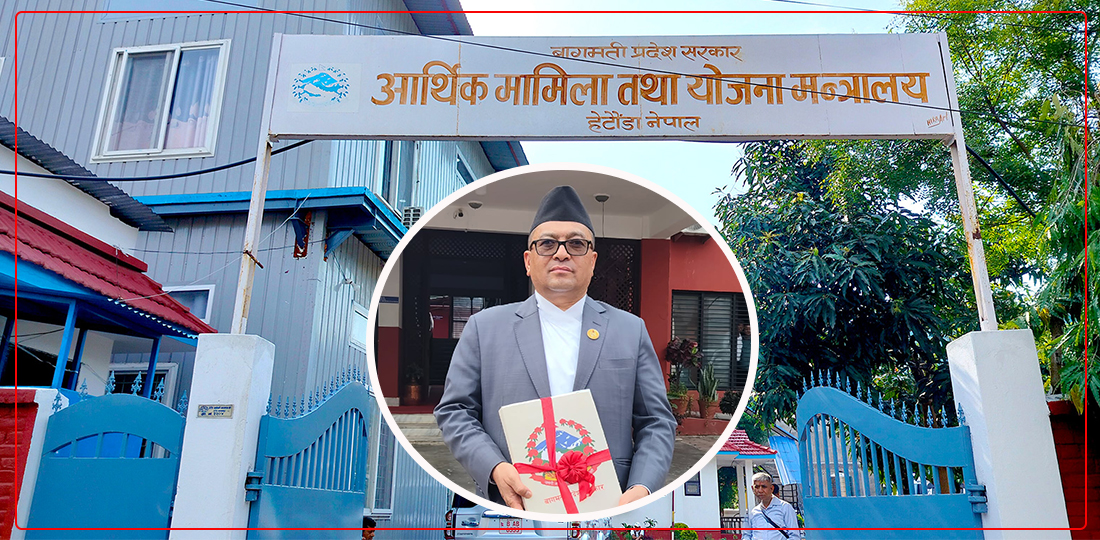
General Secretary and Convener of the Active Membership Management Committee, Pradip Poudel, says that due to the destruction of paper records when protestors set fire to the party's central office and other offices during the Janji movement on Bhadra 23 and 24, 'digital entry' is essential to create new records and connect the party with information technology.
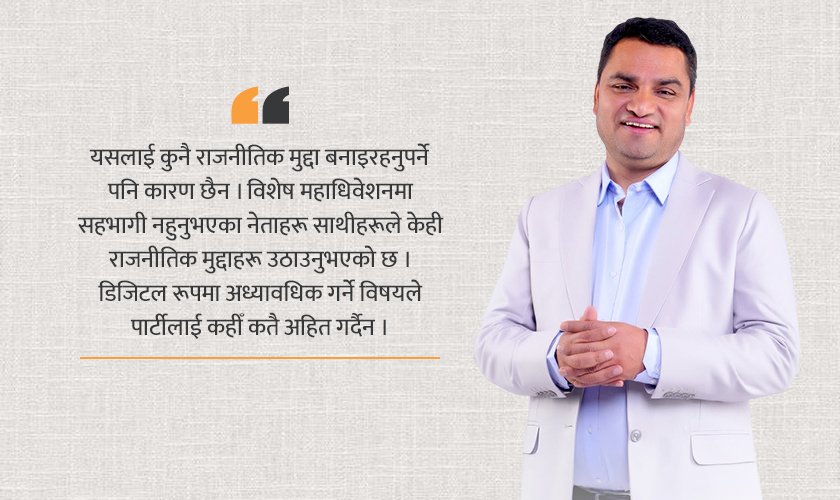
However, the dissenting groups (former President Sher Bahadur Deuba's group and Dr. Shekhar Koirala's group) are questioning the intention behind this campaign. The dissenting groups are even calling the update a mechanism to harass workers and select only their own people.
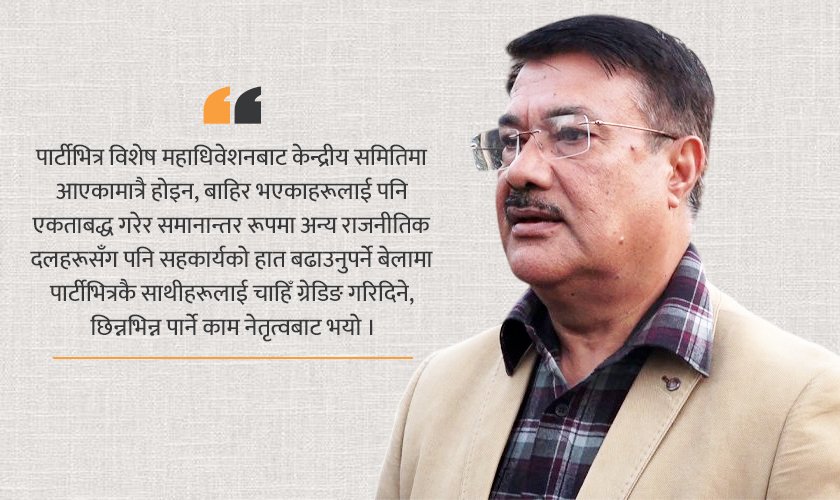
Min Bishwakarma, a leader from the dissenting group, says that the issue of updating has been brought up to grade party members, divide them, and create divisions within the party.
He states that they are moving forward with a prohibitive and controlling method, saying that active members who renewed and were distributed for the 15th general convention will be digitally updated, and only those who are updated will be allowed to participate in the general convention.
The question of the legal basis for updating active membership within Congress is also being raised. Leaders from the dissenting groups are saying that the statute amended by the 14th General Convention of the party only recognizes 'renewal' of active membership, and the word and process of 'update' are not present there. The establishment faction interprets this as a regular process, stating that the statute provides for updating.
The fact that two factions interpret the same statute according to their own convenience has created confusion among the cadres. Senior advocate Egraj Pokharel, who has worked in the Central Election Committee of Congress for a long time, says that the statute does not have provisions for membership update and that only the general convention can amend the statute.
Pokharel told Ratopati, 'I have not seen anywhere that the special general convention amended the provisions related to membership. The current work on active membership does not align with the statute amended by the 14th General Convention of the Nepali Congress.'
Leaders from the dissenting groups are calling the active membership update a mathematical game. This conflict between the working committee elected from the 14th General Convention and the working committee led by Gagan Thapa formed after the special general convention has already emotionally divided the party. Instead of reaching an agreement, leaders are engaging in public accusations and counter-accusations.
Membership renewal and record-keeping are purely administrative and procedural tasks. Such tasks are performed by employees and the party secretariat, but top leaders and general secretaries of the party are quarreling over them. Pokharel, who has previously worked in the Congress Election Committee, admits that leaders are politicizing administrative and procedural matters, further exacerbating the dispute.
He stated that the task of updating old memberships is the responsibility of the central office, not the general secretary or any other official.
If the leadership does not address the concerns of the dissenting faction and considers 'digital entry' as the only truth, the dispute within Congress is likely to escalate further. To escalate that dispute, the dissenting groups have not updated their memberships and are arguing that it is inappropriate to update again after renewing for one general convention.
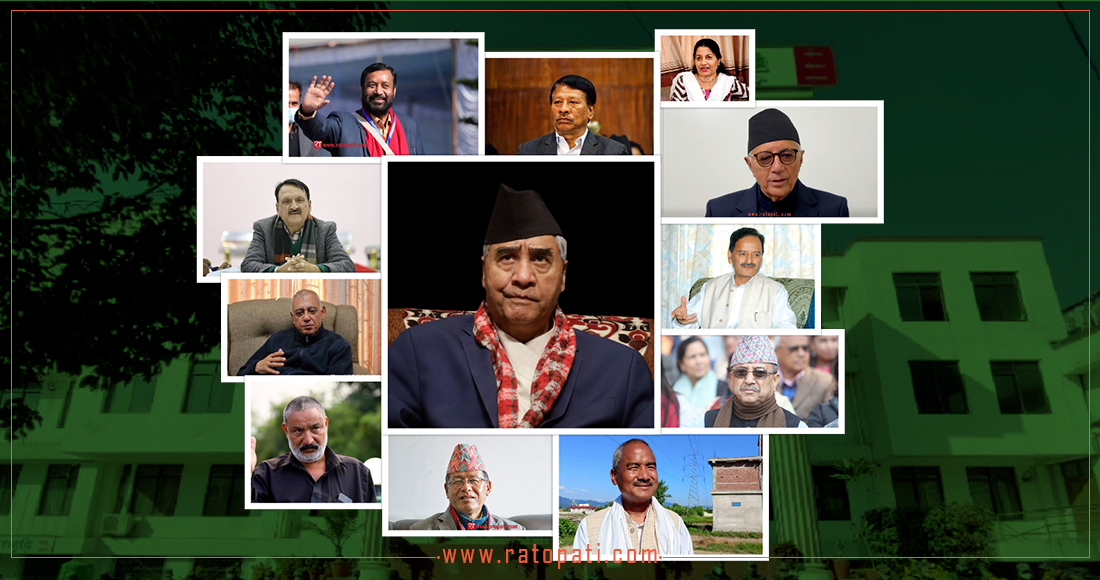
Leaders from the dissenting groups argue that the party runs on the loyalty and trust of its workers, not computer software. The establishment faction, on the other hand, maintains that digitizing membership records is a necessity of the times.
In any case, the step taken by the establishment faction of the party regarding active membership is being challenged by a faction within the party, while the morale of the workers who were disappointed after being defeated in the House of Representatives elections is further dampened by showing a reduction in the number of members. Despite the need to boost worker morale and increase the size of the organization for the upcoming local level elections in Baishakh and the provincial assembly elections in the same year, well-wishers are raising questions about what message the leadership intends to send to the party ranks by limiting the membership to 600,000 when it should reach around 900,000.
There is also a significant opinion within Congress that it would have been more effective if the active membership had been updated after resolving internal disputes, and based on that, responsibilities had been allocated and preparations for elections and general conventions had begun.
This specific news has been automatically translated by AI. As a result, there may be some inaccuracies or language errors.


_WozpGneJIk.jpg)