Japan Defeats Tunisia 4-0 in Historic 1000th World Cup Match


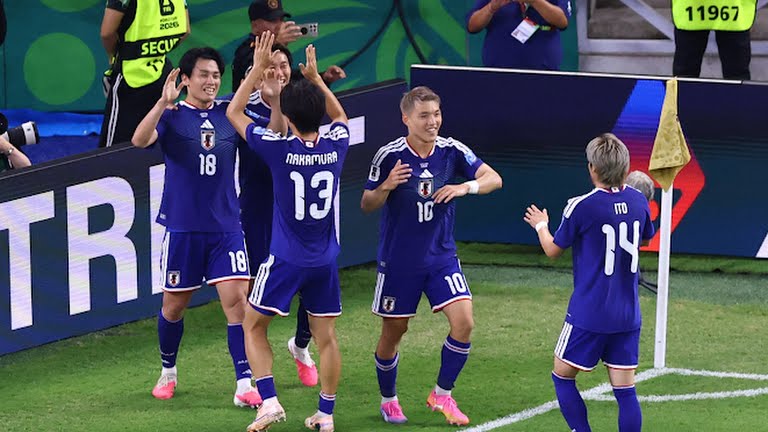
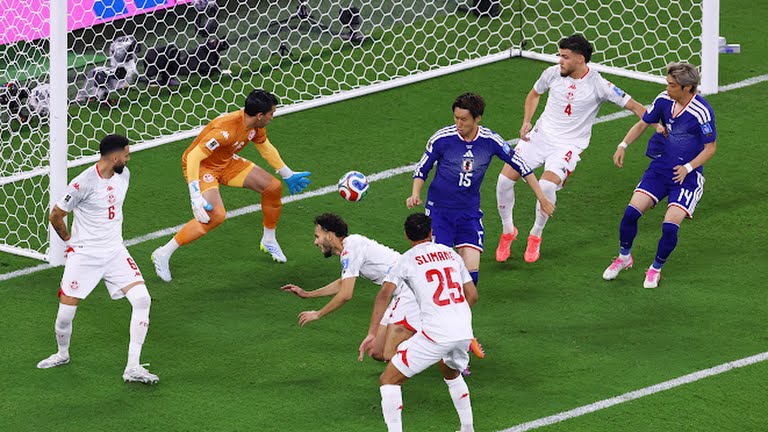
Mexico's FIFA World Cup 2026 is the 23rd World Cup, and the match played on Sunday between Japan and Tunisia in Group 'F' was the historic 1000th World Cup match. FIFA organized a special ceremony to commemorate the 1000th match in World Cup history. The main referee, Istvan Kovacs, wore a special jersey with a golden border, bearing the special badge '1000'. This honor was presented as a symbol of the World Cup's 96-year journey. The World Cup competition, which began in Uruguay in 1930, has crossed another historic milestone with the match between Japan and Tunisia. Japan also registered its biggest ever win against Tunisia, 4-0, to enter the knockout stage. Earlier, in the 2010 World Cup, Japan had registered a 3-1 victory against Denmark. Japan, which has been participating continuously since the 2018 World Cup, has played a total of 27 matches, winning 8, drawing seven, and losing 12. In the match held at the Estadio BBVA in Monterrey, Japan presented an aggressive game from the start. Daichi Kamada scored in the fourth minute to give Japan the lead. Then, in the 31st minute, Ayase Ueda added another goal, and Japan led 2-0 by halftime. In the second half, Tunisia tried to make a comeback, but their efforts were thwarted by Japan's organized defense and high-level pressing. In the 69th minute, Japan's Nunan Ito scored the third goal, and when Ueda scored his second goal in the 84th minute, the team secured a 4-0 victory. In the FIFA World Cup 2026 match against Tunisia, Japan's 4-0 victory was not only reflected in the scoreline but also in the match statistics, which showed Japan's clear dominance. Japan controlled the ball for about 57 percent of the match, while Tunisia had to settle for 43 percent. Japan continuously created attacks while keeping the ball under control. Japan had a total of 14 shots, with 5 of them on target. In contrast, Tunisia had 9 shots but created very few opportunities to seriously challenge the goalkeeper. Japan also led in passing. Japanese players completed about 92 percent of their passes successfully, while Tunisia's pass success rate was around 83 percent. Japan maintained control of the midfield, forcing Tunisia to rely on long passes and counter-attacks. Japan also looked excellent defensively. The team did not allow Tunisia's key attacking players to create open chances. The Japanese defense won most of the duels and thwarted many of the opponent's attacks early on. This match once again proved why Japan is considered one of the strongest teams in Asia. Their organized defense, high-speed attacks, and ball control kept Tunisia under pressure throughout the game. With this result, Japan has secured a place in the top 32, while Tunisia, which lost 5-1 to Sweden in its first match, has seen its knockout stage journey come to an end.
This specific news has been automatically translated by AI. As a result, there may be some inaccuracies or language errors.