Analysis of Rastriya Swatantra Party's Rise and Potential Pitfalls

In the political history of Nepal after the democratic movement, two events attract special attention. First, the unprecedented rise of the then CPN (Maoist) in the 2064 Constituent Assembly elections, and second, the recent rapid popularity of the Rastriya Swatantra Party.
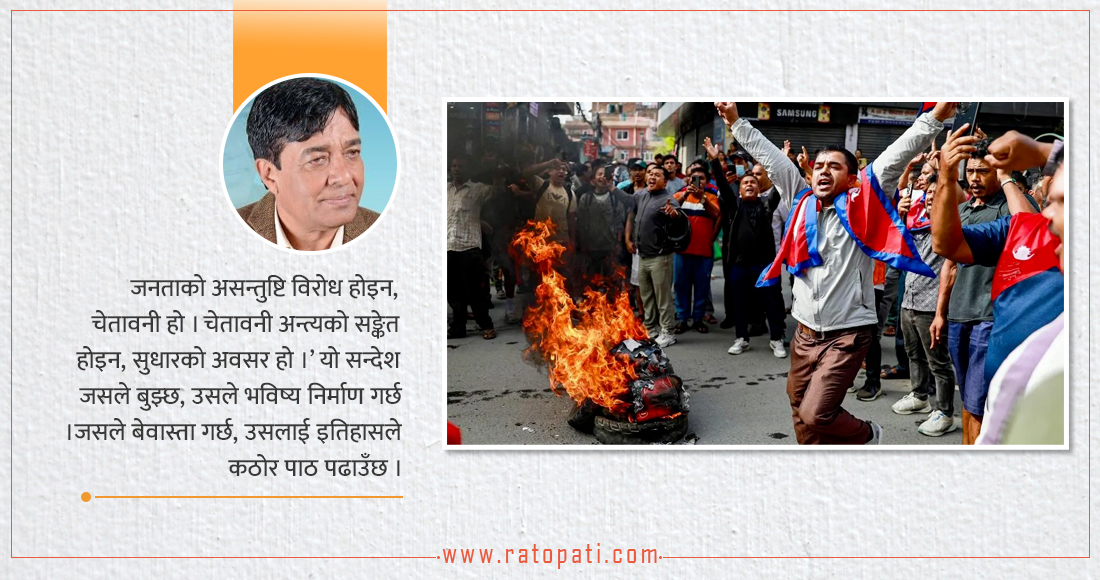
The basis of both these events is the public dissatisfaction with traditional political forces and the aspiration for change. When the public expresses disappointment with old political forces, they are attracted to new forces. However, history has shown that forces that cannot manage the opportunity given by the public properly and become infected with the old political diseases over time can fade away as quickly as they emerge.
This does not only affect the future of a single party but also weakens public trust in the democratic system.
Today, similar concerns are beginning to arise regarding the Rastriya Swatantra Party. Recent developments, controversies surrounding the leadership, internal management issues, organizational weaknesses, and questions raised about political decisions have forced many citizens to think once again, is this party also following the path of the CPN (Maoist), which was once a symbol of change?
To understand the rise of the CPN (Maoist) correctly, it is necessary to understand the failures of the multi-party system after 2046 BS. While the Nepali Congress and UML were busy with power-sharing, as corruption became institutionalized, and as poverty and inequality in rural Nepal increased, the Maoists organized that dissatisfaction.
After the end of the armed conflict, when the Maoists entered mainstream politics, millions of voters saw their aspirations represented in it. After the 2064 Constituent Assembly elections, the Maoists emerged as the largest political force in Nepal. That success was not just the victory of a party; it was an explosion of public dissatisfaction with the old political system.
Millions of citizens saw the dream of a new Nepal in the Maoists. They believed that this force would be free from old political ills, provide good governance, establish social justice, and lead the state in a new direction. But gradually, the situation changed.
The background of the rise of RSP also seems to have been prepared after the failure of the Maoists. After the 2074 elections, the CPN unified, and many thought that the country would now have a stable government.
The political culture expected by the public could not develop. Instead of agendas for national transformation, power, positions, alliances, and leadership management became the main issues. As the energy of the movement could not be transformed into institutional reform, public trust gradually weakened. As a result, a party that was once the largest force in the country has now shrunk to a force with limited influence. The downfall of the Maoists was not just the downfall of a party; it was also the downfall of public expectations.
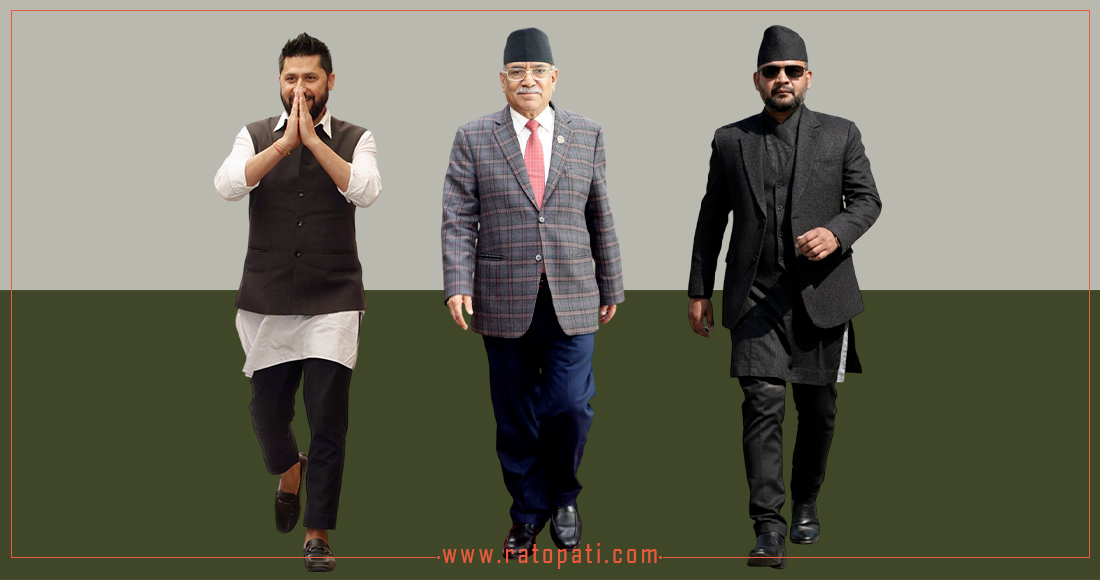
The background of the rise of RSP also seems to have been prepared after the failure of the Maoists. After the 2074 elections, the CPN unified, and many thought that the country would now have a stable government. But the division of the CPN, the power struggle between Oli and Prachanda, and the subsequent unstable governments made the public feel cheated again.
It is in this despair that RSP has emerged. Under the leadership of Rabi Lamichhane, RSP presented itself as an 'alternative to the old parties'. It presented a voice against corruption, a commitment to good governance, a promise of a new political culture, and the concept of citizen-centric governance. Especially the younger generation, the educated middle class, Nepalis returning from abroad, and voters disillusioned with traditional parties embraced it as a center of hope.
The rise of this party had given a positive message to Nepali democracy: the public still believes in change. They are ready to seek new alternatives through democratic processes. This was a good sign for the health of democracy.
However, recent events have begun to raise questions. Debates have started on the transparency of decision-making processes within the party, leadership accountability, organizational maturity, and political strategies.
It is not unusual for political parties, which operate in the field of social science, to make mistakes. Any new party faces challenges during its learning phase. But the problem begins when a party loses its ability to self-reflect, considers criticism as enmity, centers itself around individuals rather than institutions, and prioritizes its own political existence over public expectations. These were the reasons for the decline of the Maoist movement in the past. Therefore, the questions being raised today cannot be taken lightly.
When trust in the alternative forces within the democratic system weakens, trust in the democratic system itself begins to weaken.
This is not just a question for RSP, but a question of the character or ideology of the political parties that lead the overall democratic system. Many citizens in Nepal have been witnessing the same political cycle for decades. A new force emerges, raises hopes, becomes popular, and after some time, adopts the old character. If this cycle repeats, its impact will not be limited to one party. The public will start asking, 'If the new force is also like the old ones, where is the alternative?'
When trust in the alternative forces within the democratic system weakens, trust in the democratic system itself begins to weaken. Citizens may become indifferent to voting. Political participation may decrease. Despair, disillusionment, and anti-system sentiments may increase.
The experience of many countries around the world shows that when trust in democratic institutions weakens, the risk of extremist ideologies, individualistic leadership, and unconstitutional alternatives strengthening increases. This is an extremely serious issue for a country like Nepal, where democratic practice is still being institutionalized.
RSP today is not just a political party. It carries the hopes of millions of citizens. Therefore, its responsibility is greater than that of an ordinary party. If it can strengthen transparency, internal democracy, rules, and institutional culture, it can set new standards in Nepali politics. But if it also moves towards personality-centric, reactive, and opportunistic politics, it can damage not only its own future but also public trust in alternative politics.
In political history, the most difficult task is not to gain power, but to preserve the trust gained. The public may forgive once, but after being repeatedly disappointed, their faith in the system itself can collapse.
Nepal's democratic journey is currently passing through a sensitive phase. Intense dissatisfaction with traditional parties has swept them aside, but on the other hand, the initial enthusiasm for new alternative forces is not free from questions. Repeated failures of alternative forces can lead to voter apathy. A pessimistic view that 'they are all the same' can become a common perception in society.
In such a situation, RSP must understand its role not just from the perspective of electoral success, but as a historical responsibility to preserve public trust in the democratic system.
The history of the Maoists should have provided a clear warning and lesson to RSP. The hope of the people can be won, but to retain it requires continuous self-discipline, institutional culture, and commitment to national interest.
The question today is not just whether RSP will succeed or fail. A bigger question is whether the Nepali people can maintain their belief that change is possible within the democratic system. If alternative forces also forget their promises and ideals, the damage will be borne not by a single party, but by the entire democracy.
For this reason, the current journey of RSP is not just the story of a party, but a matter of faith in the democratic system connected to Nepal's democratic future.
This specific news has been automatically translated by AI. As a result, there may be some inaccuracies or language errors.